
A to Z Album Reviews
Hackensaw Boys - Love What You Do (EMI/Nettwerk)
The press-quote byline "think of the Ramones mixed with the Carter Family" may be suitably eye-catching, but it ain't the deal as far I'm concerned. Sure, there's both a high-octane energy and a genuine old-time feel to the Hackensaw Boys' music, but that's where the comparison ends I suspect. Growing up in the Blue Ridge city of Charlottesville, the Boys've been plying their driving blend of old-time bluegrass since 1999, releasing their first (distinctly home-made) disc in 2000. At that time they were an unwieldy 12-piece that barely crammed into a coach, but two further albums along the road they've since slimmed down to a more tourable six-man unit (comprising the enigmatically named Salvage, Shiner, Mahlon and The Kooky-eyed Fox together with either Pee Paw and Dante J, or Four and Baby J., depending on whether you believe the liner note or the press handout - confused: you betcha!). A cursory or first listen reveals these boys to have absorbed a wider slew of influences even than the Carters and the Ramones in putting together their heady mix of oldtime-with-attitude; the opener is a charming and atmospheric number, Sun's Work Undone, replete with well-judged instrumental touches (banjo, mandolin, acoustic guitar and echoey ol' fiddle out there in the backwoods), whereas the second track (Cannonball) is a complete contrast, more like Hayseed Dixie, a breakneck dash that makes the ensuing We Are Many seem like mere granny-punk! Mecklenburg County is pure mountain breakdown, whereas Kiss You Down There is a naughty little strut down honky-tonk rockabilly lane and Parking Lot Song is a fun jugband-bluesy throwaway. But then there's All Good Dogs, whose wistfulness is more reminiscent of Peter Rowan or Earth Opera. The Hackensaws also do a really neat line in road-movie introspection (Alabama Shamrock, High Faller), and if anything this quieter side is more prevalent on Love What You Do than the iconoclastic thrash side. Backings are sparse yet luxurious, unexpectedly delicate for the most part, and with some cool vocal harmonies that stretch right back in time to their mentors. This is a very satisfying album that proved even better than I'd allowed for and made me want to trail back to the Boys' previous releases. It's so good that the Hackensaw Boys love what they do - and so will you I'm sure.
David Kidman 2005
It's fashionable to dismiss 'prog rock' as outdated, pretentious and 'arty', it's a bit like saying that having a Simpsons poster on your wall is cooler than an original painting.
So thank God for people like ex-Genesis man Steve Hackett, Wild Orchids may never be 'album of the week' on Radio 2 but it shows that inventiveness, adventure and daring are still alive and well.
Unless you happen to be a confidante of Hackett, it's virtually impossible to say with any certainty just exactly what is meant by a lot of the music. Then again how much of Hackett's ideas you need to enjoy Wild Orchids, is debatable, because the music is designed to fire the imagination, not explain itself and in that it succeeds.
Where Hackett does slightly overdo the self-indulgence is with the track titles, the second track on the album is an exotic and pleasant weave of the orient and the occident, but to call it The Fundamentals of Brainwashing may be asking too much of the casual listener. Unless, of course, we are the butt of the author's little joke.
Wild Orchids is an album that's composed and orchestrated, rather than written and played, the intricate mosaic has to fit together perfectly for it to work. Hackett is a classical musician in all but era.
No-one, not even Steve Hackett, is suggesting that you could listen to Wild Orchids on a regular basis. However, as a means of lifting yourself out of the humdrum it's a very worthwhile and enjoyable exercise.
Michael Mee, Editor Hawick News, November 2006
Oscar Wilde reckoned that we were all in the gutter but that some of us were looking at the stars.
He could well have had former Genesis member Steve Hackett in mind because his latest solo album Metamorpheus is one of those pieces of music that raises your aspirations.
Metamorpheus isn't just the modern equivalent of classical music, it's classical music in waiting. Hopefully generations to come will think that this represents what we all listened to. It's a better legacy than much of the guff that goes around.
Right from the start, it's full of classical allusions that reach right back to Offenbach's Orpheus. However for such a weighty heritage this is a surprisingly warm and unpretentious piece. While most of the track titles sound like they were left over from Lord Of The Rings, the music itself is inviting and non-threatening. As an example of the sheer poetry of an acoustic guitar I doubt it could be bettered.
If you were looking for a home for Metamorpheus then it fits neatly alongside the rustic charm of Beethoven's Pastoral.
It would be a grey and dull world without the likes of Steve Hackett to lift both our spirits and our eyes. Niche market maybe but that doesn't alter the fact that it's wonderful.
Michael Mee
Hadacol - Better Than This - Checkered Past
Feel-good medicine from this Kansas City-based foursome, named after a potent alcohol elixir that sponsored Hank Williams' radio show in the late 1940s. Their powerhouse of a debut album stomps into a new century with all the vigour of the Rolling Stones colliding head-on with Nashville. From the opening track (No, It Don't Get) Better Than This, Hadacol's acoustic and slide guitars and 'tambourine' percussion have you in thrall. Next is Big Tornado; big country with clever high-strung acoustic touches which have you counting them in. The songs are written by brothers Fred and Greg Wickham, but not together, and producer Lou Whitney has done a fine job. It's a pleasure to listen to arrangements where there's enough space for some very pleasing musicianship, without over-indulgence and without losing the edge and the energy. If you like all that's best of our rock'n'roll tradition, but like it served up fresh and twangy: no, it don't get better than this!
Sue Cavendish
Collectively named after a state park in the Ozarks, these natives of Springfield, southwest Missouri, mix blistering driving rock with strangely sanctified four-part harmonies to produce a forthright, biting blend of music that you've not heard quite the like of before. Ha Ha Tonka have been around since 2004, originally under the name of Amsterband, and Buckle turns out to be just their second release. It's an impressive, if unduly brief set, recorded in an old church with a control booth where the pulpit had once been: the acappella Hangman comes over rather like a preachin' sermon, but the rest is dark, pounding, drum-driven rock with attitude, presenting a hard-edged view of the realities of socio-economic hardship, backwoods prejudices and drug abuse within the context of their own regional storytelling tradition. Caney Mountain is perhaps the best illustration of the band's unusual combination of musical elements, with energetic thrust punctuated by more vocal chanting, and You Lit Up The Night closes proceedings on a more restrained note, but tracks like Bully In The Pulpit and St. Nick On The Fourth In A Fervor convince the most, and on more than one level of invention. The dichotomy of all this can make it just a little difficult at times to know quite what to make of the band's overall vision, but the resulting music is almost always distinctly invigorating.
David Kidman October 2007
Tim Hain is described as a character, an eccentric and a public schoolboy of aristocratic descent. He is also two percent Jamaican and it said that he'd be arrested if he showed you which two percent. Bleggae is a fusion of blues and reggae, his two loves and two genres that fit because of their simplicity and their passion.
Little Willie John's Need Your Love So Bad is a pleasant start. This has been covered by many, most famously by Fleetwood Mac and Reggae Lift The Blues has some reggae shouting and an impromptu Lively Up Yourself - good fun and has Prince on drums, no not that one! Fine Time Child shows that blues and reggae can mix well and features Earl Linton on harmonica. An Old Blues Man Never Dies has a John Lee Hooker style opening before it drifts into a slow reggae treatment. Hain's lived in voice suits this well and to be honest, the song could fit into either genre. Somebody Turn On A Light is a highlight and like some of the others has been plundered from an earlier album. Pauline Henry makes a telling contribution on vocal. Welcome To Iraq is still as relevant today as it was when it was first released and is a wonderful critique on the intervention in Iraq.
If I Ever Get Home is another attack on the Yanks and displays Hain's clever use of the English language. The Wind Cries Mary is another old one but a cover this time. Jimi Hendrix, of course, and when you do one of his you have to be confident of your guitar playing. Hain comes through with flying colours, showing that he can handle his guitar as well as his talent for making a song his own. He can do straight reggae as well and Everybody's Talking To Themselves with chatting over a grinding reggae beat is testament to that. The biggest surprise about That's What The Blues Is All About is the fact that there is no reggae. This is a funky blues in an Albert King style and he manages to fit in pieces of other songs such as Tony Joe White's Steamy Windows. Feels So Nice is a straightforward blues with Hain turning is a voice of pure velvet. He finishes with One Man Went To Mojo, taken from the album of the same name. This is the perfect way to chill out so pour yourself a glass of whatever you fancy and settle down.
www.note-music.co.ukDavid Blue January 2008
Tim Hain unleashes his blend of Reggae and Blues on the nation via One Man Went To Mojo. He opens strongly with Fine Time Child, which is blues rock with reggae style middle eight. This features Errol Linton on harmonica and is a good introduction to the world of Tim Hain. There seems to be a number of Jimi Hendrix covers about today and Tim Has joined in with The Wind Cries Mary. As with many of his other tracks he gives it a reggae flavour and he has turned in a very good version. It's well produced and there's some excellent guitar work. There's another cover with Little Willie John's Need Your Love So Bad. This, of course, was made famous by Peter Green and Fleetwood Mac and, played in Hain's style, has turned into quite a happy song. Somebody Turn On The Light is great white boy reggae with Hain's voice sounding like velvet and Pauline Henry adding her not inconsiderable vocal talents. Paul Cox guests on If I Ever Get Home and his voice adds poignancy to this very strong anti-war roots song. Steven Stills is the next to be given the Tim Hain treatment in the guise of For What It's Worth. Another excellent song – you can't not like this guy. The good times continue with a rousing version of the well-known Madness Is Gladness and on Everybody's Talking To Themselves he shows that, although he's not Jamaican, he is the real deal.
Welcome To Iraq is, not surprisingly, another anti-war song and Tim manages to blend slide guitar and reggae very well. Clever slant on this one. The eponymous title track is just One Man Went To Mow by another name and, despite being well played and sung, is probably the weakest track on offer. Tim is back to the blues on Feels So Fine which swings along well enough with some good guitar and the spoken lyric is ok. An Old Bluesman Never Dies is performed in a John Lee Hooker style, appropriately enough as it was Zakiya Hooker who wrote it. Tim can't help himself however and flits off into his reggae rhythms. There's another classic in the shape of Misty Blue and this fits into Tim's style very well. Clea Llewellen provides the vocal and there's no doubting that Sunnysideup are a reggae band. Twenty Years Younger is a good, fun song and Albert King's Down Don't Bother Me is given a fine reggae/rock treatment. Tim's high standing shows when Tony Joe White appears as a co-writer of That's What The Blues Is All About and the result is a funky blues to rival the best. The penultimate track, I'm Just Getting Started, is a slight disappointment (compared to the rest of the set) and its blend of R&B/Soul just doesn't reach the standard. The final song is a live bonus in the shape of Put A Smile On Your Face and it gives a flavour of their potential. I can't wait to see this powerful performer.
David Blue, June 2006
The gifted young Glasgow-based harpist Rachel delivered her well-appointed debut album Hubcaps And Portholes around two years ago, since which time she's cemented her reputation with some abundantly sparkling live gigs in newly-convened trio mode (in company with acoustic guitarist Paul Tracey and double-bassist Andy Sharkey).
Here, on her followup album, Rachel again confidently yet unassumingly parades her own not inconsiderable instrumental and compositional abilities, all the while demonstrating that the humble harp is capable of more light and shade than you might think – and she doesn't necessarily need to take centre stage to prove it, generously yielding the spotlight to her fellow-musicians for the occasional solo from time to time. But truth to tell, her harp does still provide a welcome focal point for the album's multifarious musical adventures, and Rachel's innovative textures and supple phrasing are a perfect guide to the musical landscape, tracing the most gorgeous patterns in the ether which you can't resist following avidly. On The Lucky Smile, Rachel's fortunate to have acquired the services of producer Angus Lyon (himself a highly respected accordionist, of course), who brings Rachel's own cool talent into relief not only in the surroundings of her trio but also utilising the additional textures provided by drummer Scott Mackay and cajon player Paul Jennings, with scintillating guest appearances from jazz violinist Graham McGeoch (on Rachel's own composition Tsunami Jack) and superb, award-winning Gaelic singer Joy Dunlop (on an Argyll love-song, which also features Angus on harmonium, and a Lochaber narrative ballad). The percussionists impart a delicious jazzy swing to the proceedings, moving between beautifully relaxed syncopations and funkier climes: particularly beguiling is the Spanish-inflected I Lost My Harp In Barcelona.
Having said that, and notwithstanding the vibrant trio performances and Joy's fabulous singing, perhaps my two favourite tracks are Rachel's brilliant pairing of the transcribed pipe-march The Lochaber Gathering with The Graf Spree reel, and – the disc's big moment for me – Rachel's utterly spellbinding solo rendition of the air Blue Hills Of Antrim, which she first encountered on a recording by Mairéad Ní Mhaonaigh and Frankie Kennedy (this piece is a pindrop moment in her live act too). Rachel's music should have an appeal even to those who would normally shun the harp, for this is a really satisfying disc, full of subtle delights and innumerable charms.
www.rachelhair.com
www.myspace.com/rachelhair
David Kidman June 2009
Rachel, hailing from Ullapool in the inordinately beautiful north-west of Scotland, is a young and gifted exponent of the clarsach (Scottish harp) who's just released this light, airy yet satisfyingly substantial CD of music that well shows the instrument's strength as a solo instrument. For this reason, any accompaniment is kept to a very bare and very sensitive minimum (piano - Douglas Millar - on three of the disc's eleven tracks and flute - Peter Webster - on just one, the curiously-titled Chandni Chowk) - and yes, Rachel succeeds triumphantly in convincing me of the clarsach's capabilities. Rachel's source material is drawn from the traditions of both Ireland and Scotland (mirroring those of her parents), yet she brings to these idioms a delicately expressive quality of her own which is most attractive yet hard to pinpoint more exactly; perhaps it's something in the gentleness of her attack? Rachel also proudly showcases her own compositional abilities with a handful of her own tunes including the delightful, breezy jig Starry-eyed Lads and the CD's title track which has already a firm favourite among harp players! All in all, this is an eminently tasteful, refreshing and subtly uplifting album, not in the least tedious or unduly esoteric. Even though the dominant mode is soft-focus, there's grit in Rachel's playing too. Yes, the disc's a delight from start to finish, and beautifully recorded too by the way; although of course it helps if you're not immune to instrumental charms of the tenderly plucked variety! I'll not harp on, then - but equally, don't let it pass you by.
David Kidman
www.halfway.co.au
www.myspace.com/halfwaycountry
Michael Mee January 2007
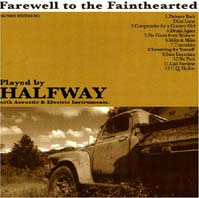
Farewell To The Fainthearted is the album you didn't know you had to have until you heard it.
The seven members of Halfway, including the Dublin born brothers Noel and Liam Fitzpatrick have taken Americana, alt country, country rock, or whatever else you want to call it, back to the wrong side of the tracks. These are songs about lives lived against a backdrop of rusted, broken trucks, dirt roads and stray dogs.
Farewell To The Fainthearted is a gritty, no frills slice of realism, set to unforgiving guitars played with an energy and belief that can only come from personal experience. Whilst tracks like Get Gone and Compromise For A Country Girl are anything but compromises, Halfway manages to avoid presenting Farewell To The Fainthearted as either bleak or depressing.
The rock n roll simmers and bubbles and its country influence, largely courtesy of the Fitzpatrick brothers, hasn't been softened by city living. But what Farewell To The Fainthearted does, almost imperceptibly, is draw the listener into its web. In real life, love is never clean cut and there's a kick in the teeth lurking round every corner for all of us.
Halfway play the soundtrack to an imperfect world. However in the midst of Farwell To The Fainthearted lies Miles and Miles Of Love, a song so tender that it appears that the band must have been caught in an unguarded moment revealing their gentle side. It's made all the more poignant because it seems so isolated.
Farwell To The Fainthearted is a complete and self-contained album, nothing on it requires anything that the band and a small and select group of guests can't supply. It's stuffed with catchy, layered melodies carrying beautifully written and constructed lyrics but above all it generates its own heat. Even the accursed 'hidden' track works well, Lowell George's Willin takes the band from its native Australia and plants it firmly in its spiritual home, southern USA. Halfway? Not a bit of it this is a band that's already there.
Michael Mee
It don't seem any time at all (tho' it must be nearer ten years) since my first encounter with the Yorkshire-based Hall Brothers (aka Nick and Duncan Hall), at Otley Folk Festival (OK, where else?!), where I was impressed by these Young Turks who had real attitude and a hefty vocal, guitaristic and writing prowess, a distinct feel for the tradition, remarkably good taste in covers and a keen grasp of showmanship (if then bordering on the showoff!). Over the intervening years they've never disappointed, but they've also continually developed their craft, greatly helped by fellow-muso John Carey in particular (to whom the Halls' latest CD, on around half of which he sports his trademark violin, is dedicated). Songs From The Shore is definitely the Halls' best recording yet, and sensibly majors mostly on acoustic-roots-rock rather than folk, albeit that it sets off with a cracking, full-tilt rendition of Child Ballad No 243 (aka House Carpenter). The remainder comprises self-penned material, six songs by each of the brothers - and mighty fine they are too, displaying a bold maturity and an increasingly literate expressiveness. Many of the songs just cry out to be covered, stuff that wouldn't disgrace a Show Of Hands or latterday Fairport album methinks, with a grand sense of melodic construction and proportion that shows how much they've learnt from their peers. And you're also likely to have fun, I'll bet, spotting the sneaky, what you might term "closet" folky, references, idiomatic twists and quirks that betray the brothers' formative influences but in a thoroughly nice way (like Another Turning Day's rippling Thompsonesque guitar undertow, and Shanty's sturdy seadog structure). The album's title reflects a certain inclination towards "watery" or nautical metaphor, and gives the CD an extra level of artistic unity alongside other purely musical elements such as the Halls' superb acoustic playing and their signature excellent solo and harmony vocal work which is still is there in abundance as you'd expect if you've heard their previous work. The surprise for some will be that at the other end of the scale from the brothers' brand of delicate modern acoustic-based balladry several tracks also have a rather harder, kickass edge with full and effective use of electric guitar with drumkit (courtesy of the aptly-named Nic Shipp) high up there in the mix. And bloody good they all sound too! Oh, and any violin duties not undertaken by John Carey are beautifully fulfilled by Hannah Bunyan; all other instrumental parts are played by the Halls themselves, naturally. The whole album has a great live vibe to it, and the recording's clean and positive (cheers, Andy Bell of Spike Productions). My verdict, then – hell, this is a supremely "shore-footed" product, lads, and pretty much a towering achievement!
David Kidman
Chloë hails from Australia, and Outside, her fourth album release, is targeted as the one that will break her through to audiences in Europe (where she'll be touring during September). It takes what's described as the 60s-70s singer-songwriter aesthetic of her third record (White Street), and marries it to an eminently approachable brand of new-millennium acoustica. That entails gentle and engaging (but at the same time highly assured) vocal work, pleasingly mature songwriting and appealing, carefully conceived small-ensemble arrangements.
The musical style I still find more often than not very redolent of the late-60s, and it's undoubtedly more acoustic-pop than folk, but it doesn't ever insult your intelligence, while Chloë's songwriting makes a virtue of simple expression of undeniable truths, expressed with a graceful acceptance of adversity, and this charming simplicity is matched by a comparable quality in her melodic invention and in her vocal performance and delivery. It's good that Chloë's singing is refreshingly free of mannerisms (except perhaps for the pronounced aspirant on some tracks and an over-tremulous fragility on one or two songs eg Dance With Me). The album's highlights for me are the delectable uke-flecked Born In The Morning, the chiming opening title track and the bolder orchestrations of It's Not Too Late and Nothing Really Matters (nice production by Greg Arnold). While admitting that not every one of the disc's ten songs will necessarily score top marks for memorability or longevity, there are more than enough delightful experiences to encourage the listener on to make further discoveries.
Lest my words cause you to feel I'm damning with faint praise, I must say that subsequent playthroughs have revealed deeper pleasures beyond an initial impression of slightly lightweight. Chloë's a generous free-spirited soul, and it actually proves very easy to warm to her music.
David Kidman September 2009
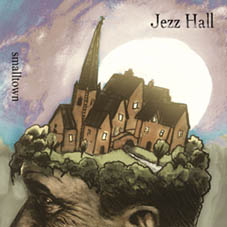
Although Jezz hails from Cambridge, he's best known on the local folk and acoustic club scene of Nottingham, where he moved in the 80s. Bravely, his début album consists entirely of his own compositions, and these mark him out as (at his best) a striking songwriting talent. As such, he's been endorsed by Pete Morton, whom he's supported on tour. Jezz's biog also lists him as having contributed to an album called The Songmakers Project (which featured Billy Bragg, Bert Jansch, Eric Bibb and Emily Slade among others), but Smalltown is the first I'd heard of Jezz, and on this evidence I sure hope to hear more. Jezz has an assured and vital presence both vocally and instrumentally, as well as a telling confidence in his own lyrical abilities, and the excellent recorded quality of the self-co-produced Smalltown brings these qualities out to perfection. Some accompanying musicians are used sparingly on a mere handful of tracks, but they in no measure detract from Jezz's own distinctive personality. Jezz's singing style is attractively husky, almost casual at times yet with a compelling approach to phrasing and onward momentum that never allows your attention to drift; surprisingly, as on Favourite Girl, I found myself detecting shades of Donovan in the precision of his delivery, but without the latter's feyness. Musically, most of the album is gently powerful and thoughtful, partly influenced by folk tradition and partly by the contemporary acoustic troubadours. Seven Days had me visualising Nick Drake accompanied by Davy Graham, and Baxter's Mines seemed a credible contemporary take on the traditional Blackleg Miner, from which it clearly derives both structure and inspiration. Fortune's Waters is a beautiful (if maybe Dylanesque, at least in that man's more traditional mode) lonesome traveller's ballad, while Secret Heart has a similarly engimatic, yearning simplicity that recalls vintage Michael Chapman, and Closer To You has all the ramblin' wistful bluesiness of Chris Smither or perhaps even Mark Knopfler. The "odd tracks out" inhabit an altogether jauntier bluesy-ragtime groove which I more quickly tired of in comparison (halfway through track 7 in fact) and Prescription Blues, which owes much to the Wizz Jones school of prime acoustic bluesiness; in retrospect, perhaps the title track oughtn't to have been placed right at the start of the CD, since it gives a misleading impression of the musical idiom of the remainder. Whatever though, this is still a really very impressive set of songs, which should propel Jezz straight into the front rank within the consciousness of like-minded discerning listeners; in truth, I've played it a hell of a lot in the month since it arrived (which explains/excuses my delay in getting this review in!).
David Kidman
The Hall family of Horsham, West Sussex was a singing family, yet unlike the members of other more well-known "singing families", Mabs and her four sons would sing mostly at family gatherings; they did not frequent folk clubs, and not all their songs were folk songs. One of the sons, Gordon, developed his own arguably quite idiosyncratic singing style entirely independently of the "folk" scene, for he had no specific knowledge of that scene until a visit to a folk club in the early 1980s and a chance reading of a folk magazine article about Bob Copper, whom he subsequently visited with his mother. These occurrences made him realise that his mother's "quaint old songs" were more important than he'd hitherto realised, and so he devoted his retirement to researching these and other songs from the folk corpus. Word got round about Gordon's dynamic singing and unusual songs, and Mike Yates recorded both Gordon and his mother in the mid-1980s.
Gordon (who died in 2000) was a fine singer indeed, with a truly unmistakable, forthright and intensely commanding (and loud!) delivery and a rich, full tone. Some distinctive features of his style (such as his penchant for emphasising ends of lines with an exaggerated "ya") verge on mannerism, and not everyone will warm to his singing (some folks found it positively intimidating!), but I find it easier to get used to than the interpretive quirks of some other more widely feted traditional singers and in the end Gordon's striking individuality and his compelling passion amply win through any initial misgivings. Mabs was a singer of charm and character too, and although by the time she was recorded (then in her 80s) she lacked the evenness of tone and delivery with which Gordon was blessed she was still in remarkably good voice. The drawback was that by that time she had forgotten many of her songs, and so the majority of these recordings of Mabs are either short songs (including fascinating variants such as Cecilia) or fragmentary performances. This disc has 28 tracks, out of which Mabs gives us 16 songs and one decidedly macabre little poem, whereas Mabs duets with Gordon on just two selections (including a strange – to our Coppered ears! – variant of Come Write Me Down). The remaining ten songs present Gordon in typically formidable full fettle, and although he was known for singing the fullest versions of his songs he would equally readily crop or omit verses in performance depending on his mood or how he was being received. Having said that, none of his renditions ever seem to drag or go on too long – you can decide for yourself on the marathon (eight-minute) rendition of The Molecatcher or the comparatively brief six-minute Outlandish Knight and Horsham Ram – a variant of the famous Derby beast. Gordon's take on The Bitter Whaling (amusingly typo-ed as Wailing on the outer track list!) Grounds is suitably persuasive, and economic at just two and a half minutes, while his gloriously stentorian Sweet Lavender street-cry would certainly persuade me to buy his wares! One or two of his performances (eg Blandford In The Mud, Salonika) verge on the "shouty" maybe, but I'd much rather hear this kind of unbridled involvement with a song any day than experience an anodyne rendition.
In fact, I find Gordon's singing both captivating and hugely enjoyable; if you do too, then I'd urge you to acquire his solo CD Good Things Enough (on the Country Branch label, and also available from Veteran's mailorder service), also seeking out the four other Veteran releases which include tracks by him. Even if you're not totally won over, you can't deny the importance of this treasurable release (which by the way comes with the usual excellent, fulsome standard of booklet) in bringing to our attention two under-appreciated traditional singers.
David Kidman February 2009
Releasing his debut album back in 1988, Hall spent four years fronting The Stormbringers (the band in which Michael Weston King played prior to forming The Good Sons), releasing four albums before relocating to Nashville for a solo career. Three further critically acclaimed albums followed before he returned home to open his Voodoo Room recording studios. A fifth Stormbringers album followed in 2001, but then he dropped below the radar for a decade, finally returning with two albums, Songs From The Voodoo Rooms with Ian Bailey and, his first solo album in 15 years, That Old Brand New, both of which sadly appear to have passed me by.
So, the arrival of this new album was like meeting up with an old friend again after many years and discovering that, while they may look and sound older, they've matured with time like a fine whisky. Again joined by Bailey on vocals and guitars with assorted guest contributions on mandolin, banjo, lap steel, dobro, and strings, it's an acoustic collection of roots-country music variously grained with Texas dust, Appalachian pines and honky tonk fumes. Hall's voice has seasoned and deepened into a warm, slightly husky twang which on barroom weepie I Can't Believe She's Gone sounds somewhere between George Jones and Johnny Cash while the beautiful reflective Long Mynd Mornings has definite hints of John Stewart.
Opening with the laid back shrug of The Feel Good Factor Blues, there's a solid fist of uptempo numbers, ranging from the slide driven six minute One Step Ahead Of The Blues and the TexMex country rock feel of The Enemy Within to the upbeat fiddle accompanied Stick Around Bojangles and a punchy cover of the Old Crow Medicine Show's part Dylan-penned Wagon Wheel.
These are well balanced by a fine selection of slower or mid-tempo tracks; the metronomic rumbling and spooked dobro of A Country Mile From The Shore's reflections on a life lived, a steadily strummed A Small Price To Pay which, complete with harmonies and harmonica, could easily pass for an Everlys country classic, the twang and warble Still My Reason Why and the terrific close harmony Red Dirt Roads about a girl leaving home and baby to become a big city singing star and finding only a jar of empty dreams and an audience of drunks and losers.
The only niggle is that there's no lyric sheet, but with this and a second My Darling Clementine album due, classic old school country has never been in better British hands.
Mike Davies March 2013
This master melodeonist from Norfolk is a real character with a quirky and individual style and a determinedly uncompromising outlook on life. And a brilliant cartoonist, by the by (see the album's cover!). Stubbornly but entirely legitimately, Tony revels in the sound of his antique Hohner melodeons with their noisy key-clicking - which as far as I'm concerned gives his recordings a special appeal, and my ears at any rate soon grow accustomed to it! And yes, it's true, there is no instrumental multitracking whatsoever on this disc, for one of the features of Tony's playing is his ability to sound like two people are each playing a melody line at the same time. This is but one element of the wide appeal of his performances: another is his enthusiastic embracing of an eclectic range of material, all of which he carries off with acute flair. Tony shares with Brian Peters and John Kirkpatrick (to name but two) the distinction of being an able-fingered squeezer who can credibly sequence The Abbotts Bromley Horn Dance, waltzes both lovely and lively, some ragtime, a Jimmy Shand piece, a Howard Keel showtune and even a bizarrely soulful rendition of Strange Fruit (yes, the very song Billie Holliday made famous) - and do them all justice. Not to mention that inimitable Norfolk accent and ripe sense of humour on his own Down On The Hard (careful!), The Haddock Song (the finest - and that's of-fishial!) and the quite touching Binder Twyne, and, purely instrumentally - probably best of all (or should I say "hall"?!) - his own Beccles Stomp, a deliciously bluesy New Orleans-style number. Only one puzzle remains: Tony's defiant but slightly self-deprecating booklet notes term his Enigma Of The Southwold Tide "the most boring song ever written" - no way! This whole CD is a totally honest, proud and immensely enjoyable little gem full of goonishly-delightful moments, to whom no-one in their right mind should fitfully admonish "Shut up Beccles!"
David Kidman August 2008
A real historical artefact, this, as it contains some long-thought-lost recordings which have recently surfaced, and whose provenance requires a little explanation. If last year you purchased the recently-republished Halliard: Broadside Songs book you'll have learned that the Halliard (=Dave Moran, Nic Jones and Nigel Paterson) had in 1968, as part of their original deal with Saga Recordings, been permitted to record demos of 15 English broadsides in readiness for a projected future release. Although Dave had kept the master tape safe, shortly afterwards the Halliard itself were no more; that tape therefore lay gathering dust, coming to light again only last year during a house clearance. The recordings have now been remastered by John Bushby, taming the original "artificial" stereo image, and they now sound pretty good for their time. And for the most part, the singing and playing therein has a tremendous vitality. Of the 15 tracks, ten comprise settings of the original broadsides to tunes by Nic and/or Dave, and excellent these are too, not in the least dated. All are interesting at the very least, and some - for example Nic's intriguing and unusual new melody for Death Of Nelson, the tricky metre of his Bold Captain Grant, the gentle resignation of Sad Lamentation Of John Kington (somewhat reminiscent of Paul Simon!), and Dave's lusty Turpin's Bonny Black Bess and With Wellington We'll Go - make for particularly satisfying listening. The remaining five of the 1968 tracks are renditions of songs which fitted the character of the urban broadside - and, typically, the overall theme of the collection, in that all the songs deal with the heroic or the villainous. This latter category includes Wild Colonial Boy, Ballad Of Dick Turpin, Patrick McCaffery and (Ewan MacColl's) Ballad Of Timothy Evans. The disc's unofficial "theme" provides a ready-made excuse for it to lead off with a set of what we now recognise as better-known material, but this may be a mistake as I feel the first four of these are the least successful in terms of the treatments (or it may be, of course, that the songs are over-familiar or that I just don't respond to the songs themselves). Finally, as an addendum to the 15 tracks from that 1968 tape, The Last Goodnight! presents three tracks recorded earlier this year: one (Rakish Young Fellow) is sung by Nic with Graham Hodge playing the guitar accompaniment, and the remaining two are sung by Dave with John and Malcolm Bushby accompanying. These final three tracks complete the available audio versions of the entire canon of broadsides featured in the aforementioned book. All told, this is an essential acquisition for admirers of Nic Jones and the Halliard alike, with honest and vital performances that transcend mere historical-artefact value.
David Kidman November 2006
Broadside Songs Of The Halliard (Mollie Music)
The Halliard, you may recall, was a trio (Nic Jones, Dave Moran and Nigel Paterson) who composed and sang some of the great songs of the 60s Folk Revival, many of which have since become part of the oral tradition; in 1968 they recorded, for Broadside Records of Wolverhampton, an LP of Broadside Songs.
This brand new publication reviving the Halliard name takes pride of place in the review section this issue, as for many it will be an essential acquisition. It takes the form of an A4 songbook with companion CD. The book contains 30 broadsides set to tunes composed by Nic and Dave (together with an instrumental piece by Nic with Nigel). The companion near-hour-long CD contains 17 tracks (16 songs and the aforementioned instrumental piece, all appearing in the book itself), ten of which are new (2005) recordings (recorded and mixed over 12,000 miles - for Dave now lives and works in Hobart, Tasmania!) on which all three men sing, Nigel played mandolin and recorder and Nic's son Joseph played guitar (thus keeping most of the recording in the Halliard "family"). Nigel's current musical partners-in-crime Ralph Jordan and John Dipper were also heavily involved, largely in the mastering and production of the recordings, while the whole project has been ably masterminded by Nic's wife Julia. And it's a hell of an achievement too, notwithstanding its scholarly, historical and yes, nostalgic importance.
So now to deal with the individual elements of the package. First the book: well it's a handsome volume, which presents the songs in what one might call standard desirable format, one song per page, with stave notation for tune and first verse and/or chorus and remaining verse texts below, each song further illuminated by an original illustration. Inserted into the middle of the book, on coloured paper, is the full transcription (six pages, plus two of notes) of the tune Tae The Weavers Gin Ye Go. The songs are preceded by a useful "short historie of the Halliard" penned by Dave, which sets the record straight once and for all on some long-and-hard-disputed myths (such as the real story behind the creation of the tune to Boys Of Bedlam!) and a discourse (by Nic and Dave) on singing broadside songs, then succeeded by notes on the songs (Dave), and brief articles on accompanying (Nigel) then transcribing the songs (John Bushby). The typefaces chosen are just right, clear and readable, and layout is attractive and easy on the eye. My only criticism on the book's presentation is that the songs are not given in the same order as on the companion CD, which would have made more sense rather than necessitating reference to the index of contents each time.
Moving on to the CD then: what more can one say except that these are honest and straightforward performances which really do bring the broadside songs to life. They're very much in the robust, perfectly accessible style that has been accepted and used as a kind of template ever since (and which the Halliard had found already in practice around the clubs when they first went out to tour the material!), although it's fair to say that by today's more eclectic standards it might be seen as somewhat formalised. In truth however, it hasn't really dated - at least, in the sense that you can still hear many club singers performing songs such as Calico Printer's Clerk and Lancashire Lads in the "approved" style heard on this CD, so much so that it might appear that the 30-odd intervening years have seen little appreciable change in "popular-folk" tastes or performance style. Whatever your take on that issue, it's clear that the quality of the singing and playing on the CD is consistent between the eras and (whether modern or original recording) holds up just fine. And of course it's good to hear Nic singing again; that in itself represents considerable progress and should not be underestimated.
Although the book does not precisely differentiate the temporal provenance of the individual tracks, I'd guess that the first seven are those taken from the original 1968 master; and aside from some occasional minor waverings in pitch and a small mastering blip that occurs around twenty seconds before the end of track 6 (A Thousand Miles Away), the engineers have done a splendid job and the recordings' age is only betrayed by an intermittent slight flakiness in timbre of the instrumental accompaniments on these tracks - certainly not worth worrying about in any way. I should by now have written enough to convince you that this fine publication is very much worth having; it's very reasonably priced too, at only £25 (plus £1.50 for UK P&P), available either from Mollie Music, 52 Newland Park Drive, York YO10 3HP or
www.nicjones.net
www.fishrecords.co.uk
David Kidman
I probably say this every time Kieran releases a new album, but his latest offering (his 19th studio album!) is invariably perfectly consistent in quality with all that's gone before in his long career: Kieran's singing voice is immediately recognisable, as are the distinctive traits of his personal expression and musical idiom. It's not an easy trick to pull off time and again when it could easily become so predictable, but Kieran always manages to ring the changes and keep the listener's interest even when exploring familiar themes in his songwriting.
This time round, the devil's even more in the detail, so to speak: for this set of brand new songs has a well-defined sound, contemporary acoustic with a strong electric contingent that enhances rather than swamps essential elements. As ever, Kieran is adept at surrounding himself with a crack backing crew – here headed by the amazing guitarist Jimmy Smith (playing both nylon-strung and electric models), with long-term collaborator percussionist Yogi Jockusch, with Percy Pursglove (double bass), Manfred Leuchter (accordion) and Marion Fleetwood (backing vocals) in tow.
The songs themselves radiate Kieran's typically assured demeanour, his solid, unflinching and yet supremely sensitive stance; inevitably there's still a hefty measure of anger and aggression (largely at the state of the world) that's to be worked through, and the opening pair of songs kinda gets it out of the system, by railing against the lack of viable alternatives (the title track) and an anthemic expression of our understandable lack of faith (God Has No Plan). Kieran so often voices one's own innermost feelings in language that's so simple we wonder why we've not written the songs ourselves, but it's Kieran's skill as a songwriter that makes something special out of these reactions, beliefs and experiences. This applies whether Kieran's examining political issues or helping us to come to terms with romance, relationships and "real life", and he's almost always able to derive a measure of comfort from adversity.
Several songs are air-punching homilies that make optimum use of devices such as repetition, staccato rhythms and smart rhymes to get their messages across. Then, on the other side of Kieran's songwriting coin, we find the powerful, world-weary rueful remembrances of October Moon and New Year's Day and the tender entreaties of Year After Year. It's All Up To You is another confidence-builder much in the vein of (I May Not Have) All The Answers, contrasting with the helpless acceptance of an unexplainable turnround situation that produces a Persona Non Grata. Finally, the enigmatic pairing of Long Lost Friends (distant cousin of that Angel Of Paradise?) with an uncredited hidden bonus track closes the disc stylishly.
Yes, sometimes it can feel like it's always Closing Time In Paradise, and there are still occasions where a series of thoughts and ideas is left hanging in the ether after two verses and (you feel) might usefully be developed more, but invariably Kieran's songs still make you think and leave you thinking, which is never a bad thing. Long may Kieran keep coming up with provocative new songs to make you think again and over again.
David Kidman November 2011
Having recently returned from a year's sabbatical, Kieran has shown with some storming live gigs that he's lost none of his touch, his bite, his winning way with an audience or his powerful presence; or, on the evidence of this CD of (almost all) brand new material, his gift for creating memorable and passionate songs.
Each new Kieran Halpin CD brings at least a couple of immediate standouts, songs that just couldn't have been written by anyone else and employ Kieran's distinctive trademarks yet still have something significant to add to his total œuvre. In the case of The Deal We Made With God, pride of place may well go to So Long John, a simple yet powerful and heartfelt tribute to the late John Wright (who was a very close friend). The anger and desperation of Still Bleeding Wound also hits hard, as does the regretful The Road Ahead, another very relevant song tackling Kieran's familiar preoccupation with examining the clash between past and future in the light of present feelings and experiences. Road Train Driver is another typically thoughtful slice of Halpin life-philosophy, set to a catchy melody and driving beat, while Bankers is a right-on vituperative piece with a particularly catchy chorus.
Kieran's backing musicians on this latest disc comprise his regular collaborators Maart Allcock and Yogi Jockusch along with guitarist Jimmy Smith and jazz keyboardist Dave Milligan; this is an ideal ensemble, other than that on the first three songs (the title track especially) Dave's glitzy Wurlitzer tones sound too jazzy-lounge in style for the material, diluting its impact I feel. While one or two of the songs will undeniably come across more intensely and make a more immediate impact in Kieran's visceral live voice-and-guitar setting, the quite lengthy travelogue Found Australia, which palls a little in live performance, seems to work better on record with its playful country-mode geetar frolics.
Finally, after the nine new songs, the CD concludes with a reworking of Kieran's anthemic 1995 classic Glory Dayz, which gains extra poignance with its additional verse written in direct personal tribute to the brilliant guitarist Chris Jones, with whom Kieran worked closely for over ten years and who sadly died in 2005 shortly after recording for Kieran's CD A Box Of Words And Tunes. Well there's no need to worry – Kieran's back, on form and in fine voice, and his fans should not hesitate in acquiring this new CD.
David Kidman August 2009
The first of two new releases from Kieran this year is a live album recorded at various British venues in November of last year during his tour with guitarist Chris Jones. Kieran and Chris had released an earlier live duo album back in 1996 (Glory Dayz), which was notable for its winning combination of exceptionally strong songs and playing that was vivid and fiery yet very subtle. Moving Air takes the two's working relationship a stage further in accomplishment, with some mightily beautiful intricacies of texture and harmonics woven in among the power chords - a combination that suits Kieran's songs down to the ground.
The album's title proves extremely accurate - play it loud and you can feel the air move, it positively shimmers in the heat haze of the cascading, rippling strings, and the recording perfectly conveys the intensity of the live experience. The music is gutsy, honest and uncompromising, with Kieran's distinctive, gravelly vocal as compelling as ever; it's ostensibly quite abrasive, but Kieran's always proved himself capable of finer vocal shadings too, as on the achingly beautiful Angel Of Paradise and when he effectively revisits an earlier song like No Turning Back (here given a thoughtful new slant). On the most recent song here (Good Reason), Chris shares vocal duties, though while proving himself adequate to the task his quiet tones form almost too much of a contrast with Kieran's own matchless, forceful delivery.
The majority of the songs on this new album don't duplicate Kieran's earlier live releases, and they range over a wide timescale, emphasising the sheer consistency of his world-vision over his long career. Even on those songs which have appeared before on his live albums, Kieran always manages to find something new to say, while his most recent writing shows him still developing his themes and concerns in a credibly contemporary fashion. And I've already enthused about the wonderfully complementary guitar work of Kieran and Chris, whose contrasting styles that coexist admirably yet also spark each other to fine new expressive heights.
David Kidman
Neil Halstead - Sleeping On Roads (4AD)
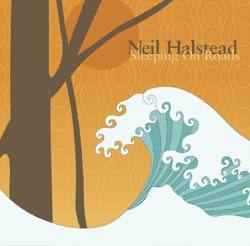
Gestating over two years, the solo debut from the lead singer of Mojave 3 isn't exactly any radical musical departure from the day job. Which means more Nick Drake infused delicately miserable country-folk, pretty tunes and hushed lazy vocals. Their bare acoustic guitar bones fleshed out with banjo, cello, trumpet and keyboards, it's all very pleasant stuff, the Leone touches to Driving With Bert especially attractive with the gently rolling leafy mood of Two Stones In My Pocket, the slowly swelling guitar-borne dream of flying free that's See You On Rooftops and six minute reverie Dreamed I Saw Soldiers the most obvious highlights. But with no obvious personal agenda to the songs themselves and no sense of exploring musical directions frustrated by the band confines, it doesn't really seem to have any reason for its existence other than proving he could do it.
Mike Davies
Hamell on Trial - Tough Love (Righteous Babe)

Hamell on Trial is not for you if you prefer your music gentle and singer-songwritery. You are excused and we'll see you later...
OK, now they've gone and we can get down to Ed Hamell's latest collection of acoustic-powered, folk-punk genius. It's wild, funny as hell with lyrics that slice like a knife at a crime scene. What you get is a guy with big opinions, stories from which to make film scripts and a lot of acoustic strumming over inspired percussion. Some of his stories are true (Downs, his recovery from a near-death car accident with the aid of a pharmacy of morphine and derivatives), or he's the voice of an angry God (Don't Kill, 'what part of Thou Shalt Not Kill don't you understand?'), and of course he's a righteous ranter against those sell-out rock stars and politicians with their mediocrity and loss of integrity (Halfway).
Surreal at times and poking fun or the finger at a multitude of targets, there's a hilarious bizarre internet romance (First Date), a small tale of blackmail and a gang rap (Dear Peter, When Destiny Calls), with guns accenting various verses - not literally - and Hamell firing words of warning (There Is A God), and - maybe literally - hitting dustbin lids (Tough Love)! But there's angst-free beauty and love in an after-life (Hail), the here and now (Everything & Nothing) and the final lullaby to his baby son Detroit.
Ani DiFranco joins him (All That Was Said, 95 South, A Little Concerned That's All, Worry Wart). No sweet harmonising, she does a fine job in edgily keeping up with the Hamell whirlwind. He's supported her on tour and she's extended her support for him by signing him to her Righteous Babe label.
Tough Love is a Triumph. No 'singing between the lines', Hamell comes at you with a punch and this one is his best right hook. Straight into my pile of Best Albums of the Year.
Sue Cavendish
Hamell on Trial - Choochtown (Evangeline)
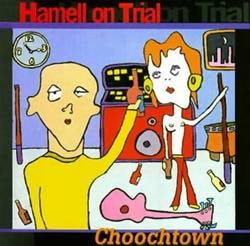
Have you ever heard an acoustic guitarist wreck his PA? Astonishing one-man-tornado Hamell on Trial did at the Borderline, London, in August. Hamell is a showman who shocks. He's a wild weapon of communication - an urban folk-punkster, a thrash-rocker who fires songs at you which are not exactly hot on forgiveness and compassion. He strums like a man possessed, he's outrageously funny and utterly compelling.
Brooklyn-based Hamell's repertoire is death, guns, race-relations, murder, prison, drugs, twisted love and sex; if it's x-rated and politically incorrect, Hamell has a wicked and witty tale to tell, talking-blues/rap style. Choochtown feels very 'live' though some tracks are supplemented by drums, bass, electric guitar, trumpet and samples.
Let's face it, this isn't sensitive stuff, so if you in the mood for something pretty and singer-songwritery, this one isn't for you. On the other hand, if you like your songs honest, bad and bloody - and you think Bob Dylan, Lou Reed or Loudon Wainwright are a little tame these days, Hamell's your guy. This man is brilliant and he's at The Borderline again on November 2nd.
Finally, a joke from Hamell's on-stage, mostly unrepeatable banter, "What has four legs and an arm?" "A Rottweiller!"
www.hamellontrial.com
www.evangeline.co.uk
www.borderline.co.uk
Sue Cavendish
Andy Hamill - Bee For Bass (Emu)
As double bassist for hire Hamill's worked with a diverse array of names, from Nitin Sawhney, Luke Vibert and Theo Travis to LTJ Bukem, 4 Hero and Carleen Anderson. As Rebecca Hollweg's other half, he also played on and produced her album June Babies. Now he's finally made his own and, not surprisingly, several friends dropped by to return the favour. Designed to showcase his collaborator's songwriting talents, while Dear Love's Hollweg/Jeb Loy Nichols duet is soulful roots, the album's primarily coloured in various hues of jazz, ranging from Shea Segar's sensual smoky Ricki Lee Jones style Camel's Back through 4 Hero/The Roots singer Ursula with Four Minutes of Fun, a spoken jazz poem set to upright bass, flute and tabla and scat vocalist Anita Wardell tackling Annie Ross/Art Farmer Farmer's Market while her own Why Do You Cry? gets a sparse 3am cellar touch from Trudy Kerr to Kenny Young taking on a percussion heavy reading of Hollweg's Getting On and sax man Chris Bowden improvising an arrangement of his own instrumental Mothers And Daughters Now Mothers.
Elsewhere Carleen Anderson slow burns in a Billie H stylee on Falling, a tune by double bassist Harvie Swartz to words by Hollweg with Tony Woods on alto while, underlining the swapfest relay race nature of the album, Who Chooses The Seasons?, a song she duets on Omar's album Music, is handled here by him and Valerie Etienne, and Ben Castle, who produced Anderson's Alberta's Granddaughter album turns up to provide bass clarinet on Hamill's mutant tango Sally Tomato.
There's quirkiness too. Tony Penultimate puts his ukulele to one side to sing the mock cabaret comic song This Was Your Life (featuring a choir of Hollwegs and Andy's mom Thelma) and, just to bend everything out of shape, The Planet Formerly Known As Moon is a surreal soiree in the David Lynch lounge with Mark Murphy on spoken vocals, Wardell on kazoo and Seger tap dancing. It takes a few listens, but it sneaks into the bloodstream. And it goes without saying double bass aficionados should purchase forthwith.
Mike Davies
The quite-newly-launched Cherry Red subsidiary label Esoteric is currently doing a splendid job of reissuing all the albums of celebrated songwriter (Josephine) Claire Hamill, who was also quite recently hailed by Record Collector mag as "the finest vocalist you've never heard" (yes, I do like the presumptive eloquence of that description!). As a taster, though, comes The Minor Fall, The Major Lift, a handsome two-disc retrospective compilation covering virtually the whole of Claire's career to date (1971 to 2005) and spanning the records she made for Island, Konk, Beggar's Banquet, Coda and finally her own label. If I'm totally honest, I don't entirely connect with some of the prog and then New Age modes with which Claire became engaged from the late 70s through to the late 80s, a blandness too far on occasion for me perhaps, but the sample tracks from the albums made during that period encapsulate what she was doing pretty well. In all, it's actually a very sensibly programmed compilation, and certainly whets the appetite for the forthcoming projected complete reissues of all the individual albums over the next year or so and prompts a re-evaluation on my part. And even Claire's staunchest fans will probably not own all of those albums!
So to those issued thus far... One House Left Standing was the product of the ingenuous Claire's signing with Island at age 16, and ambitiously showcased her nascent songwriting and her enviably pure and uncannily cultured singing voice on an unexpectedly wide-ranging set of songs, mainly penned by Claire herself (some with her then-boyfriend Mike Coles). The record started out stylishly, with the kittenish Dixieland swing of Baseball Blues (whoa, what an opener!) and moved through the assured, stately chamber-folk of The Man Who Cannot See Tomorrow's Sunshine, The River Song and the chanson-like Where Are Your Smiles At?, also taking in the classic Jon Mitchell song Urge For Going, on which Terry Reid was drafted in to play guitar (other guests commandeered by Chris Blackwell for the sessions included John Martyn, David Lindley, Paul Buckmaster, Rabbit Bundrick and Free's drummer Simon Kirke). It's a persuasive set that wears very well indeed, and its ten tracks are topped up with two bonus cuts, the lengthy and intense single B-side Alice In The Streets Of Darlington and a cutglass cover of Lindisfarne's Meet Me On The Corner featuring Gerry Rafferty and Stealer's Wheel as backing musicians.
1973's followup, October, was an even more mature record, astonishingly so for someone of Claire's relatively tender years; I guess you could say that while in one respect consolidating Claire's debut it was a little more orthodox in basic sound and approach, possibly due to the deployment of a more consistent (although to my ears a little too consistent) backing crew. A more pronounced Joni Mitchell influence also seemed to be present, especially in the melodic contours of songs like To The Stars. Produced by Paul Samwell Smith, October incorporated backing by Cat Stevens' band of the time (Jean Roussel, Pat Donaldson and Gerry Conway) and the American trio Smith, Perkins and Smith (whom Island had just signed). There are some sensitive string arrangements too (courtesy of Nick Harrison), and the final track Peaceful was even recorded alfresco in the cold in the middle of the night! Highlights of this generally strong set of songs have to be the pounding Speedbreaker, the profoundly touching I Don't Get Any Older, the tenderly beautiful Warrior Of The Water and the enigmatic The Artist. The odd-track-out is a quite strident cover of Jimmy Reed's Baby What's Wrong (With You) which, well done though it is, breaks the flow of the album's original second side somewhat. Sadly, there are no bonus tracks with this reissue - but, as with One House..., the booklet contains a brand new reminiscence by Claire herself which throws further light on the songs and the circumstances of the recording.
The third of the reissued albums, Voices, propels us forward 12 years to 1985, by which time much water had flown under Claire's musical bridge. At that time, Claire was settled and married, and had just supported Rick Wakeman on a national tour. At the instigation of her husband Nick, Claire dipped her tentative toes into the then-nascent New Age genre, recording a whole album based around the concept of a vocal interpretation of the changing seasons. Using then-pioneering layering techniques to create a thick, ethereal soundscape from her own extraordinary vocal performances, Voices proved a startlingly original record which genuinely broadened musical horizons, astounding listeners and defying preconceptions of what might "sell". Heard now, it seems a very-80s artefact, rather akin to Kate Bush without the outlandish eccentricities I thought, and definitely a precursor of what's now regarded as the Enya sound especially in its wash of swooning, shifting vocal colours - but it doesn't sound dated in the way that much 80s music does, and it contains some inspiring and uplifting composition. From the vantage point of two decades on, it's easy to underestimate how inventive and original this music was back in the mid-80s, and this repackage allows us to reassess its magic in all its aural splendour.
The fourth album to be reissued in this series, Love In The Afternoon, dates from 1988, a time when Claire was on a creative roll after the massive success of the Voices album. It's a collection of songs without an overall concept, and although it doesn't suffer from disunity in that sense and there are some fine songs among its nine tracks it still doesn't quite satisfy as an entirety. Trees, Japanese Lullaby and to some extent Glastonbury and the title track are to some extent all style-defining within Claire's later output, but the album's standout is probably Beauty Of England (which is drawn from an aborted concept album Domesday, about the Battle Of Hastings). Love In The Afternoon shares with many albums of its time a distinctly 80s synth-dominated backing, which now makes it sound quite dated (more so than Voices), and this dilutes the impact of Claire's writing somewhat for me. It would be interesting to hear some of these songs with a less elaborate textural backdrop.
David Kidman August 2008
Best known for a string of albums on Island Records in the early seventies, Middlesborough vocalist Claire Hamill has never stuck rigidly to one formula, reinventing herself along the way as New-Age songstress, occasional rock-chick singer with Wishbone Ash and conceiving the remarkable 'Voices' album, which featured multi-layered arrangements of Claire's erm, voice!
Released in 2004, her most recent studio album sees Claire return to the comparative comfort zone of singer-songwriter mode, yet several of the songs in this collection stand comfortably alongside the best of her earlier work; the jazz-tinged 'Beautiful Moon' featuring the moody trumpet of Duncan Mackay, a song which would not sound out of place on a record by Madeleine Peyroux or Diana Krall and the bright 'In the Leaves of the Park', as crisp and clear as a brisk Autumn walk.
Claire obviously has a keen ear for a cover and her little-girl-lost vocals are perfectly suited to 'Blue' from the pen of McAlmont and Butler. We also get another chance to hear the beautiful 'You Take My Breath Away', re-recorded due to the renewed interest in her work largely thanks to the surprise discovery of a recorded version of Claire's song by the late Eva Cassidy.
There is an air of melancholy throughout much of this album, even on the uptempo 'Mr Wonderful', but it is an emotion that Claire handles better than most. On the closing track, 'Singer', she proclaims "where did you go, I used to buy your records many years ago." Fortunately for us, Ms Hamill has never really been away - and Claire, if you are contemplating another change of direction, may I suggest a late-night jazz collection.
Chris Groom February 2007
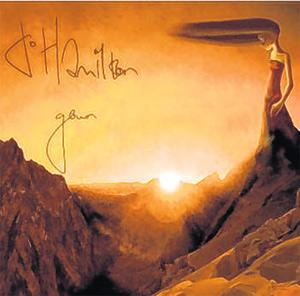
She's been likened to Bush, Harvey and Lennox as well as Regina Spektor and Imogen Heap, and while you'll hear the comparisons, she's still very much her own voice. The album is an exotic musical journey, brushing the multicultural world wings of dreamy celestial pop tinged with Gaelic mist (Exist), cobwebby jazz soul folk (The Bush infused Pick Me Up), airy Brill building balladry (There It Is), the panoramic rhythms of African plains (How Beautiful), and the melting icicle soulful ebb and flow fragility of Deeper (Glorious). Then there's the Weill cabaret shades to All In Adoration with its puttering percussion beats and woodwind trills, the classical hymnal majesty of Liathach's choral beauty and, drawing on her time in Cambodia, the intoxicatingly hushed seductiveness that is Mekong Song.
She's releasing Winter Is Over a a trailer single, a playfully catchy pizzicato plucked strings waltzer that suggests a sort of Oriental Bjork by way of an arthouse 40s Broadway musical. But it's the closing Think Of Me that's the real deceptive killer, a windchime, musical box Gaelic lullaby that floats you away on a pillow of clouds and twinkling night stars.
Sophisticated, sensuous, complex, layered and utterly beguiling, there's a song here called Paradise. A better description of the album would be hard to conjure.
www.johamilton.com
www.myspace.com/johamiltongown
Mike Davies September 2009
David Kidman
"A little gem from a new voice to me; a quick check on the web reveals that this Austin-based performer is, in fact, about ten years into his career and that Receive will be his fifth release.
Starting from country/folk roots he has apparently moved more towards what Americans describe as an indie rock sound. Well there's certainly plenty evidence of a rock edge and drive here, but his roots are certainly showing, too.
Just seven songs of high quality combine a Guy Clark-like fondness for characters and story-telling with a very twenty-first century musical approach. Three tracks of random radio stuff ("reception#1", etc) don't make too much sense to me; I guess it's an attempt to make the songs seem like random unknown voices from the ether too. Nonetheless, bags of atmosphere are conjured from some pretty sparse ingredients; Nathan's warm, slightly fractured vocal on Cinders is sung right up against the mike and supported by an arrangement of great delicacy shot through with steel - reminiscent, I suppose, of one of Lou Reed's painfully intimate songs. If Cinders was on your mp3 and popped up out of the blue I think you'd have to stop what you were doing to drink it all in.
Weary World, on the other hand, demonstrates an ability to make an apparently simple, straightforward tune and lyric carry an awful lot of emotional weight, not an easy trick to pull off whilst Change could have come from Nels Andrews' songbook; it has a similar weighty, considered style to the acoustic guitar sound, an echo-laden pedal steel for the atmosphere and an acute sensitivity for the disappointments experienced in real lives - a long way from the vacuous optimism of pop music.
Receive, in contrast, gets the electric guitar brought out and a pretty fuzzy, heavy sound backed by a thumping drum; Nathan's vocals have the edge required for a very good rock voice and the warmth that draws you in for the quieter, folkier songs. It's a slow-burner, this one, and it'd be well worthy buying or downloading what you can and familiarise yourself with Nathan Hamilton's style before you check him out live; there's hidden treasures here and I think the man could be a real find."
www.nathanhamilton.com
www.myspace.com/nathanhamiltonmusic
John Davy December 2008
It's a bit over two years since Peter's last solo studio recording (Incoherence), but he's been busy over that time, not just with the VdGG reunion tour and remasters but also in supervising the remastered reissues of his 70s Charisma solo albums. All despite having suffered a heart attack, an experience which no doubt played a part in triggering this new set of songs on which Peter reflects on mortality and on considerations of history both personal and public. With admirable, if typically cryptic succinctness, Peter admits that "the main theme here is the long dive down into not being what we were", and in confronting this situation I think he's produced a very fine set indeed, one that ranks with those Charisma albums in actual songwriting power yet doesn't possess anything like the impenetrability or degree of turn-off idiosyncrasy that many music-lovers had often found such a barrier to appreciating his earlier output. That doesn't mean to say that Peter's abandoned the experimental elements in his music - indeed, the urge to forge new and intriguing sonic landscapes is as strong as ever (eg the fragmented voice and treated-piano textures of White Dot); and Singularity is once more a totally solo effort, all instruments and voices you hear belonging to Peter himself. Lyric-wise, the Hammill hallmarks of literate and expressive heart-baring are there in abundance, yet imbued with a new maturity in their freshness of execution. What was once a distinctly inward-looking narcissism is replaced by a worldly realism, often quite self-critical and definitely not devoid of humour. Peter's metaphors are still intelligently conceived, but they're inclusive not opaque, and the music expresses a fragile tenderness amid the sometimes still painful recollection and assessment of a personal situation. Peter uses the key word "singularity" in both senses: an unusual and/or strange occurrence or situation, and a gravitational anomaly (whereby "we are circling just outside the gravitational pull of our personal black holes"). At its most intense (as on Event Horizon), Peter's writing exhibits an expressive beauty that's both accessible and immensely compelling. Now if in the past you were put off more by Peter's intensity, by way of his histrionic vocal delivery, than the actual (admittedly often impenetrable) content of his songs, then I firmly believe that Singularity may be the album to now give you the optimum chance to re-evaluate his music - for although it's still recognisably Hammill, the actual expression of the drama and thought-content within the songs is toned down naturally (not in any way dumbed down, I hasten to add) and, allied to some genuinely interesting musical content, makes for a most rewarding listening experience (and hey, Naked To The Flame even contains a snatch of tune we can whistle along with Peter!). But that doesn't for a moment mean that Peter's compromised his ideals or his talent. Singularity is a grand achievement by any standards, flying defiantly in the face of those who'd argue that anyone who's been writing and recording for 40 years is bound to have nothing new to say.
David Kidman January 2007
Following in quick succession barely a month after the previous batch, here's the second tranche of Peter Hammill remastered reissues, covering his four solo releases which originally came out between March 1977 and October 1980. The first of these, the cryptically-titled Over (well at the time I'd read that as referring to a relationship that was over – could've been personal or the band! – but I've recently learnt that the album was originally to be titled Over My Shoulder), appeared at the end of a near-two-year layoff from solo activity during which Peter had been kept busy with Van Der Graaf Generator Mk 2 and Godbluff and its sequels. On Over, Peter acceded fully to what he then considered to be his artistic responsibility – ie. to document his unyieldingly dark (and, it turns out, only partly autobiographical) ruminations on being messed up by love. The album does, however, at least seem to audibly begin where Nadir's Big Chance left off, in the sense of throwing at us the proto-punk riff-heavy vibe of Crying Wolf. After which, the gorgeously atmospheric Autumn rings the changes by employing a violinist (Graham Smith, previously of String Driven Thing and at time of recording almost on the cusp of being recruited for VDG Mk 3) to impart a powerful pseudo-classical feel to Peter's look at what he terms “an alternative future in which things have not gone off the rails at all… but which is nonetheless one lacking in unbounded joy and celebration”. The rest of Over moves bleakly through the eye of the emotional storm with the maelstrom of Time Heals, the resigned acoustic ballad Alice (Letting Go) and, perhaps most extraordinary of all, the album's coolly exciting centrepiece This Side Of The Looking-Glass which utilises a full-ish orchestra – before exiting the storm on a note of cautious optimism (Lost And Found). With hindsight, Over can be seen as laying “a blueprint for what VDG would become”. Over comes with three bonus tracks: versions of Autumn and Betrayed from a BBC session and a spare (and less well-recorded) version of Looking Glass from the same 1978 Kansas City gig that had provided bonus material for the Silent Corner and In Camera remasters.
Turning to The Future Now, released in September 1978 around eighteen months after Over, was recorded, mixed and half-written in an astounding mere six weeks during which VDGG was in its death throes and the band's live album was, er, “vital” to its chance of survival. Peter shut himself away in a rented house with the intention of working out an alternative solo way of working which made no reference to the work or style of the group, yet which stretched the boundaries of the “pop song”, also fashioning raw, concrete noise into the basis of what could be construed, at a pinch, as “normal” songs. Coming complete with some striking cover photos (like the front shot which I always thought made PH look like Kenny Everett!), The Future Now was an almost schizoid offering which paradoxically displayed an intense artistic signature. Around half of it consisted of songs viewing The Life Performing from different angles, while others embraced more “social” topics than hitherto; the remainder, the strange experimental triptych of Mediaevil, A Motor-bike In Afrika and The Cut towards the end of the record explored “found sounds” with the help of synths and beat-boxes (Peter has described these pieces as liberating, and like “sculpting aural clay”). Although there's often a distinct sense of trial-and-error about much of the album, it's amazing how it hangs together and although it's not my favourite Hammill album by any means, it nevertheless retains an aggressively confident quality right through. It marked a step forward in Peter's self-confidence as an “orchestrator”, and the use of certain traits (eg the use of synth, e-bow – on Still In The Dark – and harmonica lines – as on the cryptic Palinurus – in the arrangements) prefigures stylings which have become Peter's normal metier, particularly in the last decade. The two bonus tracks, spare versions of album tracks If I Could and The Mousetrap taken from the Kansas City tape, exude an intense self-containment.
The followup, pH7(which turned out to be Peter's final album for Charisma), appeared just over a year later, in October 1979; Peter regarded it as a twin to Future, and certainly it contained a rather similar mix of experimentation and social commentary. Its at once punning and misleading title (it was PH's eighth album not his seventh!) implied, but didn't exactly deliver, a perfect – and neutral – balance of the elements (acidity and alkalinity). It began, however, with two (for PH) less characteristic tracks: My Favourite, a fairly lightweight pop-love-song with slightly laboured imagery redeemed by a charming string arrangement, and then the declamatory new-wave stance of Careering. Thankfully there's stronger material to come: the impressive, doomy Porton Down is more typical Hammill fare, with effective utilisation of integrated drum and beatbox textures, sax and violin alongside the more concrete guitar riffing, and the memorable Mirror Images inhabits familiar VDGG territory (a less successful version had appeared on the band's double-live swansong Vital). Not For Keith is a brief but affecting tribute to VDGG's first bass player Keith Ellis; Handicap And Equality harks back to the social-commentary folk-troubadour approach, whereas The Old School Tie is an even more obvious attack on politicians and the dawn of spin, imbued with all due venom and bile. Imperial Walls, a setting of 8th century Saxon words found displayed at the Roman baths at Bath, has a scratchy grandeur all its own. Peter's ever-increasing self-confidence in home-recording and the concomitant, somewhat gleeful creativity in producing and mixing “interesting noises”, is evident throughout ph7, in fact, nowhere more perhaps than on the exuberant final pair of tracks Mr X (Gets Tense) and Faculty X (“dangerous” bare-bones voice-and-piano renditions of which, recorded for the John Peel show shortly before the album's release, provide interesting comparison here as its appended bonus tracks). Compositionally, the album's odd-man-out is an old song of Chris Judge Smith's (Time For A Change), but it's a tribute to Peter that it suffers not from the comparison with his own songs.
A Black Box, released in the late summer of 1980, was a go-it-alone independent-label effort, self-released on S-type Records almost as a gesture of frustration at the (albeit inevitable) situation of being dropped from Charisma (due partly to the ever-familiar story that although Peter's albums were critically esteemed, his music wasn't deemed commercially viable). It contained a strange mix of material for a start, ranging from the typically enigmatic (In Slow Time), the self-analytical (Losing Faith In Words and Fogwalking) and a trenchant critical onslaught on the media (Jargon King), via “pure sonic assault” (The Wipe) to “straight ahead guitar” (The Spirit, Golden Promises), with a side-long magnum opus in the shape of the ambitious, complex 19-minute Flight. This piece had a long gestation, being the first of its kind and scope that Peter had attempted outside the environs of VDGG; he'd begun writing it after The Future Now and the (then) final demise of VDGG, and it had sat on the proverbial back-burner all through the recording of ph7, and even after more than 25 years it still seems a mite impenetrable, its twists and turns signalling a curious logic and yet, despite some impressive passages, it doesn't quite hang together… but Peter (quite reasonably) views it as “a push, at last, away from the side of the pool”. Like most of Peter's music, it can at times be tough going but it invariably rewards the patient listener.
In common with the previous batch of Hammill digitally remastered reissues, the above four are state-of-the-art, and sound better than ever. All sleeve art and lyrics are faithfully reproduced, and the reissues benefit from Peter's own commentary within the booklet notes.
www.sofasound.com
www.vandergraafgenerator.co.uk
David Kidman December 2006
Here, coming well over a year after the expanded reissue of Fool's Mate, we get the second batch of (four) freshly remastered and (mostly) expanded CD reissues of the series of solo albums recorded by Van Der Graaf Generator's original front-man and lyricist/guitarist: mostly brilliant, and yet under-appreciated beyond a cult following. Listening to these albums again in sequence I experience an embarrassment of riches, a torrent of ideas and feelings that's truly overwhelming. Peter's songs are singularly dramatic, turbulent, restless, angst-ridden utterances, yet they often possess much quiet beauty (both musical and lyrical) amidst all the torment.
The second and third (and suitably lengthily-titled!) of Peter's post-Mk.1-VDGG-split solo albums were first released in May 1973 and February 1974 respectively. Chameleon, though a typically introspective collection, is (compared with some of his earlier VDGG work) less concerned with wilful sci-fi obscurity and more with the deeply personal; if it were issued today, I suspect it would probably fall most readily into the indie category (notably in respect of the occasionally brittle nature of the home-studio-produced sound and its primitive, much-of-its-time approach to stereo imaging), but that's not in any way to denigrate its many abundantly impressive qualities. As Peter himself admits, he was "stumbling under the guidance of instinct as much as conscious innovation", although "many of the moves (he) made at this time were to prove pivotal in (his) later development". Like all of Peter's work, it's music of startling, nay frightening originality. In matters such as his distinctly independent spirit and obstinate integrity especially I often hear a kinship with significant mavericks like Bowie and Harper, but the truth is that for the most part Peter's songs sound like absolutely nobody else's, even though there may be elements and echoes of modern-day chanson flooding through pieces like In The End and the sinister pastoral of What's It Worth. And he was at first slow to distance himself completely from VDGG, as Easy To Slip Away (with its throwback to the personae of Refugees) and (In The) Black Room (a song originally destined for the band's next, unrecorded - intended fifth - album, with its grandiose, episodic nature and band dynamics) both show in their different ways. Chameleon may be the first real fruit of Peter's potential solo career, but it's an astonishingly assured and coherent album. Even at a temporal remove of some 30 years, it's almost too much to take in at once: like any music of a true original, it may appear more than mildly intimidating but vastly repays any effort you make to get to know it. This remastered edition comes with three bonus tracks: two are distinctly "out-there" voice-and-piano live revisits of tracks from the album, recorded in Kansas City nearly five years on from the album, which may give an exaggerated sense of perspective but are (overly) passionate, nay fierce to the point of seeming histrionic (especially the Beethovenian sense of scale Peter then brought to Easy To Slip Away). The third bonus track (Rain 3 AM) is an unreleased curiosity from around the time of the album: the sound may be a trifle flaky, but the song itself is fascinating.
The Silent Corner … was a fairly massive leap forward in terms of accomplishment in self-production technique (and recording quality), as even a cursory listen to the opener, Modern, will reveal; the song's satisfyingly complex structure is another vital element in the strong impression it makes. Peter's pulsating electric guitar work on this track in particular betrays the influence of Spirit's Randy California, who made a one-off guest appearance on another of the album's key tracks, Red Shift. More ostensibly straightforward "troubadour" material such as Wilhelmina sits easily alongside the extended, more ambitious A Louse Is Not A Home (another song retrieved from the last days of VDGG-Mk.1) and the beauteous brief epic Forsaken Gardens which bridged both periods of VDGG (and three members of the band still appear on several tracks). Of the four bonus cuts, three are versions of album tracks which come from a roughly contemporaneous Peel session (with David Jackson in tow), the last (The Lie) being another delightfully over-the-top selection from the abovementioned Kansas City concert.
In Camera was the first Hammill solo album on which everything (aside from percussion on just three tracks) was played by Peter himself. It continues the startling advances made on The Silent Corner, notably in terms of wild experimentation, while the sheer scope of its material bravely presents the listener with at times uncomfortable challenges in the form of extreme contrasts, from the relatively orthodox reflective confessional of Again to the rockist angst of Tapeworm, the intriguing guitar-quartet setting of The Comet, The Course, The Tail to the ultra-synth texturings of Faint Heart And The Sermon, and the strange but logical pairing of the harmonium-rich Gog (misprinted as Go on the back cover - oops!) with the utterly claustrophobic, nay decidedly weird musique-concrète soundscape of the cryptic Magog (In Bromine Chambers). Three bonus tracks, taken from a 1974 Peel session recorded shortly after the album's release, are sparse voice-and-piano readings of two of the album's songs plus a real rarity: a stripped-down version of the old VDGG classic The Emperor In His War-room.
Though released in February 1975, barely six months after In Camera, Nadir's Big Chance saw the Chameleon mutate dramatically into Rikki Nadir, a kind of proto-punk alter-ego! OK, Pistols it ain't - but you could almost be forgiven for hearing pre-echoes of Anarchy In The UK (or X-Ray Spex) in Birthday Special and the title track! The album comprised a set of (by Hammill standards pithy) quasi-pop-songs (though in practice few of them weigh in at under four minutes!), including the gentle Canterbury-like Been Alone So Long and a remake of the primordial VDGG tune People You Were Going To. Not unnaturally, it was received with some puzzlement and a degree of antipathy, but in retrospect, although it's not necessarily Peter's finest forty-seven minutes, I really rather like it for what it is - and it sounds great in this remaster, even though it yields no bonus tracks.
The digital remasterings of these four albums have been carried out by Peter himself, and he's opened out the original slightly thin sound with far better presence, notably in certain of the bass frequencies, and the bonus tracks are well worth having; these sensibly-coordinated reissues, which are graced with additional new notes by Peter too, are state-of-the-art. A few months after Nadir, VDGG ended its four-year set-aside, and the Godbluff lineup was to take up most of Peter's time for a year or so; a convenient point at which to break my survey of Hammill remasters - the next batch will appear shortly.
www.sofasound.com
www.vandergraafgenerator.co.uk
David Kidman October 2006
This has actually been a really difficult record to review, basically since it's nigh impossible to capture the incredibly individual essence of Brighton-based Mary's wildly original and very very special talent as a singer and songwriter. It's also one of those "less is more" jobs that makes much out of exceedingly minimal resources. And it's a seriously scary experience from beginning to end - at times it's almost too disturbing to listen to at all except in the comfort of your own mind.
But the first thing you'll hear, after the bald tenor guitar intro that is, will be Mary's totally extraordinary voice, which will bring your ears stark upright, for it takes the art of singing into an unearthly place indeed (you'll either love it or hate it with a passion, I suspect - and I love it!). It's a voice of paradoxes: if I must provide an aural reference point, well there's a deep hint of Anne Briggs in Mary's utterly assured yet almost diffident timbre. It's an airy and breathy voice, replete with that hushed, naïve intensity that exudes total immersion in, and direct expression of, experience (accentuated and emphasised by the close-miking, I don't doubt). Mary's writing - and indeed her whole sound-world - is peculiarly haunting. It's shot through with true wyrd-folk sensibility (think of artists like Pamela Wyn Shannon, Sharron Kraus and Alasdair Roberts): it might be said to embrace the closest kinship with goth-folk, but for all its dark simplicity you'll uncover abundant layers of meaning in every carefully phrased line. Imagery is spellbindingly strange, both significantly eldritch and properly poetic, sometimes ostensibly impenetrable but always keeping a firm handle on the boundaries of perception. Melodies sound primordial, ancient, modal, yet with adventurous turns of the screw.
The feel of the music, and some of the instrumentation Mary has at her command, is imaginative and often distinctly ISB (for instance, there's a gorgeous swooning cello line on Honey that just cries out to be played on bowed gimbri!). A small complement of extra musicians (including Alice Eldridge, Jo Burke, Alistair Strachan, Grant Allerdyce and co-engineer Joe Watson) supplement Mary's guitar, being used eminently selectively and to brilliant effect. Perhaps the most striking marriage of words and music comes on The Bell They Gave You, but every song here has much to offer in terms of aural and verbal stimulation and even the interpolated samples (on Free Grace and the cryptic Exeunt) don't grate or disrupt the album's curiously logical flow. Features that might in lesser hands become just a gimmick here prove essential to the impact of the songs - for example, the hidden track Encore For Florence (a weirdly touching tribute to celebrated "tuneless, tone-deaf soprano" Florence Foster Jenkins) sets a parlour piano amidst the faux-crackle of an ancient 78 in the manner of a fusty attic discovery. And maybe the strangest (and most immediately memorable) among the host of strange songs, is the acappella Ballad Of The Talking Dog, which takes the time-honoured "bunch of green holly and ivy" refrain from the domain of classic folk balladry and twists it around multiple vocal chords to the creepy accompaniment of hand and mouth percussion, with spectral whistling, discords and spoken counterpoints - it sounds like the Addams family singing a Child Ballad at their fireside on a bleak winter's evening! Like the whole album in fact, this track is at once soothing and discomforting. All in all, an extraordinary record: totally mesmerising, spiritually rewarding and - I've gotta say it - absolutely unique.
David Kidman October 2008
Wayne The Train Hancock is one of those guys who believes in doing things the old fashioned way. Well, at least when it comes to recording. Extended sessions in the studio are not for these boys. A Town Blues was recorded in 20 hours and mixed in two days. Bloodshot Records, their new label, might even be accused of providing them the luxury of extra hours. Well, at least a couple of them. The reason that he's able to do this is that the band is a hard working outfit travelling the road performing more than most. The net result is that all their albums have a spontaneous feel well, they would, wouldnt they and a bunch of songs that have matured with performance on the road. A recipe that has worked fine for all of their albums.
At the production controls, this time, is Lloyd Maines who is favoured by many of our country music friends in the US. Rightfully acknowledged on this album as The Professor for all his sterling work in this area. He closes out the album accompanying Wayne to get the regulatory forty minutes of CD time on Railroad Blues. A track that's as live as you'll get. So, if you havent gathered already, the music of Wayne Hancock is country - the honky tonk way. All styles are here. The up tempo songs swing along with a highlight in Miller, Jack And Mad Dog warning of the dangerous effect of the demon drink and driving combination. There are lonesome ballads such as Happy Birthday Julie which has the singer passing on congratulations to the girlfriend who left him and got killed in a car crash. Mr Hancocks pen accounts for ten of the tracks with the others including Cow Cow Boogie which was made famous by Ella Mae Morse who was popular in the 1940s and 50s. This gives you a good clue as to where this band are positioned. Yes, its traditional honky tonk in all its flavours with great songs done just like a live show. Sound good? You bet.
www.myspace.com/waynehancock
www.bloodshotrecords.com
Steve Henderson
David Kidman October 2009
The odds have to be that Hand - whom Willie Nelson describes as the 'real deal' - will remain as unfazed and unaffected as his music by the acclaim that will surely follow The Truth Will Set You Free.
While the revolutions of Americana, 'big hat' country and 'nu country' have swirled around him, James Hand has steadfastly remained true to the heart and soul of old country, the kind that served Hank Williams, Lefty Frizzell and Ernest Tubb so well.
While a 'career' musician, one who has done nothing else in his life, may have to search long and hard for the truth of his songs, Hand has to look no further than his own life. 40 years of playing for '$15 a person and free beer' and his 'other' career as a horse trainer have imbued his music with an unbreakable strength. He has also drawn deeply on a lifetime's experiences at the 'unknown' end of the musical spectrum, James Hand isn't showbusiness, to echo Nelson's wise words, he's the 'real deal'.
This collection of a dozen originals gives a small overview of Hand's work, his country music encompasses the whole range, beginning with the wonderfully light and sunny swing of Banks Of The Brazos and ending with When You Stopped Loving Me, So Did I, not only a classic country title but a song that could be as old as country music itself. Without Hands's tender touch it could easily have been swamped by corn, however three chords and the truth never hit home quite so sharply.
There's almost a novelty factor in listening to an artist play pure, undiluted country music, no whistles no bells, just plain old, from the heart country. James Hand may have taken 40 years to get intot he studio but I'll bet it doesn't take another 40 for him to be back.
Michael Mee
Drifting away to Brett Spark's dark baritone on the opening cello waltzing Linger, Let Me Linger I was transported back to the days of the old school doo wop crooners like the Ink Spots, melting in the warmth of the unbridled romanticism captured in lines like "I am the puddles in the street waiting for your falling leaves".
Recorded for their 20th wedding anniversary, it's an album of (admittedly often skewed) love songs, steeped in spirituality and the rich loam of nature with metaphors and images of spiders, birds, trees and foliage. Indeed, the pedal steel keening Little Sparrows talks of schools of shining fish, swarms of buzzing bees, geese and ants with love painted as Jonah on the raging seas embracing the whale that comes to swallow him while the twangy, Johnny Cash evoking Wild Wood has them conjuring a stone age love nest of stick and bones as he declares he will "bark like a dog in your arms." Well, it makes a change from moons and Junes.
Invested with their longtime Louvin, Stanley and Everly influences, songs like When You Whispered carried in the traditional arms of banjo and pedal steel with bluegrass waltzes and mountain music slow dances, it's a marvellous testament to the couple's devotion to both each other and their musical roots.
Nothing here falls short of wonder, but particularly deserving of mention has to be A Thousand Diamond Rings with its surf guitar noir mood, the Spanish classical guitar and gothic melancholy of The Winding Corn Maze (more swarming bees, here) and the 40s ragtime lounge whistling shuffle of The Loneliness of Magnets, an inspired image of separated lovers. Here's to their 25th.
Mike Davies April 2009
Over the years they've been musical partners Brett and Rennie Sparks have built a reputation as one of the world's finest purveyors of melancholy Americana, their music conjuring images of dust hung desert nights and Appalachian mountains silhouetted against the evening sky as they sit round the camp fire singing songs of loss, death and damnation.
So, a surprise then to find the new album a relatively more upbeat affair, noting a world waltzing towards self-destruction but celebrating the small and infinite moments of beauty and wonder that nature provides to soothe the soul's fears.
Using such instruments as mellotron and wine glasses and drawing on the sepia tinted worlds of hillbilly, tin pan alley ballads, cowboy country, western slow waltzers and, on Beautiful William, even medieval tunes, Brett crafts the careworn honky tonk melodies upon which songs like Somewhere Else To Be, Bowling Alley Blues (very George Jones) and Your Great Journey are built.
Meanwhile, Rennie takes lyrical inspiration from the life of Nicola Tesla, the electrical engineer and scientist who invented alternating current transmitters but whose ambivalence to the world let him to become a recluse in his hotel room, unable to bear the touch of human skin. However, as she notes in the waltzing Tesla's Hotel Room from where comes the album's title, one day he opened the window and befriended pigeons, finding his way back out of the darkness. It's that contact with the universal her songs explore.
Unfolding in airport lounges (the throaty Neil Young-like All The Time In Airports), bowling alleys (Bowling Alley Bar) and graveyards (White Lights), she tells stories of hunters shooting prey that transforms into their true love (Hunter Green), of shoes hung over telephone wires (These Golden Jewels) and post apocalypse life (After We Shot The Grizzly), striking emotional chords from such images as a black glove on the cliffs, broken cheap sunglasses, and 'a small bag of onion rings'. Existential, metaphysical, whatever, the Sparks dig beneath the dry clay and turn dulled stones into diamonds. A thing of wonder indeed.
Mike Davies, May 2006
The Handsome Family - Singing Bones (Loose)
Now suitably based in Albuquerque, Mexico, baritone Brett Sparks and his ethereal voiced lyricist wife Rennie follow up 2001's breakthrough death ballads collection Twilight with yet another collection of poisoned dark country melancholia that reinforces their reputation as the Johnny Cash and June Carter of contemporary Americana..
If you've not encountered them before, then try and imagine a rocky mesa at dusk, cacti and stark jutting Appalachian mountains silhouetted against the evening sky, the sound of rattlesnakes occasionally breaking the silence, dust gathering in your throat, an empty whisky bottle in your hand and the death angel sitting round a camp fire with an acoustic guitar singing of the souls that have passed this way en route to damnation.
This time round they've fleshed out the sound somewhat, pushing the boat out by adding musical saw and pedal steel to the basic mix of guitars, keyboards and drums mandolin and such regular embelishments as auto harp, bango and violin. But the landscape remains mich the same with its dark valleys, black hills, and creeping shadows a perfect backdrop to songs that explore the "veil between this world and the next" on numbers such as the whippoorwilling waltz 24-Hour Store where the sleepless and the lost push their trollies as the crying ghosts of dead shoppers flit in and out the aisles, the cowboy dying in the desert on the clacking chugger The Song of a Hundred Toads or the farmer lowering himself down The Bottomless Hole behind the barn where dead cows, garbage and tractors seem to fall forever.
It's a magnificently moody but also blackly humoured mariachi collection, evoking the spirit of Marty Robbins on the hauntedly romantic Gail With The Golden Hair, channeling Lee Hazlewood and Nancy Sinatra across the still waters of The Forgotten Lake and through the thorny bushes Far From Any Road, walking with Johnny Cash on the Southern Baptist rework Dry Bones, gathering round the family Bible for the a capella If The World Should End In Fire and its closing counterpart If The World Should End In Ice. Texas Gothic at its finest, there's no better wallow in gallows humour and death balladry to be had this side of Nick Cave.
Mike Davies

This duo's fourth album In The Air was one of the listening highlights of 2000 for me, and this new one coincides handsomely with a UK tour. Husband and wife team Brett and Rennie Sparks make very strange music that's at once comforting and unsettling, smooth and caustic; it's both seriously weird and weirdly serious. Kinda like an unpardonably sweet, easy-on-the-ear gothic country, but lots more addictive than that tag might imply - try to imagine Johnny Cash singing Beefheart lyrics! Brett's is the golden voice, and he also plays almost everything in sight, while Rennie seems to content to pen those peculiarly poetic lyrics while contributing occasional vocals and autoharp. The songs contain some exquisite imagery, which often appears inconsequential but is actually finely crafted, while musical settings are by turns mournful (There Is A Sound), sinisterly jaunty (All The TVs In Town) and creepy (Gravity), often running counter to what you'd expect from a cursory reading of the texts. With cunning simplicity, Cold Cold Cold packs all the atmospheric power of an old John Leyton/Joe Meek classic, while I defy anyone not to be moved by No-One Fell Asleep Alone or the delicious Gene Autry cowboy shuffle of I Know You Are There ("When the rope of death strangles …. when white owls circle screaming and gravel fills my mouth"), or the wonderfully deadpan lament So Long. With typical oddball directness, the insert helpfully explains that "this CD was recorded at home on our Macintosh G3….. it took a long time because the TV was next to the computer"; and 'tis a full, rich - and yes, beautiful - sound they coax indeed. You must experience the uniqueness of the Sparks Family's vision at least once in your life!
David Kidman
Formerly leader of 80s Newcastle upon Tyne underachievers Hurrah!, were Handyside to never pen another song he would still warrant singer-songwriter immortality for the title track of his solo debut. Little short of a modern day hymn with a soaring arms-linked swaying chorus that builds to a jubilant, uplifting finale as he sings 'let now every heart rejoice', it's hard not to find the words Rufus, Wainright, Buckley and Jeff rising unbidden to the lips.
The same is true throughout the album where you might also see parallels with Martin Stephenson (with whom he's collaborated on a Grant McLennan tribute), but which unfolds to reveal him as very much his own man. Working with producer Rob Tickell (who also plays bass and Hawaiian Weissenborn guitar) and Hurrah! drummer David Porthouse, he's crafted an album steeped in dusty Americana, English folk and church music. Indeed, that hymnal quality is also forcefully to be heard on the no less outstanding Midwinter's Feast with its hallelujah chorus, lines about church bells and wheezing harmonium and the closing piano backed, emotion quivering Peace In Our Time as he sings "God bless our bombs and the guns we are firing, caught in the crossfire of lies we told."
Dealing in themes of love, loss uncertainty and disillusion, the album's musical textures are simple but rich. The opening piano ballad Beautiful Thing hints at Brel and Buckley equally (you could also imagine hearing it on an early Scott Walker album), Darkest Night is brooding, muscular bluesy soul flecked folk, River Of Song harks to Irish trad folk swayalong while acoustic Americana warms the heart of The Slow Road and the yearningly gorgeous Whisper In Your Mind with its pedal steel and Paul Heaton colours.
There's not a weak moment here but it would be remiss not to also make special mention of Let The Lights Go Down, a spare, romantically bruised acoustic song of pleading and resignation that features shared vocals with Maria Yuriko and curls around the ears like aural aromatherapy. Hopefully it won't mirror Hurrah!'s fate of critical acclaim but little commercial success, because Handyside truly deserves to be discovered on a global scale. Let now every heart rejoice, indeed.
www.paulhandyside.com
www.myspace.com/paulhandyside
Mike Davies June 2008
This at first seems a confusing record. It's labelled as "Chinese folk revival", and, whilst it certainly emanates from Beijing, its inspiration derives comes more from Mongolian folk music. Hanggai (the name describes an idealised grassland landscape of mountains, trees, rivers and blue skies) is a group of young musicians, mostly from Inner Mongolia. Its frontman is Ilchi, a former member of a punk band who, having discovered traditional overtone singing (khöömei), is now on a mission to rediscover and perform a repertoire of ancient songs that have almost disappeared during China's recent turbulent past. Aiding Ilchi and his tobshuur (two-stringed lute) in his endeavours are horsehair-fiddle (morin khuur) player Hugejiltu and deep bass singer Bagen (music students steeped in the traditional music), with Xu Jinhchen (sanxian), Hexigtuu (sihu), further assisted by producers Robin Haller and Matteo Scumaci who add electric and bass guitar, banjo and programming. The latter hints at the nature of Hanggai's treatments of the traditional material, with authentically spare basic textures augmented by percussion, occasional western influences and natural and street sounds from the surroundings (Beijing). It's little wonder that Hanggai have attracted a cult following in China amongst those seeking an antidote to Chinese boy bands! Some tracks sound true-traditional (Wuji is just voice chanting against a wailing fiddle line), whereas My Banjo And I (great title!) accompanies that beautifully otherworldly, wondrously guttural throat singing with an insistent galloping rhythm and the enchanting yet disturbing Borulai (Lullaby) employs a strangely soothing scratch-like beat. Some western-style twang guitar embellishes Five Heroes, while Flowers builds on a hypnotic, driving lute rhythm; the rather gentler melody of Haar Hu could almost be a Mongolian version of Scarborough Fair, and - most fun of all - there's even a raucous, madly accelerating Drinking Song. Maybe it shouldn't work, you say, but it does - and I get the strong feeling that this is but the start, and that there's plenty more territory yet to be explored in this creative and genuinely exciting reinterpretation of traditional Mongolian music.
David Kidman February 2009
What if music had smells? If CDs were impregnated with an aroma that embodied the essence of the sounds. Motorhead would be leather, axle grease and sweat, Lucinda Williams would be the smell of tarmac intermingling with fresh cornfields, Radiohead would be antiseptic and anything from the Pop Idols stable would, of course, be a ripe processed cheese. If that were the case then playing the Dogs would fill the room with the scent of leafy English country lanes, the grass glistening with dew, raindrops from a summer shower dripping from leaves on the trees, a clean freshness in the air.
Comprising Andy Allen, formerly a jobbing member of the Pistols and Professionals, his ex-lover Joanna 'Piano' Pace, and his (but not her) daughter Lily Ramona, it's been four years since the South London trio emerged with their Joe Boyd overseen debut, Bareback, on his Hannibal label. Reviews glowed for their fusion of English folk rock, celtic country and the sort of midwest American gothic embodied by Matthews Southern Comfort, underpinning lyrics of a generally downbeat mood.
However a cancelled Rankins tour on which they'd been booked as support followed by label problems, took the edge off what should have been fast lane progress up the folk roots ladder. Now they're back via a different licensing deal, still with Boyd keeping a watchful eye, and while there's times when the mix has a few too many rough edges, if the wheels turn smoothly there's no reason why this shouldn't elevate them to the hallowed ranks of artists such as the Indigo Girls, Dear Janes, the McGarrigles, Poozies, Michelle Shocked, and the early incarnation of Suzanne Vega.
Evoking worthy comparisons to the likes of McTell, Thompson and Martin Taylor, Allen's nimble fretwork dances all over the album, cascading arpeggios, tumbling lullabies, meditative strums, bluegrass banjo, steel strings twanging and resonating under his fingertips. Here and there the acoustic guitars are coloured with mournful woodwind, hand percussion, cello, dulcimer, and double bass but mostly they're left to weave their own spells, the women's voices - sometimes in harmony, more often with Piano's dust and creekwater wearied whispering tones taking lead - providing the real complementary textures. Her songs haven't exactly found the sunnier paths of life, but as the album title, Whole Way (where they express the optimistic hope to 'sell a lot of records') and even death song Little Door ("I wouldn't say the world has opened up, just a little door but it's enough" ) hint there's at least rays of light coming through and any darker concerns are well shaded behind the generally sprightly tunes.
Spanning English trad folk flavours and appalachian mountain music (Let Alone Me), it's hard to pin down prize tracks from the 12 contained here, but pushed to name favourites then the repeat play button hits on the haunting Half Smile with the two women weaving witchy, dank forest harmonies as a flute threads its way between the spaces, the resigned Women Who Love Too Much (as Fred Neil meets Sandy Denny), Singers (shades of Leonard Cohen and early Judy Collins) and Hollywood, a dreamy tale of empty success, self-deceptions and those left behind in the road to fame on which Allen takes lead vocals, his timbre and phrasing sounding not unlike Billy Bragg. It's a beguiling, intoxicating album, inhale and breath in deep.
Mike Davies
[Ed: September 2004 - Half Smile is released in UK on Spinney Records with 2 bonus track - 'Never fails' and 'Heyday' - and new cover artwork.]
"Porch music with a little Texas red dirt" is how the Canadian singer-songwriter refers to her music. If you can't aurally picture that, then just think Ottawa's Lucinda Williams with a pinch of Gillian Welch and you'll have a good idea of what lies inside the CD case. Songs about busted relationships, broken dreams, temptations, growing older and the slippery search for redemption, delivered in world weary dusty tones, it's a fine collection of roots country tinged here and there with bluegrass banjo courtesy of guitarist producer David Baxter and, on opening track When Lovers Leave and the waltzing backwoods folk Three Times Bent, from Toronto's Justin Rutledge.
She gets bluesy on Rest Of My Days, lover's revenge murder ballad Mary Mary and the swampy Southern groove of Riptide and ups the tempo for the slide and banjo picking of No More Rain, but to these ears it's the gentler, wistful bruised heart ballads that are the strongest.
The undulating Here We Go Again distils the uncertainty of entering into a new romance while still picking up the pieces of the last, Just For The Ride brings a jangle and twang to a yearning for the innocence of young love unaware of the hurt ahead while the album's final three numbers, the London set Somewhere A Lovely Flower, Off This Train and, conjuring memories of Kathy Mattea, Lilacs Dancing move from the search for self and happiness to a memory of being found. It's not a groundbreaker, but her laid-back acceptance and honest delivery will make heartbreak's twilight hours easier to bear.
Mike Davies January 2011
'Think porch music with a little Texas red dirt', it says on the blurb. Seems a fair way of describing the Ottowa native's album of Americana and a soulfully warm voice that's drawn comparisons with Mary Chapin Carpenter and Gillian Welch. With instrumentation built around acoustic guitar, dobro (fine picking by Chris Barkely), pedal steel, upright bass and stripped down percussion, Hanson fluidly moves her musical moods between twangy roots country (Eleven Months), rustic American folk (Dance In The Evermore), bluegrass (Cold Touch) and country blues (Willow Tree' revisiting of murder ballad Pretty Polly), all sounding equally assured whether she's standing tough or hiding vulnerability.
Love, life, mortality, religion and, on Tears In Your Rain, environmental concerns provide the subject matter and, if she's not rewriting any thematic concerns, she does find the human heart in the stories she tells. And if there's no single career making standout, the lovely sadness of Seeking Juliet and More Of The Same and a gravel gritty Nazareth Bound will certainly ensure her name gets mentioned in the right places.
www.lynnehanson.com
www.myspace.com/lynnehanson
Mike Davies September 2008
Out of Ottawa sporting comparisons to Gillian Welch and Mary Chapin Carpenter, Hanson recently picked up a Canadian Blues award for River By My Side (which she didn't actually write) but while the blues also puts in appearance on the commitment-fearing Little Stage Fright it's her Americana and Texas soul-country moods that really flavour this debut album.
Recorded with unfussy production and unshowy playing that gives it a live feel, her songs are a mix of well observed snapshots and seemingly more personal reflections on relationships that have slipped or are slipping away, ranging from the aching Different Story where a couple meet at a barroom to sign the divorce papers and the lost dreams detailed with a finely observant eye on the twangy title track to the regrets of the backwoods country-folk Fell Down A Wishing Well (one of several featuring Lynn Miles on backing vocals) and the comfort and healing to the lilting, pedal steel laced Just A Day Away.
Fine though it is, I'm not convinced that the album really needs her cover of the traditional gospel folk tune Wayfaring Stranger, a song that may have a thematic connection of sorts but feels as though it's strayed in from a live set list. That said, the fact that a song that's weathered the years as well as it has can be overshadowed by Hanson's own material, says as much for her songwriting credentials as the album does for her singing.
www.lynnehanson.com
www.myspace.com/lynnehanson
Mike Davies November 2006
Bo Hansson - Magician's Hat/ Attic Thoughts/ Music Inspired By 'Watership Down' (Virgin)
It's probably fair comment to dub at least the first of these three albums "seminal Swedish prog", and the remaining two, while not rising to quite the same level of inspiration, nevertheless have their imaginative and appealing moments, especially Attic Thoughts. Even so, as a talented Gothenburg-born multi-instrumentalist and prog-rock genius, Bo is certainly best remembered today for his first solo release, Music Inspired By Lord Of The Rings, which the Famous Charisma Label took high into the album charts back in 1972. That album was reissued last year by Virgin, and now it's the turn of the three remaining solo albums which originally appeared on Charisma in the UK to appear in digitally remastered new editions. Each one comes complete with bonus material – Magician's Hat has the original tryout version of Big City (titled just City) and one previously unreleased cut, the superbly eerie Waltz At Dawn, whereas Attic Thoughts is boosted by the ambitious three-part Crystal Suite. Watership Down's bonus track is an eleven-minute live-in-the-studio Migration Suite. Sadly, and unusually for such reissues, the booklet notes don't give us any information regarding the sources of the bonus material. Inspiration for Bo came from all fields and disciplines of music – jazz, classical and rock – which Bo proved himself adept at assimilating and recreating. The downside of this is that some of Bo's musical ideas and themes don't quite achieve the memorability quotient that they need to stand out in a competitive prog marketplace, and whilst one can admire his versatility and creativity some of the later music, particularly on Watership Down, has a tendency to ramble and in the end leaves me a touch cold. For Attic Thoughts, Bo had made more conscious use of improvisational techniques and the richer keyboard timbres of synth and mellotron; its tripartite title track was a particularly fine example of ambitious but not over-reaching prog-rock, and the album, while pleasing Bo's growing legion of British fans, failed to make any impact on the charts – inevitably so, I suppose, with the musical climate favouring the advent of punk just around the corner. The Watership Down album continued to explore the wave of inspiration that had begun with Attic Thoughts' Rabbit Music, and Bo utilised his musical collaborators to good effect, but in truth it was a more uneven effort musically, and by the time of its release distinctly unfashionable. But these reissues at least give us the chance to reassess Bo's place in prog history, and I find that I can certainly appreciate them a lot more now than I did at the time of their original release.
David Kidman
From Cork and now based in Glasgow, Hara's very much in the tradition of the classic acoustic singer-songwriter, a deft string picker, a voice with a slight emotional crack and songs that slide down easy but also hang around to get you pondering their relationships themed lyrics. Comparisons to such professed influences as Nick Drake, Iron & Wine and Mark Kozelek are a touch overstated, but there's no denying he has an easy on the ear style and knows his way round a guitar fretboard. It's not about to make him the next darling of the modern folkie set, but numbers like the circling melody of Bribe, the fresh open fields air to Nothing New, What Will Lie In Wait (where he actually conjures thoughts of Ian Matthews) and the clear stream waterfall colours sparkling across Blue Heart of Mine and The Light will always ensure a welcome on the folk club and pub circuit.
Mike Davies December 2007
Coming together as a three piece house band for a regular event at St Pauls Church in Derby and gradually evolving into their current sextet format, they've largely spent their career to date on the Christian music circuit, releasing debut album Leaving Safe Anchorage last year. However, given the exposure, their sophomore should easily see them expanding their audience into the contemporary folk-rock mainstream.
Fronted by the striking, dust and silk vocals of Bethan Court, obvious comparisons would have to include Fleetwood Mac, Kate Rusby, and Sandy Denny but you might also hear hints of Judy Collins and Eva Cassidy in there too. Listening to her on the gently rippling autumnal Another Rainbow or the world weary Sweet Hand of Mercy is a bit like bathing in aural Radox, the soothing sound of late summer evenings and fireflies.
The band's other prime strength lies in the songs of Phil Baggaley, sometimes quietly melancholic at others shimmering with a sense of joy and determination; wistfully veined with themes of loss and stalled emotions on Watching It Slip Away, Mayday and the wonderful waltzing title track or celebrating the redemptive nature of love on the tumbling folk pop of Five Senses and the simple wonder of the universe in Stargazing. There's times when he calls to mind Julie Gold.
Having said that, two numbers hark to traditional English folk ballad. The Storm Gate is tale of a Whitby boy sailing with Captain Cook while his intended waits at home, verses sung by both the lovers and the lad's sister. And, arguably the album's standout track, Gunmetal Grey is a brooding warning not to harden your heart that, with its steady drum beat, electric guitar and the edge Court brings to her singing, would add lustre to a Steeleye Span album.
A veritable shining beacon in the folk pop seas, let them guide you safe to shore.
www.theharbourlights.net
www.myspace.com/harbourlightsband
Mike Davies July 2007
These two highly regarded young musicians originally met as teenagers, but only last summer, while teaching at the Folkworks Summer School, did they consider doing some actual duo work together. And by all accounts, so naturally did the two gel that after just a couple of days of playing this CD emerged! Meantime, Rob's continued his involvement with the English Acoustic Collective and Emma's been teaching and performing both in the UK and her motherland Sweden. This disc turns out to be an intensely uplifting experience that fully conveys the joys of informal music-making. The majority of its ten tracks are duets for English concertina and fiddle: fresh, sparky and uniformly intelligent adaptations of tunes that range from morris and Kimber (the opening set) to an intriguing pairing of waltzes American and Swedish and sets of Northumbrian classics both traditional and composed (Alistair Anderson, Willie Taylor) – the way the two musicians intuitively intermingle the individual lines and parts on these is but one of the many delightful features of their playing. The CD also showcases two descriptive pieces by the musicians themselves: a severely beautiful short sketch of Emma's (Midnattssolen, described as "a reflection of an ascent in the remote fells of northern Sweden"), and a delicately managed invention of Rob's (Mercury) on which he swaps concertina for guitar. Rob also sings for us on the "minor re-write" Brown Is The Colour and the Laurel Swift setting of Kingsley's Young And Old. All told, this is a genuinely exciting disc which it'll prove hard to grow tired of, for with each twist and turn of melody Rob finds felicitous subtleties in his chosen instrument and Emma's joyous, earthy phrasing springs new surprises. Rob's also responsible for the superbly immediate and close recording.
www.robertharbron.co.uk
www.emmareid.se
David Kidman, October 2006
Ed Harcourt - From Every Sphere (Heavenly)
Having earned a Mercury Music Prize nomination for his Here Be Monsters debut, the Sussex singer-songwriter returns to clock up a second batch of Nilsson, Wilson, Newman and Badly Drawn Boy comparisons. To vary things a bit, Ghost Writer turns in four minutes worth of discordant, clanking beatnik jazz Tom Waits with a sprinkle of Bowie, but opening proceedings with the gentle summery sway of Bittersweetheart for the most part he again favours the dreamier side of melody in which to couch his songs of love and loss, of death and, well, life really. The dead bluebird image on All Of Your Days Will Be Blessed, underlines the fact that Ed's world isn't as sunny as his tunes might suggest, even on The Birds Will Sing For Us he completes the title line with a fatalistic "but we all die in the end." Sister Renee reads like a former opium smokers song of regret at giving up the poppyseeds, Undertaker Strut is an echoey jangled piano and trumpet snapshot of the Funeral Director that's likely influenced by Something Wicked This Way Comes, Bleed A River Deep, Fireflies Take Flight and the seven minute title track closer all doing their bit to contribute to the emotional gloom and thoughts of mortality. Mercifully for the Samaritans then, the lad does manage to curl a couple of more positive moments round his fingers, Watching The Sun Come Up is a buoyant post break up song but still sees Ed ready to "attack the day with the will to burn" and on the gorgeous lullaby Metaphorically Yours with its crooning ooohing backing vocals, he sings "if my wrists were slit you'd bandage them with style and grace", adding "I confess I love you so." Tragedy, romance...sphere is the key.
Mike Davies
This is an unusually distinctive album by a British band (based in Berkshire) that is unafraid to take chances and diversify within the broad compass of Americana. Sure, it's got its own oddball tendencies, but for most of its length it's a reliable and intriguingly different album on which influences are less worn on the sleeve than sewn away neatly in the cuff. The songs are the work of lead vocalist and guitarist Pete Gow, who apparently recorded a solo live album around four years ago from which Every Dirty Mirror's most-straightahead country-rocker track Lullaby (… Of Sorts) originates. I also only just discovered that the whole band Case Hardin released its debut album Some Tunes For Charlie Spencer back in 2007 which was acclaimed by Maverick magazine – but since I never received a copy I can't comment on any artistic progression or development between that album and Every Dirty Mirror; suffice to say that EDM stands up very well on its own. It would be considered an interesting album purely because every track's different, but the consistent quality of the songwriting transcends any novelty-value and the occasional quirk of presentation.
Pete clearly feels for his protagonists and translates this concern into the settings and the expression he brings to the lyrics: the disc's centrepiece, Champeen, is the ballad of an ageing yet unflinching prize fighter, while the epic First Steps Out Of The City has resonances of both Dylan (circa Desire) and a more picaresque Joe Ely. Gritty riffs characterise numbers like the Stones-ly raunchy Old Wooden Pews, while lonesome mountain banjo permeates A Day At The Races and the gently rocking First To Know.
I could live without the gimmicky distancing and scratching effects given to the vocals at times, but in the end these probably don't intrude seriously enough to spoil my appreciation of atmospheric songs like Are Those Really The Miles? and in the overall context of what in the end is a most impressive alt-noir-country-roots-Americana record.
David Kidman October 2011
After (jointly) winning the BBC Radio 2 Folk Award for Best Original Song last year, Hardy now continues her brave exploration of the world of song with her fourth album proper (that's not counting her recent side-projects The Dark Peak And The White, the seasonal album Bright Morning Star and the collaboration Laylam with Eliza Carthy et al.).
This new collection intersperses telling and ingenious treatments of traditional material (more Songs Lost And Stolen, you might say) with some stylistically-diverse songs of her own composition. These all take their cue in some measure from the concept of Battleplan, an ideal state of affairs which is almost never achieved. Bella's interpretive creativity achieves a new level with the challenge this presents; she not only plausibly re-imagines traditional ballads from a female perspective, but also brings her own personal experiences into the mix; notwithstanding the fact that some of the traditional songs have already been subjected to countless reinterpretations down the ages.
Bella's latest reworking of Yellow Handkerchief/Flash Company brings a newly rueful expressivity (much aided by Angus Lyon's piano accompaniment), while the eerie tattoo of Good Man's Wife (which rather intriguingly is seen to stem from The Raggle Taggle Gypsies) benefits from a sparse pizzicato fiddle and a desperate vocal backing chant that reflects the female protagonist's recognition that war never goes to plan. The devilish momentum of Whisky You're The Devil forces piano and drums together in almost unholy counterpoint to Bella's rewritten tune, and a pounding drone-heavy beat permeates the fiddle-sing of Through Lonesome Woods. The Seventh Girl is a feisty, skipping retelling of the Outlandish Knight ballad that reflects the status of its heroine, and a charming, rustic-piano-backed version of the shanty One More Day provides a pleasing and apt disc finale -although the distinctly late-night-lounge feel of Bella's own "coffee shop crooning song" Maybe You Might could equally well have fitted that particular bill.
Bella's renowned compelling and well-controlled vocal delivery is reliably supported by her current touring band The Midnight Watch (Anna Massie, Angus Lyon, James Lindsay and Mattie Foulds), who provide a sensitive (indeed, sometimes chillingly dramatic) backdrop that also displays a keen contemporary edge. Perhaps one or two of the new songs have the conscious air of therapy (Three Pieces Of My Heart), but for the most part they convince; for instance, Sleeping Beauty seems to tread the right side of the line in its depiction of the unrealistic expectations of relationships, while Drifting Away is a beautifully conceived snapshot of a touring artist's perception of our world. Even so, for all the persuasiveness of the storytelling, the thematic unity of the material and the imagination of the arrangements, I'm left with a mild feeling of the album not quite hanging together, which may in part be attributed to its brevity.
David Kidman May 2013
Bella's latest CD is an infinitely more ambitious undertaking than its two predecessors, although it takes the trend begun on album two (In The Shadow Of Mountains) to its extreme by becoming nothing less than a fully fledged singer-songwriter album, and in doing so inevitably takes her music to some perhaps unexpected places well outside the ambit of the traditional folksong with which she originally made her name and reputation a mere four or five years ago.
Having said that, Bella's not abandoned her traditional roots - roots that you'll remember surfaced with a vengeance on her own song Three Black Feathers (since covered by Jim Moray, too) that was a highlight of her debut album Night Visiting. For several of these Songs Lost And Stolen resonate with, or bear a structure heavily inspired by, traditional song - notably The Herring Girl, and to a lesser extent maybe Bridge Of Dean and Flowers Of May.
The songs range wide over personal experiences real and imagined, not all equally convincing on early acquaintance it must be admitted, but Bella's compelling delivery soon wins one over. The jazzily attractive Promises revisits the writer's insouciant pretensions of schoolgirl days, while there's an almost relentless Seth-Lakeman-meets-bluegrass-and-rockabilly vibe to Written In Green. On the other hand, Good Friday and Broken Mirror almost appear insubstantial by comparison with the delicate vision of Full Moon In Amsterdam, which seems to inhabit a similar poetical universe to that of Karine Polwart. Directly inspired by one of Angela Carter's retellings of the Beauty And The Beast fable, Rosabel is rather persuasive: a good illustration of Bella's predilection for the fantastical side of storytelling which has lately been so persuasively revisited by the likes of Emily Portman.
Bella's creative uploading of the fairy-tale concept into the modern world is also key to the album's opener Labyrinth, a decidedly thorny proposition which moves from spooky beginnings (including a musical saw within its backdrop) to a more pop-conscious climax that in Bella's swooning delivery exhibits shades of Kate Bush (albeit in a lower register). This track is typical of the overall less rough-hewn, more sophisticated ambience of the record, in production terms especially (courtesy of The Burns Unit's Mattie Foulds - the aforemtntioned Ms.Polwart's husband).
Happily, Bella's trademark starkly, brilliantly expressive voice has lost none of its special quality, and nor is it submerged in the production; but this time round she contributes markedly less in the way of fiddle playing to the record (I think any brief solos have been taken by Breabach's Patsy Reid, but track credits haven't been supplied with the promo copy so I'm unable to verify this). Bella's other collaborators are Kris Drever (slide guitar, and duet vocal on the lazy 3-a.m. Walk It With You), Corrina Hewat (harp), Chris Sherburn (concertina) and Su-a Lee (cello).
Although Bella herself is on superb vocal form, and there's not really a weak track as such, it's possible to argue that this album's consistency lies more in the textured feel of the production than in the actual writing; but it's still a hell of an album.
David Kidman May 2011
Bella's first solo album, Night Visiting, both impressed and mesmerised enormously on its appearance almost exactly two years ago, and neither its impact nor its charms have waned a jot on repeated plays since. Her followup disc is another stark yet often very sensual masterwork characterised by the sheer power of her voice, the intense quality of her fiddle playing and the inventiveness of her own songwriting. Although Bella herself is necessarily and rightly the dominant and defining presence in the album's all-embracing solidly-voiced and cocooningly fiddle-rich textures, I wouldn't wish to underplay the equally assured supporting contributions of (string players) Debbie Chalmers and Lucy Coggle, or of Chris Sherburn, Corrina Hewat and Anna Massie. This is a disc that you just can't ignore, such is its aural impact for a start; but this facet would be of little or no consequence if the music within were not of such exceptionally high quality both in its invention and execution.
Like its predecessor, In The Shadow Of Mountains intersperses Bella's creative arrangements of traditional songs and ballads with her own compositions which are keenly (if innately and yet subconsciously) rooted in tradition. And again, it's with a prime example of the latter that the new disc kicks off: Mary Mean, a potent little tale set in jig-time that throws you in at the deep end while demonstrating Bella's exceptional control of her voice. It also gives the listener the chance to get accustomed to the elements of occasional harshness and stridency in that voice which offset the moments of pure tenderness (the closing Trawlerman's Wife gives an even better account of these contrasting qualities). Bella is one of those performers who displays a real sense of presence (I'm sometimes reminded of Carole Pegg, in fact, with her forthright fiddle style rich in double-stopping drones and fierce stabbing strokes), and the forwardly-balanced recording tends to accentuate this aspect while maintaining a key clarity of line and texture. There's a sense of danger about Bella's music-making, and while the album's not exactly unremittingly gloomy it does possess a largely dark and brooding ambience.
Standout tracks include Bella's tense reading of Low Down In The Broom, with Chris Sherburn's barren and sombre concertina providing a slightly underplayed and yet entirely responsive counterpoint to the string-trio backdrop, and her telling exploration, in Smoke And Ashes, of the human side to the tragedy of foot-and-mouth disease. Other particularly memorable – and contrasting – moments come with the acappella All In The Morning, an arrangement of a traditional Christmas song from Castleton, Derbyshire, where Bella's joined by members of her family (Emma, Beth, Jan and Joe); and two evocative self-penned instrumental tone-pictures.
Elsewhere, there are some tracks which, though bravely managed, may divide opinion to a greater extent: Bella's rather individual treatment of Rosebud In June (backed only by Corrina's harp), which is distinctly wayward in its almost improvisatory vocal elaborations and irregularly stretched melismas, may well seem unsettling at first acquaintance, while her latter-day update of the Sovay tale, Sylvie Sovay, initially feels too lackadaisical but gradually will quietly impress - believe me. As did Bella's plaintive version of Ten Thousand Miles, which could so easily have been one of those "do we really need another version of…?" scenarios but here gives additional listening pleasure by benefiting from Anna's deliciously contoured, gently rippling guitar accompaniment. The disc's only slight misjudgement to my mind comes with Bella's version of the classic murder ballad Cruel Mother, which I feel loses some of its visceral impact by being paced rather fast.
But then again, Bella's a risk-taker, and the vast majority of her experiments with tradition, while on occasion undeniably challenging, can be seen to pay off handsomely. And most important, her strong and confident musical personality is brilliantly conveyed on this tremendously atmospheric disc, from whose dark-peak charms it proves impossible to drag yourself away.
David Kidman October 2009
Although a child of native Derry, now resident Western Australia, there is an almost immediate sense that there's something wickedly French-Canadian in this heady, eclectic special brew - check the eponymous opening track. Sure enough, the PR reveals that the family up-rooted to the Canadian East Coast when Ms Hardy was five years old. Think perhaps McGarrigles/Mary Margaret O'Hara? Her vocals are signature singular complementing her magpie influences be they Folksy/dreamy romance, unashamedly retro 60s bobby-sox romantic and even a splash of Ska. It's strongly suggested that those of a more inquisitive nature, and you are to be encouraged to do so before a recommended purchase, ought dip into some of the tracks on her website.
An accomplished, most enjoyable debut album, a toe in the water sampler would have to be These Three Words. Its hazy-lazy/dream-dusted mantric vocals and stripped down acoustics might well have you imagining Anna Calvi gliding through the evening mists of Grantchester Meadows. Though Freedom's vibrantly naughty Diva recklessness insists the girls don their Audrey Hepburn shades and get down to some cocktail-shakin', pool-side swinging - of the more innocent variety, of course. Further explorations uncover even more subtle themes and nuanced perspectives. Recommended.
John Kennedy March 2013
Jon Hardy and The Public - Make Me Like Gold
Phew, has this guy got his demons! Reputedly the son of an itinerant preacher, and one time child preacher himself, Jon Hardy brings us a hard-hitting set of songs studded throughout with religious imagery. He's not trying to convert us to Jesus, though, but rather wrestling in public with his doubts and fears. He comes back time and again to our ultimate loneliness; in the song "Time", for example he contemplates his abandonment of (or by) faith and by those he thought loved him and concludes "I myself must bear this weight".All this to a fairly bleak arrangement offset by a very sweet fiddle part. One of the considerable strengths of this album, in fact, is the very varied musical texture, from the sharp, aggressive rock of "Grand Canyon Meltdown" to the bare simplicity of acoustic guitar and voice on "What They Say", a love song colured with a desperate need to love and be loved. A church organ makes a few appearances to drive home the religious associations; "Grand Canyon Meltdown" has disconcerting lyrical echoes of "Bohemian Rhapsody": "Mama, there's blood upon my hands, and it ain't mine, mine, mine", but where the Queen song was a pile of flippant nonsense, this is entirely bleak and serious - as is the entire album. As with "On The Beach", there's something fantastically compelling about somebody prepared to lay themselves so bare in public, and I admire him for it. Not a comfortable listen then, but very well worthwhile.
John Davey
Although multi-instrumentalist Phil Hardy is best known as a virtuoso exponent of the low whistle (and a driving force in the Kerry Whistles company), this CD finds Phil's commanding musician skills utilised within a memorably varied range of settings that explore his compositional skills too, as well as his wider interests in world musics outwith the more standard Celtic repertoire.
Phil views this disc as a culmination of what he terms the "whistle years" of his career, heralding his intention to move on to other projects including production work in his new studio and further collaborations with vocalists. So the disc focuses on whistle music, yes, but it will surely not appeal just to whistle enthusiasts. It presents thirteen tracks recorded at various times over the past seven years (and taken from a host of previous CDs of Phil's that for some reason I'd not encountered before). Almost exclusively his own compositions, they show Phil's eagerness to both explore and embrace influences from all over the musical world, from the half-expected (John McCusker, Michael McGoldrick, Brian Finnegan) to the wider Celtic stage (Simon Emmerson, Dónal Lunny) and far beyond (the middle-east, township kwela, the cinema and global fusion).
Phil's approach to accompanying instrumentation is invariably both lightly inventive and listener-friendly, and while there's nothing overly radical or directly ear-challenging here the result is always satisfying, carefully managed and predominantly musical, while respectful of the specific tradition being represented or inspiring it. The most successful of the tracks, like the Moving-Hearts-inspired Leaving Friday Harbour and the spirited Morning Dew Set, bear much repeated play, and Phil's incorporation of the didgeridoo alongside the whistles on The Magpie's Tale makes for some intriguing textures. And on the few occasions where they appear, Phil's companions on his journey (Tony Hinnigan on percussion, Katy Butler on bass clarinet and Rob Terry on keys) fulfil their roles admirably.
And yet I also sense a kind of manufactured politeness, especially on the blander Lonely Christmas, the pseudo-Afro-Celt soundscape of Cun Ana and the jolly club-tropicana-Celto-Caribbean groove of Paddie's Paradise. And in the end the inescapable overall impression is of a clever guy trying a little too hard to convince us he's capable of playing all things for all men, and it tends to come out as rather lacking a true focus for his copious talent; I feel that despite best intentions Phil may have been just a touch too eager to demonstrate this, albeit on occasion having the nous to be unassumingly tasteful.
Generally speaking, though, these nagging little reservations apart, the disc gives us a sparkling and believable sequence of well-realised musical adventures.
David Kidman January 2010
This is the perennially hardworking Phil's fifth album, and possibly the one on which he comes closest to providing the listener with, if not necessarily a complete picture of his many skills, instead certainly a pretty accurate portrait of where he's at - at least for this very moment in time.
Through a sequence of tracks that ranges from deft but tricky instrumental pieces to songs engaging with contemporary topics in general, songs of social conscience and/or often hard-hitting politically conscious commentary and back again, Phil sounds both relaxed and freshly fired-up.
Notwithstanding Phil's own considerable talent, this is probably to a significant degree also much attributable to this latest album being a creative collaboration with his arranger, producer and engineer (and drummer) Mike Johnson, who brings a keenly innovative artistic interpretation to the soundscape of each song that's conducive with its mood and intent. Bringing in additional instrumentalists, notably Dave Gilbertson on saxes, Claire "Fluff" Smith on violin and cello and Chris Lee on bass and mandolin, has enabled Phil to touch base with his jazzier predilections (being a fan of Steely Dan, Weather Report and the late John Martyn in particular) and couch his songs in a more adventurous and more apposite musical setting.
Of course, Phil's own stupendous acoustic guitar playing still drives the material - making it easily reproducible live - but the special colours of the saxes or strings further enhance Phil's distinctive vocal timbre and point the lyrics in exactly the right manner, making for great (and repeatable) armchair (or wherever) listening. Each track is a success in its own special way, from the serious beauty of When The Tide Comes In and This World Of Mine to the ominous and discordant horn chorale of The Police Didn't Come, the caustic soft-shoe rhythms of The Hedgefund Shuffle, and, perhaps most telling of all, the pared-down acoustic guitar embellishments of the acutely pertinent observational On A Saturday. Towards the end of the disc, some programming and sequencing is employed to good effect (on This Shrinking World), while welcome guest Gina Le Faux brings a gorgeous fiddle part to the disc's closer Steffi's Waltz. Some of the songs also include harmony vocals from Caitlin Hare, which are well managed (although I wasn't always entirely convinced that her own individual timbre sits quite ideally with Phil's).
The disc's songs, all Phil Hare originals, are without exception a strong bunch, and contain some of the best he's written, while the subtly intricate instrumental pieces are a delight (even if some of them seem a tad brief or little more than interludes - Phil's expert rendition of the famous Music For A Found Harmonium, which opens the disc, could have been usefully prolonged too).
This is a well-rounded disc, and it should please the twin contingents of Phil's loyal fan base (the folkie/activists and the guitar aficionados) while furnishing him with some new admirers amongst the younger listeners and practitioners of the burgeoning acoustic fraternity that, like Phil, is resolutely, and emphatically, very much still alive and well.
David Kidman October 2011
Phil Hare - Tears From The Tracks (101 Records)
The perennially and unjustly underrated singer and guitarist has at last brought out an album that tells it like it is. Not that any of Phil's three previous albums (Living On Credit, Common Ground and Broken Timing) were in any way sub-standard products or at all un-indicative of his talents, but it's fair to say that these talents were at times subsumed in and by arrangements that clouded the issue and tended to hamper true appreciation of Phil's special qualities as a performer. So this new album with the cleverly twisted ?Smokey-R-screen? of a title brings us the pure, unadulterated voice and acoustic guitar of Phil Hare, just as you would hear him live at your local club (if they could be bothered to book him). There's 18 tracks here, with a total playing time of a few seconds under an hour and ?hare-ing about? eclectically during the course of the set (hare-coursing, geddit?) from Phil's proudly individual takes on trad-arr. both vocal and instrumental through to ten brand-new songs written by Phil himself in what he terms ?the modern folk style?. The recording quality, admirably crisp, clear and immediate, perfectly captures the essence of Phil's act, this no doubt being partly attributable to the largely first-take discipline with which the recording was made (in a frantic three-hour studio session!). Far from being a rash, hare-brained idea, then, this recording method was actually the result of careful consideration of comments made by Phil's fans who felt his earlier CDs were in one way or another not entirely representative. Not least in showcasing Phil's remarkable skill as a fingerstyle guitarist, which is brought into sharp focus for a more concentrated timespan on two tracks here (well it's better than the one piffling instrumental cut on each of the previous albums, but Phil's fans would've wanted to hear even more of his flying fingers here I'm sure!). Also in giving us a full-on onslaught of Phil's signature, passionately moulded vocal style ? although there are occasions when the vibrato and note-bending features can become slightly mannered, especially on repetition. That brings me to the other small reservation I have ? which is that I don't find myself warming to some of the songs, for there's a short sequence of cuts late on which I find mildly wearisome (The Streams Of Lovely Nancy, then two of Phil's more flippant compositions). But I emphasise that it's my own taste, these are just songs that I don't find particularly interesting, rather than my making any adverse comment on Phil's performance of them. And in any case these are surrounded with some of Phil's most stylish creations (Dear Sandy, the title track, and the closer Coming Home), a neat rendition of Ashokan Farewell and a fiery blues (Come Back Baby) which redeem matters considerably, So, this really is a CD worth your time, perhaps especially so if you've not encountered Phil before. For a final selling-point that should sway you firmly into feeling like buying this CD is its rock-bottom price (£5.99 incl. P&P!), fixed thus in order to try to prevent free downloading.
David Kidman

Perhaps inviting a sideways, if surreal comparison with Lewis Carroll, our very own March Hare almost apologetically announces "I'm late!" in the release accompanying this CD, which turns out to be only his third album in thirteen years! And although very different in content from both Living On Credit and Common Ground, to some extent it shares those earlier albums' sense of understatement, even underselling, of Phil's talents. It's probably fairest to say that although Phil makes a very strong impression in live performance, both as a versatile, accomplished and deservedly acclaimed guitarist and as a high-class songwriter in his own right as well as possessing a distinctive vision in his interpretation of traditional and contemporary songs, Phil's recorded work has somehow never quite found immediate acceptance or appeal (or shifted loads of units!). You have to take the time to work at it and let the songs penetrate, doing their work in making you think, but it invariably proves worth the time and trouble. Broken Timing amply demonstrates that Phil's songwriting skills have attained a new maturity of late, ruminating more lyrically than previously yet retaining both his characteristic honesty of expression and that sharp observational edge and deep commitment to life's important issues.
Although Phil has a clear respect for the tradition, a distinct contemporary sensibility also informs and infuses his writing, and on Broken Timing the latter predominates, being reflected in the musical arrangements, which largely revolve around the piano of Jonathan Levy providing the rippling melodic counterpoint to the driving delicacy of Phil's guitar. Probably the best illustration of the melding of trad and contemporary elements is O'Flanagan's, which features accordion, whistle and flute and pits a dancing verse against a more leisurely, reflective chorus. Sax, drums and bass are also used, albeit quite sparingly, and the production (courtesy of drummer Mike Johnson) is uniformly crisp and sympathetic. The only potential downsides: there are only just three instrumental cuts, and these are very brief - hardly enough to showcase Phil's skills you might say; and - and this is what may yet prove the barrier to wider acclaim for Phil - an occasional (albeit relative) flatness in melodic content in some songs. Whatever, Phil certainly doesn't deserve to remain so criminally underrated, so do take a chance and get to hear this fine album, and support Phil by going to see him live whenever you get the chance.
David Kidman
I was mightily impressed with this young band's first CD Let Them Eat Fishcake, but if anything Album Number Two is perhaps even more cryptic in terms of expressed intent (well, if the resolutely masked insert photos and the scatterbrained lack of press release are anything to go by!). But in the end it's the music that counts, and in my opinion Harem Scarem have moved on apace in terms both of arrangement capabilities and instrumental competence even since the heady days of Fishcake. They've also abandoned the (thankfully few) trendy gimmicks that slightly spoilt their debut, in favour of a generally more thoughtful approach to the instrumental settings. The big surprise, in view of the fact that virtually all of its members play in other bands on a regular basis, is that Harem Scarem's lineup has remained intact since Fishcake! What's so encouraging about Harem Scarem is that they're unafraid to together face the challenge of trying out lots of different new ideas, and retaining that quirky adventurousness of spirit, while being fully aware and ever mindful of both their known performance capabilities and the limitations and potential of the timbres of their chosen instruments. The Blair Witch Project (I'd hesitate to dub it the band's "New Labour of love"!) includes a variety of such experiments, each of which is truly distinctive; perhaps the finest are the relaxed Angus And Linda set (track 4) and the tricky-metred Pocket Size medley (track 8). Collectively, the band have a real flair for combining their own original compositions in the traditional mode with genuine traditional tunes - the sprightly Fish Tank set (track 5) is one good example - and they clearly have great fun working in the Wizard Of Oz tune Ding Dong! The Witch Is Dead as a springboard for a polka and a couple of jigs (track 9). This time round, I singled out several passages of notably fine solo work (from fiddlers Sarah McFadyen and Eilidh Shaw in particular, but in truth none of the five musicians lets the side down in the slightest!), yet the Harem Scarem approach to ensemble is always credible and never seems like just a bunch of sessioners bolted onto each other for massed effect (as can so easily happen when such like-minded souls get into a band setting together!). I also thought that on this new CD the vocal tracks stood out very well - we know from the Fishcake album that accordionist Inge Thomson writes beautiful songs, as Soar here proves, but there's also a really attractively sung treatment of Tibby Dunbar, which leads without a break into An Bhean Udaí Thall (it's a pity that the lead singer for neither song is identified in the notes, though we can have an educated guess! - but hey, we ought to give credit where it's due, I say...). The final song, Simmer Dim (another of Inge's), on which Rick Taylor guests on trombone, marks a rather neat, one-off, kinda-jazz-cabaret-style departure from the band's folkier repertoire - and it works too! On the songs as well as the instrumental sets generally, Harem Scarem are characterised by a supremely breezy quality to the playing and the free-spirited arrangements, where light and uncluttered textures with selective creative augmentation are the order of the day. So congratulations, folks, on another successful project!
David Kidman
David Kidman
Raised on a Southern Ontario farm, with bluegrass in her veins and, one suspects, several Dolly Parton albums in the bedroom, this is Harmer's fourth solo album, one steeped in old tyme country flavours but full of contemporary concerns.
Social issues find expression in Goin' Out (featuring baritone dad Clem on harmonies) which addresses AIDS and the strummed acoustic Escarpment Blues environmental concerns about the Niagara Escarpment, a World Biosphere Reserve for endangered species, where she grew up and now under threat from multinationals who want to open quarries.
Themes of personal strength and renewal are mapped out in the spiritual and emotional topography too. Catchy newgrassy opening track The Ring thanks a friend for inspirational support and about sitting out dark times like you would bad weather, the choppy picking Phoenix talks of regeneration, an image picked up again on the barroom waltzing Oleander where the return of the blossoms after the winter serves as metaphor for the ability to endure. Nature provides the balm too in the closing hymnal How Deep In The Valley where the tranquillity of the landscape fills you with the grace to accept that which you know. She's playful too though; the title track a hot fiddling bluegrass tune that sees her finding strength and refuge in a Wal-Mart shopping mall!
Though largely self-penned, Harmer drops in three covers too. Luther's Got The Blues is a skip along light footed 'scruffy sidewalk lament' written by friend Luther Wright, Salamandre a lovely children's song about a magical amphibian sung in French while, just to tip the hat to her influences, there's a breeze rippled take on Dolly Parton's Will He Be Waiting for Me? that catches the vulnerability and anxiousness at its heart.
It's a simple, but disarmingly lovely, poignant album fresh with the tang of pine trees, dust roads and mountain streams, as bountiful to the soul as the landscapes that have inspired it.
Mike Davies, May 2006
Ever heard Irish traditional music played by a Dutch folk band? Well, that's just one part of the stock-in-trade of this inventive young five-piece based in the Netherlands, whose lineup sports fiddle, banjo, guitars, double bass and bodhrán/tarabuka (with a soupçon of clarinet). Then again, any record that starts out with Grieg's famous Morning (from the Peer Gynt incidental music) done out as an Irish reel ought to deserve more than a cursory listen - but the rest of the disc (the group's second CD) is actually pretty persuasive too. Harmony Glen may however be thought a slightly misleading name for a band who specialise not in vocal harmony but in well-turned and relaxed (albeit harmonious in their own way) instrumental sets - but in the extensive booklet-note to the song of that name, we learn that their Harmony Glen is more of a mysterious sanctuary. Anyway, the instrumental tracks tend on balance to favour Irish forms, with the odd Swedish tune also finding its way into the mix at times - although several of the individual pieces are compositions by group members (singer/percussionist Vincent Pompe Van Meerdervoort and banjoist/guitarist Sjoerd Van Ravenzwaaij) - and there's more than an occasional dash of klezmer and jazz thrown in for good measure. Having said that, six of the 12 tracks are actually songs rather than instrumentals, and these are an appealing collection overall: three are self-penned (one by Vincent, one by Sjoerd with singer Nienke and one by all three), a rather strange interpretation of Cyril Tawney's Chicken On A Raft and two self-arranged traditionals - Rocking The Cradle and an interestingly unusual take on House Carpenter). There's enough energetic individuality and independent thought in evidence on this album to ensure it's worth seeking out.
David Kidman January 2008
Harp - Harp: A Time To Sing (Appleseed)
The unforgettable voice of Pete Seeger together with Holly Near, Arlo Guthrie and Ronnie Gilbert and the traditional Oh Mary Don't You Weep opens this remastered and expanded (to 26 songs) historic 1984 live recording.
Singer-songwriter Holly Near assembled a group of folk musician friends - HARP being an acronym of the initials of their first names - for a series of concerts, one of which (Universal Amphitheater, Los Angeles) was previously recorded and released as the 13-track Harp. Each singer brought their own favourite songs and each song is performed by various combinations of the four's voices and instruments together with piano accompaniment by Jeff Langley. The quality of the live recording is excellent.
Political songs sung with the strength of passionate personal conviction are a rarity these days This album is a celebration for all those who have and do use music and the song to serve the cause of protest. But there are also songs to engage the audience in singing along too and moments of intimate and at times very moving spontaneity.
www.hollynear.com
www.appleseedrec.com
Sue Cavendish
Although Manchester-based "alt-folk romantic" trio Harp And A Monkey was formed in 2008, this eponymous release constitutes its debut on record. The principal characteristic of its sound is gentle electronica driven prominently by harp, guitar and banjo with occasional accordion or melodica – and if you think that sounds a touch eccentric, well yes it is… but it's also curiously attractive and very addictive.
The stock-in-trade of HAAM (alias Martin Purdy, Simon Jones and Andy Smith) is a haunting and surreal kind of melodic storytelling that isn't ashamed to parade its defiantly northern influences: they themselves cite (amongst others) "OS maps, Delia Derbyshire, the M62 motorway, Elizabeth Gaskell, Oliver Postgate and A.A. Milne", but I also hear Roger Davies and the Smiths in there on occasion. The album's opening gambit (The Soldier's Song) takes its cue from a scratchy sample of Hanging On The Old Barbed Wire then proceeds to paint a disquieting aural picture of eerie remembrance of the horrors of Passchendaele to a backdrop including spectral glockenspiel. A Better Life (The Bride's Lament) is a Deep-Lancashire-inspired tale set to wistful harmonica and banjo and pealing church bells, while Willow And The Ghost irresistibly evokes the Pennine Moors and even subliminal murder intrigue. Katy's Twinkly Band could be heard to pull together the spirits of Kates Rusby and Bush in sinister-nursery-mode while eventually handing over the vocal honours to a gang of kids from a North Manchester school.
Absent Father (Letter From A Falklands Veteran) poignantly juxtaposes an intense and mournful lyric with a surprisingly gentle, ruminative tune, contrasting with the childishly scratchy rhythms of Blind Mice. The charmingly eccentric Polite Society sounds like Daevid Allen or Hangman's-era ISB cordially providing shelter and cups of tea for waifs and strays while playing the theme from Tales Of The Riverbank for their entertainment. Digging Holes ironically yet movingly celebrates the work of the navvies who built the future on the past (also incidentally evoking the world of MacColl's Radio Ballads), while the closing Serenade For A Winter's Day mirrors the trio's own title track in conveying a deep sense of connection with the passing of the seasons, a certain degree of nostalgia and the comforting feeling of returning "home for tea"; it finally fades into the northern ether on a distant ghostly sleigh-bell jingle.
HAAM make a distinctively British sound, and they're described by their label as "the bastard sons of the Oldham Tinkers locked in the BBC Radiophonic Workshop with only the BFI back catalogue and a handful of scratchy folk LPs from the early 70s for company"; I rather like that tag, but it doesn't tell the half of the appeal of their quirky, strangely engaging inventiveness. Listen closely, for the rewards are there for the reaping.
www.myspace.com/harpandamonkey
David Kidman October 2011
Australian by birth and US resident, Harper is someone who mixes music from both areas to produce an infectious sound. The twelve original tracks begin with Do What Is Right, which is a funky rocker although the cover of the album does not really prepare you for this. What would you expect if you saw along haired guy with a didgeridoo? He is a strong harmonica player as you would expect from someone who has the lungs to play that other instrument. The switching between fuzzed and clear vocal adds another layer to the song. One Day has both didgeridoo and harp, a strange coupling that actually works. Otherwise, this is a straightforward rocker that sounds a bit like Paul Weller's Walk On Gilded Splinters in the chorus. Sure There's A Place is a strong, slowish rocker and Watch Your Back is sultry and will creep up on you. Just What You're Looking For is a return to the funk with another strong harmonica performance. Al Hill, on Hammond organ, also deserves a mention here. There's a return to the didgeridoo for I'll Go Home and he manages to include this powerful instrument without disrupting the overall feel of the song. Very earthy as he and the band get down and dirty.
Resonator guitar is brought in by Andy York to good effect on Feels Like Sunday Morning. Essentially, Harper is based on soft rock but that is not a criticism. Wailing harmonica welcomes Get Out Of This Mess. Its simple formula and catchy chorus are effective but it is the harp that steals the show. Face The Truth is sophisticated rock for grown ups much in the style of Steely Dan and I Must Be Dreaming is slow and harmless. He certainly has a voice for this kind of soft ballad. The return of the primal screams and didgeridoo for You Can't Hide also brings back his harmonica. It is these incisive harp breaks that will most likely make the biggest impression on you. Good funky rock. He finishes with The Comfort Zone, an instrumental where he confirms my belief that he can be a worldwide star on harmonica. The upbeat finishes features overdubs which provide harmonic harmonicas! The more you listen, the more you will hear.
www.harper.biz
www.myspace.com/harperband
David Blue May 2008

Released as a double album, Harper's sifted the tracks into hard and soft. Opening with the surging, Eastern flavoured manifesto of Better Way, the politically informed 'black' disc finds him in funky blues mood, cranking things up for things like the title track, the rocking out Please Don't Talk About Murder While I'm Eating which melds Hendrix and the Stones with some searing slide guitar. Swaggering struts Engraved Invitation and Get It Like You Like It recall Gimme Shelter era Stones, Serve Your Soul is a lengthy psychedelic sludge stormer while, evoking thoughts of Havens, the pyche-era Temptations and the harder edges of Curtis Mayfield, the powerful Black Rain is a powerful accusatory song written in the wake of Hurricane Katrina.
There's one moodier, acoustic number in the set, the bluesy gospel Gather Round The Stone, a track which serves as connection to the companion CD and also marks the influence he's taken from his recent work with the Blind Boys of Alabama.
Though no less emotively potent and positive, the more acoustic 'white' album shows a mellower soul-folk approach, beautifully shuffling through the hymnal cry to throw of negativity Cryin' Won't Help You Now, conjuring thoughts of Clapton at his most spare on the instrumental Sweet Nothing Serenade and Reason To Mourn and pledging devotion on the heart yearning folk blues Waiting For You that, for some reason, puts me in mind of Cat Stevens.
Whether you prefer the yin or the yang is will doubtless depend on the mood enhancers you require at the time, though the hard side is more likely to garner favour with Harper fans who wish he could be Lenny Kravitz with better songs. Either way though, what you have here are two fine examples of an artist who has finally found the way to the centre of his voice and music and the confidence to give it expression.
Mike Davies, April 2006
www.amazon.co.uk - nice price (Ed)
Ben Harper And The Blind Boys Of Alabama - There Will Be A Light (Virgin Records)
Harper and the Blind Boys of Alabama met up in 2001 at the New Orleans Jazz and Heritage Festival. The respect and admiration was instant and genuine, The Blind Boys of Alabama recorded Harper's Give A Man A Home and Harper repaid the compliment by playing on the band's Higher Ground release.
Far from this being a clash of generations, it's the age gap that causes the sparks to fly. The Blind Boys of Alabama open the CD with the deeply spiritual and moving Take My Hand, you can hear the trials and tribulations their generation faced coursing through every note. Harper then brings an energy and zest to the likes of Wicked Man and Where Could I Go. But even he settles back a little and 11th Commandment is the sound of someone picking their way through a tune sitting on the back porch taking the evening air.
The missionary zeal returns with a vengeance with Well, Well, Well and it is that vitality that underpins the music. They may come from different times but Ben Harper and The Blind Boys of Alabama are united in a common cause, the blues.
www.benharper.net
www.blindboys.com
Michael Mee
Miracles For Beginners is another well-nigh-faultless offering from Nick, replete with trademark exceptional virtuoso guitar playing and superlative songwriting. Do I really need to say any more? Does the record-buying public need any further incentive to purchase? Evidently - for if there were any justice the awesomely talented Nick would have been rewarded by massive sales for his previous albums. Even so, he's got a deservedly huge following for his spectacular live gigs, at which jaws are seen to drop on a regular basis, even those of folks who've seen him countless times! Nick's astounding technical skill is but one of his qualities that's taken as given but emphatically not taken for granted, and it creates a frisson of excitement each and every time - on record too, as studio album number six amply proves. Typically, you'll find intricately rippling, cascading traceries alternating with passages of relentless hammering percussive rhythm, in a too-modest demonstration of flawless technique that still enables the ingress of true soul in its expression. There's an eager surfeit of musicianship, and as always Nick's positively spilling over with musical ideas and right-on opinions on "life, the universe and everything". The irony implicit in the album's very title, Miracles For Beginners, shows Nick to be anything but a beginner; steeped in the politico-folk tradition of his estimable father and sharing Roy's deep-rooted integrity and passion, Nick's ten-year-so-far career has produced music of considerable maturity, his lyrics characterised by a keen intelligence and a highly-developed wit that enables him to persuasively share his confidences.
This new offering may be the mixture as before, ie veering with sheer abandon between straight amplified-acoustic backings and rock-shaded rhythms, but it is after all presenting a brand new batch of songs and it's not in any sense a case of "the same old same old" alloveragain. Nick ranges through personal-romantic (Always), laconic self-examination (Your Love Has Saved Me From Myself), restless philosophy (Communication) and political allegory (Magic Feather, Field Of A Cloth Of Gold); while the commentary of Simple couldn't be, er, simpler, but how effectively Nick sidesteps the potential charge of peddling clichés! In a way, this may be the right album to win over the listener hitherto unversed in Nick's charms, since it's arguably a more cohesive set than Treasure Island, also certainly representative enough of his talents and predilections and maybe not as wayward or extreme (at any rate in strictly experimental terms) as one or two of his previous releases. Does this man ever rest? you might ask - especially when you see where he's gigging this autumn!
David Kidman July 2007
Nick Harper - Treasure Island (Sangraal Records)
Nowadays the word 'original' is bandied about like confetti at a wedding, Nick Harper is one of the very few who warrant the title.
The first sign of his 'uniqueness' comes when trying to decide just what kind of musician Nick Harper is. He sings, plays guitar and writes but if you're going to label him a singer-songwriter and compare him to Messrs Blunt, Cullum and co., then prepare to see them pale into insignificance alongside the kaleidoscope of sounds and ideas that Nick Harper unleashes on Treasure Island.
More accurately Harper is a glorious reminder of the kind of musician that held sway during his father Roy's heyday. He is an artist of imagination, insight, intelligence, conscience and passion, a throwback to the time when musicians believed they could change the world and did.
You don't listen to a Nick Harper album to be passively entertained, although his voice and playing skills would be enough to do that. Instead he will break your heart with the beauty of Real Life, a song that showcases his playing talents perfectly - during the exquisite guitar solo it is not his talent that's stretched but the guitar's ability to cope with that talent. Then, just as easily, he can excite your imagination with Underground Steam and Good Bus and rouse you to righteous anger (or not so righteous depending on your point of view) with Intelligent Design, with Nick Harper there is no halfway house.
Treasure Island isn't simply a collection of clever songs, it's an engagement between artist and listener, created by one this country's brightest and most innovative talents.
Michael Mee
David Kidman
Nick Harper - Harperspace (Quixotic)
Nick Harper is one of our most impressive and talented young musicians and Harperspace (Quixotic) is his best album to date. It is also his most adventurous and commercial. But dark things are going on in Harper's space. Here are fifty-four minutes of uneasy lyrics from a seemingly troubled mind. Can any songwriter transcend the baggage of his heritage as artist and as a man? "But the fault is... in my genes, I'm not a set of songs, I'm the man in between", sings Harper in Kettledrum Heart. Nick is Roy Harper's son and whatever that means to him and whatever else is going on in his life, it is looming large in his writing.
Harper is the master of biting, acoustic-driven songs and aggressive, funky riffs. 'Live' he is astounding as he thrashes the bejesus out of his guitar, and tunes and detunes his strings as he's playing, with such passion and intensity that it's a wonder he doesn't break them! Those who know Roy Harper's work hear it in Nick, and there's a lot of Stephen Stills in his vocals, but Nick has his own 'voice' which cannot be ignored.
Harperspace is a 'family' affair: Glenn Tilbrook, who is executive producer, guests on the album. Quixotic is Tibrook's label. The new album is mostly a band sound: acoustic guitar dominant with interesting arrangements, loops and effects and attention to detail. It demands repeated listening and so should Nick live.
www.nickharper.com
www.harperspace.com
Sue Cavendish
Having received the BBC Radio 2 Folk Awards Lifetime Achievement Award earlier this year, a little less than a couple of years on from his 70th birthday concert at the Royal Festival Hall, Roy's being increasingly – if belatedly – appreciated as the unique artist he undoubtedly is, and, one might say, the very epitome of "The Original Awkward Cuss raised to the level of genius" (a phrase actually used by Robert Simpson to describe fellow British composer Havergal Brian).
Roy's supreme personal integrity and perennially, admirably uncompromising stance has meant that he would not endeavour to release a followup to his fine 2000 album The Green Man just for the sake of it (or to appease the gods of marketing), but instead bide his time until he had the will to make another record. Now, at long last, we can celebrate the return to the recording scene of the original Sophisticated Beggar – the man whose magnificent Flat Baroque And Berserk LP my father ordered me to return to the record shop simply because he found the cover offensive (ha!).
No doubt partly as a result of the plaudits surrounding him over the past couple of years, especially those from the younger generation of artists intent on checking out key artists they'd heard of as being influential, Man And Myth is a work of extraordinary confidence and impressive power, which shows unequivocally and typically defiantly that "the man can still cut it" (and how!). It capitalises on Roy's proven strengths as a lyric writer, singer and guitarist, embracing his familiar preoccupations and themes with all the intelligence, passion, insight, wit and venom we associate with his work. And while it presents no surprises in the literal sense (in that its sequence of seven telling tracks includes, in best Harper tradition, a 15-minute "long song" that's part of a linked 23-minute epic album-finale), its enduring deep commitment and genuine power and artistic consistency may surprise those listeners who might now have been ready to write Roy off as another tired old hippie parading immemorial clichés and jumping on the comeback bandwagon.
There's no disgrace in the fact that Roy's as angry as ever, his justified anger as always tempered by right-minded indignance and (if occasionally prone to a trite turn of phrase) his writing remains suitably economic, pithy and above all still highly relevant to our time; he can still rant with the best, as The Enemy and Cloud Cuckooland both exemplify par excellence (although the presence of Pete Townshend's thrusting lead guitar on the crashing, rocking latter track just might also increase the sense of irony that we will get fooled again!). It's great too that the more lyrical, personal, introspective side to Roy's writing is also given full rein, on the touchingly elegiac January Man and the eastern-inflected The Stranger with its barely-concealed indictment of the alienation that contemporary society can bring.
All of these contrasted utterances show Roy to be still very much in fine voice too, as the perceptive outsider still capable of expounding emotional bases ranging from contempt for lust and greed, painful realisation of the ageing process and loss of identity to unutterable sadness and regret: gutsily raising Cain (The Enemy), gently wistful (Time Is Temporary) or waxing confidential with controlled delicacy (Heaven Is Here). The last-mentioned song, which together with its successor (and tender "forever" postlude) The Exile represents the "myth" side of the album, rejoices in a seductive, aromatic (if at times cryptic and more than slightly autobiographical) narrative replete with resonances from ancient Greek myth, and contains some of the disc's most compelling and thoughtful imagery, all couched in a memorably characterful musical backdrop which features Tony Franklin's outstanding fretless bass work and a neat Robert Kirby-style string arrangement.
Musicianship on the remainder of the album is no less keen, and the settings, coordinated by Jonathan Wilson and John Fitzgerald, are no less enticing, and prove an ideal foil for Roy's often contradictory yet invariably percipient verbal musings on life and death. OK, Roy may be necessarily wary of the old ghost (The Stranger), but it can't help but continue to inform his writing, which retains all its trademark emotional honesty. Man And Myth is nothing short of masterly - welcome back, Roy.
David Kidman, October 2013
Valentine was released on vinyl in 1974, and is now availiable on CD. Valentine is a collection of the smaller works that were written during the Stormcock - Lifemask era - with contributions from Jimmy Page, Keith Moon, Pete Sears and Max Middleton. Orchestral arrangements by David Bedford.
Forbidden Fruit - pretty tune, nice guitar but dodgy lyrics. Actually as a 17 year old I didn't find them *that* dodgy, but now I do. Still as with most on the tracks on the album it's beautifully produced. MCP Blues - one of Roy's more sucessful rockers. Starts with a bang, has a good riff and a memorable chorus - often caught myself singing it in unguarded moments. Love the guitar sound and tone as well. I'll See You Again - possibly the greatest song of unrequited love ever written with a drop dead gorgeous arrangement, soaring passionate vocals, and that Bedford touch. If you haven't belted out the 'No way, no way no ways' as loudly as possible with a mixture of sobbing and a grin in the privacy of your own home you haven't lived! Play at max volume.
'Twelve Hours' - Classic. Again the arrangement is the thing - perfect production and singing that make you really feel the 12 hours, with some great lines as well. Would like to have heard a John Martyn cover of this. Acapulco Gold - a favourite in the 6th form common roon and really cool. Commune - Yes, I love Bedford's greenflies - yes I love everything about this track. It's perfect. Say no more. Magic Woman - Quite amusing, and the coda is interestingish, again it's the chorus that saves this track. Not a favourite though.
Che - Nice dual guitar piece - a bit of 'Well that could not be anything else than a Roy guitar track' love it. North Country - for me the best version of this song. Roy's voice and Bedford's strings again work wonders. Forever - again a sublime delight, and those harmonics on the guitar are so tasty. Another beautiful track.
All in all my second favourite Roy album, and a must for any lover of the great man's music.
Jon Hall
I rather enjoyed this one: against expectations I'll admit, for I wasn't overly taken with Fletcher's record with Topeka last year. This new one, however, engaged me from the start, a tough-hewn and gritty parade of roots-rock with Fletcher's distinctive, strongly characterised vocals (yet actually I've spent a lot of time trying to figure who he reminds me of!) well to the fore and exhibiting a deep Americana sensibility. Fletcher's been working the Southern California alt-roots scene for a little over a decade, initially with country-rockers Cowboy Buddha and latterly as a solo artist (his debut s/s album was in 2001). Musically, his ambit ranges loosely within the Wilco/Uncle Tupelo groove, with a touch of Neil Young and some nods to garage-punkers along the way, but there's an intelligence and wit within his introspective writing that gives it an extra edge over and above the pop-rock connotations that exist in the music itself, albeit that he addresses the familiar and time-honoured concerns of loneliness, longing, love and betrayal. The whole of this new album has a great sound, rooted initially in a strong acoustic base but with special (and more eclectic) contributions from sideman Brit Collins (lead guitar, Hammond etc.) that really enhance Fletcher's lyrics and complement his own music-making - with here and there a touch of banjo (Aujourd'hui, Reckless Words Of Love) and mellotron (If I Could Say Where To Begin) for instance. In all, this album contains 14 new songs - well, 13 plus a brief, weird instrumental piece - and a perfectly reasonable, driving (sorry!) cover of David Bowie's Always Crashing In The Same Car. Although the songs coming after that cover, which in effect make up side two of the album, don't quite make the same impact, there are no significant weaknesses therein, and you still come to the end wanting to repeat play several of the tracks - and that's the mark of a returner, for sure.
David Kidman January 2008
Delivered in a world weary voice, the Oregon native's previous albums, The Bootlegger's Daughter and City Of Refuge, offered stark Appalachian hued folk, blue grass and old time country with songs that harked back to the old West and pre-Depression America, populated by characters seeking rest, salvation and escape from their trials.
The building blocks remain in place for her third outing, its theme encapsulated in the album's title, a reference to a stretch of traditional Native American fishing waters on the Columbia River at an area that divides Oregon and Washington. During the 1950s the giant Dalles dam was built to create hydroelectric power, the subsequent artificial lake submerging the waterfalls and a nearby village. You get the metaphor.
However, save for the undoubtedly allegorical cautionary gambler's story House of Cards, the songs, much fuelled by personal experience, largely focus on relationships sundered either by fickleness or fate.
The plaintive Here In My Bed initially sounds like a lament for a lover who has abandoned the singer but, while no less sad, turns out to be her giving the marching orders to an unfaithful lover while, conjuring Emmylou, Goodbye Amsterdam has her revisiting places where they spent time together in a drawn out separation cleansing.
Distance keeps the lovers apart in the immigrant lament Pretty Saro, an unaccompanied traditional number lyrically reworked to suit Harrington's through line, whereas the bluesy Spokane (written by Art Hanlon and sometimes titled Last Sunday) is a tale of how love and alcohol don't mix, though here it's the woman with the whiskey cruel tongue.
Elsewhere, set to a traditional melody, Little Pink has a jaundiced view of love and marriage, the jazzy Cotton Club groove of You'll Do has the singer settle for what she can get and Where Are You has her lying alone in bed while a guitar and dobro pick out a lonesome refrain.
It may not be the album's best song, but by far the most poignant account of loss is Bury Me Close, a personal reflection of her Swedish immigrant grandfather who died of a broken heart six months after the passing of his wife of 50 years.
Yes, if Harrington's not singing about loss, she's singing about death. A similar scenario informs the deceptive home on the range contentment and weeping fiddle of Let Me Sleep In Your Arms Tonight and there's mortality at the heart of He Started Building My Mansion in Heaven Today, a country gospel that, inspired by a comment from her other grandpa, could have come from the Louvins' catalogue. Even the unfathomable mysteries of life listed on the fingerpicked You Don't Know includes her asking 'how many breaths do we have left to take'.
A bit of a downer, at least she signs off on a relatively upbeat note. Another reminder of Harrington's own religious upbringing, The Last Jubilee is an old fashioned Grand Ol' Opry acoustic swinger that doesn't see being called home as cause to be blue, not when the celestial choir includes Johnny, John, Hank and Elvis. Maybe, but for now I think I'll settle for this angel on earth. Pity about the unflatteringly awful cover though.
www.rachelharrington.net
www.myspace.com/rachelharrington
Mike Davies November 2010
Seattle-based, Oregon-born Rachel released her strongly self-assured debut full-length CD only last year; The Bootlegger's Daughter was one of those truly timeless-sounding Americana records, very much steeped in the Gillian Welch/Emmylou country/folk/gospel/oldtime roots groove but with more than enough individuality to escape from charges of plagiarism. And as we heard on that debut, Rachel's blessed with a really attractive (and suitably ballsy) voice and a brilliantly idiomatic delivery, a total integrity of purpose and pretty good songwriting chops too! And she has the knack of surrounding herself with top-notch musicians.
So for the second time, in a set consisting almost entirely of her own compositions, Rachel totally convinces with the sheer directness and clarity of her lyrical expression and the simplicity of her melodies, not to mention the pure unadorned beauty and gritty confidence of her vocal tone. City Of Refuge seems at once like a natural continuation of Bootlegger's Daughter and a counterpart that successfully replicates the winning formula without treading over the same old ground - this structural gambit even extends to the insertion of a tiny, perfectly formed (if cryptic!) acappella song right at the heart of the disc.
Rachel's own songs once again inhabit that time-honoured region that's home to her personal and mythical stories from the American West, but there's more to it than that, as just one listen will reveal. This time round, the standouts for me are the tender high-wire reflection Under The Big Top, the forlorn waltz of A Housewife's Lament and the sparse valedictory Angel Boy, all three of which stand favourable comparison with the aching Walk To You on Bootlegger; but in all honesty I couldn't find a weak track here. The disc's three non-originals include a funky mandolin-flecked take on Ode To Billy (sic) Joe, and a jolly clarinet-infused conflagration of Old Time Religion and Working On A Building that ups the gospel contingent.
Rachel's support team on City Of Refuge is if anything even finer than that on Bootlegger: it features her current touring partner Zak Borden (a really accomplished player of mandolin, guitar and "guitjo" - a heavy six-string banjo!), as well as Tim O'Brien (fiddle) and Mike Grigoni (dobro, pedal steel), with backing vocals from Holly O'Reilly and Pieta Brown. All told, City Of Refuge proves an abundantly fine new set from this enchanting chanteuse.
www.myspace.com/rachelharrington
David Kidman July 2008
Listening to Rachel Harrington sing, is like reading a beautifully written novel. Every 'chapter' has been created with an honest, loving care and intelligence, ultimately the whole opens up a magically simple world.
In an age seemingly obsessed with instant gratification, The Bootlegger's Daughter's mix of bluegrass, country and gospel - that has been and quite clearly still is an important part of Rachel Harrington's life - provides an unhurried experience, these songs were a lifetime in the writing, so there's no need to rush over their listening. In fact the 'charge' may be laid at her door that she's 'too serious by half' but it's the same intensity of purpose and belief that elevates Gillian Welch to heights few can dream of.
The Bootlegger's Daughter may be simple by design but it doesn't suffer fools, gladly or otherwise. It is also infused with an unquenchable , Harrington stays resolutely true to the roots of what she does, there is not the merest whiff of compromise anywhere on the album. Blow - The Ballad of Bill Miner for instance is timeless in the sense that it could have been first performed in the backwoods of America, years before the advent of anything remotely modern, like electricity. But again you have to greet the music on its terms or not at all.
And once you accept that Rachel Harrington is a roots musician in its truest and purest sense. the n the sheer magic of The Bootlegger's Daughter becomes infinite. Instead of looking for a modern 'hook' with which to 'sell' Up The River and Summer's Gone for instance, Rachel Harrington allows the unforgettable beauty of her voice and the integrity that lies behind it, speak for her. There is a haunting quality about Up The River, it is entertaining but it wasn't written as mere entertainment, it has a much more to say.
Like Gillian Welch, Rachel Harrington is completely immersed in everything that surrounds her music, The Bootlegger's Daughter isn't a sugar coated album, dripping with the honey of sentiment, it's real and it has guts but it burrows its way into your soul.
Michael Mee April 2007
60s legend, The True Soul Queen of New Orleans, Betty Harris has released a debut solo album filled with 16 original songs on Evidence Music. She is probably best known for her version of Solomon Burke's Cry To Me and was under the wing of Big Maybelle in her early years. She recorded often with Alain Toussaint and toured with Otis Redding on what was to be his final tour. After a few years in retirement to raise a family her daughter found a number of internet sites devoted to her and coaxed her to start performing again.
Is It Hot In Here brings immediate comparisons to Tina Turner but this mid paced R&B/rock is good enough in its own rite. Isolation (Someone To Hold) is R&B/soul and nothing out of the ordinary. Intuition is slow but it's certainly no ballad. Her vocal is deliberately slurred at times and the subject matter is certainly a bit different. Backing vocals from Bekka Bramlett, who wrote the lyric, are a welcome inclusion. Still Amazed is a raunchy R&B and a Rolling Stones song if I've ever heard one. It was written by the same team that wrote Midnight Train for Buddy Guy, Jon Tiven and Roger Reale. Buddy Miller lends his not inconsiderable talents on vocal harmony and lead guitar. Since You Brought Your Sweet Love is a duet with Freddie Scott and the Tina Turner likeness re-surfaces. A Fool Can Always Break Your Heart is another Stones style R&B and probably the strongest performance here. With lyrics by Keith Reid, who produced some of the most recognisable words in popular music history - A Whiter Shade Of Pale, how could it fail?
You Do My Soul Good is slow and soulful. Guitarist Jon Tiven goes off on a riff but the song doesn't really go anywhere and there's not enough variety. How To Be Nice is mid-paced R&B, Who's Takin' Care Of Baby is sultry R&B and Time To Fly is a Bonnie Bramlett written grinding soul/R&B with attitude. It Is What It Is - how philosophical! Written by Jerry Ragavoy, this needs to be paid attention to. Need, a collaboration with legendary songsmith Don Covay, is classic soul and I love the feeling behind it – take it and shove it! She Stays On is a tale of domestic abuse and a slow soul/R&B that a number of artists have tried to record but Betty is the only one to have nailed it. She did not want any Gospel songs on the album but Tell It To The Preacherman, although it flirts with religion and you would think from the title that it would be overtly holy, is good old style R&B and one of the best on the album. A Bible And A Beer is very rousing. The Tina Turner comparisons will still be around but she is her own woman, as shown by the fact that she originally had reservations about recording the song as her mother is a preacher. The album is finishing strongly and Happiness Is Mine, co-written by Betty, continues with the more up-tempo beat to end with.
David Blue March 2008
Probably one of those "even more than the sum of its parts" records in the end, although on first play it's a deceptively laid-back outing that has a classic backward-time-tripping feel that should be regarded as timeless but actually reeks strongest of the Southern California country-rock-meets-rock'n'roll of the Burritos and often of those classic Emmylou-and-Gram recordings prior to Crowell's joining the Hot Band back in '75.
It's good to be able to report that Emmylou's in finest voice, and clearly well pleased at being within her comfort zone for what (believe it or not) actually marks her first official collaboration with Crowell on record. And Crowell's no mean singer either, his smooth timbre an ideal foil for Emmylou on this album of duets. The material has been chosen carefully too, with four songs written by Crowell taking a pride of place among the covers, which include Roger Miller's swinging Invitation To The Blues and Hank DeVito's Hanging Up My Heart.
It all sounds great, with a modern-day Hot-Band lineup (including many of its original members alongside Stuart Duncan, Bill Payne and Vince Gill) on expectedly excellent form. And as a further throwback and connection to the old Hot Band glory-days, the team chirpily re-works Bluebird Wine, the driving uptempo Crowell composition that opened Emmylou's very first solo record way back then, to good effect.
Special favourites for me on this set are probably the slowies – Spanish Dancer, Here We Are, Crowell's own Open Season On My Heart and the even more gorgeously harmonised Allen Reynolds waltzer Dreaming My Dreams – but in truth there's not a weak cut. The whole set is ably produced by Brian Ahern, and it marks a further high point in the two protagonists' careers for sure.
David Kidman March 2013
As an interpreter of others' material, she's peerless, but over a recording career spanning 43 years she's not been exactly prolific as a songwriter; indeed, there were as many self-penned numbers on her 1968 debut, Gliding Bird, than on the next nine albums combined. Save for the classic Boulder To Birmingham, her own compositions are generally absent from best of compilations.
Yet, to be sniffily dismissive of her as a track record as a songwriter, either solo or in collaboration, as some reviews of this album have done, is to overlook such great songs as Prayer In Open D, Tulsa Queen, The Pearl, Michelangelo and Waltz Across Texas. And, excuse me, how about Gold from All I Intended To Be, one of the finest country songs written in the past five decades.
All of which brings us to her latest, an album of thirteen tracks of which only two (guitarist Jay Joyce's Cross Yourself and a fine banjo rippling version of Ron Sexsmith's title track) are covers and three (including the rockily upbeat post-Katrina celebratory New Orleans) are co-penned with Will Jennings. Which leaves seven totally self-penned tracks, the most on an album since 2000's Red Dirt Girl.
Now, I'm not about to make argument claiming they're all top drawer numbers (Ship On His Arm may be inspired by a wartime tale of her parents but it's still musically meandering and dull), and I'm certainly not attempting any defence of the whimsical Big Black Dog other than it skips along cheerfully enough and it'll probably find a place on a kids' compilation album some time in the future.
However, there are precious moments here, headed up by The Road, a melancholically nostalgic and soaringly melodic memory of her days with Gram Parsons that can catch you so offguard with lines like 'how could I see a future then when you would not grow old?' that you might find a choke in your throat.
Loss and loneliness inform much of the album, specifically so on the valedictory Darlin' Kate, an achingly personal but far from maudlin farewell to Kate McGarrigle but also the grown old reflections of Lonely Girl with its keening chorus, the brushed drums slow waltzing Goodnight Old World and the memories of childhood of Nobody.
Quite why she chose to revisit the story is unclear, but breaking the soul-searching mood, one of the best album's best numbers is My Name Is Emmett Till. The story of the 14-year-old black boy whose torture and murder in Mississippi in 1955 mobilised the Civil Rights cause, it's sung in the ghostly first person as he describes how his mother "could not recognise me, the mutilation was so great."
Dylan, of course, also addressed the murder with The Death Of Emmett Till, a song covered by Joan Baez. It's testament to Harris as both writer and singer that both songs stand shoulder to shoulder.
It may not be perfect, the songs may not all be brilliant, but there are thousands of performers and writers out there who'd sell their soul to be as good as its flaws. This is one hard bargain you'll really want to drive.
Mike Davies May 2011
If ever reminded were needed as to why Harris is regarded as the queen of country music, then all that needs be done is to slip this into the CD player. Her second release for Nonesuch and the follow up to Stumble Into Grace, sees the 61 year old reunite with ex-husband Brian Aherne, the producer with whom she made her first 11 albums. Understandably, it's a reflective work, the songs, original and self-penned, concerned with the passing of time, mortality, faith, and loss, taking stock but still looking forward.
Her song choices are as keen as ever, bringing attention to overlooked and underexposed writers or more obscure numbers by better known names. Of the former, Jack Wesley Routh provides the album's bookends with Shores of White Sand and Beyond the Great Divide. The opening track, a song about fortitude in the face of broken hopes, uses the original drum tracks by the late Keith Knudsen as featured on the version recorded back in 192 by Karen Brooks. Brooks even revisited her own past to provide background vocals. The second Routh song, with John Starling on harmonies, is a lovely old country spiritual, the sort of thing cowboys sang out on the prairies.
Among the familiar names, you'll find Merle Haggard's wistful drowning ballad Kern River, Patty Griffin's hushed and starlit Moon Song with Mary Ann Kennedy on mandolin and Phil Maderia providing keening accordion, while trucker-poet Mark Germino provides Broken Man's Lament's heartrending tale of a woman who found she couldn't ignore the song in her heart and man who had the world and saw it fall away.
More recognisable covers come with Tracy Chapman's hymn to keeping pure, All That You Have Is Your Soul, and, now feeling she's lived long enough to do it justice, Billy Joe Shaver's weary but resilient Old Five And Dimers Like Me, duetted with Starling for a version that stands shoulder to shoulder with Shaver's own. As her career testifies, Harris is no slouch when it comes to penning her own classics and she's come up trumps here. Both Hold On and Take That Ride, a song about talking to God and facing up to dying, are respectable additions to her canon, but it's the three others that truly shine.
Both co-written with and featuring Kate & Anna McGarrigle, Sailing Round The Room is a remarkable joy-infused song about the spirit leaving the body and becoming one with the universe while How She Could Sing the Wildwood Flower is a touching tribute to June Carter Cash that shimmers with the same beauty of those early Emmylou albums.
But, to these ears at least, the album's finest moment comes with Gold which, featuring Dolly Parton on distinctive harmonies, is a heartbreaking, lump in the throat broken love song of a woman whose best was never good enough. When she sings "I could come trailing clouds of glory but you saw nothing to behold, no matter how bright I glittered, baby, I could never be gold,' there shouldn't be a dry eye in the house. The road to hell may be paved with good intentions, but the road to musical heaven is clearly built on sublime ones.
Mike Davies June 2008
This lavish four-disc retrospective box-set is subtitled Rare Tracks And Forgotten Gems. Thoughtfully compiled by Emmylou herself, it largely focuses on personal favourites, collaborations and (glory!) loads of previously unreleased cuts (those are mainly clustered on discs three and four). It's as much a modest celebration of the longevity of Emmylou's career as a demonstration of just how important her contribution has been to country music, both as an individual artiste and an authentic voice at a time when the country scene has become increasingly bland and pop-conscious.
The first two discs concentrate on studio recordings, many of which have been culled from the byways of Emmylou's output which haven't necessarily gained wide currency hitherto. Emmylou can be readily forgiven for including two tracks from the album many consider her real (in the sense of breakthrough) debut, Pieces Of The Sky, but the set begins with an alternate take from the sessions for her little-known true debut release, 1969's Gliding Bird (which I've never even heard!), then moves through her groundbreaking work in helping break down the barriers between country and rock through her duets with Gram Parsons (represented by a tracks from the Sleepless Nights collection and a live track with the Fallen Angels lineup).
The next batch of tracks most fans will already have - they're taken straight from the Pieces..., Elite Hotel, Luxury Liner, Quarter Moon In A Ten Cent Town and Blue Kentucky Girl albums - but the majority of them will prove to be as much loved by her fans as by Emmylou herself. After which, two tracks from Roses In The Snow and three from Evangeline, then one apiece from Cimarron, Last Date and White Shoes (all comparatively neglected albums within the Emmylou canon), bring the survey of Emmylou's career forward into the mid-80s.
The chronological approach - together with the loose theme of collaborations - continues on into Disc 2 with isolated tracks from the albums Thirteen, Angel Band, Bluebird and Brand New Dance, also one from the semi-autobiographical concept album Ballad Of Sally Rose. Thence into the 90s, where we find tracks from the fine live album Emmylou recorded as part of her evangelical work on behalf of the Ryman Auditorium at a time when it risked demolition, after which we hear the Leonard Cohen cover Ballad Of A Runaway Horse, one of the key tracks from Cowgirl's Prayer. Following that, Emmylou's artistic (and critical) renaissance began in earnest with the landmark Wrecking Ball album of 1995 and continued with the live set Spyboy, each of which generate two tracks here, as do the present decade's Red Dirt Girl and Stumble Into Grace albums, all exceptional works which show Emmylou as a mature and potent performing and writing force still very much to be reckoned with. The oddity on Disc 2 is Man Is An Island, an enchanting collaboration with the McGarrigles previously only available as a bonus track on a limited-edition variant of 2004's Light Of The Stable release.
On Discs 3 and 4 the credibility of the adopted sequence is more important than a strict chronology. These discs concentrate on previously unissued material including outtakes, together with some more obscure or hard-to-find tracks recorded specially for projects paying tribute to other artistes. Fine though the choices on those first two discs is, the "unknown quantities" on discs 3 and 4 have considerable musical as well as rarity value, and discs 3 and 4 will doubtless be worth the price of the set alone. Firstly, we find here several previously unreleased recordings of Emmylou with Linda Ronstadt and Dolly Parton, including a sublime Palms Of Victory from the aborted 1978 "Queenston Trio" sessions and an exquisite Softly And Tenderly from the sessions for Trio II. Not to mention the heavenly original demo of All I Left Behind, a co-write with Kate and Anna McGarrigle that features the sisters' vocal harmonies too (I just can't stop playing this one and melting into a corner!). Other highlights include Emmylou's incredibly powerful cover of David Olney's 1917 with Linda Ronstadt (and again, bedecked with those supremely rich McGarrigle harmonies) from the Western Wall album, and the same singers covering Golden Ring for a Tammy Wynette tribute album. I also absolutely love Wildwood Flower, Emmylou's duet with Iris Dement on the Randy Scruggs Crown Of Jewels album. There's stuff here that I've never come across before (and I'm an Emmylou fan!), like a tender Beth Nielsen Chapman cover (Beyond The Blue) with Patty Griffin (sourced from a movie soundtrack), Wondering (from a Webb Pierce tribute album), and a neat 1992 duet with Guy Clark. More widely-known, I bet, are Emmylou's ballsy contribution to Steve Earle's Jerusalem album (I Remember You), her fond Kate Wolf tribute (Love Still Remains), her breathtaking cover of Townes Van Zandt's Snake Song, her Gram Parsons tribute duet with Beck (Sin City), and Sonny taken from the important 1991 issue Bringing It All Back Home that featured all manner of Irish folk superstars. Unreleased gems here include the Lanois-produced In The Garden (which was recorded for, but not included on, the All The Pretty Horses soundtrack), a duet with Seldom Scene's John Starling (First In Line), and a heartfelt cover of Guy Clark's Immigrant Eyes for which no personnel details or recording date are available. The most recent item on this set comes from Emmylou's latest collaboration with Mark Knopfler (Love And Happiness, from last year's All The Roadrunning album).
It's great to have all these collaborations under one roof, so to speak, and they only serve to emphasise the way that Emmylou's presence can turn anything (even something that's already pretty darned good) to bright shining gold, the way she moulds and firmly expresses the lyrics, and how her penetrating interpretive insight informs her own compositions. And I can't stress how good it is to listen through all four discs and revel in Emmylou's gorgeous voice: so clear, so expressive, so achingly beautiful, so heartbreakingly other-worldly almost - hey, heaven just gotta be like this!
(Finally, this boxed-set also comes in an alternative edition which additionally includes a DVD. Real shame that I've not been granted access to this, but it's said to contain historic OGWT performances with the Hot Band, PBS program selections, two promotional videos, a Spyboy track, a duet recorded last year with Elvis Costello at the Grand Ol' Opry, and a personal PSA.)
David Kidman October 2007
Emmylou Harris - Pieces of the Sky/Luxury Liner/Quarter Moon In a Ten-Cent Town/Blue Kentucky Girl (Warner)
Rodney Crowell figured heavily across both albums, the latter containing her heartbreaking crystal pure version of Till I Gain Control Again, while a Beatles cover cropped up on each, For No One and Here, There and Everywhere respectively. Gram was in there too, revisited via Sin City, Ooh Last Vegas and Wheels on Elite Hotel and in spirit on Pieces courtesy of Emmylou's self-penned moving tribute Boulder To Birmingham.
Like all of the reissues, each has two previously unissued tracks, California Cottonfields and the self-explanatory nod to her influences Hank and Lefty on the former and Jo-El Sonnier's Cajun Born and a simple acoustic duet with Crowell on You're Running Wild on the latter.
Clearly prolific, Luxury Liner arrived the following year, maintaining but strengthening the formula to become biggest selling solo release to the present day. Familiar names were present again, Gram represented by his racing rock n roll country title track and She, the old school flag flying with the Louvins' When I Stop Dreaming and A P Carter's Hello Stranger on which she teamed with Nicolette Larson, Crowell again joining forces for co-write Tulsa Queen. While Chuck Berry's C'est la Vie kicked up a pair of heels, it was a generally slow barroom waltz of an album, it's standout track her plaintive reading of Townes Van Zandt's Pancho and Lefty, though had Me and Willie made the final cut (added here with the keening mandolin coloured Night Flyer), it might have been a closer call.
Having written San Antone Rose on Liner, Susanna Clark was enlisted again for Quarter Moon, providing Easy From Now On, a Jackson Browne-like song that sat midway between the album's balance of uptempo kickers like Delbert McClinton's Two More Bottles of Wine boogie woogie and Crowell's I Ain't Living Long Like This and the more reflective moments of her lovely version of Parton's To Daddy , Jesse Winchester's My Songbird and the drop dead breathtaking duet with Willie Nelson on One Paper Kid.
Live cuts provide the additions here, adding accordion to Guy Clark's New Cut Road and letting Barry Tashian let rip on the cajun stomping LaCassine Special.
A year later, digging in her heels after the label tried to push her into poppier territory, Blue Kentucky Girl was pure country, bluegrassing it from the go with Tanya Tucker on Sister's Coming Home, Ricky Scaggs' fiddle scraping away. Those keening mountain back porch homespun moods are in abundance too on Dallas Frazier's Beneath Still Waters, the title track and the superb three part harmony with Sharon and Cheryl White on Jean Ritchie's Sorrow In The Wind, there's the old school Nashville country of Leon Payne's They'll Never Take His Love From Me and, shades of Kitty Lester, the Louvins' Everytime You Leave with Don Everly on harmony. She even takes the old Drifters hit Save The Last Dance For Me out to the barn and dresses it up in gingham, pedal steel and mandolin.
A duet with Glen Campell on an unfussy acoustic Cheatin' Is and Hank Cochran's break up waltz I Know An Ending When It Comes provide the extras here, but the album's true diamond though is Harris finally finding the emotional courage to record arguably Gram's finest song, delivering a heartbreaking version of Hickory Wind on which you can almost hear the sobs stifled in her throat.
Essential stuff, now roll on the second batch.
Mike Davies
Emmylou Harris - Red Dirt Girl (Grapevine)
Think of a drum as heartbeat, pounding life into every song, strong and constant as a heart should be - like the gentle thunder of marching bands. Think of a bass line echoing that beat, another pulsing thread. Add a guitar, metal strings weaving with fluid vocals a shining brightness against the dark colour of the rhythm beneath it, The songs lives and Emmylou Harris carries you away to something so basic and sensual, yet beautiful that it takes your breath away.
The afro-celtic feel of Wrecking Ball continues to unfold and improve on Red Dirt Girl. The production is awesome. "The whole recording process was magical. I didn't want to abandon the steps I'd taken with 'Wrecking Ball'. I wanted to stay in that general direction because I loved the sound of that record. During those sessions I had been so impressed by Malcolm Burn. It seemed that there was nothing he couldn't do. So we got together again last November. It was just Malcolm and me with Daryl Johnson (from Spyboy) and Ethan Johns (from Western Wall and legendary producer Glyn Johns' son). We did the whole record in Malcolm's house in New Orleans, in his living room. Then for the second leg, in March, I came down and spent a week with just Malcolm and myself, working on a new batch of songs I'd finished. Later we started adding other people to the tracks. Everyone was so generous with their time and energy." 'Everyone' includes Buddy Miller, Jill Cunniff, Kate McGarrigle, Patty Griffin, Julie Miller, Dave Matthews, Patty Scialfa and Bruce Springsteen.
This is the latest release from Emmylou. I simply will not tear it apart track by track. It is a perfect work of art and should be listened to with joy and reverence, for such excellence won't come our way for a long time. I'll leave with that. You need this album in your life.
Sue Cavendish

Not the former Walsall FC striker nor the ex Daily Express football writer, this Harry Harris is the London based Builth Wells singer-songwriter and this is his debut album in which he's joined by brother Jack on electric and slide guitar, the excellent Polly Paulusma (who produced and in whose shed it was recorded) on mellotron, harmony vocals and guitar.
With instrumentation that includes piano, double bass, cello, trumpet, and flugelhorn, it has a mellow warm and often jazzy folk feel, Harris' slightly rasped breath vocals sometimes reminding me of Nizlopi (especially on the opening Rings) at others a smokier David Gray or Ezio Lunedei. I think there's a little Martin Stephenson, Tom Robinson and Van Morrison in there too.
The arrangements are simple but effective, leaning towards acoustic folk blues with some fine guitar picking complemented by brushed drums and the horns, and the delivery relaxed and soulful, well suited to his thoughtful, melancholic songs. Immediately attractive, its charms increase with repeated listening and there's several songs to which I find myself persistently drawn back; the gospel tinged Salt, the lovely lilting Ashling (which joins the Gaelic and Welsh in Celtic soul), and the summery tumbling Middleton Street with its brass caresses and shrugging rhythm, a number would sound perfectly at home on Astral Weeks or Moondance and a perfect contender for Radio 2 play.
The six minute social commentary of Televised is another standout, so it's a bit unfortunate that, on my copy at least, both the sleeve-listing and the CD itself have reversed the running order of it and Portrait Of A Girl (Sleeping) as well as Great Big Storm and Simple Things & Abstract Nouns. But I wouldn't let a little thing like puzzling why the lyrics don't fit with with the track titles spoil your enjoyment of this highly promising debut.
Mike Davies September 2010
The first international artist to win the New Folk songwriting competition at Kerrville, BuilthWells singer-songwriter Harris released his debut album five years back but then put music on a backburner to concentrate on his university studies.
It's good to see he's graduated on both fronts, this sophomore offering a blending of English and American folk influences with accomplished acoustic guitar fingerwork and a warm, soulful slightly salty burr that digs deep into his Welsh heritage.
Given he studied English Literature at Oxford, it's not too much of a surprise that, laced with imagery from the natural world, his lyrics are extremely literate and poetic, lines like 'I spent a year at the maw of a sonnet' and such phrases as 'plumy stones' suggesting he spent a time studying Romantics and Metaphysicals like Byron and John Donne. There again, rather parading his education, he also has a song titled Sylvia Plath's Lullaby ('a love strain from your Mother, when your Mother's dead and gone') while two others, The Rehearsal and the quiveringly throaty and harp streaked Red Weather are dedicated respectively to American poets Elizabeth Bishop and Wallace Stevens.
There again Tea Meeting with its strummed guitar, tin whistle and 'I'm gonna take you to the Tea Meeting baby, gonna talk real sweet to you' line suggests he's well schooled in Paul Simon and sassy jive folk blues too.
Easy on the ear with echoes of Jackson C Frank, Dylan, Richard Thompson, sparse acoustic Springsteen, erstwhile mentor Eric Taylor and fellow Welshman Martyn Joseph, he sometimes (especially on the lovely, wistful Donegal) sounds much older and more seasoned than his young years and, while his lyrics may get a little flowery at times, his songs are veined with ancient tales, tongues and wisdoms.
Although personal favourites would have to be the 60s folk-blues shaded Easter Morning and Wedding Dentures, a remarkable story of a bartered bride with wooden teeth wary that her son's future bride perfect smile hides a darker soul. nothing here falls below the highest quality. He's already notched up tributes from Kate Campbell and Eliza Gilkyson, with this album he's going to need to make room in his press kit for a lot more.
Mike Davies October 2011
It's been a good year for music. Without thinking too hard I could offer you Dylan, Rosanne Cash, Tom Pacheco or Butch Hancock as end of year winners and though you might disagree, the artist's track record would, at least, suggest that these releases are worth your consideration.
So what if I were to tell you that my ultimate choice as record of the year comes from a young man making his debut with no label, no distribution and no intention to take it too seriously until he finishes at university.
Let's go back about a year; I'm on my way to see Jimmy Webb play in Worcester's wonderful Huntingdon Hall when the evening's driver, Folkwax editor Arthur Wood, slips a CD into the car player. He knows I'm going to be blown away; I've seen that look before. And I am. The song is A Plague On Both Your Horses; the writer and performer, Jack Harris. From one listen to one song it's clear that this is major talent. Lyrically the song is literate, witty and melodic. Harris' guitar playing, amazing. It's clear that here we have someone who not only sounds contemporary in approach but is clearly aware of the musical and cultural chain he's adding his link to. I can't remember the next song, though I suspect it was the equally excellent Tailor Of Aquitaine. What I do know is that I soon had copies of this wonderful music and that barely a month has passed since when my radio programme has not benefitted from the inclusion of one of Jack's songs.
So, here we have the debut album though, as I said it is very low key, having no distribution beyond his web site. That, incidentally is not through disinterest, there are labels rather keen to to do business but Jack is in the midst of a degree course at Jesus College, Oxford. It's a course he intends to finish before following his muse. It's also important to point out that the cottage industry nature of the album's retail doesn't stretch to the record itself; the music was produced by legendary American singer songwriter Eric Taylor who, I'm reliably told, has been heard to mutter "damn, I wish I'd written that" in reference to at least one Harris song.
Now the first thing I noticed on getting my copy of this disc was that neither of the two songs that alerted me to Jack's greatness are actually on it! On one hand you're forced to contemplate words like arrogant and cocky, on the other concede that astonishingly, no matter how much you love those songs, you just don't miss them. And how could you, the dozen songs here are so rich that you'll spend years roaming through their landscapes relishing the taste of the lyrics, looking into the corners of the pictures they paint, wondering at the detail and what it might really mean. Within the opening song - and let's not call them tracks, a word that suggests commodity not art or emotion - Oast Houses, and how evocative is that, Harris writes "There's a hill outside of Gloucester like the small of your back"; is that or is that not beautifully, visually evocative? In the same song we find "boughs of trees like great commodious bones".
If this suggests a certain learning, a certain well read-ness about the man it's not so. Take Cotton Dress Love Song and think about the line "Billowed sheer in the sun is the fit that's best"; there's an eroticism there that rises in other tunes too. Red's On The Bed is perhaps a little robust to be called erotic with talk of 'ardor', 'sin' and a 'salted finger'! It does though prove that there's blood in the writer's veins and flesh in the songs rather than simple erudition.
If I were to pick one song to convince you to buy and love this album, and justify my claim of its best of year status, it would be Tampa Red. Written by a fifteen year old Harris it tells the tale of the legendary blues man returning home from his wife's funeral to hang up his old guitar because his muse has gone. The song conveys at once how bereft Tampa Red is at such loss and how deep his love for his wife is. This is song-writing and performing of great skill and sophistication. Great understanding and fine expression.
That this is Jack Harris' first major step in public is rather daunting. Do not under any circumstances let it pass you by.
www.jackharrismusic.com
www.myspace.com/jackharrismusic
Steve Morris, November 2006
www.myspace.com/stevemorrispresentsrootsandbranches
www.roots-and-branches.com
WCR1350am
The Beat
To purchase Broken Yellow and his two EPs Pathfinder and A Plague On Both Your Horses, follow the link to Jack's mum, Jude, who is handling his music sales:
www.jackharrismusic.com/Music.html
Pianist and vocalist Harris is something of an enigma and has a style all of his own. Quite literally, he is as unique an artist as I have heard for some time. Although he has almost four decades of song writing and performing behind him he has only just recently turned into a recording artist in his own rite. His second album, Edenton, begins with Sometimes, a spiritual, short and a cappella opener. Incidentally, the album is a journey back to his hometown of Edenton, North Carolina. Sweet Weepin' Jesus is a moody, contemporary blues and an indictment on modern politics with backing vocals from The Holmes Brothers. He, and The Holmes Brothers again, keeps it slow with another spiritual blues and Day After Day highlights his smokey voice. He has obviously learned from some of the artists that he has shared a stage with such as Taj Mahal and Koko Taylor. There's still no paced injected yet for the rolling blues of Donny Hathaway's Tryin' Times and I'm finding it hard to categorise him as the minimalist Ruthie's confirms. There's a slight backing vocal on this one in addition to some percussion from Jim Lucchese and Tom Dube's production just allows the song to be as it wants to be.
Didn't It Rain is traditional Gospel and superb with Mabie Marshall and Eleanor Mapp adding excellent backing vocals. Slide guitar is introduced to the authentic feel of Memphis Slim's Mother Earth and although the volume is raised, the pace still remains on the sedate side. Miles Between Us is a painfully slow blues and Kemp gives us another facet to his voice. The crystal clarity here is reminiscent of Robert Cray. Lucchese's drums only come in half way through as the tension builds. Willie Nelson's Nightlife is an old standard, slowed down even more than the original. This has voice and Brian Verrochi's bass only and is very, very good. The eponymous title track starts out with voice and piano and builds up into the type of song that Elton John cranks out with great regularity. Harris certainly likes to strip things back at every opportunity but he lets himself go on this one. The piercing backing vocal from The Holmes Brothers is one standout here. He finishes as he started and gives us a reprise of Sometimes. This will definitely leave you with the message of how hard life is and how weary we have all become. An interesting and different album.
David Blue April 2007
A couple of years ago, on the album Let My People Go!, Kim & Reggie presented us with a very persuasive case for the power of song in activism. In tracing the African-American path to equality, their mission is always to carry on the folk tradition of preserving important songs from the past and adding meaningful new songs from the world around them, and their latest CD is a further triumphant fulfilment of that necessarily continuing mission. Subtitled Underground Railroad And Civil Rights Freedom Songs, Volume 2, it's a natural sequel to their best-selling and universally acclaimed 1997 album Steal Away, itself a direct follow-on from their very first recording (the now-deleted 1984 Music And The Underground Railroad) which grew from their extensive study of the rich lore of the Underground Railroad (which for those not familiar with the term, is helpfully described at the outset in the excellent booklet thus: "a multi-race, multi-faith network of slaves and free persons committed to aiding freedom seekers to escape the oppression of slavery"). Here, once again, Kim and Reggie deliver a set of universally exuberant and totally committed performances, this time featuring songs they've unearthed since Steal Away, along with revivals of a couple of standards from their past recordings (eg the title track and Trampin'). They embrace vibrant arrangements of a handful of ageless traditional spirituals both familiar (Oh Mary Don't You Weep, Keep Your Lamps Trimmed And Burning) and more obscure (Done Wit Driver's Dribbin', Children Go Where I Send Thee) alongside other traditional African-American freedom songs learned from sources such as the Georgia Sea Island Singers, and original compositions by Cathy Fink and Roberta Slavitt. Guests helping Kim and Reggie out here include Guy Davis (vocals, harmonica an slide on Rise Up Shepherd And Follow), Marcy Marxer, Cathy Fink, and Matt & Marshall Jones (two members of the 60s SNCC Freedom Singers group). Much of the album is stirring acappella, gospel-style, or with percussion or simple guitar backing, but it's all tremendously effective and stirring stuff. The pared-down yet impassioned version of Down By The Riverside (just voice and banjo) is the ideal antidote to those wearisomely strung-out throwaway thrash renditions we're used to. Kim and Reggie themselves are on splendid form, and to show the way the songs and their message cross the generations Reggie even trades rap verses with 14-year-old Texas-based rapper "Baby Jay" Gutierrez on Row The Boat. Preachin' they may be, but Kim and Reggie never make you feel uncomfortable - quite the reverse - and it all adds up to a strongly performed, imaginatively conceived, richly invigorating musical experience. And there's also a special bonus track (If You Miss Me From The Back Of The Bus) that's downloadable exclusively from Kim and Reggie's website.
www.kimandreggie.com
www.appleseedrec.com
David Kidman March 2007
Kim & Reggie Harris and Rabbi Jonathan Kligler - Let My People Go!: A Jewish And African-American Celebration Of Freedom (Appleseed)
David Kidman
I love the sound of the hammered dulcimer, especially when it's well played, sympathetically recorded and - this is important - when I'm in the right mood; and then I can listen to its mesmerising timbre all night! If I'm not feeling receptive, however, it just becomes a head-spinning clatter, and I suspect there are many listeners who never get beyond this tolerance threshold. However, an experienced long-term practitioner of the instrument like Sue Harris should be able to make a persuasive case for listening to a whole album's worth of solo dulcimer playing. Even Sue doesn't quite manage it here, though she certainly comes very close, simply by creatively interspersing tunes of differing provenance. Another of Sue's favoured gambits here is to leaven the unvaried timbre of the instrument by plucking the strings instead to accompany herself on a couple of songs; these are well sung, and more of the same wouldn't have gone amiss I feel. Strangely illogically, the album's subtitle is "music of the hammered dulcimer" - perhaps "for" would have been more apposite than "of", since the non-vocal repertoire presented here largely comprises material that you wouldn't readily associate with the instrument, for example Billy Pigg's Hornpipe and Lullaby (composed for the Northumbrian pipes) and some Scott Skinner fiddle tunes. I'm not quite convinced by Sue's treatment of the medieval Lamento di Tristan, which loses its attractively improvisatory qualities in the shimmering residual haze of the note decay. But it's a credit to Sue's artistry and expertise that by and large these "translations" work, and they are sensibly complemented by four of Sue's own compositions and one suitably evocative piece by Benji Kirkpatrick. This was an album worth making, and the recording undoubtedly does the instrument and its player full justice.
David KidmanDave Harrison - Hum (Dodge Records)
A thitysomething lecturer in modern history at the University of Liverpool, Harrison's also a decent singer-songwriter who cites The Misunderstood and Nick Drake among his influences. Other than on the psychedelic rock of She Loves The Sun you might struggle to hear the former (listen deeper!), but Drake's spirit comes through clear on an album that calls to mind the troubadour days of mid 60s English prog folk.
However, I'd venture Drake's not the strongest flavour from that period here, more often Harrison's slightly trebly voice, phrasing and 6/12 string guitar work more readily suggests Roy Harper and Mike Chapman. From the opening of It's Not Your Scene you might make a fair guess that the Stones' Satisfaction is an old favourite too. Listening to Sumatra Kamasutra I suspect he may also be an admirer of Morrissey.
Though filled out here and there with drum and string programmes, flute, bass and electric guitar, the emphasis is mostly on melodic acoustic and it's easy to imagine hearing them in some 1967 college folk cellar bar while lines like 'wild eyed apple child' wouldn't be out of place there either.
There's some nice stuff here. Megan features tasty Spanish guitar, Maganda Khar is underpinned with Eastern rhythmic hints while Beautiful Miss America, my favourite cut on the album next to the swirly Luminous Circles, brings to mind Doug Ashdown (of Winter In America fame) as he sings about finally being able to show affection in public.
There's three bonus tracks added, a slightly slower (and to my mind inferior) take of Get Out Of My Hair, an instrumental Luminous Circles and, by way of a total mood change, a version of the laid back Lost In The Ocean with an added rap that, frankly, I could well live without. Otherwise, it's a promising set that, while it could benefit from stronger arrangement and production in places, should afford Harrison a welcome on the folk club circuit if he finds himself at a loose end during the university holidays.
Mike Davies
Springsteen is again in evidence, both musically and lyrically, on the upbeat driving big chord roots rock of Dead Of The Night and Send A Message while elsewhere you'll hear echoes of the Beatles (strings flecked piano ballad When The Walls Fall Down), Ryan Adams (Evangeline), Tom Petty ((You Don't Know) What You Do To Me), Steve Forbert (Look At You Now) and, on Wait For Me Marie, the great Roy Orbison.
But, as his demonstrated on his debut, Hart is no carbon copy as either singer or writer. The language of his songs and stories is invested with poetry and unfolds on an emotional landscape that is never second hand.
Listen to The Swimmer where, to a shuffling folk rock jangle and with Eddi Reader on backing vocals, he sketches a portrait of a man defying age and mortality. Listen to the Van Morrison-like, sax flecked Great Unknown's memory of a parent or mentor who was a rock in the storm. Or, again drawing on the nautical imagery that recurs throughout, to the slow soulful six minutes of Mercy Boat's voyage into faith with Melvyn Duffy's pedal steel at the tiller.
A musical seafarer, there's country winds blowing across the achingly romantic The Wilderness (where you might get a hint of early 80s Tom Waits) and Scottish folk warmth caressing the soaring harmonies on the folds of Map Of My Heart, but wherever he sets sail or the tides take him, you'll not regret sharing a passage.
www.myspace.com/roddyhart
www.roddyhart.com
Mike Davies December 2009
He hails from Glasgow but his heart and soul were clearly forged in the Americana heartlands, his debut studio album (after the Home Tapes demos) earning him worshipful comparisons to Springsteen, Ron Sexsmith, Steve Forbert and the young Willie Nelson as well as attracting appearances from Eddie Reader, the Trashcan Sinatras and Kris Kristofferson, for whom he opened on a his UK tour. Now, it has to be said that at times, Hart is a little to in thrall to his influences. Indeed One Thousand Lives sounds just like a Born To Run outtake, complete with Roy Bittan piano parts and carbon copy Springsteen blue-collar romantic lyrics with lines like 'ragged glory' and love reeling into a 'crooked night'. Fortunately, it also happens to be a pretty good song. As as are its companion tracks with their common themes of weary resignation, letting go, grief and renewal, variously embodied by the likes of the country soulfulness of The Life And Times Of Joseph Rowe ("everyone must make amends with what is lost"), the harmonica wailing Forbert sounding She Is All I Need ("I'm just a broken mess of shattered glass and cigarette ashes") and the hymnal-like simple, moving on piano ballad Journey's End ("sometimes one journey has to end to let another start"). The pain of love lost, the strength of finding it, and the pride of having felt it loom large too in the soaring My Greatest Success (a track Willie really should cover), I Will Not Fear The Dark and, Kristofferson rumbling in the background, the simple pledge of support and devotion of Home. Aside from playing a variety of keyboards, guitars and mandolins, he's a storyteller too, crushing hearts with Temperance of Peace's tragic tale of a young woman who fell through society's holes, and the upbeat jaunty Flames where young lovers Jack and Marie 'stumble in and out the park and try to find a cheap hotel', he easing her fears that they'll "end up withered leaves falling from some forgotten tree". Perhaps the poetry of his words is sometimes forced, sounding too much as if he's trying to emulate his heroes, but there's no denying they strike emotional chords and deliver strong, chorus friendly melodies, or that Hart's voice is tinged with classic qualities. He may need to explore further to find his own distinctive musical identity, but this is an assured starting point.
Mike Davies May 2007
Tim Hart, a founder member of Steeleye Span, sadly died last Christmas Eve following a period of treatment for lung cancer (prior to which he'd spent the past couple of decades away from the music industry, only briefly re-emerging to perform with erstwhile duo partner Maddy Prior at 2008's Electric Proms).
One final project which Tim had desired to see come to fruition was the re-release (for the benefit of his grandchildren) of the recordings of children's nursery rhymes which he'd made at the beginning of the 1980s, as a gift for his then-three-year-old son, simply because he was appalled at the standard of such releases on offer at the time. The resulting recordings were originally released (on Music For Pleasure if I remember rightly) as My Very Favourite Nursery Rhyme Record and Drunken Sailor & Other Kids' Songs respectively, and now they're both remastered and come re-packaged by Park in the best standards of the house.
This splendid two-disc set finds Tim and a reasonably large assortment of musical friends relaxing and enjoying themselves hugely in setting down these definitive, direct and straightforwardly ungimmicky renditions of timeless children's songs: renditions that (unlike virtually every other recording of such songs) are not an embarrassment for adults to listen to! Using a mix of traditional instruments and modern-day synthesisers in intelligent, lively and refreshing folk-rock-ish arrangements (much of their time, but for the most part not especially dated – and importantly, neither patronising nor kidsy-twee), and paying due attention to the texts while acknowledging and bringing out their (often deeper) folk meanings, Tim here created a delightful pair of records whose contents can actually stand the test of time. Together they present accommodating and captivating - and supremely well-sung - versions of all the time-honoured rhymes, with a few extras that more or less permanently straddle or invade the folk repertoire.
For Steeleye fans, naturally, the special glories of these sessions will be Maddy's Sing A Song Of Sixpence and the many Tim & Maddy duets including Three Jolly Rogues Of Lynn, The Riddle Song, Lavender's Blue, Old Woman Tossed Up In A Basket and London Bridge Is Falling Down. And of course the very many selections on which Tim's own distinctive voice rings out strong and bold. But there's also some excellent session contributions from Tim's chums including Melanie Harrold (notably A Fox Jumped Up and her delicious duet with Maddy on Michael Finnigan), Rick Kemp (sterling bass work throughout), Brian Golbey, Bob Johnson, and most especially B.J. Cole on pedal steel, as well as cameo guest appearances from John Kirkpatrick, Davy Spillane and Lea Nicholson. As a first-stage appreciation in a musical upbringing, what more could a child desire?
David Kidman February 2010
The "universal entertainer" and highly influential bluegrass fiddler/banjoist/songwriter that was John Hartford passed away just over a decade ago, but his legacy has been carried on enthusiastically ever since by The John Hartford Stringband, the same group of musicians who appeared on his last five Rounder projects and who were his touring band during the last years of his life. Comprising Bob Carlin, Matt Combs, Mike Compton, Mark Schatz and Chris Sharp, this band now forms the core of this Memories Of John tribute project, recorded to commemorate John's life and music and incorporating renditions of several of John's own hit original songs alongside some traditional tunes and songs that John refashioned, all topped up with a clutch of rarely-heard originals that John wrote shortly before his death.
Other illustrious musos needed no persuading to contribute to the project, and by the sound of these recordings everybody had a whale of a time celebrating John with all the affection and musicianship they could muster. The guest-list is proudly headed by Tim O'Brien, who contributes a memoir for the booklet as well as key vocal parts for Lorena and MISIP; Alan O'Bryant proves himself the only possible choice for a wonderful rendition of Delta Queen Waltz; while Alison Brown, George Buckner and Béla Fleck take turns to play authentic three-finger (JH-style) banjo. John himself also puts in a posthumous appearance on a couple of tracks: You Don't Notice Me Ignoring You and Fade Out – both rare recordings taken from a reel of demos made in the mid-1960s.
But the whole collection is a splendid encapsulation of the irrepressible spirit of the man, from performances of fiddle tunes crossing old-time with Celtic (Homer The Roamer), through John's own bluesy jugband standard Bring Your Clothes Back Home, the perennial Hartford favourite Love Grown Cold to some out-and-out studio rentacrowd fun on She's Gone, and in complete contrast the beautiful Royal Box Waltz. Forwardly but plainly recorded, yet with no lack of presence, everything on this disc evokes the larger-than-life spirit of John Hartford brilliantly.
www.johnhartfordstringband.com
David Kidman October 2010
John Hartford - Natural To Be Gone 1967-1970 (Raven)
With one of his final appearances being as emcee and guest artist at the O Brother concert, Hartford died of cancer in June 2001, leaving behind a legacy as one of the world's greatest banjo and fiddle players and something of a legend of bluegrass and American folk music. This 28 track collection compiles material from the no less than seven albums he released on RCA in the spate of just four years. Obviously Gentle On My Mind is included, the song that went on to become major hits for Dean Martin and Glen Campbell, but here heard in its more stripped down original context. In a way it became something of an albatross for Hartford and it's a little dispiriting to hear over the course of the compilation the many songs that found him echoing its melody.
But there was more to him that that folksy pop, the austere bluegrass of The Tall Tall Grass, the spoken word evocation of hell that is There Are No Fools In Heaven, the melding of the Lovin' Spoonful, Tom Paxton and Brel on The Six O'Clock Train and A Girl With Green Eyes, the swerve into West Coast flavoured pop and Jimmy Webb influences epitomised by Californian Earthquake and I Didn't Know The World Would Last This Long and, conversely, the more trad colours of the pithily titled Dusty Miller Hornpipe And Fugue In A Major For Strings, Brass and 5-String Banjo.
Although Hartford wouldn't again know the sort of success Gentle On My Mind brought him until his 1976 Grammy winning comeback Mark Twang, the tracks here are ample testament that he sense of whimsy and love for the music he played remained undiminished. It's a fine snapshot of his early career and only a shame that RCA didn't see fit to make available anything from Radio John, an eighth album he recorded but which the label shelved because it was too rootsy and which remains unreleased to this day.
Mike Davies
Mick Harvey - One Man's Treasure (Mute)
Arranger, multi–instrumentalist, producer, soundtrack composer, and co-founder of the Bad Seeds, this finds Harvey in wistful form as his deep vocal unfolds a mixture of originals and covers that strike personal connections. Like longtime collaborator Nick Cave (whose Come Into My Sleep he affords a gorgeous interpretation), he's drawn to warm brown, melancholic velvety balladry with its roots in a combination of Walker, Cohen (evident on Harvey's own Man Without A Home), Cash, Tim Buckley and Lee Hazelwood whose The River and First St Blues are respectively included here.Coated with strings and piano, the album draws breath from Australian alt-country and Celtic folk alike; listen to his striking rumbling version of Jeffrey Lee Pierce's Mother Of Earth or the spare cover of Robbie Fulks' stunning Bethelridge where Irish devils and Middle Eastern djinns haunt its windswept plain.
Here are songs about morning after hearts, hard earned wisdom and easily lost loves designed to be heard as smoke curls around empty glasses in some 3am bar.
He shares a stained table with hope on one side (Come On Spring) and despair on the other (the echoing well of thirst in Demon Alcohol written by Bad Seed Conway Savage and sounding like Alabama 3), yet holds his centre sufficiently to dispense the wry wisdom of the sonorously twanged Hank Williams Said It Best.
Harvey's chosen his material well and whatever personal connections they resonate, he's made them his own but given the disarming beauty of his own gently tumbling lullaby Will You Surrender? you have to hope that next time round he'll trust his own writing muses a lot more too.
Mike Davies
Although Jon's presence is always welcomed at our folk clubs and festivals, it's good to see he's not forsaken the recording studio. Still Water, his carefully-considered followup to 2006's rather fine Alibi Of Innocence, observes the basic pattern in that it features new self-penned songs that have been thoroughly road-tested (and necessarily tweaked) at live gigs, here enhanced – and in some cases quite transformed – by their fresh studio settings. Jon, demonstrating no little accomplishment here in taking sole responsibility for the technical side of the production, has lavished no little care and thought on the arrangements, which have been consciously crafted for posterity listening in the home environment yet still retain a quality of immediacy that seems to stem at least partly from Jon's increasingly able and astute vocal expression of the songs' sentiments.
Eight out of the disc's ten tracks are original compositions of Jon's, and these bear the typical Harvison hallmarks: quirkily observant and well-intentioned, genuinely right-on commentary on aspects of life, as often as not set to a time-signature with a slightly unpredictable (I'm tempted to call it irregular, but it's unlabelled!) distribution of bar-line divisions that deviates from more obvious structural expectations.
Yet at the same time this latest CD largely possesses a very individual musical character that's quite different to its predecessors (a Good Thing, of course): this derives from the specific inspiration Jon has gained from his fellow-musicians who play on the recording, in particular from Dave Moss and Masha Kaestner (aka Lightgarden), whom he terms his "production muses". On just over half of the tracks, Masha's Indian harmonium adds a fulsome and consoling ambience, this distinctive sound blending beautifully with the inventive weaving lines of Dave's violin and viola; Dave also contributes some telling, intricate bouzouki embellishments here and there. Although I wouldn't want to focus unduly on the unusual aspect of the scoring of much of the album, it can nevertheless impart an intriguing and equally unusual perspective to the songs themselves.
One Sky, a plaintive and heartfelt song about being close to people who are far away, is perhaps too literally remote, and a touch over-mellow with its prominent piano part – an impression that's reinforced posthumously by the more immediately focused intensity of the ensuing track, the title song, which conveys a suitably unsettling climate through its sparse and strange palette (guitar, harmonium, slide guitar and a wonderfully eerie flute part courtesy of Maggie Boyle). The dubious rationale for the Chinese building a road up the north face of Everest is reflected on the song of that title, the trudge of the percussive beat and Dave's overtone singing representing the clash of cultures and moralities and emphasising Jon's commentary on the sheer incongruity of the project. According To Paul, a song about hope built around BBC weatherman Paul Hudson's peculiar way of placing emphasis within his stock-phrase "the sun will rise", is another distinct success in terms of arrangement, with Masha, Dave and Jon backed by some subtle and delicious percussion (Gary Hammond) and bass (Chris Newman).
In complete contrast, the charming, chansonesque piano-backed love-song The Girl From Helsinki is almost parlour-chamber in mood and texture. Whereas Gates Of Eden Closing's admirable, if would-be-Dylanesque political-protest mode comes over a touch forced in places, perhaps even hamfisted in its use of cliché (Gary's friendly percussion on this track tends to accentuate this impression and blunts the song's intended edge).
But wait - for the best is yet to come however, on the first of the disc's non-Harvison-penned items: a gorgeously dark-toned treatment of the traditional Scarborough Fair, which is blessed with a widescreen pastel-shaded string-rich setting that ebbs and flows with gently opulent yearning and a lovely keening flute obligato, a sublime backdrop that both reflects and underpins the masterly tenderness of Jon's vocal. After this outstanding track, I must say I feel the album winds down a touch, with a version of Poverty Knock (OK it's a good one, but doesn't really fit here – I cynically wonder whether it's been included as a smoothly operated gambit to ensure airplay on Radio 2's Cowshed Show!) and the written-to-order Happy Song, which still fails to quite convince me (even if its carefree mode and lyrics are taken slightly tongue-in-cheek). Finally, the album's closer, Good Day, sees Jon revert to simple vox-and-guitar mode on a thoughtful song that's certainly gained in impact from Jon's decision to slow down the live-performance tempo for the recording; like many of Jon's songs, Good Day improves with deeper acquaintance.
In all, Still Water may not be Jon's strongest set in all, but he is to be congratulated for (again) daring to be different, to take chances, producing a brave album with its own strong identity and integrity.
David Kidman December 2010
Jon, one of the UK's most underrated songwriters, hasn't brought out a whole new album of his own songs for absolutely ages (High Diving was way too long ago, and he's not been idle since then!). His last record, Knight's Gambit, was a superb collection of reinterpretations of traditional songs, but on the enigmatically-titled Alibi Of Innocence he returns to his original metier and mops up a whole load of fine songs written over the past half-dozen or so years, several of which he's been performing live round the folk clubs etc for a while now. Although its songs may have been written over a fairly long timespan, then, this new album does seem to emerge into the light with a theme of sorts which is only partially explained by its title. Childhood provides us all with a ready-made excuse in the alibi of innocence, which (pace Jon's booklet note!) is still a perfectly credible defence in my book; the very concept is endemic to relationships of all kinds, from those within the family (explored in the first few songs in particular) to those of adult love (explored in Solomon's Song and the title track for instance).Throughout life - and this sequence of songs - runs Jon's generally optimistic tenet of persistence, grit and defiant determination that takes its cue from the personal philosophy of legendary baseball pitcher Leroy "Satchel" Paige: "however bad it gets or seems to get, smile". Then, in his song of welcome for his grandson (the tender Long May You Walk) and the portraits of family members (father and mother), Jon conveys his feelings - and theirs - with a genuine affection and pride; he's not getting soft and sentimental in his old age (sic!), but, having come to an increasingly mature appreciation of the formative influences and inspirations that he's gained from the experience of his parents, he too emerges from the experience of the years "unbroken and unbowed" (a condition which continues right on through to slow-fade). Jon's lyrics are thoughtful and introspective, yet also significantly passionate without being overly heart-on-sleeve.
Musically, this latest batch of songs mostly tends to embody features that I'd regard as "archetypal Harvison", which have sort-of become Jon's trademarks: as often as not they utilise slightly unusual structures, unorthodox time-signatures and irregular bar-lengths to keep your ears on their toes (so to speak!), and then Jon's melodies don't always go where you might even half-expect them to lead! So, while the songs aren't in any way rendered inaccessible by these sometimes challenging quirks of expression, they're not exactly your average foot-tapping folky fare either! None of this is intended as negative criticism, since these features add further spice and interest to what are already pretty intriguing creations. And Cold Cold Night, perhaps the CD's emotional core, is a bleak chansonnier-style musing in its own right, structural considerations notwithstanding. The two comparatively orthodox songs (in terms of format/idiom, that is) come towards the end of the CD: The Lost, a powerful commentary written after a visit to Tyne Cot in Belgium that is very much inspired by both the traditional ballad and the political anthem, and Daughter Don't You Weep, a Wizz Jones-style bluesy-folk piece with a sting in its perspective. Vocally too, Jon's on strong form for this album, with several of the songs reintroducing us to what for some may come as a surprise: an altogether gentler mode of vocal delivery which is most attractive and proves that Jon doesn't need to bluster or bawl in order to gain the listener's attention or make an impact (in that regard, perhaps Smile "shouts" a bit and some of the bluffer, gruffer vocal gestures elsewhere may seem a little harsh on repetition).
Finally to the settings: although Jon's a gifted and creative guitarist in his own right, he's invited his mate Phil Hare to contribute some exceptional, and beautifully tasteful, filigree lead-acoustic work on several songs (that on Solomon's Song really sets the seal - sorry, pun only just realised! - on an already-standout cut), while fiddle maestro Tom McConville brings in some delightfully capricious yet abundantly lyrical weavings, and Jon's erstwhile touring partner Dave Moss crops up from time to time on either bouzouki or Indian harmonium. It may have been seven years or so in the making, but this new album of original songs from Jon has certainly been worth the wait and it's definitely his finest yet (so it's fitting that, being on Irregular's sister-label, it should secure decent distribution through Proper into the major retailers).
David Kidman July 2006
Her calling-card is sure laid out in an attention-grabbing way by the opening cut, Second Star, a beautifully mysterious guitar-drenched slice of pure moody Americana that, as much as it puts Kathleen herself in the spotlight, also showcases the instrumental and arranging skills of the album's co-producer Chuck Prophet (there's that man again!!!). Thereafter, there's an edgy alt-type restlessness, a sense of subliminal tension almost, that underlies both Kathleen's writing and the moving-between-musical-genres gambit of the rest of the disc.
There's a soft-pedalled country-waltz (Will Someone Explain), an enchantingly fragile electro-ballad (Until It's Time To Go), a delicate, minimally-scored acoustic drama (the enigmatic closer Leave To Remain) and the confidential streetwise-shuffle of Traffic Starts To Hum, also an appealing co-composition with Stacey and Jack Earle (Losers Weep), while on the other tack completely there's pounding goth-rock (Don't Tell), and full-on rock (Hallelujah, complete with premature fade), and the sinisterly brooding, deeply anti-war Like A Pearl Necklace on which Kathleen espouses her unwavering political-activist convictions. Other musicians helping out here along with Chuck P include Simon Alpin (guitar), Danny Eisenberg and Julian Wilson (Hammond organ), and Tom Heyman (pedal steel): splendid musos each and every one, who leave an admirable degree of space between the notes while giving plenty of variety in texture and mood to keep interest going throughout this ten-song set.
It's a very impressive album indeed, and only now do I discover that somehow I missed out on Kathleen's debut CD, Into The Deep, an omission which I fully intend to rectify. As for the title - well, just you go on ahead and ignore it: instead, you tell everyone about Kathleen's music!
www.kathleenhaskard.com
www.myspace.com/shedoes
David Kidman November 2007
Kathleen Haskard - Into The Deep (Howlin Hound)
The unflattering cover and inner sleeves are not exactly prepossessing, but that's the worst you can say about this debut album from the singer-songwriting former California surf chick and chum of Stacey Earle whose bloodline includes a Mexican folk hero and Irish prime mover of the American labour movement (not to mention used VW car dealers if Jello Mould is autobiographical) and who currently (at least at the time of the biog) calls south east London home. Working from an acoustic roots base, she weaves her way through the blues (Cheap Perfume a slow raunch with slide guitar), soul country (Galileo), country gospel (Out In The Light), sax hazed jazzy lopes (Strange Resistance), plangent guitar mid tempo poprock (Adam's Apple), desert noir soundscapes (Longing) and old school Bonnie Raitt (a useful comparison point) country rock (Out In The Light).
Into The Deep with its comparisons between love and addiction serves as a good example of her lyrical flavours, many of the mostly love songs veined with physical and sexual imagery in which she's variously self-confessedly weak and defiantly strong. There's a sense of tension to the work, underlying her vocals too, which perhaps gives added resonance to a song titled I Purr and I Roar. Maybe that explains the photo of her in that cold bath!
Mike Davies
Gordon Haskell - Look Out (Flying Sparks Records)
Gordon Haskell is a cult musician: a member of Fleur de Lys in the late 60s; King Crimson's bass player, replacing Greg Lake, for two albums; playing with such 'greats' as Tim Hardin, Van Morrison and Alvin Lee - and now solo, doing the singer-songwriter thing with acoustic guitar and a big bag of his own songs.
Wearing his 'signature' hat, bearded lived-in face and with a twinkle in his eye, he's a spellbinding live performer. Singing with a voice weathered and deepened by years of touring, (and maybe too much whiskey, cigarettes and late nights), he performs tongue-in-cheek but self-revealing songs of love and life - some of which has gone horribly wrong for Gordon- but he never fails to entertain or bring a smile to your face.
His new album is a mix of funky rockers, jazzy, romantic smoochers and bluesy bar-room shuffles - all his own material. Robbie McIntosh and Hamish Stuart help out on guitars and bass and Sam Kelly on drums.
Sue Cavendish
January 2002.
Gordon's album has been given a makeover by his new label East West which signed him on the strength of championship by Johnnie Walker and BBC 2 - and it's supportive listeners, the silent (and generally overlooked) majority, who made 'How Wonderful You Are' it's most requested single late Autumn 2001. The title of the album is now 'Harry's Bar' and the whiskey bottle has been taken away! Four of the more uptempo tracks have been removed and five slower ballads inserted. 'How Wonderful You Are', which was Number 2 in the UK Christmas charts, is now, of course, the lead-in track. At the time of writing this, the CD is number 2 in Virgin and a major tour is planned for late spring, following dates already booked with Robbie McIntosh and Hamish Stuart.
The music critics have been surprised by its success but a bit underwhelmed in general by it's unchallenging and stylised nature. The public pays little attention to critics; since September 11th, many have not wished to be challenged, preferring the warm security blanket of sentimental songs! The last words shall be from Gordon who has finally found his niche aged fiftyfive as a crooner of gently romantic fare! Nearly three years ago he told me, "Musically I am in the neighbourhood of John Martyn, Tom Waits, JJ Cale and James Taylor. My curse is, because I am known internationally as former King Crimson bassist/vocalist, it creates a totally distorted image of who and what I am, namely passionate, sensitive, earthy, funky, incredibly rhythmic, and tough at the same time."
Sue Cavendish
Comprising Ann Arbor born singer-songwriter Annie Gallup, New York writer/producer Peter Gallway and veteran session drummer Jerry Marotta, this is the trio's second album and comes highly recommended to anyone who likes spooked American folk and has The Cowboy Junkies, Robbie Robertson, T Bone Burnett and Daniel Lanois albums in their collection.
The three of them collaborate on the writing while Gallop and Gallway take care of guitars, lap steel, bass and keyboards between them as well as sharing the vocals, either individually or as duets. Gallop gets the first spotlight with August Sin, speaking the illicit lovers lyrics in a late night sultry femme fatale whisper over a smoky blues ambience, an approach repeated with them both narrating character parts in the hypnotic Getaway Car 's noir tale of stolen jewellery and double-crosses.
The first to feature actual singing, Gallway steps up to the front for the title track, another brooding tale from the shadows involving murder and a debt due while Gallop shows she can croon as seductively as she can speak with Mercury, a softly swaying song about desire, addiction and desperation that, with the line 'we are mercury on a dark river', more than confirms their prowess as writers.
Although He Did What He Wanted adopts a slightly angular jazzed shuffle with brushed drums and Jake & The Five Plaids is a sprightly a capella tale about a doo wop outfit, the general musical tenor is slow, brooding and soulful and, like Echo Echo where Gallop adopts the voice of a woman remembering her and her lover's last night in WWII London before he shipped off overseas, the literate songs more like short stories with musical scores.
Although there's not a weak track here, other stand outs would have to include What Hemingway Said about creative inspiration, Cigarette Girl where Gallway talks us into a late night bar as a guy steps out of the rain and is beguiled by the smile of the girl nobody else notices, and, set movingly in New York. September 2001, Leave Most Of It Out's elegy for half-finished songs and the emotional weight of what's left unsaid.
Another of the year's best albums and if Carl Franklin's ever looking for someone to write a screenplay and provide the songs for his film noir comeback, he knows who to call.
Mike Davies November 2011
Follow up their 2003 Bad Pennies album debut and their first for their new label home, if you've not encountered Liam Dullaghan and Sophia Marshall before you'd be forgiven for assuming them to hail from the rolling plains of the MidWest or the sunny climes of California. In fact they come from Leicester. Physically anyway. Their spirits are clearly an ocean away, borne on the same jangle and twang breezes as Gram Parsons, Ryan Adams, and The Byrds, though Let's Just Start Again suggests they've got a Mamas and Papas best of lurking in the collection too and Liam's hushed breathy delivery to Ghosts will surely evoke thoughts of a burned and brushed Damien Rice.
Opening the short and sweet countrified pop of Underwater/Overland that will instantly have Teenage Fan Club members singing up, they move into the sunny tumbling jangle of first single Flyer, Dullaghan's soft dusty voice taking lead on a song that sends you weak at the knees with its simple sense of joy. Marshall takes her first lead on the third cut, New Lace Dress, a knockout assured performance that soars and dives between the spaces that link Stevie Nicks and Sandy Denny and then it's on to the glorious powerpop Papercuts (reminiscent of early Miracle Legion) before bringing the mood back to the gentle rain dropping on leaves ballad melancholy of the sublime Undecorated with its fragile piano and acoustic guitar.
Sweetest Feeling shows they can rock up the fire too, its Fleetwood Mac hints picked up later on the English leafy folk of A Tiny Taste of Death that inhabits the same spidery world as Rhiannon. "Misery loves misery, it found a home deep inside of me", sings Liam on My Heart Is Like A Day, underlining the softly bruised notes of sadness that underpin many of the songs and melodies where lyrics talk of panic attacks, words that can taste like blood and, ever the arch romantic, Dullaghan calls himself a 'secondary torture device'.
And yet the music dispels all the heart's grey clouds, the harmonies streaming sunshine into the soul as they chime and dissolve into the skies with the gorgeous closing Let's Just Start Again. And if that title isn't a cue for a review punchline I don't know what is.
Mike Davies
The HaveNots - Bad Pennies (Circus 65)
Hailing from Leicester, 22 year old Liam Dunnaghan and 19 year old Sophia Marshall share both a label and a predilection for hushed lonesome prairie harmony Americana with The Guthries. They also share a clutch of glowing reviews hailing them as ones to watch in the loosely defined alt country field. Following up last year's EP of demos, somewhere between Mazzy Star and the Junkies their debut album reflects a collection of influences that embrace Uncle Tupelo, Gram Parsons, The Beatles (1st and Last has shades of Norwegian Wood) Tom Waits (whose 'never saw the morning till I stayed up all night' line from San Diego Serenade pops up on the seductively slurred romance of K.I.S.S.I.N.G) and, quite likely Everything But The Girl before they got dance.
There's a warm melancholy to their mellifluous melodies, that 2am languor of rainwashed streets that permeates the opening Sin, a mood of reflective sadness that veins many of their songs about hearts bruised by love and loss. Sophia's stained, husked crystal voice, experienced and seasoned beyond her years, and Liam's desert night guitar weave fine magic, the swooningly romantic Shut Your Eyes, Evergreen's two fingers to an ex lover and the quiet turmoil of emotions on All The Wrong Wounds solidly crafted smoke curling ballads but the jangling dual harmony Sweetness and Light (their most obvious country tune), the life embracing Learning How To Whistle and a jaunty train rhythm chuggingly bluegrass Run For Colour (written in response to her nan's death) show they can do uptempo just as well.
If there's any complaint it's that a couple of the songs don't last long enough, but frankly when you're immersed in quality like this, you really want the whole album to go on forever.
Mike Davies
David Kidman
Recorded live, often before the ink of the lyrics had dried on the page, as with its predecessor it's a lovely uncluttered affair, Haves' sweet country girlish voice enfolding a tapestry of pastoral English folk with twinkles of jazz (Sheridan's Bookshop), blues (Twisted Mind) and, on Don't Cry especially, even a suggestion of the pyschfolk of Nico-era Velvets.
Again too the songs paint everyday pictures, sometimes dark as on the dysfunctional genetic bloodlines of Christmas In London, achingly poignant on the break up of The Sun Went Down and the distracted widow's guilt of The Self Improvement Song. There's self-expression defiance on the spirited acoustic One Of Us and wistfully knowing insights with the tumbling, hymnal melody of the title track's observation on how life can take you by surprise just when you think you have it under control. A terrible pun I know, but you really should get yourself some aural horticulture.
Mike Davies May 2009
Janis Haves - Big Front Door (Own Label)
Other half Geoff is still there on guitar and producing, but the follow up to their Haves & Haves debut is being accorded the solo spotlight because the songs derive from a very much more personal experience. Having written opening track Gwendoline, a portrait in song about her visits as a 13 year old to formidable singing teacher Miss Gwendoline Ayles-Ramsey and her wisteria strewn house with its big front door, Haves began to reflect on the other women who had helped shape her life and had since passed on.
And so a conceptually thematic album was born, embracing memories of feminist maiden aunts, poets, singers, a best friend's mum and her nan, the subject of the delicate tinkling In My Chair, sung in the person of her late widowed grandfather.
Although the popular blonde the singer resents and wishes she could be gets a name in the tumbling summery pop Mary and Me, most aren't quite that person specific. You certainly don't need access to her family tree or address book to relate to the child in a hurry to grow up in the 60s Greenwich Village folksy jangly waltz swaying Blind Leaving The Blind, the awe of a writer's skill in Write Those Words (where Brad Lang's upright bass works its own wonders), the stagnated dreams that never set sail in Tall Ships and the need to escape dead end towns that chugs through Older, or Waiting For Jesus's exhausted desire for death as an end to worldly troubles.
There's no hints of the Emmylou comparisons that the last album elicited and while her country affections are still evident on the likes of Older, it's steeped far more in suburbia's cul de sacs than open highways, Haves's phrasings and the often leafy folk melodies and arrangements (The Box, Chasing Rainbows) denoting a very English record with very English sensibilities. A door well worth the opening.
Mike Davies
Haves & Haves - Haves & Haves (Way Out West)
Listening to this album blind, for much of its length I could have sworn I was listening to a quality product from the Nashville fringe. It's classy and accessible pop-flavoured country-styled contemporary songwriting, and the majority of the songs hooked me straightaway. Imagine my surprise then, when I read the press handout to find that Haves And Haves are Janis and Geoff Haves, a husband-and-wife duo based in Kingston, Surrey. Both have a healthy pedigree within the music business already - Janis with the band Ice Garden and Geoff as a professional session guitarist for over 25 years - but have up to now deliberately resisted working together; this step was taken following a growing realisation that Janis was building up a hefty catalogue of songs. Hence this album, on which Janis writes all the material and sings while Geoff plays all the guitars and does some backing vocals, underpinned by the solid rhythm section of Paul Westwood (bass) and Graham Walker (drums) on most of the cuts and with one or two other guests on a handful of cuts. Geoff has a fine grasp of the art of subtle yet characterful accompaniment, some might say inspired by Buddy Miller. As well as a mighty fine songwriter, Janis is a pretty exceptional singer (a bit in the Emmylou Harris mould perhaps, with shades here and there of Maura Kennedy), possessing both delicacy and a great range, and an innate ability to get right inside the idiom, whether on the sublime, rippling Shameless or the soaring torch-ballads Turn Your Love Around and If That Were Me or the gutsy power-jangle of the tongue-in-cheek Car and An Evening Spent Alone (Dar Williams meets Lucy Kaplansky?) or the ache of Miss You. A superb début all told, which has been difficult to prise away from the CD player!
David Kidman
Underlining their deep affinity with the music of the Balkans, you would be hard pressed to distinguish between the ethnic origins of the four trad numbers arranged here and the seven self-penned originals, six by accordionist Barnes and one by violinist Trost.
Only two tunes, cimbalom romp Kertesz and I Am Not A Gambling Man, an accordion wheezing lurch which sounds like a Brecht/Weill cabaret tune transported to Eastern Europe, feature vocals, but the impulse to add your own whoops to the remaining instrumentals is almost impossible to resist.
A galloping, tuba oompahing Foni Tu Argile opens proceedings in fine gypsy fettle, transporting Budapest to a Seville bullring, a culture crossbreed that also finds expression in the marvellously titled The Man Who Sold His Beard which sounds like a mariachi band gatecrashing a gypsy wedding.
Elsewhere the rousing bouzouki and trumpet dance rhythms of Turkiye and the whirling dervish Zibiciu contrast with the sombre romantic melancholy of Raggle Taggle's lamenting violin (before it suddenly perks up for a sprightly jig) while Lassu has the sweeping widescreen cinema feel of an Eastern European remake of The Big Country and Trost's spooky clattering funeral march Vasalisa Carries A Flaming Skull Through The Forest is every bit as marvellously evocative as its title suggests. Barnes says that when they've played impromptu performances, people have swarmed out into the street to join the revels and dance along. I'd suggest moving the furniture to the side of the room before you play this, just in case.
Mike Davies May 2009
Three albums in and Jeremy Barnes and violinist Heather Trost are certainly winning friends and influencing people. It seems the duo discovered Fono, a Budapest shop come folk music venue, during a trip to Hungary last year and hung out with assorted local folk and jazz musos. Among them were noted Budapest multi-instrumentalist Bela Agoston, a bit of a wizard on the old Hungarian bagpipes, sometime trumpet and violin playing Archie Shepp cohort Ferenc Kovacs, upright bassist and klezmer expert Zsolt Kurtosi, and Balazs Unger, a master of the dulcimer-like cymbalom.
The idea was hatched to put together an ensemble to record a mix of traditional Hungarian, Romanian, Serbian and klezmer tunes along with new compositions by Barnes and Trost. Thus this limited edition (4000 numbered copies) 8 track mini album that serves to showcase the six musicians' individual talents across a selection of ensemble pieces, duos and solos. I'm no musical ethnologist, but if you happen to have any taste for Eastern European folk, it's a fabulous addition to the collection. Opening with Trost's marvellous melancholic gypsy melody Kiraly Sitars spotlighting violin and cymbal and sounding like an outtake from The Godfather, it belts into the urgent lurching Barnes-penned Zozobra, on which he plays everything save for cymbalom while Balazs gets to his own thing on Vajdaszentivany, a virtuoso collection of trad Hungarian melodies.
Elsewhere Agoston's pipes are spotlighted on Dudanotak, Serbian Cocek sounds like a wedding party marching band, Ihabibi brings everyone together for what starts with a rumbling drone with sax and then bursts open into a fiery mazurka, the violin led funeral march circle dance tune Oriental Hora and, recorded exuberantly live, a Romanian Hora and Bulgar.
Since it's certain to leave you wanting more, the release obligingly comes with a bonus DVD featuring a short film introduction to A Hawk And A Hacksaw that, while disappointingly commentary free, does feature some great live and location footage, including material filmed in Budapest.
Mike Davies May 2007
The third album from multi-instrumentalist Jeremy Barnes and violinist Heather Trost continues his musical love affair with East European folk music. Predominantly instrumental (though with a clutch of lyrics that sound like they were contributed by seasoned village elders imparting their wisdom), it was recorded in a makeshift studio in a remote Romanian village with members of Balkan folk group, Fanfare Ciocarlia who bring an extra edge of authenticity to its mesh of kletzmer, mazurka, mariachi and gypsy folk. Faced with titles such as God Bless The Ottoman Empire, Waltz For Strings and Tuba and Gadje Sirba, you've a pretty good idea of what to expect, as the album intoxicated with trumpets, flamenco guitar, sax and even a Gregorian chant. Melancholic and joyous in equal measure, and so resolutely melodic numbers like Oporto, Song For Joseph and There Is a River In Galisteo make you want to leap atop the nearest table, shake the hips and stamp the feet. A Turkish delight.
Mike Davies November 2006
Timeless, authentic rural American music from two acknowledged masters long used to giving that music their all with an utterly unforced clarity of expression and purpose. This is the real deal, recorded as-live with virtually no frills in a one-room house built in the early 1800s. It's exactly what this music should sound like, indeed probably as it always has right from the time of the Louvin Brothers and beyond - but don't take that to mean it's in any way predictable! The soulfulness and conviction of the two major players is tasty, right-on, and spinetinglingly good. But hey, what else would you expect from a New Lost City Rambler (Tracy) and any musical partner he decided to espouse? The selection of songs is unerring too, presenting good old modal ballads like Little Willie alongside songs of pure mountain soul (Poor Drunkard's Dream) and glorious gospel (Love Will Roll The Clouds Away, Climbing Up The Golden Stairs), throwing in a couple of poetic classics by southwest Virginia songwriter Kate Peters Sturgill along the way. As well as some particularly challenging duet pieces like My Closest Neighbour, there are some exceptional solo items - Tracy's wonderfully lonesome Soldier's Farewell and Ginny's unaccompanied rendition of the Primitive Baptist hymn Salem's Bright King being definite highlights. But the whole disc is stuffed full of brilliant yet totally natural performances from the core duo, also (occasionally) with the aid of selected auxiliary musicians and singers (including Ron Stewart, Peter Schwarz and Dirk Powell). Uniformly excellent.
David Kidman, June 2006
Ginny's heralded as one of the finest contemporary interpreters of the rural mountain music tradition, though this is my first full-length encounter with her talents. On this tribute to her father Ben (an "honest" singer in the tradition too), she's assembled a backing crew that fully embodies and reflects the strands of that tradition – gospel, country, bluegrass, oldtime, honkytonk, and after all, it's all just music! The musicians include Tim O'Brien, Darrell Scott, Ron Stewart, Dennis Crouch and the album's producer Dirk Powell. Predictably superb though their individual and combined playing is, the real star of the show is Ginny, for her singing for me is among the very best I've ever heard in this repertoire: vibrant and deeply felt, and versatile to boot, totally at home in each idiom yet capable of bringing such a great degree of power and emotion to her interpretations. There's pure mountain magic on the unaccompanied Gospel Ship, and there's the raw Primitive Baptist style on the title track (backed only by Dirk's timeless fiddle drone), whereas Ginny also shows an equally convincing mastery of the Merle Haggard-honkytonk heartbreak style without a trace of pastiche. She sings strongly and affectingly, and does bluesy and soulful so well too (I loved the hybrid Oh So Afraid, which Ginny got from Tracy Schwarz), and moves incredibly naturally between performing styles, whereas the relatively spare accompanying instrumental textures are a constant delight. There's even an appearance from bassist Danny Thompson on the closing track. Honest, I've not tired of this truly excellent album yet.
David Kidman
Strictly speaking a reissue, this originally appeared on Columbia back in 1999, but not best pleased with its terminally limited release and lack of promotion Hawkins extracted herself from the contract, regained the album rights and now gives it a second birth via her own Trumpet Swan imprint. She's never matched the breakout success of Damn, I Wish I Was Your Lover but few of her breed can invest a song with such upfront in your face sexuality ("I'll take your tongue right down my throat" she purrs in one of her milder moments) while keeping the sensuality factor invested with a fragile insecurity. Those lucky few who've already discovered the treasures of My Connection and The Darkest Child's prowling melodies do have an incentive to reinvestigate since, aside from retitling the opening Strange Thing as Walking In My Blue Jeans it now comes in an expanded edition with a bonus disc of home demos, remixes, videos and two new tracks, the jazz piano swing of You Turn Me On where Rickie Lee Jones meets Brian Wilson and the cool vibraphone summer groove of Travelling Light's song of self-doubt. Unlikely to fuel inject her career at this stage, but she's an artist who warrants at least one album in your collection.
Mike Davies
Ted Hawkins - Nowhere To Run (Catfish)
Rediscovered by Andy Kershaw in the mid 80s, the Biloxi born singer and sometime jailbird had a voice that sounded like Sam Cooke reincarnated, ideally suited to the world weary soulful folk blues that formed a large extent of his repertoire. Under Kershaw's championing, Hawkins got to release or re-release a clutch of wonderful albums throughout the 80s, touring the UK where he had found a far more appreciative audience than back home in America, before returning to Venice Beach in 89. In 1994 he signed to Geffen and seemed to be on the bring of a major breakthrough when fate played its cruel hand and he died of a stroke. What remains though is a collection of timeless albums and an army of fans dedicated to keeping his memory alive. Musician Michael Messer is one such and it was he who produced this 1989 set, originally released to almost instant obscurity as I Love You Too, but rescued and put back on the shelves where it belongs last year thanks to Messer's efforts.
Featuring Baby, the first song Hawkins ever wrote, it's a typical warm, easy on the ear set as he works his way through love songs, songs about being stuck in jail, about fickle success, and even a medley of nursery rhymes rearranged to bring out deeper, personal meanings and emotions. Who'd have thought London Bridge is Falling Down could sound so heartbreaking. Like Dollar Tree, it also ripples with the Caribbean palm wine music influence of SE Rogie, while Ding Dong Ding veins an African coloured Bo Diddley riff into a Buddy Holly sounding melody and Who Do You Love (one of Hawkins' many devotional songs) gently ripples with a reggae beat while sounding like Cooke at his silkiest. Hawkins said I Love You Too was his favourite album, a sentiment you'll likely be inclined to share.
Mike Davies
Arguably the most lushly romantic singer-songwriter currently plying his trade in the UK, Sheffield's burnished voice crooner returns with his fourth album, the title, like the previous Lowedges and Coles Corner, another reference to a hometown landmark; here the oldest bridge across the river Don that linked the poor and the rich parts of town.
Opening with the strings soaked, Orbison-esque end of romance Valentine, it's also a deeply personal album, the theme of crossings much informed by him turning 40 and the death of his father from cancer. Indeed, the cover shows Hawley on the same stage where his dad played 30 years earlier.
As with previous outings, the dominant musical mood is melancholic slow dancing, rippling through The Sun Refused To Shine, Lady Solitude, Roll River Roll (about the victims of the Great Sheffield Flood), Our Darkness (a love song to the domestic hearth), and the country swaying ballroom floor title track. Those Scott Walker, Leonard Cohen and Jim Reeves reference points are undiminished,. but the midtempo cascading timeless splendour of Tonight The Streets Are Ours, a song attacking the brutality of ASBOS, also suggests Morrissey had he been raised in the Brill building.
It's not all cheek to cheek shuffles though; Serious finds him skipping down the street, heart singing to love with a skittering percussion and rockabilly guitar, while I'm Looking For Someone To Find Me rustles along in gentle on my mind thoughts of Glen Campbell hanging out with Buddy Holly.
Aside from the Chris Isaak meets Costello rockabilly image with the slicked hair quiff, glasses and sharp silver-grey suit, his country influences poke through frequently. You can hear them rustling in the leaves of Lady Solitude and in the shanty tanged The Sea Calls, but they really make their presence felt on the marvellous Dark Road, its twangy guitar, loping rhythm and Hawley's world weary dark voice firmly summoning the sound and spirit of Hank's Lost Highway as sung by Henson Cargill or Jimmie Rodgers. If he ever decided to do a cover of There's A Heartache Following Me, Nashville and the Opry would be waiting with open arms.
Sadly unlikely to find the mass audience of James Blunt perhaps, but you'll be hard pushed to find a lovelier accompaniment to your starry night dreams than this.
Mike Davies, Sept 2007
Richard Hawley - Coles Corner (Mute)
Let's face it, what were the odds that a former guitarist with Pulp and the Longpigs would turn out to be closet devotee of classic torch songs and lush Brill Building pop. But here's Hawley with his follow up to Lowedges, once again titled after a Sheffield landmark and once more overflowing with the sort of broken hearted romantic grandeur that, one something like the drop dead gorgeous The Ocean, makes even Scott Walker seem like death metal.
His careworn baritone often reminiscent of Roy Orbison and drenched with the sort of sonorous dark twangy guitars that tend to haunt David Lynch soundtracks , the reference points remain swooningly familiar with the likes of Harry Nilsson (Just Like The Rain), Bacharach and David, Walker (Coles Corner), and Chris Isaak (I Sleep Alone) all touchstone influences.
But you'll hear other notes too, Darlin' Wait For Me calls to mind the melancholic warmth of Jim Reeves singing Distant Drums, Hotel Room is a Henry Mancini ballad sung by a crooning Elvis with Hawaiian guitars, Born Under A Bad Sign is cut from the same musical cloth as Brian Hyland's Sealed With A Kiss while, adding a new country flavour, the wonderful Wading Through The Waters Of My Time sounds like a cross between vintage Willie Nelson and Hank Williams and both the train rhythm chugging I Sleep Alone and the spare strummed lullaby Who's Going To Shoe Your Pretty Little Feet would have added lustre to any Johnny Cash album. If someone like overrated male Dido and Chris De Burgh replacement James Blunt can ship truckloads of albums, by rights Hawley ought to stride this world like a collossus.
Mike Davies
Richard Hawley - Late Night Final (Setanta)
Until recently Sheffield born Hawley's main claims to fame were as an ex member of Longpigs, Pulp's live guitarist and playing on All Saints' cover of Under The Bridge. Then came his self-titled mini album and a flurry of critical acclaim for his dreamy melancholia and hearts broken ballads crooned with rich and dark evocations of Chris Isaak, Cowboy Junkies, Harry Nilsson, the Everlys and Orbison, tremolo arm cracking up the 60s style echo as lonesome piano tinkles its aching ivories. This is more of the same, an abundance of riches that's the sound of the night sky and twinkling stars, walks along dusk shaded beaches and the smell of dew hanging on the open windows of loft apartments. Sometimes shadows of 3am bars, sometimes hanging around seedy cocktail lounges, the album comes drenched in romantic sadness, songs like Can You Hear The Rain, Love?, Cry A Tear For The Man In The Moon (a deep dark voiced soundtrack to an as yet unmade David Lynch movie), Long Black Train and the tinkling Something Is...almost making you wish your relationship would fall apart so you can enjoy them to their fullest.
Mike Davies
Although Bryn's not released an album since 2005's Keep The Faith, he's still been busy keeping the faith and spreading the gospel, and this autumn we're being treated to ample musical and spiritual compensation in the form of two new albums to celebrate Bryn's "30-year stretch" (from 1980, when he recorded his first gospel album The Gap, through to 2010).
Both albums find Bryn enthusiastically promoting the Christian message, couched in everyday language and boosted by some of the finest musicianship you're likely to hear – not least his own excellent guitar playing (the searing light that's often been hidden too far under the bushel on previous albums). I'd implore you not to switch off at the thought of two CDs' worth of overt religion-peddling, but instead commend you to Bryn's persuasive vision and the transforming power of his belief. You don't have to wholeheartedly embrace that vision personally in order to appreciate the sincerity and genuinely-felt expression of Bryn's faith and acknowledge just what it can do for the lives of others. Trust In Me, Bryn is saying, and you will find that inner strength; yes, you will.
One Way Ticket sees Bryn returning to his R&B roots, with the occasional detours into light jazz (Let's Go Out Tonight) and reggae (God Is My Strength), on nine own-compositions and three covers. Although the Gospel is still the primary focus, the secular concerns of everyday life and love also figure large, and the muscular nature of the backings gives the whole set an added strength that really convinces. Bryn's got Paul Jones guesting on harmonica on the title number, and the rest of his tight support crew (Henry Spinetti, Dave Bronze, Mark Edwards and Karlos Edwards) provide no less illustrious accompaniment. Two tracks are purely instrumental – solo excursions that demonstrate Bryn's considerable prowess on slide guitar, including a neat (almost Simpsonesque) treatment of Once In Royal David's City. And several of the songs have been inspired by conversations with inmates of prisons (where Bryn undertakes half of his concert work these days) and convey messages of hope; only very occasionally can these messages perhaps seem a little trite, but for the most part they provide both reflection and genuine inspiration in equal measure.
Seven of One Way Ticket's dozen tracks form the foundation for the new compilation Inside Out. This latter CD directly reflects Bryn's continuing long-term work: that of taking his music into prisons across the UK and thereby sharing the freedom of the Gospel. It stands on its own as a fresh experience of Bryn's music, with twelve of its 16 tracks newly recorded by Bryn and his truly accomplished band of fellow-musicians in forthright and committed performances that take in all the trusty approved musical idioms, from deep country-blues (Nobody's Fault But Mine) to Feat-style slow-drag (Best Worst Thing). The remaining four tracks are culled from available releases (two from More Than A Singer, and one apiece from Songs And Hymns and Bryn Haworth Band Live). Inside Out is available free for prison inmates, but for everyone else it can be purchased from Bryn's website for a recommended donation of £12.
David Kidman September 2010
Bryn Haworth - Keep The Faith (Bella Music)
Good to hear that Bryn's still going strong, for here he's produced a satisfying new CD whose very title is both a mission statement and a credo for all those of us of like mind. It's a classy, tasty and yet fairly laid-back set consisting almost exclusively of new material by Bryn, mixing gently driving rockers with more reflective statements of Bryn's aimable and largely positive philosophy of life. Positive, yet devoid of the preaching or self-righteousness that might afflict any songwriter who maintains such a faith.
Bryn's voice, guitar and mandolin are backed by a stalwart crew of highly dependable sessioners including Henry Spinetti, Steve Gregory, Dave Bronze and Martin Neil. There's a pleasant Latin-inflected instrumental track (Salema) midway through the album. My favourite tracks? Probably the soft-ramblin', country-tinged Wash Me Clean (a Maggi Dawn composition) and Satisfied, the soulful R&B-style workout I'm In Love With You (great horn arrangement), and Psalm 40 (a neat slice of anthemic rock-gospel).
But in truth, it's one of those unpretentious, well-produced and fairly timeless-sounding CDs which appeals at once, stays right with you and never offends or jars - yet there's not much else I can (or need) say about it except that it just makes you feel good all the time it's in the player. Sometimes a short review can say as much as a longer one or more in-depth analysis, and I reckon this is one of those times ...
www.brynhaworth.com
www.myspace.com/brynhaworth
David Kidman
Bryn Haworth - Let The Days Go By & Sunny Side Of The Street (Gott)
Not before time, we have a well-packaged CD reissue of singer-songwriter Bryn's first two albums, recorded for Island and originally issued in 1974 and 1975 and here crammed neatly and completely onto one single 78-minute disc. They date from a time when Bryn had returned to live in Britain after a spell working in San Francisco with Red Weather, and show Bryn to have absorbed Stateside soul and rock influences into a more distinctly British country-folk writing idiom. Bryn's writing, then and now, is characterised by a healthy – and genuine, unforced – sense of spiritual optimism and wellbeing. The general air of freshness and expansiveness in the lyrics was mirrored by Bryn's open-tuned guitar style, with slide playing in particular that was strongly (though not slavishly) influenced by Ry Cooder. Musically, Bryn's work of that period invariably inhabits an accessible and very appealing feelgood vibe of the Cat Stevens-Lindisfarne-McGuinness-Flint variety. What's more, he's blessed with a clean production and some inordinately classy playing from supporting session musos (effectively the Island label "family", comprising its veritable "house bands" of the era!). That means drums largely courtesy of Bruce Rowland, then, with (on Let The Days Go By) Pete Wingfield, Gordon Haskell, Graham Maitland, Rabbit Bundrick and Mel Collins or (on Sunny Side Of The Street) Chris Stainton, Alan Spenner, Pat Donaldson and even those naughty moonlighting Fairporters Swarb and Matty! Let The Days Go By is predominantly light-textured, with emphasis on acoustic instruments and tones, whereas Sunny Side Of The Street is occasionally more soft-rock-gospel-oriented in basic sound and approach. Bryn's still going strong in 2005, by the way, but hearing these early albums again should provide no embarrassment to him whatsoever as his work is remarkably consistent in quality, so do go investigate this attractive reissue (which includes lyrics within the booklet too).
www.brynhaworth.com
www.gottdiscs.com
www.myspace.com/brynhaworth
David Kidman
Singer, guitarist and songwriter, session musician par excellence, good egg and Bad Penny, Simon's is one of those names that crops up everywhere yet whose talents often go unrecognised in the wider scheme of things. Taking Routes is his second solo album for Fellside, and consists almost exclusively of his own compositions, both vocal and instrumental. These are well crafted songs and tunes that draw their inspiration from the two specific geographical areas of England that have featured a lot in, and influenced, Simon's life - Northumberland and Cumbria. The focus is soft and accommodating, the idiom accessible, but that does not mean a lack of involvement, either on the part of the composer or the listener, for Simon's work proves substantial and very engaging indeed. He has a gift for incorporating traditional-sounding composed tunes into the fabric of the songs, and on this new recording he's blessed with the help of some fine musicians to ensure it all comes across effectively. Touring partner Andy May (Northumbrian smallpipes, whistles, keyboards), Stewart Hardy (fiddle), Steve Lawrence (banjo, bouzouki, mandola, low whistle), with Terry Haworth and Rachel Unthank - what more could you want? All of these provide a good foil for Simon's pleasant singing voice and his guitar work, which, though quiet and subtle, is accomplished and stimulating. Simon also has a gift for writing evocative songs which capture the feel of the landscape and people he's depicting - indeed, Turn To The Sea (track 7 on this CD), telling the story of rum smuggling from Whitehaven, where Simon grew up, won the Maryport Songs Of The Sea festival competition (the experience of which also inspired Talk Of The Town), while The North Eastern Line was featured on the prestige "theme CD" A Full Head Of Steam a couple of years back. In all, and notwithstanding a certain element of welcome understatement, it's probably the distinctive wistful strength in Simon's music that proves its most appealing and enduring characteristic.
David Kidman
Scottish-born and exiled Australian from 80s band Men At Work, Colin's since found fame in his new home (the US) as a part-time movie star and, more importantly, a solid singer-songwriter. Colin's latest CD is a smooth, considered portrait of what might be considered artistic freedom in contentment that's tempered with a slight and not always altogether convincing degree of cynicism, its ten new songs couched in convivial, accessible musical settings that place their ringing clear-textured quality at the service of Colin's lyrics. Gentle electric guitars float around a pleasant acoustic base, and the reliable musicianship of his backing crew is unchallenged. Colin currently lives in the American sunshine of the state of California, whose intrinsically sunny climate and image permeates the genial, honest lyrics and their pleasing crafted-pop settings with the occasional dash of country. The closing track, a rolling instrumental, seems quite successfully to capture the bittersweet bustling atmosphere of the Californian experience. But there's much to like in the songs nevertheless; the most catchy of these are probably No Time, I Can't Get Up Out Of This Bed and Baby Can I See You Tonight? - all of which tend to gently and affectionately stick in the memory afterwards. Only the overt rock crowd-pleaser Pleased To Almost Meet You feels out of place. But with its neat riffs and pure uncluttered expression, the whole project mostly has a nicely immediate, easy-going feel, which however leaves it in danger of passing you by much as an enjoyable dream you'd like to revisit someday - which of course you can any time you wish. And there's the rub - it's probably all a little too easy in the end, in several senses of the word.
David Kidman January 2010
Colin's yet another in the time-honoured line of Scottish singer-songwriters who'd emigrated to Australia; in his case, subsequently finding his greatest success when fronting the 80s band Men At Work. But since the 90s Colin has emerged as a bit of a cult figure in his own right in the role of a solo artist, producing some classy albums of self-penned material and exhibiting a relaxed, good-humoured performing style all his own. His conversational delivery eases you in gently and accommodatingly, and the opening (title) track's a good place to start if you've not heard Colin's work before. For he's got a real gift for observational storytelling, and this is especially strong when ruminating wryly on the passage of time and its effects on the characters in his songs. His smoky, soulful voice is attractive too, and suits his writing style well, while he always manages to surround that voice with appealingly lean and telling musical arrangements that say much with little resource. Are You Lookin' At Me? is Colin's first collection of new material in six years, and his fans will consider it worth the wait, although (and I'm aware this may just be a personal response on my part) there are times when I feel his style is almost too casual and relaxed to feel wholly convincingly uplifting.
David Kidman January 2008
Hayden - Skyscraper National Park (Loose)
That's Paul Hayden Desser to his folks, a Canadian lo fi folkster whose past has embraced an album with the now defunct Outpost, label interest from Neil Young, and an invitation from Steve Buscemi to provide the title song for Trees Lounge. When things went sour, he retreated to a no profile and his record collection before slowly coaxing himself back into his home studio to lay down a few things he'd been scribbling. This album is the result, a DIY affair that started out as a ltd edition before word of mouth led Loose to his door. It's an unhurried, no pressure affair full of images of open spaces and the road stretching out, so subdued and spare that some numbers barely seem there at all.
Liquid acoustic guitar and his warm cracked hushed voice floating across songs that confront but never give in to disappointment. It's delicate stuff, like the music Will Oldham might dream or - on the liltingly catchy Carried Away he advises a woman to leave her man - what Paul McCartney might have written if he were in Belle & Sebastian. There's not too much you can whistle here - though the doodling comes close to an itchy shrug of a melody on All In One Move - but you'll find it hard to shake them from your head, the album closing with Lullaby which, despite having little by way of a discernible melody, sends you drifting away serenely on its strains of violin and French horn to "close your eyes and think about, what you can't live without." Worth noting too that since this came out back home, he's been playing to increasingly packed houses, has issued a double live CD and had his back catalogue re-released. Time to start paying attention I think.
Mike Davies
What Hayden does have is a striking voice which, while on occasion reminiscent of Tracy Chapman and Alanis Morrisette, bears her own distinctive and disarmingly affective tremulously husky signature. She also happens to write candidly honest autobiographically hewn songs with the ability to stir chords in universal hearts.
Titled in memory of her best friend, a fellow student who died tragically young, recorded with a three piece band her debut album slots comfortably into acoustic pop folk territory, her guitar work and melodies warmly evocative of Paul Simon's early years.
Opening number, Green, immediately draws you into her world, a song about the emotions that come with growing up and finding yourself uncertainly on the cusp of independence that inform the lines "my old man's turning grey and my mothers face has changed and my phone calls are getting further and further apart. And I'm not ready for this today."
Themes of loss of childhood innocence also shape both the airy, trad flavoured pulse of Climbing Trees and Fairytales with its acknowledgement that eventually you're the only one who can make your decisions, that "no purple fairy's gonna mend your shoes, tell you to 'go get em'" and how if you're waiting for some Prince Charming to wake you to your life you could sleep forever.
There's an ironic note to the latter when she says 'you're better off waking up on your own', since several of the songs relate to the difficulties of trying to keep a (now ended) relationship together while she was living in Liverpool and, having completed his studies, her boyfriend (and bassist) was back home in San Francisco.
The heartaching Going Home deals with imminent departure while, one of the standout tracks, the gently dappled, chorus friendly pleading of San Francisco plays like a short story thumbnail about pouring pints in Liverpool while yearning to be with him, unable to get a visa unless they marry and unwilling because "I'm too young and we're not holy."
But, however personal all this may be, when, on Warm Me Up, she sings "I will not get used to this situation", you don't have to have experienced a long distance love affair of '8 hour plane rides' and '5 hour time differences' to relate to the image of a space in the bed that 'keeps getting colder and colder'.
If there's a minor criticism it's that the mid-tempo numbers are all weighted to the first half of the album when it would have been better balanced by punctuating them with the feisty self-aware Selfish and the gradually building Nothing's Ever Simple. But, if you need persuading that, while adept at melodic lovelorn strums she's not limited to them, then hidden bonus track Closed For Winter offers ample proof, a defiant emotional lockdown number delivered in a bluesy wail and discordant electric thrash that calls to mind PJ Harvey derangement.
However, it's reflective and wistful that are the hallmarks of my personal favourite, the softly tumbling Cookery Books. Forget boyfriends, this is a love letter to something much closer to her heart as she confesses 'I've been looking to alternative ideas.. I've been claiming that I don't need music much. But I've been lying."
A career making Radio 2 crossover classic in waiting, this is her Fast Cars, her Love & Affection, her Thank U. "I've been sitting here a long time, I've been waiting for my real life to kick in," she sings. A talent for the years not just today's glossy mag covers, she doesn't deserve to be kept waiting any longer.
Mike Davies September 2009
Although Edwina's a well-regarded singer-songwriter with a wealth of experience (and travel!) under her belt, this is, amazingly, only her second solo record. Although it's markedly different from the first it's still recognisably Edwina's own - and not just in the literal sense that her singing voice is so breathtakingly distinctive. While, interestingly, her debut CD didn't quite reflect its title (Out On My Own), at any rate in terms of its expert and slick production (courtesy of Clive Gregson and John Wood), Pour Me A Drink is an altogether more intimate collection that places the focus even more squarely on Edwina herself, her voice and guitar (no other musicians appear, excepting Jake McKeague on dobro or guitar on the album's bookend-cuts). This minimalist gambit pays off handsomely, allowing for maximum concentration on the songs themselves via Edwina's fabulously expressive delivery and her thoroughly musical and delicately judged fingerpicking (no boring s/s strumminess here). She really puts everything into communicating the message of a song: that's only to be expected in the case of her own compositions (even so, not all singer-songwriters are able to convey their own meaning as effectively!), but Edwina also brings something quite special to a cover version that you feel you're understanding its nuances of meaning for the first time - quite a gift that! (Just hear what she does with Richard Thompson's Waltzing's For Dreamers and Randy Newman's Feels Like Home... and she even makes playful capital out of the hoary old Froggie Went A-Courting!) Of the self-penned songs, standouts must embrace the yearning melancholy of Leave A Light On For You, the urgent, desperate Run (co-written with Carissa Broadwater, who also contributes harmony vocals), and the exquisite closer Irish Waltz. And the classic-sounding title track (a co-write with Clive Gregson), is the absolute epitome of resigned-heartbreak-lonesome. Albeit writ from personal experience, each song is both a masterpiece of introspection and an outward projection of encouragement and hope. In conclusion: well, Out On My Own was pretty good, and a well-produced calling-card for a way-more-than-promising singer-songwriter; but, placed alongside Pour Me A Drink, there's almost no contest, for it's the latter that, simply stunning in its immediacy (and so closely approximating the pindrop atmosphere of her live appearances) truly convinces as the real-deal Edwina.
David Kidman August 2008
The Tipperary singer-songwriter's debut album, Night On My Side, earned a Mercury Music Prize nomination and saw her being compared to the likes of Beth Orton and Joni Mitchell. However, come the equally fine follow up, The Roads Don't Love You, the fickle nature of the business had seen new names take their place in the next big thing spotlight and, outside of Ireland where she picked up a Best Irish Female Artist award, the album slipped past almost unnoticed. Now comes her third, released on her own label and a pretty even balance of the stripped down acoustic and more fleshed out, rockier tracks, but all again sharp with the emotional depth and observations of her past output.
Of the uptempo material, Out Of Our Hands is the most obviously direct though In Over My Head is a shimmering wall of sound that at times feels almost shoegazey and Don't Forget is scuffed beats pop.
However, it's the quieter moments that are the most persuasive; a gently rippling Chasing Dragons (a break up song with a drugs crux?) where her whispery delivery sounds incredibly strung out and world weary, At Constant Speed's six minute simple synth pulsing reflections on an ended relationship and, showing offer guitar dexterity, the sun-kissed dreamy haze of This Is What You Do where she sings in a languid, husky whisper that's both sensual and sad. It's not going to bring a return to the attention she received first time out, but those who've kept the faith will find no disappointments.
www.gemmahayes.com
www.myspace.com/gemmahayes
Mike Davies June 2008
Welcome here again indeed for Co. Clare-born fiddler Martin and his long-time guitarist partner Dennis. Ten years on from their last studio album The Lonesome Touch and eight since their stunning Live In Seattle set comes a fresh studio offering on which the exquisite musicianship and gentle virtuosity of this dream-team are the pre-eminent features. On first hearing the duo's music may seem overly understated, even leisurely, but the musicians empathically communicate their joyous sense of true understanding of the music's character through a myriad of nuances in their playing. The musicians' outstanding level of control, both of line and attack, is exemplary. I'd single out their opening rendition of The Clare Reel, a masterly (and brilliantly economic) two and a quarter minutes, with not a note or phrase wasted, or Martin's superlative distillation of the slow air The Dear Irish Boy, or the duo's interplay on The New Post Office set (at six minutes the longest by far on the entire disc, but not a second too long). I continually marvel at the way these musicians achieve the absolutely right mood by giving the exact necessary degree of holding-back rather than forging ahead blindly with the rhythm in the way too many of today's tunesmiths do. Dennis also unassumingly rings the changes sometimes by exchanging his guitar for a mandolin, Martin his fiddle for a viola. The delicate, intensely poised music-making and the resultant beautifully artistic, almost classical purity of texture and expression make for a breathtaking " yet also refreshing and relaxing" antidote to the more obviously dazzling note-spinning of the "session brigade". To be sure, this disc is totally in a class of its own: its music amply repays your concentrated listening, for Martin and Dennis engage the ear infinitely more subtly.
David Kidman February 2008
Although Christopher Wyant explains that he calls himself Hayseed to allow him the freedom to explore his music, the pejorative nature of the word does him and his wonderful music few favours. It's also only when you realise that Wyant was raised in a strict religious sect, one where all secular entertainment was off-limits, that you begin to understad and appreciate the cocoon that Hayseed has constructed around Melic. Growing up without modern influence has left Melic an example of untouched country music. Arriving in Nashville in 1986, Hayseed found himself sliding away from the confines of his upbringing and towards the more modern church. That 'journey' provides an extra tension to God-Shaped Hole and Falls The Shadow, as good as Hayseed's lyrics are, it's only when you look beyond them to a wider context that you realise how incisive they really are.
Hayseed is one of a rare breed, a true lyricist. Unable to play an instrument, he has to transmit the feeling of his lyrics to musicians. While it leaves him at the mercy of others it adds a vigour and sense of purpose. The songs of Melic have undergone the most rigorous scrutiny in the studio and survived. As you savour the album's shades, you realise that Lucinda Williams wasn't exaggerating when she placed Hayseed on a par with Bob Dylan, Neil Young and Van Morrison, like those three, Hayseed leaves dark corners in song's like Father's Lament. The two covers on the album act as a microcosm of the conflct Hayseed plays out on Melic. The Allman Brothers' Melissa is a sweet love song to life, while the hymn Precious Memories shows a link to the past that Hayseed is unable or unwilling to completely break.
Within what should be a fairly narrow album, Hayseed has conjured a diversity that keeps you on your toes.There is always a sense of something hidden, even in the light and breezy Cold Feet. It's almost as if the album requires someone more insightful to uncover its true meaning. Because of an absence of playing ability, Hayseed has to rely on his talent to express what he knows to be the truth behind his songs. Just as someone who is denied one of the senses, finds the others heightened, Hayseed's lyrics rip open his own songs.
Melic is an uncomfortable and unforgettable album of the purest country songs you're likely to hear for some time.
www.hayseedsings.com
www.myspace.com/hayseedsings.com
Michael Mee, Editor Hawick News, October 2006
No covers? None needed. In fact Hayseed Dixie's seventh album begs the question why the practice of taking rock songs and 'countryfying' them into rockgrass went on so long.
Undoubtedly it was a brilliant idea, I Believe In A Thing Called Love is proof positive but the band was in danger of becoming known more for what they did to the work of others, rather than the marvellous mayhem they can wreak on their own songs.
The phrase, 'trademark Hayseed Dixie' must be the ultimate musical contradiction, the fact that it is Hayseed Dixie instantly means that it's anything other than 'trademark'. You get what you get, from the more traditional to the plain wild and, best of all, you never know which is just around the corner.
Hayseed Dixie is a loud band, even when it's being quiet it's loud, Set Myself On Fire, despite its slightly apocalyptic title, develops from a disturbing disjointed premise into a quite touching love song but its message is clear, definite and unequivocal, you know when you're in the middle of a Hayseed Dixie song.
But if there is a common thread, then it's the life the band injects into its music, Bouncing Betty Boogie is as rollicking an opening as the name suggests it should be. But at last Hayseed Dixie has the opportunity to show that it is far more than just a band intent on a good time, When Washington Comes Around, Trickle Down and Donkeys In Morocco may not be standard fare but they offer more than just novelty value. In fact the warnings are heightened by the innocence of the homely 'hoe-down' accompaniment. On No Covers Hayseed Dixie make comfortable bedfellows of polar opposites. But this is Hayseed Dixie and it's hardly a surprise that there are a couple of madcap moments, Stonewall Hicks is gloriously eccentric and there are few country bands that could get away with Frustration but not only do the members of Hayseed Dixie get away with it, they positively revel in its rock n roll glory.
There is one track on No Covers that stands head and shoulders above the rest, slowing down the rock/country rollercoaster is Born To Die In France, a thoughtful and thought-provoking song that is a multi-layered delight. It is the moment that Hayseed Dixie moved from a band with a good idea, to one that commands and deserves our full attention.
www.myspace.com/hayseeddixie
www.hayseed-dixie.com
Michael Mee February 2008
Guitarist Rick, who started out in psych-band The Accent, was swiftly converted to the acoustic cause after seeing Bert Jansch, Stefan Grossman and John Renbourn; at the height of his fame, Rick was appearing as a sessioner on highly-regarded records by Christine Perfect, Martha Velez and Dana Gillespie, but only managed to release one solo album, this under the guidance of Mike Vernon, on whose Blue Horizon label it appeared in late 1971. It presents a clutch of imaginative (albeit definitely betraying those key Renbourn-Jansch-Graham influences) instrumental compositions, primarily acoustic, alongside a handful of self-penned songs that were somewhat obscurely-motivated and mystically symbolic (on which Rick proves also that singing wasn't exactly his strongest suit - sample Seeing Through and Find Yourself Sometime and you'll hear what I mean, but what the heck). In the former category, pieces tended to have quirky titles which belied the seriously inventive nature of the compositions, but Dance Of The Sour Grape Fairy, Lament F' Yorke, the lazy-bluesy Mongrel and the early-music-flavoured Neptune swiftly emerge as highlights on a pretty consistent set. Rick's undoubted prowess on acoustic and electric guitars is well complemented by some excursions onto sitar, mandolin and bass.
Interestingly, Rick did record an entire second album with Mike Vernon, but it never saw the light of day (self-promotion never being much of a priority for Rick at the time!); but luckily Rick himself kept the master tape, so Sunbeam have appended that second album's eleven tracks as bonus material on this handsome CD reissue of Rick's eponymous release. The sound quality's a bit muffled, and not as precisely detailed as that of album number one, but Rick's playing's just as characterful. With liner notes by Rick himself, this is definitely a recommendable purchase for anyone interested in the byways of British acoustic-guitar-dom and its unsung maestros.
David Kidman June 2009
Yet another bunch of Scottish country-rockers with a long gap between releases the follow-up, it's been eight years since the Dundee outfit full length debut, Hotel Radio, though the delay wasn't exactly of the band's making. In 2007 they headed to New Jersey to record Hands Around The City with Hold Steady producer John Agnello at the helm, only for the finished album to become mired in legalities and remain unreleased to this day.
Bloodied but unbowed, the four piece retrenched and decided to record their third album back in Dundee and handle production themselves, any lingering frustrations finding outlet in a revitalised sense of energy.
Opening with the short sharp strident punchy power of Carmelite, their Byrds/Beatles influences are undiminished but while the debut album had hints of Blondie to its 60s West Coast sound, the more ready comparison here would be to Katrina and the Waves. Wake To Guide Love and Southern Lawns also hit the surging power button, but they're wise enough to offer light and shade too.
Girl In The Night nods to the Fab Four's influence on 80s drive time rock, The Darkness Ends rides pedal steel into folksy country with a bluegrass sheen, the dreamy soul country Paperhearts introduces strings, sax and trumpet and Everything Starts Again even introduces a krautrock motorik drone and a swirling Neil Young psychedelic guitar break.
Bravely, singer Andrew Mitchell takes a stab at soaring Roy Orbison with Aspen, a track based on the exploits of Hunter S Thomson, and strings washed ballad You Only Stand To Lose If I Stay, and if he doesn't quite reach the same heights they're still creditable efforts.
It's taken them a while to get back on a solid footing, but, to paraphrase Paul Simon, the forecast is good for a Hazey shade of winter.
Mike Davies October 2011
What is it with Scotland and a love of The Byrds? Cosmic Rough Riders (and front man Daniel Wylie's solo career), Teenage Fanclub and now this Dundee lot. Named after a Nick Drake song and lining up as Matthew Marra and sister Alice (Michael Marra's kids, folk fans), Liam Brennan and Andrew Micthell, this is their first full length release after an introductory mini-album back in 2004. McGuinn's shining through from the jangling opening track, Always There and while second track Toulouse is a flurry of punky pop veined with Beatles nod (Get Down's also a perfect Fab Four pop pastiche), the countrified harmonies and shimmering guitars of Moanin' Face summon the ghost of Gram Parsons while Step Into The Country leans in the direction of Dave Crosby's CS&N years.
Gary Louris of the Jayhawks stopped by to add backing vocals to big swaying ballad Baby Tell Me and his band provides a suitable reference point for some of the tracks here, though with Alice taking over vocal duties for the la la la-ing Don't Look Away you might suspect that the family's got some early Debbie Harry and 60s West Coast pop in the CD collection too.
Although Katie Goes meanders to little effect, there's few dips in the overall quality and the moment the powerpop Your Enemy bursts out of the speakers it's hard to resist turning the volume full blast and throwing yourself round the room to a blur of ringing guitar effervescence to rival the classic new wave flurries of Plastic Bertrand's Ca Plane Pour Moi or The Undertones and make you feel simply glad to be alive.
Mike Davies, February 2006
Hazeldine - Orphans (Glitterhouse)
Taking their cue from labelmates The Walkabouts, the three girls and a guy New Mexico roots country quartet have come up with a covers album. It's a stripped back acoustic, let's sing some favourites affair that casts its net in some intriguing waters to trawl up a catch that's eclectic to say the least. Hillbilly harmony roots are to the fore on Trixie Smith's Mining Camp Blues (complete with yodel) and The Mekons' Wild and Blue, but then there's the darker, moodier psychedelic folk swirls of Neutral Milk Hotel's April 8, a stark dazed stagger through the mournful laments that are Radiohead's Lucky and Sparklehorse's wormwood beauty Heart of Darkness. Turning up the electrics for a moment, Whisky In The Jar is a clear nod to the Thin Lizzy interpretation and, frankly not the strongest contribution to the collection, but you can probably forgive anything for their Roches-like interpretation of Peter Gabriel's Cuckoo Cocoon, trad folk nugget It's Only Love (Hank Cochran by way of X's John Doe) and, the diamond in the crown, a plaintive closing reading of A Song For You that has clearly been visited and blessed by the ghost of the Gram and Emmylou original.
Something of a personal campfire songs record for the band that takes time out to reaffirm why they got into this in the first place, it's well worth fostering with a view to adoption.
Mike Davies
The Hazlewoods - Leavin' You For A Cowboy (Laughing Outlaw)
It only takes a few seconds of the opening Divorce Trailer Style to realise what the Hazelwoods are all about. The song itself is close to the Sinatra/Hazelwood hit Jackson and Carrie Phillips sound like Nancy herself, all spruced up for the 21st century. The record company blurb states the album is "a thumping, tounge placed firmly in cheek, turbo-charged hayride...." which reflects the general feel of the album. There's some great guitar work from Matt Allison and the rhythm section shows that not all good country comes out of USA, especially on I Really, Really Love You, a song that echoes west coast bands like The Seeds and Love's first album. Then there's Big Hair which really puts its foot on the gas. The album leaves me thinking that The Hazelwoods are a band who could make a pretty big impression here in the UK. It's not hard to imagine them blowing the crowds away in London, Manchester, Newcastle and Glasgow if they sparkle like they do on record.
cj holley
Hazy Malaze - Blackout Love (Fargo)
Neal Casal seems to be finding any excuse to keep from recording his long awaited new studio album of original material. After a compilation and a covers collection, now comes this second side project set with rhythm section Jeff Hill and Fadel, born out of serving as touring backing outfit to Shannon McNally.
If swaggering Southern blues n funk riffing rock n roll happens to be your thing, then this cuts a steamy groove, variously calling to mind the Black Crowes, Stones, and Doobie and Allman brothers on dirty rolling numbers like Everything, Got My Wings, Damage Talking (bit of ZZ Top meets Led Zep in there) and a country-strutter revamp of the trad Corrina.
Solid, sweaty boozy, packed barroom stuff on which the trio's clearly having a good time but please, can he now just knuckle down and make that damned solo album.
www.fargorecords.com
www.nealcasal.com
Mike Davies
As the late 60s turned into the 70s, many pop songwriters turned their hand to the singer-songwriter-cum-troubadour role, those in the States (Randy Newman, Carole King and Neil Diamond) tending to achieve greater success than their counterparts in the UK, of whom Tony Hazzard was one of the more notable. After penning clusters of hits for the likes of Manfred Mann, the Tremeloes and Herman's Hermits, Tony chanced it out on his own with a brace of early-70s singer-songwriter albums (Loudwater House and Was That Alright Then?) that were respectable, if at times rather too heavily arranged (very much after the model of their American inspirations). Castle have brought these two LPs together on this two-disc collection, which also includes sundry non-album A- and B-sides, alternate versions of album tracks and even a few previously unreleased cuts. All you'd ever want to hear of Tony, I suspect - and so it proves. There are some delicate miniatures like Daffodils and Sara's Birthday, and some pseudo-McCartney rural-pop bordering on country (Lie Down), but even so, and even after all these years, I can't quite make my mind up about Tony. Well-constructed though his songs undoubtedly are, and attractive to listen to, I get the distinct feeling that equally often he's not taking it all too seriously, indeed parodying the hand that feeds - if you get my drift; for instance, I actually found tracks like Blue Movie Man and Loudwater Zoo quite hilarious (in that cute 70s "slightly silly" manner). What redeems much of Tony's work here, in the end, is the solid, well-oiled support he gets from a typically well-regarded bunch of session musicians of the time who effectively made up a kind of British backroom session mafia" (B.J.Cole, Chris Spedding, Clem Clempson, Caleb Quaye, Dave Greenslade, Ray Cooper - and Mike Batt!). Aside from some strong slices of singer-songwriter pop on the second of the two original albums (The Potter, Blossom), the best of the rest of Tony's material inhabits a kind of backwoods-rural-suburbiana that takes the example of Tumbleweed Connection into his own private world; you can't ever say Tony's songs are anything other than listenable, but there's often a feeling of exclusivity, an in-joke that we don't quite get allowed access into, that's a bit of a barrier. Any such reservations notwithstanding, this set is still worth a listen, especially for the tracks comprising Was That Alright Then?, an album that's a typical example of a 70s 'also-ran'/'might-have-been' that contained more intriguing ideas than it did embarrassing moments.
David Kidman
Rockabilly trio The Headers comprise of Bobby Lebel (guitar and lead vocals), Scott Freilich (bass and backing vocals) and Dan Stroll (drums and backing vocals). They are seasoned musicians as this new album confirms. The opener, Pretty Good Shape is old style Rock n Roll/Rockabilly with stinging guitar – think Stray Cats. Lovin' Stuff is a good, harmonic soft rocker with Beatles overtones. 10 of the 11 tracks are originals and Eloise is not a cover of the famous Walker Brothers track but is a swinging Rock n Roller with a guitar that sings. Riptide is a classic 60s style instrumental but given a modern twist. The slightly twee High The Sky fits in well with their 50s/60s style and the Les Paul style guitar track is a good addition.
Hard Man To Love is classic Rockabilly and the rhythm section really get going on this. There is some more excellent guitar work and they all rip it up towards the end. The Headers funk it up on the beginning of Cajun Sugar and then it drifts off into Southern Rock. Lebel really is a good guitar player and this could easily be their signature tune – more please! They return to the classic Rockabilly arena with Hey Ruby and Blue Highway is old school Rock n Roll with lovely harmonies. Turn It Up evokes images of early Presley Rockabilly and Lebel has the perfect voice for this type of tune. Like the others, this is short and sweet. They finish with an audacious cover of Bodhisattva. Not many people take on a Steely Dan track and even fewer manage to pull it off. It could be classed as career suicide and, although they are not in the same league, they almost make it. However, the truth is that this is not a song to mess with and for once Lebel's voice does not achieve pass marks.
David Blue June 2007
After more than a little deliberation, I've warmed considerably to this Vancouver band. Initially, their music, although readily accessible and well-heeled, seems a touch too varying in its root-inspirations to give a consistent vision. The running-order may be partly to blame for this first-impression, for (especially in its early stages) it seems almost too random-shuffle-play to enable maximum capital to be made out of Headwater's more sensitive creations. But let's dwell on the positives, of which there are many: Headwater's long-standing writing team of guitarist/banjoist Jonas Shandel and mandolinist Matt Bryant have here come up with a set of original songs that, while economically addressing those time-honoured themes of death, loss and love, betray influences from, and elements of, country, bluegrass, acoustic- and roots-rock and old-time string band, but mostly don't exactly sound like any of these – instead they inhabit what I can only describe as an attractively ad-hoc kinda indie vibe that variously reminds me of a rather good busker's version of Wilco or even the Dead. Marc Esperance (who's produced Po' Girl and Linda McRae amongst others) has been brought in to do his duty (and bang the drumkit on occasion), and there's also some fine steel guitar from Tim Tweedale, piano/organ/accordion from Tyson Naylor and upright bass from Patrick Metzer that fleshes out the core Headwater duo sound really well when needed. For me, perhaps the set's highlights come with its more laid-back moments (Picture Show, Come And See Me, Follow You Around), for the uptempo charge of (Fred Eaglesmith's) Freight Train (the album's one cover) seems a mite laboured in contrast. But having said that, I do like the sense of friendly rollin' drive and gentle momentum these guys bring to their music; they do a neat line in raw and edgy sophistication (not the paradox it might sound), while their grasp of the various idioms by which they've clearly been influenced is pretty complete. (I like the minimalist digipack's artwork and design too, by the way.) And yet, I also sense more than a smidgen of as-yet-unrealised potential that this evidently slightly difficult second album can't quite bring out to the forefront. I do rather look forward to their next album now. (And their forthcoming UK tour in November…)
David Kidman May 2009

Hoochie Coochie Man is excellent but slightly overdone. It's been done so many times but there is no need to mess about with it. There's a harp solo and Waters would have liked that. Guest guitarist Randy Bachman launches off into one this time as does Healey. I can just visualise him bouncing about on stage with the guitar at its usual angle. White Room - another version of the classic Cream song. This is full of energy and is as good a cover of any song that I've ever heard. Pounding drums and a sensational solo sum this up. This is one of my favourite Cream songs and Healey has not disgraced it. He keeps up The Beatles and Clapton theme with While My Guitar Gently Weeps. It's an audience favourite with a big participation from them. I think that this is the first song that I saw Healey play. Whipping Post is a pulsating blues rock with jazz and prog inflections. Teach Your Children Well is a strange one to include, considering Healey's blues/rock credentials. There are deep tones to his voice an he comes across surprisingly well. The band adds excellent backing vocals to give an all round country feel. Santa Bring My Baby Back To Me is a pretty daft one to include in an album that was released in the Summer. Seriously, it must have been from the November 2007concert in Toronto that this one came from. The band was having a good laugh anyway and as the man says "That's what it's all about". A fitting epitaph. The bonus DVD has versions of Shake Rattle and Roll and Like A Hurricane. Worth having for those two alone.
David Blue September 2009
Jeff Healey was one of the most distinctive guitarists of my generation and I was sad to hear of his recent passing after bravely battling against cancer. It is all the more sad as this album, his first blues/rock album in eight years, was due to be released within three weeks of his all too early death. He is backed on the album by Dave Murphy on keyboards, Alec Fraser on bass, Dan Noordermeer on guitar and Al Webster on drums, a line-up that Healey called "the best damned bar band in Canada". Mess Of Blues is a compilation of standards, some live, that have been part of his show over the years. I'm Torn Down is live and what he did best – a scorching blues. This is how to remember him and parts of his solo just melt together. You don't really have to do too much to How Blue Can You Get. However, there are more notes than BB King and keyboards get a big slice. Live again. Sugar Sweet is a funky blues with a fuzzed guitar solo and Jambalaya is upbeat Creole with superb guitar. There is a good version of The Weight but it just lacks the original feel and Levon Helm's vocal can never be recreated. A classic song nonetheless.
Mess O' Blues is played in a barrelhouse style. It's been recorded by many from Elvis to The Quo and this one tends towards Elvis. It's Only Money is high paced boogie/rock n roll. I would have loved Jools Holland on this although pianist Dave Murphy (who Healey said is "undoubtedly the finest keyboardist I've ever worked with) does the job exceptionally well. He also takes on vocal duties here but Healey steals the show yet again with his scorching guitar. Like A Hurricane is one of my all time favourites and this is a very good version but it does lack a bit of the originals impact. He does stamp his own personality on it though and his guitar work goes without saying. Sitting On Top Of The World is the classic blues. This is a driving version with a good piano break and marvellous guitar. A boogie-woogie version of Shake Rattle & Roll finishes things off.
This album is as good an epitaph to a great guitarist as there can be.
David Blue April 2008
Imogen Heap - Speak For Yourself (Megaphonic)
Three years on from her collaboration as half of Frou Frou, seven since her debut I Megaphonic, breathy voiced Brit Heap returns to the fray for her third, solo, album. Resisting label offers after leaving Island, she's gone her own way to produce an album of twinkling coffee table electropop. That's not meant as a put down. It may be sunkissed sweetness easy listening, but there's sophistication here; plus, of course, that marvellous voice that gives it all the human touch.
Things open with Headlock set to a machine beat that practically conjures up images of robotic dancers performing in the video, but it still has heart. Likewise the pulsating beats of Goodnight and Go with its Jeff Beck guitar or Loose Ends, a number that evokes almost nostalgic thoughts of 80s Howard Jones.
Undoubtedly best known will be Hide and Seek, a song about disbelief, betrayal and grief that's already enjoyed much exposure on The OC and on which she dispenses with music per se and doubles up and treats her vocals to produce a song not a million miles away from Laurie Anderson, but with warm blood in its veins.
It's not all soft and gentle melodies. Daylight Robbery is a virtual roar of noise compared to some of its album partners while, for example, The Walk and Just For Now, ably demonstrate the sort of range and experimentation she's embraced.
It repays deep listening. Behind the obvious you may hear incidental, accidental noises like trains passing her studio, or sighs that escape between words. But, ultimately, it's the songs, the voice and the vignettes of vulnerable emotions that make this so worthwhile. Heap's speaking for herself, you owe it to yourself to listen to what she has to say.
Mike Davies
This abundantly modest gentleman is regarded by true connoisseurs of the songwriter's art as the finest of South Yorkshire's native practitioners of that art, and yet he's not a household name - except perhaps in the nethermost regions of Rotherham! Over the years, Ray, although a prolific songwriter, has tended rather to leave it to other singers to perform his songs in the world at large (ie. outside the Socialist Republic!), making it all the more surprising in view of their quality and consistency that relatively few of these songs have gained anything like a wide currency. Memorably, though, Roy Bailey has taken Calling Joe Hill, Rother Sing A Don Song and Song For David (the latter, fittingly, is included here in "his master's voice") to a wider audience; but the compass of Ray's songwriting is far broader than even these contrasted pieces suggests.
Ray's previous album, Broad Street Ballads, was released around eight years ago (also on NoMasters), yet even then it represented (frustratingly) just the tip of the iceberg of the man's total output. Ray's writing is totally in the spirit of the NoMasters Cooperative, which was created "to support song making and music that aims to carry forward traditional themes and forms into new works"; working in the true song-making tradition, Ray sets several of his lyrics to variants of recognised traditional melodies. But this is emphatically not plagiarism: it's the folk process at work, for Ray's words of wisdom inspire, and conspire, onward, carrying the resonances of the familiar through into the realms of original thought and beyond.
Things To Say, Ray's catchy and defiant singalong paean to self-advocacy, could well be the Cooperative's theme song, but more than anything it turns out to be Ray's personal credo, for "singing out's a way of speaking up in key". He describes his thought-provoking songs as "partisan comments on culture and tradition"; and they certainly get right to the heart of our experience, whether affectionately celebrating community togetherness, ruefully reflecting on or grittily railing against familiar social/political concerns (war, loss both personal and collective, industrial change), from a universal-cum-local viewpoint (transcending purely regional appreciation) and with an appealingly expressive delivery. Ray's songs are political, sure, but they're often steeped in nostalgia too, all the while they continue to embody the true activist's deep-rooted concern at the decimation of his local region's industries. Ray's passionate about this, though necessarily also sanguine, to some extent resigned to the inevitable.
Many of the songs on the new album are elegies for the people of coal and steel, dealing in some way with the demise of either ndustry. Some (The Navvy Boys, Pudding Burner) are also effectively hymns to the lost cultures associated with former industries, others (March Of The Daffodils) take the form of sinister commentaries, contrasting with the more personal brand of wistfulness of Young And Easy, The Fields Of Foggydew and, most poignantly of all, Well. The latter, set to the melody of A Stor Mo Chroi, uses some judicious ornamentation (in the manner of classic sean-nós) to bring home the passion of this heartfelt lyric penned in tribute to his father, an Irishman with a marvellous tenor voice who died singing "the old songs" during a session ten years ago (the title signifies the old songs becoming a well of nourishment to Ray at the time of his grieving).
War, of course, is a different matter, and Ray's bitter reflections stir the soul (Baghdad-On-Dearne brings the notion of the global war village scarily close to home, for instance). And the state of everything in the world is waspishly dissected in a jaunty, gleefully wordy patter-song (Point The Finger At The Emperor) that could almost be a collaboration between Arthur Sullivan, Leon Rosselson and George Papavgeris! Ray's puckish predilection (and true gift) for verbal prestidigitation is given full rein here; a born communicator, Ray genuinely relishes language, and the playful delight with which he turns words around his tongue and spills them out of his mouth in a "jubilant jumble" is palpable. And yet a well-defined sense of purpose lurks in every single keenly-constructed turn of phrase. The album's title is itself a masterly metaphor for the utter accident of most people's circumstances and predicaments at any given moment, whereby the "right" sunshine will be wrong for someone somewhere, but the key realisation is that people working, imagining and acting together can without a doubt transform the patently wrong into another kind of sunshine completely, that might even suit us all.
If you're in search of useful reference points, try these: Ray has the acute political awareness and right-on sensibilities of John Tams, and although he's addressing all of humanity, you feel he's singing directly for you as an individual (and a mate). You hear that every word counts, and at times Ray lovingly caresses and moulds his phrases and syllables rather like Vin Garbutt but without Vin's more extreme mannerisms (no insult intended, I hasten to add).
The themes Ray tackles, then, are well familiar. But he gives us more than a Ray of hope for, though these be time-honoured and heavyweight, his treatment of them is invariably anything but heavy-handed or ponderous. He makes us think, sure, but entertains us royally with his craft; sometimes, as on Manvers Island Bound, a comfortably familiar tune from folk memory may be given a sprightly calypso twist that deceptively belies the profundity of Ray's feelings. With regard to musical backing, Ray's own deftly-judged guitar accompaniment is often quite gentle yet always retains a firm rhythmic impetus, while there's an expert support crew (all the NoMasters stalwarts including CB&S, Jo Freya, Jude and Neil from Chumbawamba, along with Ciaran Boyle and Chris Sherburn) bringing an additional level of easy assurance that, blessed with subtle engineering from Neil, both couches and balances the sharpness of Ray's observations.
Take my word for it: Ray's a national treasure, a very special talent. And each of his albums is a magnificent multi-layered masterwork. To be sure, as Ray is saying, the sunshine may well be wrong - but we can all still harvest the Grapes Of Wath over The Long Song Line!
David Kidman October 2009
Edmonton, Alberta based Rob Heath was one of the six winners of the 2003 Kerrville Folk Festival New Folk Songwriting Competition. One More Day Above Ground is his fourth album and like its 2005 predecessor, Couple Of Times Round The Sun, it was produced by Louis Sedmak.
Mystery Of You, co-written with Dottie Moore, plus Watching and the penultimate track The Way She Looked At Me are [lyrically] unconventional love songs, while the setting for the album title song is a barroom, with life or death the options on offer. With God On Our Side was penned over forty years ago, Yours Truly is Heath's early 21st century take on Dylan's contention, and it's followed by Brightest Stars co-written with Sue Fink, founder and conductor of the Angel City Chorale.
Why Not Stand Out focuses on the maxim, dare to be different. Therein the narrator recalls his school years and his father – "There were all kinds of birds tattooed on Dad's skin" – who one day stripped off to his pants in the schoolyard, and performing a belly dance made those birds, peacock and all, dance. An early twentieth century bi-plane features on the cover of the liner booklet, while Heath's Flying Machine relates how a mother offers her [criminally] wayward son redemption in the form of a gift "With a body of white spruce and rose wood, Strung together by six wires of steel."
A number of Heath's songs pose the question, what is a life worth? And, can one life truly make a difference? In Starlight Tours an inebriated Native American dressed only in t-shirt and jeans – "He floated like an anchor stung like a lady bug" – is arrested and charged with starting a fight. The police dump him on the highway miles from town and tell him to "Go walk off the Coors" but he perishes in the winter cold. Men who serve their country in military combat often return home haunted by the ghosts of what they have done, seen and heard. The foregoing is pretty much the thrust of To Come Back From His War, although it is equally applicable to women who serve. What If They're Right recalls the shooting of a twelve year old Palestinian, Ahmed al-Khatib, by Israeli troops during early November 2005, and Heath's lyric makes a serious point about breaking the spiral of violence begetting violence. The child's family subsequently donated his organs to the Israeli people "For the sake of peace between peoples." 7 out of 10
Arthur Wood, Kerrville Kronikles April 2009
They don't make a big play of who they are, but in the interest of drawing attention that might otherwise skip past them in the CD racks, this is Edie Brickell of New Bohemians fame, and her co-writer guitarist stepson Harper Simon, whose dad, as you really should know, is Paul Simon. And Harper's not the only offspring of famous fathers on the album. Guest collaborators include Sean Lennon, Martha Wainwright and Lowell George's daughter Inara. But, as many examples of have shown, musical pedigree can still produce a dull album. Not, however, here.
It's not going to get the young and cool all frothed up, but those of more sophisticated, mature musical sensibilities will find much to make them glow with melodies that are poppy but layered and grooves that are both relaxed yet darkly coiled.
It is, for the most, steeped in smouldering Southern white blues, smoky Americana and rock soul. Opening with the intoxicatingly heady brew of Henri with its Gallic noir ambience, spooked guitar, carousel organ and Brickell's husky languid vocals sounding like a ghost calling down the years, it shifts straight into the, er, bohemian juke joint swing of Better where Brickell clips the end of her words as if she was Lily Allen and on to the swaggery good time Sheryl Crow-like barrel-housing Ready To Play.
Quality established, it rarely dips. Confused is a circling melancholic piano waltz, Easier all slow burn narcotic country blues and Maximo the sound of sultry afternoons among the juniper bushes while the reggae lurch Need A Friend and the 90s seconds of Dynamite Child gives it some solid B52s surf guitar twang dance moves.
A little more electronic than you might have expected from the folk rock backgrounds (though admirers of Brickell's art student lyrical bent will be happy to know she's still playing to the gallery), but produced with a keen ear to balanced textures by Simon and Bryce Goggin, it may have begun as a one off experiment but hopefully they'll stick around and refine what sounds like a winning formula.
www.theheavycircles.com
www.myspace.com/heavycircles
Mike Davies May 2008
Listening to opening track, Something, Somehow, you can well understand why, with that gentle folky warmth and soulful vocal, he's been likened to the early James Taylor. However, the further you get into the Knoxville singer-songwriter's debut and its laid back, romantic hued Americana, the more you realise that a much more accurate comparison would be Don McLean.
He has an almost identical inflection to his voice and intimate delivery and songs like dreamy, jazz tinged Alone On A Saturday Night, the poignant fiddle flecked Along The Way's soldier's lament from beyond the grave with its reference about an unjust conflict, and the reflectively wistful, post-relationship double act of My Love Was Gold and Two Tickets are cast from the same heartfelt mould as McLean's first two albums.
Listening to the gently rolling Freight Train Lady, one of the album's best cuts and featuring Mindy Smith on back-ups, I'd also venture to suggest there's a strain of Rick Nelson in the bloodstream too.
Gifted with the ability to pen captivating sublime melodies, elegantly interpreted through arrangements that embrace accordion, viola, soulful organ and playful banjo, he's a songwriter natural while his reading of A J Roach's psalm-styled whisky confessional My Chemicals shows him to be a sympathetic interpreter of other's pain too.
An auspicious first outing, originally released in America in 2008 (the year he won Kerville's New Folk competition) it's being re-promoted to coincide with his second brief UK tour (he was here in 2009 with Carrie Elkin) that takes in a return appearance to the Celtic Connections festival. He's apparently busy working on a follow up. Personally, it can't come quick enough.
www.robbyhecht.com
www.myspace.com/robbyhecht
Mike Davies January 2010
Maximilian Hecker - Infinite Love Songs (Kitty-Yo)
In a land better known for producing Wagneresque heavy metal bands, robotic synth outfits and camply decadent cabaret performers, Hecker comes as something of a refreshing change. A wasted looking stick thin singer-songwriter with a guitar and keyboard, he crafted his work standing on the corners of Berlin's Hackesche market, serenading passers by with his sighing falsetto voice and fragile heartbroken folksy songs of solitude and longing. Now he's gathered his contributions to the Nick Drake pastoral school of bruised romanticism attended by the likes of Tom McCrae, Travis, Ed Harcourt and Kingsbury Manx and poured them into a debut album that seeks to find a home in every forlorn sensitive young man's bedroom and the heart of every pretty girl with maternal longings. Having a song titled The Days Are Long And Filled With Pain and lyrics like "and today I shall kill myself" is perhaps over-pleading his cause, but there is a mesmerising cascading waters beauty to the likes of Cold Wind Blowing, Flower Four, and the glorious standout that is Sunburnt Days while Over suggests he may have a few Neil Young albums hidden in his knapsack too. Only the title track's ill advised synth pop ambition to cast himself as a German Pet Shop Boys spoils the day.
Mike Davies
Hekety - Furze Cat (WildGoose Studios)
For those not in the know, Hekety is an all-instrumental five-piece that happens to embrace the considerable talents of the energetic young band Crucible (well, three out of its four members at any rate). Hailing from the Sheffield scene, Rich, Jess and Gavin probably need no introduction after their recent CD Changeling with Crucible, but in Hekety (yes, it is pronounced with all due "toil and trouble"!) their already accomplished and vigorous playing is augmented by Jo Veal (clarinet) and Nigel Holmes (bass) to produce a very distinctive sound that's solid and varied yet delicately enthralling. Initial one or two plays of the CD generate a slightly underwhelming effect, reinforced by the gentle unforced pace of the opening tone-picture Downhill Dream (which like a majority of the tracks is an original composition by a group member) and by the soft rounded tones of the clarinet, an instrument which you might not expect to hear in a folk outfit in company with melodeon, fiddle and guitar/cittern – unless perhaps in Eastern European ensembles. But by the time you're halfway through the CD I guarantee you'll be won over. The choice of bass for expressing and driving the music's rhythmic pulse was a fortuitous one too, methinks. There's a winning sprightliness to all the playing, in fact, whether in ensemble or individual contributions, and a wholly authentic dance-like feel to the proceedings; at the same time, though, it proves every bit as suitable for closer listening. I've long admired the Cruciblers' instrumental prowess in the context of that group, but the added verve they achieve as part of Hekety is magic. I appreciate the way they handle internal dynamics and build the shading on tune-sets, while keeping a robust rhythmic impetus. And as well as the excellently-managed earthiness of faster-paced sets like The Watergoat March/Scampering Nell and
David Kidman
Helian Keys (alias Ian Maver and Helen Bennett) is an acoustic duo based in North Lincolnshire, who perform mostly their own compositions (together with a few covers). Butterflies And Stone, good value at just £5, is their first full (-ish) -length CD (their previous two releases were just singles), but actually their music first came to my attention in the shape of the lovely song Take My Hand which around three years ago formed the proud centrepiece of the excellent Yellowbellies 2 charity compilation (in aid of CLIC Sargent, which cares for children and young people with cancer); and Take My Hand reappears here, I'm glad to say.
First, though, to clear up the obvious question at the outset, Helian Keys being a rather intriguing name-tag: it cleverly conveys (rather in the cryptic manner of a crossword clue) the duo's musical personality, by namechecking both Helen and Ian and the dominant mode of accompaniment to their songs (keyboard). Helen plays piano and accordion and sings a bit (mostly backing vocals), whereas Ian takes the lead vocal part; they're augmented very selectively on some tracks by local musician friends (fiddler Tracey Smith, whistle player Jacqui Wood, guitarist Keith Vigors).
So now to the music itself… The ten original songs on this CD are without exception sensitive and thoughtfully crafted creations, personal cries for help almost, honestly expressed in a caring, sharing, universal and simple language enabling the listener to identify readily (or empathise) as and where appropriate. They may deal with awkward emotions and situations (mainly in the context of love and romantic involvement, it turns out), situations that are rife with ambiguity and misunderstandings, but the end-impact is intimate, involving and yes, (and sometimes unexpectedly) comforting. The truths need to be told, or at least stated upfront, and thus these songs are like a kind of therapy, but - importantly - neither uncomfortable to experience nor in the "immediate turn-off" bracket that many might come to expect from that kind of subject-matter. We've all been there (or are there!) in such situations, and their refreshingly unsentimentalised depiction has that essential ring of truth. For instance, Devil And Angel clearly and straightforwardly expresses the different faces of love; Falling and the Keats-inspired First Lady Of My Dreams both explore aspects of unrequited or spurned love that are so very familiar, as are the post-romance settings of Forgive and Price I Pay and the telling scenario of That Time Of Our Lives (done as a duet). The powerfully reassuring closing track Waiting is Ian's response to a poem by Konstantin Simonov. And finally, Heroine presents a different social perspective to the rest of the album, being a sympathetic "slice-of-life" portrayal of the plight of a drug-addicted prostitute.
Given that this is Helian Keys' first foray into the medium of recording, it's inevitable that there will be shortcomings in terms of how the music is presented, and I'd stress that here my reservations are not within the spheres of performance or songwriting but in the main of a purely technical nature, and ones which are certain to be addressed and ironed out as Ian and Helen gain experience and confidence in the ways and methods of the studio environment. In this case, the relatively low final playback level gives rise to a slightly flat, distant quality to the recording overall, which, combined with the fact that the majority of the ten songs happen to be of a fairly similar pace, mood and expression (the more uptempo, jazzy title track comes midway through the disc), tends to have the effect of diluting the otherwise strong impact each of the songs are likely to make when heard individually. Now I do realise that Helian Keys' stated aim (according to their MySpace site) is for "a relaxed, mellow feel" to their performance, but their songs just do not deserve to be relegated to background music (or to be played in the car, say): for the point is that you need to pay close attention to the lyrics, and perhaps a more immediate kind of sound-picture (i.e. a recording with more presence) would go most of the way towards enabling a listener to do so more readily.
In any case, the bottom line is that Helian Keys' songs deserve to be heard and appreciated, and this home-produced CD is both a natural and viable kick-start for that process and a two-way adjunct to the duo's entirely involving live performances of these and other songs. And the inclusion of a full-blown lyric sheet within the jewel-case package is a nice touch too.
www.myspace.com/heliankeys2006
David Kidman October 2009
Ever since Big Daddy reinterpreted Dancing In The Dark and Eye Of The Tiger in the style of 50s rock n roll bakc in the mid 80s, there's been quite a spate of artists transposing ostensibly incompatible musical genres. Hayseed Dixie gave hard rock staples a bluegrass makeover and, more recently, Nouvelle Vague have been applying bossa nova stylings to 80s electro and punk.
The latest alchemists are a Gothenburg trio comprising Harriet Ohlsson, Johan Bringhed and Kalle Karlsson who, making their EP debut two years ago, take heavy metal classics and turn them into classy jazz-folk tinged chilled out acoustic/electronic easy listening, Ohlsson's crystalline breathy vocals conjuring thoughts of Nina Persson and Stina Nordenstam. They call it Lounge Metal.
Amazingly, it works far better than you could have imagined, easily kicking into touch any 'novelty' and 'gimmik' accusations. Opening with a cello enhanced chamber folk version of Iron Maiden's The Trooper, they proceed through a moody piano and icicles take on Europe's Rock The Night, a narcotic semi-spoken slow waltz of Twisted Sister's We're Not Gonna Take It, the Broadway jazzed arrangement of Metallica's Blackened and Slayer's Seasons In The Abyss remodelled with flourishes of pop, pagan folk and classical piano.
Elsewhere they reinvent Saxon and AC/DC, but perhaps the best moments are a Bjork meets Ben Folds remake of Megadeth's Symphony of Destruction and a dreamy early hours come down blues version of Black Sabbath's Paranoid. Totally owning the material, they transform it beyond recognition without ever once suggesting a hint of kitsch and once again proving that a good song is a good song however you choose to frame it. Now, bring on Waterson Carthy do Slipknot.
www.hellsongs.com
www.myspace.com/hellsongs
Mike Davies July 2008
Backed by his regular touring band and featuring various guest performers, the good time atmosphere of the show's set with the jazzy New Orleans swing of Ophelia from The Band's Northern Lights-Southern Cross album, the set list's a mix of material from his most recent Grammy winning solo album, Dirt Farmer, Band classics and a smattering of covers.
The former yields three great performances, the Larry Campbell fiddle backed down home folk Anna Lee where the band's female singers complement his own vocal cracks to hymnal effect, a slow blues stride through Paul Kennerley's A Train Robbery and a lovely campfire reading of Wide River To Cross where he's joined by Sam Bush and Buddy Miller who co-wrote the song with wife Julie.
The covers embrace quite a spectrum, beginning with a lively boogie through Chuck Berry's Back To Memphis and, continuing deeper into the blues, veteran Little Sammy Davis takes to the stage to lend voice and wailing harp to Buster Brown's Fannie Mae and a vocal version of Slim Harpo instrumental Scratch My Back. Additionally, there's a rock n rolling romp through Lefty Frizell's Time Out For The Blues with Helm back on the sticks and Teresa Baron channelling Wanda Jackson on vocals, a seven minute workout of Grateful Dead staple Deep Elem Blues and, with Sheryl Crow taking the microphone, the Carter Family's No Depression In Heaven.
Crow's also up for a fine mountain music swaying Evangeline, the song on which Emmylou Harris duetted for The Last Waltz. Alongside that and Ophelia, there's four further diamonds from The Band's peerless back catalogue. There's an almost jam n jive version of Rag Mama Rag complete with tuba solo from Clark Gayton before the show closes on a triple Robbie Robertson whammy of a bluesy brass and organ driven The Shape I'm In sung by keyboardist Brian Mitchell, seven rocking groove minutes of Chest Fever and, joined by John Hiatt on vocals for the finale, what else but The Weight. Everyone sounds like they had a great time. You will too.
Mike Davies June 2011
On this new disc, Levon delivers a set of which The Band themselves would've been proud: a totally vintage-sounding soulful roots stew that bears all the traditional, indigenous hallmarks yet sounds thoroughly contemporary (and relevant) at the same time. Levon starts out here as he means to go on, with a juicy, jubilantly brassy take on the Grateful Dead number Tennessee Jed, his own sharp-toned southern drawl (showing little true signs of wear!) immediately recognisable and with some neat harmonies from Teresa Williams (on almost all of the other tracks, by the way, the harmony part's taken by daughter Amy, sounding great). The album then moves on through the Americana landscape with a laid-back take on the Staples' Move Along Train before unveiling the disc's lone self-penned number, the excellent Growin' Trade, which chronicles the struggle of a southern farmer and his family to preserve his livelihood in the face of modern commercial demands and strictures. Then comes another standout track: Happy Traum's enchanting Golden Bird, which receives a beautifully atmospheric treatment, with a lusciously-textured backing rich in harmonium, fiddle and autoharp tones; the old-timey mood is revisited just a couple of tracks later with an affectionate rendition of Carter Stanley's White Dove. Muddy Waters' genial Stuff You Gotta Watch is doctored with a Cajun gumbo fix, then the swaggering Toussaint-Helm New Orleans-style brass section breezes in for Randy Newman's King Fish before returning to the Muddy Waters catalogue for the stripped-back blues of You Can't Lose What You Ain't Never Had.
With the pleasing but workmanlike soul-gospel strut of Larry's composition When I Go Away, the final stages of the disc seem to tail off a little: the soul-country waltz of Heaven's Pearls feels just a touch laboured, and I Wish I Knew How It Would Feel To Be Free, however well-managed musically, feels more of an anti-climax than the concluding carefree celebration Levon obviously intended it to be. But that comment's only relative to the wonders of the preceding cuts, and I'd be really surprised if the album doesn't reap a harvest of awards, for its gold-star quality is never in doubt.
David Kidman August 2009
www.myspace.com/levonhelmstudios
www.levonhelm.com
www.fishrecords.co.uk/reviews/dirtfarmer.htm
Neil Pearson, Fish Records, October 2007
www.fishrecords.co.uk
Fish Records are suppliers of singer/songwriter, folk & acoustic music - based in Shrewsbury, England
Last summer I was lucky enough to spend an all too short few days hanging out in Woodstock with Tom Pacheco and believe me, should one of Netrhythms favourite singer songwriters ever lose the muse, a glittering future as Woodstock rock guide beckons. One afternoon we climbed into his car and cruised the town with Tom pointing out where Dylan had lived when he first arrived; where he had written this song and that, where he had married and so on. We viewed the famous Woodstock studios and Rick's Road down which the famous Bearsville recording complex stands. More downbeat was the time spent at Rick Danko's grave; clearly a moving moment for Tom who I guess regarded Rick as a spiritual brother rather than fellow muso.
Having done the tour I found myself being driven down a backroad from which we turned into a long drive running down to a large barn / residential building. "I'll just see if Levon's home," I heard whilst the old brain put the numbers together to rightly deduce that the Levon in question was Helm. The Band junkie in me was, I admit, more than a little awed. Turned out that Levon was asleep.
However, later that night it was decided that Tom and I would venture out again and a few minutes later I found myself standing on the VIP steps of Levon Helm's barn, being introduced to The Band's long time road manager whilst swallowing the fact that barely feet away Helm himself was swinging away at his drum kit, laying down his unmistakably styled rhythm and smiling broadly as the band he was leading dug into a genuinely great groove.
This was The Midnight Ramble.
These events take place on a fortnightly basis with invitations costing a hundred bucks a piece. For that you get to be in an audience of 90 seated in Levon's studio watching his band and guests (recent such include Dr. John, Elvis Costello and Emmylou Harris) play some of the most relaxed, most infectious music on the planet. Should you want to go, it should be pointed out that shows are sold out into 2007!
Now all of this is leading to the recordings. Now these come in many forms; there are - available from www.levonhelm.com - CDs, DVDs and CD/DVD combos and available from www.emusic.com, two CD compilations. One of those features that band I caught that is essentially Levon's blues line up fronted by Little Sammy Davis that mixes some of Sammy's tunes with blues classics that Levon has probably played way back to the pre Band days in Arkansas. It's loose, organic and right. This is the blues bar band from your very best dream.
The other online set offers a different take on Helm's music; still bluesy it finds his daughter Amy and Dr. John guesting and Levon himself singing for the first time since his brush with throat cancer - check the wonderfully rambunctious version of Band classic Don't Ya Tell Henry.
Nothing here will change the world, cause ripples in the music world or have anyone recasting old notions. But it will put a spring in your step and a smile in your day. And if you can ever make the show in the barn, it'll rekindle your belief in Santa Claus!
www.levonhelm.com
www.emusic.com
Steve Morris, May 2006
Not a new album of self-penned material (you'll have to wait for Departure And Farewell next spring for that), but nonetheless a marvellous addition to the Brooklyn-based indie folk outfit that provides a record of their original score (and bonus material) for this summer's Public Theatre Shakespeare production in Central Park.
Performed by Hem, the onstage band and cast members (among them Anne Hathaway, Audra McDonald, Raul Esparza, and David Pittu), comprising orchestral cues, traditional period music, originals and songs from Shakespeare, it's a suitably seasonal release that makes you want to rush out into crisp snow before seeking out the nearest jug of mulled wine and Elizabethan feast.
The album opens with band composition Illyrian Aire, a brief Celtic flavoured tune played on whistles and uillean pipes, before launching into 40 second reel Black Thorn Stick. Indeed, most of the tracks here barely last a minute, but their joys remain pure delight.
The Rose Of The Heather, another reel, is the first to break the 60 seconds mark and wouldn't sound out of place in a De Dannan set before Take, O Take Those Lips Away from Measure For Measure introduces vocals to the mix, in this case a pure voiced Hathaway proving she can sing as well as she can act. She's back, this time with McDonald, for Full Phathom (sic) Five from The Tempest (a number not actually featured in the stage show) while Esparza delivers a robust Where Is Fancy Bred from Merchant of Venice.
However, as befits the title, the remaining songs are all those sung by Feste in Twelfth Night, a variation of the Vaughan Williams arrangement for Come Away Death, Hey Robin, Jolly Robin, I Am Gone, Sir and, of course, an ensemble rendition of The Wind And The Rain which, with its rousing reel coda taking the running time to over four minutes, brings the curtain down on a truly fabulous production.
www.myspace.com/hem
www.hemmusic.com
Mike Davies November 2009
Word says that. the band now expanded to a mince piece, a follow up to 2005's sublime Eveningland could well be out later this year, but for now Dan Messe and Sally Ellyson have been dusting down the tape archives to produce this 18 track collection of covers, demos, rarities and live recordings.
If you've heard either of their previous two studio albums or the I'm Talking With My Mouth EP, you'll know this isn't going to be a gathering of bin ends, but a store cupboard of previously hidden gems.
Those familiar with the story of how Ellyson got the job by singing lullabies on to Messe's answerphone will be delighted to find the album bookended with two of her audition numbers, the original scratchy 30 seconds of All The Pretty Horses and a more fleshed out and polished The Golden Day Is Dying. The debut album, Rabbit Songs, provides the bulk of the live material, recorded during their US and UK tours of 2005, and featuring a stripped back piano arrangement of Betting On Trains, an equally rearranged Idle, a version of Sailor that swaps the strings for pedal steel and mandolin for flute, and a not too dramatically altered bluegrass All That I'm Good For.
Also lifted from the tour tapes is the evergreen Tennessee Waltz, the first cover they ever recorded and a live staple ever since. The covers category yields other welcome treasures too. There's Fountains of Wayne's Radiation Vibe, guitar player Gary Maurer having played on the original, a lovely country-blues reading of Tony Joe White's Rainy Night In Georgia that shows Ellyson's Margo Timmins torch tones off to good effect, an achingly resigned version of REM's South Central Rain with keening pedal steel and, again returning to the trad country shelf, a loving honky tonk waltz through Crazy Arms.
Coming up to date for the Eveningland material, having been pruned back on the album they've included an extended version of the title track instrumental while, just to confuse things, the hitherto instrumental Cincinnati Traveller now appears with lyrics referencing the horses ridden by opposing Civil War Generals Grant and Lee while, in true folk tradition, the song reoccurs in a 'misheard' version as The City and The Traveller.
The previous album also yields a demo of The Beautiful Sea and a couple of outtakes, the slow dancing melancholic dark-hearted The Present and Oh No, a banjo plucked backwoods blues folk gothic number with an arrangement inspired by Ode To Billy Joe, which just leaves a liltingly hymnal soundcheck recording of Rabbit Songs' Lazy Eye transposed from piano to guitars and mandolin. Much more than a side road for completists, this is another essential step on what's proving a remarkable journey. Whoever Tom is, he really should get in touch and catch up.
Mike Davies, March 2006
After Rabbit Songs, Eveningland and the rarities collection No Word From Tom, you wonder when Dan Messe and Sally Ellyson are ever going to put a foot wrong. Well, not here that's for sure. Their long overdue third studio album, complete with contributions from James Iha and the 21-piece Gowanus Radio Orchestra, pretty much sticks to their established 'countrypolitan' blueprint; lazy ballads coloured by rippling guitars, pedal steel yearnings, Ellyson's gorgeous voice whispering and soaring across the verdant melodic ranges, a hint of Americana blues and soul here (The Pills Stopped Working, with its distant harmonica, bubbling dobro and horns section), lullaby memories of dreamy Irving Berlin 40s there (Almost Home) and forays into Texicali barroom swayers (Too Late To Turn Back Now).
The presence of the strings lends an almost cinematic quality to so several of the songs, indeed the dreamy title track sounds custom built for a romantic magic montage in a Spielberg movie while the lovely piano ballad sadness that is Great Houses Of New York might easily be mistaken for something Randy Newman penned for an unmade Toy Story sequel. That reflective quality veins much of the material here, Not California an aching lament for places and people left behind, the tornado themed Funnel Cloud, the aching mandolin coloured Old Adam, the pastoral folk pleasures of Curtains, and Pills all documenting the passing of years and people, and of changes wrought for the worse. Indeed, even the haunting Celtic mist meets Confederate decay instrumental The Burnt-Over District is rich in an evocation of years long crumbled to time.
Yet, just as the opening Go Easy Now pre-empts the separations that follow as she sings of meeting again along the ways, so wistful melancholia is balanced by hope on the quietly anthemic I'll Dream of You Tonight, the comfort of memories in Reservoir, and the love-struck young girl twinkling He Came To Meet Me. And, arguably best of all, on the weak at the knees romanticism of the Emmylou-like Hotel Fire where pedal steel keens under evening desert skies and Ellyson sings how (adulterous?) lovers snatching hungry passion momentarily set ablaze a cheap hotel room. It's an album to warm those autumn nights of the heart. (Note: UK release date tbc)
Mike Davies November 2006
If the story's to be believed, Sally Ellyson got the job when she answered pianist-songwriter Dan Messe's Village Voice ad for a singer to go with his newly formed New York alt-folk trio. She left a message saying she wasn't really a singer but she'd give it a try. She then proceeded to croon some old lullabies onto his answering machine. A verse of one, Lord, Blow The Moon Out Please, provides the album's introduction and you can just imagine Messe falling over himself to return her call. She has a still, quiet but emotion-steeped crystal voice that on When I Was Drinking immediately evokes thoughts of a dustbowl Sandy Denny fronting the Cowboy Junkies lazily watching catfish down by the creek. That's where the music's rooted too. An American folk heritage burnished with but never overwhelmed by an 18 piece orchestra, leaving room for the mutedly introspective guitar, piano, pedal steel and mandolin to breathe deep. The influences are keen, the early Joni Mitchell of All That I'm Good For, Stephen Foster waltzing through Lazy Eye and the beguiling land of cotton instrumental Polly's Dress, a definite touch of Tim Buckley's Morning Glory shining on Betting On Trains. Moss hung, corn swaying, dusk over the backporch smalltown songs like Halfacre, Leave Me Here, Stupid Mouth Shut and Sailor paint themes of tongue tied love or leaving, many imbued with a sense of childhood's gaze and a memory of home. An altogether glorious snapshot of sun streaked dying summer evenings seen through half-closed eyes and sepia filters; show me the bunny indeed.
Mike Davies
Dorris Henderson with John Renbourn - I Watch The Stars (Fledg'ling)
A distinctive singer who's sometimes been compared to Odetta and Nina Simone, Dorris was born in Florida but grew up with the late-50s LA jazz scene, later recording with Lord Buckley and spending time in New York before moving to England in 1965. There she met, and subsequently recorded with, guitarist John Renbourn. Together they made two highly-regarded albums, classics from the mid-60s British folk-blues boom.
1965's There You Go, which incidentally marked John's recording debut, was reissued on Ace a few years ago, and now it's the turn of the second album of the pair, 1967's Watch The Stars, which is an even finer collection. Recorded like its predecessor largely in one take, its grooves positively exude immediacy and freshness. The tremendous eclecticism of the material it contained reflected Dorris's formative musical experiences to some extent of course, but was also influenced both by the exciting work of Davy Graham and John's fast-developing musical partnership with Bert Jansch both in and out of Pentangle.
Watch The Stars unites the folk-boom and "beat" sensibilities, the Afro-American West Coast with suburban London; during the course of its near-40 minutes (15 tracks), you can't fail to be impressed by Dorris's strikingly individual voice, which is at once incredibly sturdy and deliberately delicate, soulful, forthright and resonant, with a staggering range and a dazzling command of a fantastic range of material, from traditional (American) folk-gospel (including the title track and No More My Lord, both later reworked by John for Pentangle) to contemporary songwriters (Lightfoot, Dylan), Billie Holiday's God Bless The Child, two Anne Briggs compositions and a couple of Dorris's own, and even a medley of recited haikus (Poems Of Solitude). There's also a bonus track, the single A-side on which Dorris performed Arthur Lee's Message To Pretty (from the first Love album), a further demonstration that Dorris's singing style was so very adaptable and that she was equally at home with interpreting a diversity of musical genres. Dorris and John were joined on the album sessions by guitarist Tim Walker and bassist Danny Thompson.
Watch The Stars contains some wonderful music that's at once timeless and of its time, and the long-overdue CD reissue of this LP is indeed a sparkling gem that should brighten any self-respecting collector's shelves.
David Kidman
Dorris is one of the most distinctive female singers I know, though I've also heard her compared to Odetta and Nina Simone on occasion. Originally springing from the late 50s LA jazz scene (at clubs like the Ashgrove, where she first encountered Odetta in fact, a life-changing experience by all accounts) and subsequently the early 60s folk scene, where she rubbed shoulders with the likes of Bob Dylan, Sonny Terry & Brownie McGhee and Memphis Slim. After recording with Lord Buckley, Dorris moved to England and met and recorded with John Renbourn (their classy mid-decade collaboration album There You Go was reissued by Ace a few years back). Shortly thereafter, Dorris was invited by Trevor Lucas to join Eclection, a name with which she was associated even after the original band had folded at the end of the decade. After a period of relative inactivity, interest in Dorris was sparked off again by the above-mentioned reissue, also incidentally rekindling her desires to make another album. So here it is - and a really fine one it is too. It's like a musical autobiography, with Dorris essaying songs of love, sadness, loneliness and joy in a suitably eclectic track-listing that runs the gamut of traditional folk (Wayfaring Stranger), bluesy soul (Lonely Nights), deep driving blues (Vicksburg Blues), standards (God Bless The Child) and some ethnic/world-influenced material. A rich tapestry indeed, and over the whole range of styles and moods, there's rarely a false note struck. (Personally, I found Dorris's take on The Water Is Wide a tad mannered, but that's the only instance that bothered me.) Dorris's accompanying musicians (naturally) include her son Eric Rasmussen as well as John Renbourn (both on guitars), Tim Penn, Sophie Smiles and father Mick, Mac McGann (among others), and there's some vocal contributions from Audrienne (an ex-Marvelette) too. There's some superlative and wholly credible ensemble work, whether the musicians are employed as small teams of solo players or permitted to stretch out and cook (as on the final half of Adebimpe). And as for Dorris herself, the maturity and complete authority with which she invests her singing is nothing short of stunning. Whether on new material or old, the effect is genuinely refreshing throughout. This album represents an exceptional comeback, a true "moment of magic".
David Kidman
Dubbed Oklahoma's answer to Dwight Yoakam by Rolling Stone though probably closer to Steve Earle, Townes Van Zandt and John Mellancamp's rootsier work, the honed in Austin singer-songwriter and cancer survivor sings from the heartlands, spinning downbeat unromantic tales of desolation and desperation, lovers and losers, bad luck and bad choices. It's unfussy Americana, guitars twanging, throat dusty, emotion on the bone as he sings of family dysfunction (ma kills drunk dad for having sex with their daughter) on the skipalong Flatlands, takes the voice of a store owner talking to the corpse of the young robber he shot dead on Look At You Now and stories of third rate romances, lost loves and lost dreams with August, I Wanted To, Speed Rack and I Never Lost An Arm. Not the most uplifting and optimistic of storytellers, but there's an honesty and compassion in his work that tells you these vignettes of loneliness are as true to life as the soil from which the characters spring and return.
Mike Davies
Shetland-born Kevin was one of the founder members of Fiddlers' Bid back in 1991, since when he's gone on to appear with Boys Of The Lough (whom he joined in 2002) and Session A9 (whom he joined two years later in 2004); his latest group project has been the co-founding of The Nordic Fiddlers Bloc, a new trio lineup.
For Fin Da Land Ageen, though (it's a Shetland expression meaning "to arrive back home", by the way), we encounter Kevin in less-often-heard non-band mode, in that his solo playing is the focus on a sparkling collection of traditional Shetland fiddle tunes, on most tracks of which he's accompanied (on guitar or mandola) by the highly regarded Swedish musician Mattias Pérez, who's also the disc's engineer. Kevin does, however, get to play the classic "listening tune" Da Silver Bow and as a solo piece.
The result is a pleasing and mildly stimulating album, which however is difficult to review in that there doesn't seem anything to criticise! Certainly the playing is predictably faultless, and although no technical challenge seems too daunting for Kevin he doesn't go out of his way to stun the listener with a display of technique – and nor does he need to. With an almost effortless-seeming combination of dexterity and grace, Kevin plays fully in the spirit of the acknowledged masters of Shetland fiddle music (he's clearly been listening to the archive collections), though his mind remains open to using the more contemporary style of Mattias as an enabling mechanism, a means of putting this music across to his new audience. He's also responsive to, and keen to point, the kinship between Shetland and Scandinavian styles, especially in the use of drones and double-stopping (as on Da Unst Bridal March), while his fleet-fingered skipping through the ensuing set of reels is sure to set the feet tapping (Mattias' nifty way of pursuing the melody line is equally delightful). I also liked Nina Pérez's fiddle counterpoint to Kevin's on the closing track, Minnie O'Shirva's Cradle Song.
Perhaps the only slight drawback of this CD is that it's very short (37 minutes) and thus it might seem to lack substance – except, that is, while it's actually playing, when the listener can't fail to be both gently gripped and enchanted by Kevin's consummate mastery of the Shetland fiddle.
David Kidman October 2011
All the way from San Marcos, Texas comes Terri, with another excellent collection that includes a batch of spirited new songs from her own pen. Terri's philosophy's summed up with John Hadley's stirring, upbeat Life's A Song, which kicks the cd off like it kicks off her live shows. Set to a great bouncy backbeat and blessed with a crisp Lloyd Maines production (Lloyd himself on guitars and harmony vocal, with Glenn Fukunaga and Paul Pearcy providing the rhythm), it sets the stall out for what's to follow. OK, so Terri's music is hard to categorise - "too loud for folk, too pop for country, too country for jazz" - but hey, so what? Her songs are bright-eyed and accessible with satisfying and thoughtful content, and don't need to compromise on quality just to fit some preordained pigeonhole, especially in these days of catholic tastes. And her performance style, always confident and upfront, has never sounded more appealing than on this new record, her ninth. Terri's prowess on guitar (acoustic and electric) is here supplemented by some sterling harmonica work too, and she works well with co-producer and co-label-owner Maines to get exactly the right sound blend and balance for the mood of each song. And that extends beyond her own material – which by the way is top-drawer - to the three covers, which include Woody Guthrie's Pastures Of Plenty, all done with both fresh brio and deep conviction. Terri also turns in a powerful (and newly expanded) version of Jimmy Driftwood's song about the pettiness of racism What Is The Color Of The Soul? Among Terri's own compositions, especially attractive are her ode to independence of spirit Acre Of Land (almost Guthrie-esque itself, this one!); Bottom Of A Hill, which mingles topographical affection with life-philosophy; the cajun-inflected Jim Thorpe's Blues; the (unusual for Terri) love-song Soul Of My Soul; and the laconic, bittersweet-reflective Things Change (shades of Mary Gauthier, but done semi-spoken). The last two tracks are less orthodox in tone, maybe, but no less interesting in their own right: the spoken-word piece If I Had A Daughter (which, though sincere, I find a tad over-sentimental) is followed by Mood Swing, an idiomatic tribute to some of the jazzers who've inspired Terri over the years (from Louis Prima to Chet Baker, Anita O'Day to Duke Ellington). Hey, thanks for the boogie-ride, Terri!
David Kidman November 2008

San Marcos (Texas)-based Terri has been treading the boards and producing strongly individual music for nearly ten years now, though it was her 1998 breakthrough album Wilory Farm that really captivated critics and fans alike with its spunky mix of folk, country and scat-jazz-inflected roots (and Terri proved herself no mean guitarist too!). Subsequent albums explored the intensity of intimate fears and feelings through Terri's increasingly intimate delivery, 2002's The Ring being a specially impressive record I thought. Now, on The Art Of Removing Wallpaper, Terri's main concern is to strip away the layer upon layer of bad wallpaper that permeates the world, to tap into those universal truths and attack the rot through undergoing a fresh personal reality-check. In doing so, while retaining that strongly individual sense of Attitude that's always been her personal trademark, Terri overlays and augments her intrinsically whimsical approach with more overt sensuality and an often frenetic gospel fervour in order to attack and deal with all that rot. The opener Breakdown is a defiant rant against a personal "bad day", something we can all identify with, while Enjoy The Ride kinda sequels Breakdown in forcing Terri to reassess some bad habits! Through a deceptively gentle lilting melody, One Way forcefully condemns folks with closed minds, and Judgement Day cannily uses an evangelical-gospel idiom to condemn the cowardly manipulation of faith and religion to satisfy personal grievances and ambitions. Monopoly rails against the deregulation of radio, while the rousingly funky One Night Stand is a tongue-in-cheek portrayal of the plight of a "designated driver" who's forced to stay alone at the bar. The album's initial reliance on original songs of Terri's then kinda breaks down in its second half with I Need Love, here striking home powerfully via Terri's passionate spoken delivery of the verse sections; then, after a moving little pedal-steel instrumental Jeannie's Song, there's Terri's beautiful rendition of Quiet Me, a Jeff Barbara/Sarah Pirkle song with a really positive and reassuring message, and the mood of reflection continues with Long Ride Home. Gospel-style rejoicing pervades the finale Hey Now. By the end of the album, then, ranting has turned to reflection, and the wallpaper has been removed (you might say) - well, that's one way of looking at it. Come with Terri on her spiritual journey, on which she's joined by long-term collaborator, producer Lloyd Maines; you too will be both charmed and inspired.
David Kidman August 2006
This release is billed as "good honest music in Black & White", and sure enough, in one respect that's what it delivers - but I must emphasise at the outset that the description does not mean it's monochrome or colourless in any way. This is sharp, clearly etched playing, crisply defined by the excellent, close, immediate recording. Clean and uncomplicated, nothing flashy, no pan-Celtic fusion experiments or washy keyboards. Just a pair of musicians completely in tune with each other, sometimes playing like Siamese twins conjoined in harmonious unison and at other times breaking out into independent yet beautifully complementary lines of thought. Well here I'm referring to the two Brendans - the brilliant South Derry fiddler Hendry and the sparkling Co. Antrim flautist Mulholland. They play firmly in the mould of the classic Irish traditional fiddle-and-flute duettists (Molloy and Peoples, Coleman and McKenna, Crotty and Cullinane etc), but with the difference that they're supported, augmented, by an accompanist - in this case, expert guitarist Paul McSherry (formerly with Lúnasa and brother of John the master piper with Donal Lunny's Coolfin). The ensemble playing is perfectly in character with the individual contributions: tight yet spacious, while fresh-breathed, free-spirited yet ideally integrated. The musicians treat the tunes with respect, not as a mere vehicle for showy one-upmanship (although there's abundant virtuosity on display). And their playing allows for expressive subtleties galore, which reveal themselves on successive plays: subtleties that you might not expect to encounter in a programme of basic reels and jigs with the occasional air-hornpipe set (track 7) or polka (track 9) thrown in for good measure. There are a handful of self-penned tunes here, but the majority are trad-ingeniously-arr. by the lads themselves. I'm sure I also detected a small amount of intelligent multitracking on occasion (eg on the track 8 waltz & reels set), but this proves no distraction from the inherent musicality of the lads' sprightly performances. My only small reservation is that at times I found Paul's guitar rhythms just a touch too forwardly balanced, although not necessarily to the extent of being obtrusive. No serious criticism intended, for this is a delightful, feelgood, welcomingly straightforward and wholly satisfying record that does much to put the case for Irish traditional music played with a straight-down-the-line and no-frills approach.
www.copperplatedistribution.com
David Kidman November 2008
This immensely talented young singer and storyteller is curiously little known outside his native north-west; he tends to play to a niche market, although presenting a considerable diversity of repertoire warmly and accessibly. When you're in his presence you feel a true one-to-one intimacy, as though he's giving a concert just for you alone, and that applies equally to this CD too - with the important exception that here the menu is exclusively musical (in other words, not punctuated with stories). That may sound a tad austere, admittedly: Nick takes his bardic role seriously, and though his live performances are not without a certain impish humour that particular quality is not especially in evidence on this CD. That's not a criticism, just an observation of fact, I hasten to add, for it detracts not a whit from the deep impact of the disc. It comprises a cleverly integrated mixture of songs which knowingly embrace both ancient written and contemporary writing traditions and interspersed with a handful of Nick's own compositions. Nick's accomplished singing is best described as quietly exciting: possibly a shade understated you might say, but amply repaying your close attention; his expression flows with peaks and troughs that arise completely naturally out of a thinking empathy with, and complete understanding of, the text and its import. Nick's equally at home with researching and re-presenting a classic ballad like Dónal Og (which he ambitiously rephrases to the Irish tune but in his own native tongue) or Annachie Gordon as he is in empathising with sombre classics of latterday folk poetry in song such as Lal & Mike Waterson's Scarecrow and Sydney Carter's Crow On The Cradle (given a sinister waltz setting). Nick's own Gallows Tree is an eminently worthy addition to that select canon of modern gloom-and-doom landscape-inspired songs that both respects and creatively adds to tradition, while his Naked Flame is a powerful personal depiction of the paradox of a failed relationship and Falling Sun an enigmatic exploration of an ultimately unknowable theme. The disc's only spoken (as opposed to sung) contribution comes on Wandering Aengus, where Nick's own poem is imaginatively recited to preface his delightful setting of Yeats' original poem dealing with the pilgrimage towards Beauty. The disc's instrumental palette is limited (though again this is not a criticism), mostly to just Nick's gut-strung yew-wood harp, the distinctive timbre of which is sometimes blended with a cello (played by Sherry Robinson); there's also a very occasional excursion onto concertina. Additionally, Nick sings just three of the dozen songs here unaccompanied, and these, while wholly accommodating, prove gently impressive. Summing up: Nick's a very skilled artist, the true embodiment of a living tradition, and his work - and deep integrity - should definitely be embraced and celebrated rather than brushed aside or shunted into a siding. Intriguing title too, by the way.
www.nickhennessey.co.uk
www.harbourtownrecords.com
David Kidman
They come with Irish-American ancestry and both musical cultures are evident on their debut album where songs drawn on the pair's personal experiences and connections. As such, they prove solid country writers with numbers like the jangling Same Old Boy (where Beatles influences poke through), As Long As I Got You, Every Road and the dark-tinted folk protest Soldier's Wife.
However, it's hard not to play spot the influence when Willie Nelson's shadow looms over Ain't Leaving Without You and Johnny Cash invests the twangy Uncle Johnny. Especially when Keane's vocals consciously try to sound like them.
Don't get me wrong, this is a perfectly good and highly listenable album that will sound great coming from the speakers at some line dance and played in person on some barroom stage, but at the moment the duo just don't have the identity or the musical muscle to make an impression in the wider and more competitive country world.
Mike Davies December 2009
As a performer, Christie is arguably less well-known than as a songwriter; covers of his songs, by Frances Black, Marie Brennan and Christy Moore, have topped the Irish charts over the years. His method of songwriting may be unorthodox (it starts with him singing ideas onto cassette), but it has reaped rewards. Stories For Sale, however, I discover to be Christie's eighth album (his first, The Rehearsal, came out in 1992 on U2's label), and comes after a break of six years - apparently it took producers Neill and Calum MacColl quite a deal of persuading to tempt Christie back from the quiet life of performing retirement! Christie has, with the help of the aforementioned gifted producers and a small handful of other supporting musicians, now given us an exquisitely turned record full of his accessible and gently crafted songs, mostly in a wistful acoustic folk-pop vein and mostly directly inspired by simple reminiscences or experiences, all tempered by a spirit of thoughtfulness and a dreamy optimism. Figuring quite large in Christie's sensibility are the less extreme emotions that might otherwise get overlooked in the writing of a song, and I find that it's those songs with the least complex arrangements and more tuneful constructions (like History, Maybe and After All This Time) which make the greatest initial impact. Christie's singing style is also very attractive, and often distinctly reminiscent of vintage Cat Stevens (especially on nostalgic pieces like Denny Street). This charming release is also enhanced by its appealing booklet-digipack presentation, which contains full lyrics and some revealing notes on the songs, and the disc also contains bonus tracks in the shape of an illuminating interview segment and an alternative acoustic version of Remember Me.
David Kidman, June 2006
This duo is fast becoming hot property on the folk and roots scene, and it's easy to hear why. Phillip's an inordinately fine slide guitarist and harmonica virtuoso, while Hannah a singer-songwriter with an acute sense of tradition who also happens to be an accomplished fiddler and banjo player. Though best known latterly for supporting Show Of Hands (notably Steve Knightley on his Live In Somerset album), they've appeared at numerous festivals in their own right and on BBC Radio 3's Late Junction. Their philosophy (and the album title) is summarised in the liner-note: the act of singing the bones requires that the singer breathe his/her soul over the collected fragments of traditional song, and in doing so they "hope to sing the ghosts of the past into the present". Even so, only two of the items on the disc (Courting Is A Pleasure and Death And The Lady) are purely traditional in origin; these are treated with respect and blessed with innovative arrangements (although the latter's beatbox intervention takes a little getting used to).
The remainder of the songs, though self-penned, are clearly inspired by traditional sources and might easily be taken for such: the keening Lulle Me Behind Thee and the ballad Queen Gwendolen both have the requisite air of antiquity, while Three Witches (concerning the 1682 Bideford Witch Trials) and The Painter (the story of Hannah's grandma's father) show Hannah's penchant for historical narrative.
But it's arguably the musical settings that really grab one's attention and set the duo apart; Phillip's slide work is quite simply astounding: his inspired dobro playing brings a timeless, distinctly eastern feel (he also uses the chatturangui, a Hindustani slide guitar, on one song), which eerily well complements Hannah's backporch-infused banjo and fiddle. Hannah does the majority of the singing, exhibiting a clear determination and strong sense of purpose and an intermittent yet telling use of decoration (although the close recording renders her attack, and timbre, a touch abrasive on occasion). Phillip's star vocal turn comes on the bonus track, a captivating live recording of Dan Tyminski's The Boy That Wouldn't Hoe Corn. Hannah and Phillip also demonstrate the potential of their quirky instrumental blend on a handful of pleasing instrumentals (with percussionist Jon Sterckx in tow); Phillip's soulful alap-like solo dobro adaptation of O'Carolan's Separation Of Soul And Body is all too brief though.
This is a haunting and intimate CD, which should satisfy a predictedly insatiable demand for take-home product from Phillip and Hannah when they go on tour supporting Steve Knightley again early next year.
www.philliphenryandhannahmartin.co.uk
David Kidman November 2011
Since 1994's Puerto Angel, Don Rooke's The henrys have established themselves as a band who defy normal musical boundaries, and thankful we should be. This new release has them sounding, again, like the houseband on the Marie Celeste such is their ghostly charm. Rooke's meanderings on Weissenborn and Kona guitars bleneded with the band's adventurous use of electric guitar, bass, trumpet, conch shell, drums, organ, a few vocals from the wonderful Mary Margaret O'Hara, National steel, Mellotron, Theremin etc., ensures nothing ever gets boring. The fact that The Henrys are always in touch with their roots makes the music very, very accessible, even when pushing the boundaries on a version of Mingus' Goodbye Porkpie Hat or tackling that mouthwatering gem Marie Elena.
If your preferences are inclined in the direction of Ry Cooder (The Border, Paris, Texas etc.), Bill Frisell, Rainer, Penguin Cafe Orchestra, Tiny Island or some of Jerry Douglas's more contemplative moments then The Henrys are, without any doubt whatsoever, for you. The next time you are talking enthusiastically about your guitar heroes just don't forget Don Rooke, it could be seiously embarrassing for you if you don't mention his name. He's up there with the best of them, just as creative and taking the slide guitar and his accompanists to new destinations. Be there, you'll love it. Great music, in fact great Canadian music.
cj holley
Once you get past the slightly twee cover of Cool Breeze Blowin', you'll discover a beautiful collection of traditional country music.The cover, which looks as if Hensley's head has been superimposed onto a cheap postcard, is thankfully the only false thing about Cool Breeze Blowin' because Jerry Hensley is undeniably the real deal.
It's also fair to say that Hensley is very well connected, his grandfather was the legendary A. P Carter's brother and Hensley still lives in the Clinch Mountains, Virginia, so it's probably difficult to get someone who's more steeped in country music than Jerry Hensley.
But neither good genes nor environment are any guarantee of talent and it's Cool Breeze Blowin's music that shows that Hensley is not the black sheep of the Carter dynasty, hiding away at family gatherings.
For eight years he was Johnny Cash's guitarist and he teams up here with the late, great man on the wonderful Flesh and Blood, recorded in Maybelle Carter's living room.
It's only listening to the likes of Jerry Hensley that you get a real sense of the gulf that exists between the 'dime a dozen' bar-room country bands and those that understand, live and respect the music. A prime example is Hensley and Anita Carter's duet on It's All Over Now Baby Blue, surely one of the most recognisable songs on the planet and therefore one of the least attractive of covers. But because of Hensley (and Carter's) innate ability to express the song's emotional depths intelligently, it is fresh and very pleasant. A track so timeless, that if, like the rest of the world, you didn't know any better you'd swear was the original.
Cool Breeze Blowin' is as relaxed and engaging as the title suggests it should be, it strips away the glitz and glamour of showbusiness and gets it back to its humble roots. The instrumental Wolf Creek comes straight from the back porch and even Johnny Cash sounds more comfortable and at home, instead of being on show he's singing the music he's most comfortable with. There will be many who dismiss the homely traditions of Jerry Hensley as dated and rather straitlaced, they would be wrong. On Cool Breeze Blowin' he gives a masterclass on why real country that stays true to itself, will never lose its universal appeal.
Michael Mee, February 2006
For what turns out (incredibly) to be Lynne and Pat's fourth duo CD already (and their third for WildGoose), there's a healthy continuity and consistency both with those previous recordings and with their reliably entertaining live act. The disc follows a broadly similar course to its immediate predecessor The Moon Shines Bright, and is blessed with a comparably expert recording that faithfully captures the special qualities of those two voices both individually and as a blended entity - and they're on top form too. At the risk of stating the obvious, the principal difference really lies in the songs, and it's another well-considered selection that shows the ladies' voices to best advantage - if anything, I like it even more. Favourites right from the first playthrough? - well, a lovely rendition of The Collier Laddie, Roger Bryant's superb anti-war song Foreign Fields and Pat's own composition The Harper (an attractive embodiment of the itinerant of the title). But the characteristic Heraud & Turner harmonies (brilliantly managed as ever) are put to service equally ably on the duo's arrangements of traditional and contemporary material: their response is to the songs, and their settings don't draw undue attention to themselves. One slight change from before (perhaps in response to mild criticism of the ladies' previous albums) is that there's even more telling use of instrumentation to balance out the purely acappella performances: recorder and guitar on The Little Turtle Dove, English concertina on Where Is My Boy Tonight? and guitar alone on Pat's evocative Lament Of The Flither Girls. The disc's humour/gentle topical satire quotient this time round consists of two joint Lynne-Pat compositions in time-honoured cheery music-hall style, the more satisfying of which is Off For The Op, on which they address the virtues (?) of cosmetic surgery (though the catchy chorus does remind me more than a touch of Spotted Dick!). I'd question the running order just a bit, for the first of these fun items (Pheronomes) jars rather in its position between Twa Corbies and Whitsuntide Carol, but that aside September Days is a very well-sequenced collection indeed. A special mention too for the accompanying artwork (by Hilary Bix), which must be one of the most beautiful, visually pleasing and genuinely complementary to have graced a WildGoose release - and it so simply and effectively illustrates the disc's wonderful, lyrical title song (written by Jim McCourt). Well done Lynne, Pat and WildGoose.
David Kidman December 2007
'I wish it could be Christmas every day', sang Roy Wood. Well, the festive season may be over but here's an album of 'original Christmas music for year-round listening'. . The ninth album from the Chicago based singer songwriter, it does contain references to snow and cold weather and yes the title track lyrics do mention silver bells and a silent night, but you won't actually find the C word anywhere. What she's singing about is how 'this season should happen year round' and that any ordinary day could be a 'holy night'.
The question is, is it an album you might want to listen to on 'any given day'? Well, despite liking her previous release, I confess it took me a while and several plays to be won round. I'm not keen on the production which at times, notably on the opening Evergreen, seems to lose Hurd's voice in the mix at the end of lines. Indeed, in keeping her vocals (which can belt it out when required) restrained, they sometimes seem to be fighting a losing battle with the backing. But, while no Kitty Wells, she does turn in pleasing 50s and 60s era Nashville rock n roll with numbers like Cold Outside, the bluesy Good Will and Glögg, a shuffling boogie about how anything's a good excuse for a glass of hot wine.
One of the stronger numbers, Children Believe is a lazy speakeasy country blues with brushed snare and honky tonk piano while, tinted with shades of Shawn Colvin and the country side of Bonnie Raitt closing piano ballad Westminster Chimes has that curl up in front of a warm fire vibe. However, by way of complete contrast, the jaunty six minute Heart Of Snow with its tinkling piano and airy chorus sounds like it could have come from the summer of love 60s, sharing a musical spirit with John Stewart's Daydream Believer and the Cowsills as well as reminding me of Sheena Easton's 9 To 5. I've listened to the album several times since and it's grown on me, and while I probably won't be digging it out to go with the Band Aid, Buble and chestnuts roasting by an open fire in 11 months time, it certainly the Christmas present that keeps on giving.
Mike Davies January 2013
They grab you from the start with Welcome Home and its shuffling drum beat and 60s cosmic dream-pop tumbling melody line, following through with the soulful doo wop croon of Stay and the gently jogging title track where Winstanley's Paul Simon influences are most evident. There are, though, too many instances where you'll be hitting the skip button. Nobody's Business is meandering, organ based soul blues, Having You Around is a rather ungainly mix of rockabilly, rock n roll and Tex Mex that you'll not want to keep hanging around, D.P.H is disposable musical box synthpop and Ba Bah sees a singularly ill-advised reggae break out.
However, with folksy shuffle That's Why I Like You The Best marrying the Simon flavours to a big dash of Steve Goodman and the forlorn I Can't Help Dreaming Of You slow waltzing round the empty barroom to the Gram and Emmylou jukebox, there's more than enough to make you hope the second album's a more consistent affair.
www.myspace.com/hermakebelieveband
www.hermakebelieveband.com
Mike Davies November 2009
Glen Row is a row of cottages in the Scottish Borders, to which (way back in 1969) the Incredible String Band relocated in order to set up their loose-knit "artistic community". When the band dissolved five years later, Mike retained the Row as his home and musical base, all during the time he led the post-ISB bands Mike Heron's Reputation and Heron, which were decidedly more rock-influenced and included among their lineups ex-latterday-ISB members and a fellow Glen Row resident (Frank Usher). But in the immediate post-ISB years, having secured a minor publishing deal, Mike used the rural location to its best advantage to get down to writing songs that he wanted to - songs freed from the constraints of band repertoires which could experiment with a variety of genres and approaches - and then get down to recording them informally with some musician friends in Glen Row's little cottage studio (owned by Mike's neighbour, bassist/keyboard player Jon Bavin), a suitably convivial and relaxed atmosphere.
The ensuing (often quite rough) recordings were issued as a set of three demo-cassettes back in the 80s, and this truly handsome two-disc set (boasting generally superior remastered sound) collects the whole lot together for the first time (although a selection of the songs had been issued on a Voiceprint CD in 1993), here along with the single A-side Sold On Your Love (taken from a one-off 1978 Zoom label release) and a much newer (2006) recording of the otherwise unreleased (but written in the original era) song Handful Of Dust. No-one could pretend that all the songs are neglected masterpieces, but Mike's prowess as a songwriter has tended to be underestimated over the years and the majority are better than respectable, with some fine creations here that deserve to be heard, like Portland Rose, Gauguin In The South Seas, Florence, Grip Like A Song, Ghosts Of Paris and the Kerouac-inspired Mexican Girl, to name but a few. At its best, Mike's writing is distinctly classy and gently impressionistic, exploring love from different perspectives but with a consistent zest for life and embracing a tender emotional expressiveness where called for. I'm not entirely sure about the occasional touches of sci-fi imagery that surface somewhat contrivedly on some songs, and some musical experiments (such as the reverb-laden falsetto vocal work on Dream With Me Astra) just don't come off, but what does end up compromising the deeper invention of the songs more is not so much the lyrical content but instead the musical backdrop: there are some over-glitzy synthy trappings and typically 70s histrionic guitar solos for instance. And the two reworkings of ISB-era songs (Maker Of Islands and Red Hair) prove distinctly misguided, especially the latter (which emphatically does not work as a "power ballad"!).
But the compensation is that Mike's in fine, and unmistakable, vocal form throughout. Over the course of the two discs, recording quality varies from excellent to serviceable, but clearly the very best efforts have been made and I know the tracks have never sounded so good. A small few have evidently been remastered from original vinyl sources (telltale crackles on Lost In Space for instance, and Baby Goodnight, incidentally the only song of the entire bunch to have been covered by another artist - Bonnie Tyler). The accompanying booklet is excellent, with finely informed and informative notes from Adrian Whittaker that explain the background to the songs and include a modicum of eminently sensible critical commentary as well as due biographical perspective, together with full presentation of song lyrics. In many ways this set is the missing piece in the Mike Heron jigsaw, and surely worth acquiring.
David Kidman November 2007
Mike Heron - Smiling Men With Bad Reputations (Fledg'ling)
Produced by Joe Boyd and recorded in 1971 while Heron was still part of the Incredible String Band but looking to renew his old rock roots, this is a curious and in many ways pioneering amalgam of folk, rock and world music. Inevitably Heron's vocal delivery often leaves it sounding like a heavied up ISB (Beautiful Stranger, the now frankly inlistenable prog Warm Heart Pastry), but there's moments of real beauty here as with Flowers of the Forest (where guest organist Steve Winwood's influence is very prominent), Audrey on which Heron's accompanied by John Cale on harmonium, and Spirit Beautiful which featured Indian percussion and Dr Strangely Strange and sounds curiously like a later Cat Stevens.
There's a remarkable collection of musicians on hand too, as much to do with Boyd's reputation as Heron's one suspects, among them the Fairports, Pete Townsend, Ronnie Lane, Keith Moon and Dudu Pukwana while the two previously unreleased bonus cuts even include Elton John and Jimmy Page. Long out of print, the ongoing ISB revival makes this a timely if not necessarily essential, reissue.
Mike Davies
It's weird to learn that part of an album with such a title was recorded during a snowy blizzard, but there's no wintry chill anywhere to be found on what turns out to be a uniformly warm, intimate record. Although all three of Caroline's previous albums have been distinct highlights of my listening, especially last year's gorgeous Lantana, to my mind Golden Apples Of The Sun now just has to surpass them all.
Caroline's already shown the deep, consoling strength and confidence in her songwriting within the loosely roots-based alt-country mode, and now she follows on with a completely natural switch to an altogether folkier mode, while at the same time this latest venture comes across as her most personally realised collection thus far – despite the fact that only six out of its dozen songs are Caroline's own compositions. On the latter and on the various covers alike, the record gives the listener a definite feeling that Caroline is harking back to the intense creativity of the 60s American folk scene; she strongly invokes the presence of its icons, notably Joan Baez and Joni Mitchell and to a lesser extent Judy Collins. Indeed, Caroline's vocal delivery here incorporates a telling use of vibrato that consciously mirrors that celebrated Baez trademark, and on her cover of Joni's early song Cactus Tree she tackles those characteristic register-leaps as to the manner born – but there's no element of calculated pastiche, I hasten to add, more a heartfelt tribute to those inspirations.
The wonderful purity of Caroline's vocal tone, that mesmerising quality of innocence shot through with maturity of phrasing, hits you right between the ears from the opener on in, as does the top-drawer quality of the songs themselves. That opener, Tales Of The Islander, delicately imagines taking a trip with one of her long-term heroes, the late naturalist/painter Walter Anderson from her native Mississippi; time stands still in this encapsulated moment, and sets a high benchmark for the rest of the album – one which she maintains without flinching over the ensuing 45 minutes. Even when she departs from what might be regarded as straight folk territory, as on a radically re-melodised Long Black Veil and – even more unexpectedly – a cover of Cyndi Lauper's True Colors. But back to those originals – standouts include the awesomely poetic Dante-inspired The Great Unknown (which could've come out of an early Joni songbook) and The Dozens, which takes a white girl's experience of segregation and Civil Rights as its starting point (its questioning stance clearly echoing the Baez story). Caroline's brand new arrangement of Yeats' Song Of The Wandering Aengus displays her solid gift for fine melody and rather eclipses all the other versions that come to mind (including the famous Judy Collins setting), while her simple John Hurt-like take on See See Rider is most persuasively managed and the closing miniature The Wild Rose (a neat compilation from poems by Wendell Berry and Pablo Neruda) is simply very beautiful.
As far as musical backings are concerned, Caroline's been terrifically fortunate in securing the services of producer David Goodrich, whose sympathetically contoured contributions (guitars, etc) and stripped-down textures are absolutely perfect for Caroline's voice and really do allow her songs to breathe. The whole album makes a quietly telling impact from very first play, but it grows even more thereafter, and it's rapidly nudging its way into my top ten list of 2009 against some very stiff competition.
David Kidman December 2009
With a voice as smooth as treacle, Caroline Herring has produced a debut record that winds its way into your heart. Twilight comes from the rootsier side of Country and is lent a bluegrass feel by substantial contributions from Peter Rowan, Billy and Bryn Bright as well as long time Terry Allen associate, Richard Bowden.
The opening track, Mississippi Snow, provides a gentle introduction before Ringside Rodeo really catches your ear with its 'she wears a cross like a tattoo' lyrical hook. Further along on Standing In The Water, Caroline proclaims 'that sounds good' to some of Bowden's fiddle playing and she's hit the nail on the head. Her accompanying musicians are superb. That's not to say that the songs aren't good too but their quality is certainly a little less even. For my ears, added to the aforementioned tracks, Whippoorwill, Emma, Learning To Drive stand above the crowd and I'm sure that Caroline herself will be doing so over the next few years.
Her only problem with rising above the masses is the current relative deluge of American roots music that has followed the success of Oh Brother, Where Art Thou?. Having said that my money is still on her to rise above it and this is a promising enough start.
Steve Henderson
Kristin Hersh - The Grotto (4AD)
Who's a busy bee then. As if coping with a fourth child wasn't enough to handle, Hersh has reformed Throwing Muses (complete with Tanya Donnelly) to record their eponymous ragged,jagged heavy sonic fest new album as well as putting together this, her sixth solo album. Contrasts don't come much more extreme. Stark, sparse and spooked, nerve frayed acoustic with Howe Gelb on piano and former Squirrel Nut Zippers' Andrew Bird on occasional moody violin, the songs twist and notes bend like emotional knots round her weary hoarse rasp and quiver of a voice to produce an ambient, meditative soundscape that draws you in to its silences and leaves the actual song content to percolate around the brain stem.
Though the opening Sno Cat is probably the easiest to decipher (she'd had a fight, went out into the night, saw some fat guy on a snowmobile and found her anger vanish in the face of the eerie tranquility) and the jaunty piano boogie Arnica Montana is basically a Hersh tour bus road song, her often impressionistic lyrics are neither immediate nor obvious. But things like Deep Wilson, Vanishing Town with its tinkling piano intro, the ghostly Silver Sun and Milk Street with its lines about "trying to shield your glass newborn from the dodgeballs and aching for children that you have never seen" do seem to connect on a subconscious level that allows you to feel if not necessarily articulate their meaning.
Essentially it's a domestic album, weaving around themes of marriage, children, love and the balancing trick they all require, and while first impressions might suggest angst and fractured nerves, the end result - after however many plays it takes - is one veined with wisdom, love and the acceptance of a life found worth living. That, as she says mixing her metaphors, is the way the cookie bounces.
Mike Davies
Born in Moscow, raised in Boston and now based in Glasgow to where he moved after being caught in a tube during the 7/7 bombings, Hertzov's influences would seem to be firmly divided between guitar riff rock and acoustic singer-songwriter folk, both firmly rooted in the 70s. The former's in evidence on the ringing mid-tempo Down At The Park where he sounds like a ballsier Andrew Gold, the heavy Steven Stills feel of Savior and the steady drum beat drive of Miles Ahead. The fact that the latter two are pretty turgid with his voice straining suggests he's more at home with the more lightfooted material like the sunny skipping Believing, a mandolin led Tumbling Down And Away and Shelter or the acoustic balladry of 6 Years and Unity At The Core where you'll variously hear such influences as Nick Drake, Paul Simon, Don McLean, Steve Forbert and Robin Williamson.
Although Mosaic has some vague references to global ecological issues, lyrically he never strays far from personalised themes of love, new starts and family, lines like "I can almost taste the toast she made' underlining his preference for everyday rather than poetic images.
The man also clearly has a sense of humour with the last track, throwaway mazurka Jewish Bride, a wry tale of being seized by lust at a Brighton Beach wedding with acclaimed Polish jazz double bassist Tymon Tymanski singing scat solo and the inspired rhyme of 'hors d'oeuvres' and 'curves'!
Mike Davies July 2010
Harp player and singer Corrina was a STMA nominee back in 2004, since which time she's been pursuing an interesting career, jointly directing the 22-piece Unusual Suspects ensemble (with pianist David Milligan) and finding time somehow to tour with Karine Polwart and Kathryn Tickell (whose CD The Sky Didn't Fall formed a key collaborative effort in the pages of her CV) as well as recording with Shine, Chantan and Bachue and being much in demand as a guest and session player on other folks' records.
Here on her second solo album it's only natural that her vital and musical harpistry should be the focal point pure and simple. Somewhat miraculously, this all-instrumental CD was laid down over just two days in Corrina's home in the Borders, and the recording exhibits a really special closeness and immediacy that reflects the stunning quality of Corrina's playing, unadorned with any production tricks or enhancements. You might not think of the harp as a powerful instrument, but in Corrina's (large!) hands it certainly is; this CD is genuinely a solo performance, although anyone could be forgiven for disbelieving that, since the beautifully resonant sound Corrina conjures from the strings is so wonderfully rich and full, and you really can hear and feel every last vibration and delicate harmonic nuance. Corrina regards playing the harp as a "contact sport", and she definitely communicates that close-encounter thrill and excitement to the listener, very possibly more so than any other harpist I can think of. Her technique is formidable though never offputting, and employs a faultless yet spontaneous coordination of intricate note-adventures with a solid rhythmic backbone. I just love the way that her inventiveness flows, as when a forthright jazzy swing suddenly breaks out and lets loose (Beserk Nana) or a massive, insistent rhythm stomps out of the undergrowth (Suntrap Ratman).
But Corrina's unerring control of her musical resources is also a constant source of wonder, whether on the more animated tunes or on the disc's more genteel excursions like Fourteen Years and the especially beguiling Milligan's Waltz. The latter is one of seven of Corrina's own compositions scattered throughout the disc; the remainder of the tunes (two trad-arrs aside) are well-chosen contemporary pieces by the likes of Johnny Cunningham, Ian Carr, Mike Vass and Anna Massie.
Corrina knows exactly what will suit her instrument, yet she's always eager to exploit its capabilities, and the sheer depth of tone (and range of emotional feeling too) she coaxes from its various complex mechanisms can be quite surprising, while illuminating the darker recesses of the aural landscape with its characteristically canny spread of light and shade and texture. Just sample the lovely Amberanna, or the vibrant Ledger's Bogle Peelers set, or the charming, if slightly epic intimacy of the close-on-eight-minute Sister's Lament, and you'll not fail to be mesmerised I'll wager.
David Kidman January 2010
It's never a surprise, but always a pleasure, to welcome a new offering from Kathryn, who's probably done more than most over an impressive 20-year span to keep folk music traditions alive both within and well outside her native north-east. But each fresh recording from Kathryn always springs a surprise and delight of some kind, and on The Sky Didn't Fall it takes the form of the unique blend she achieves when working with her new collaborator, Scottish harpist and singer Corrina Hewat (whose own solo CD on the Footstompin' label, entitled My Favourite Place, has been well received). Although the purpose of the collaboration would appear to be the exploration of "the shared traditions of the North of England and its celtic neighbour", the very use of the harp gives the whole recording a slightly more "Celtic" than Northumbrian ambience, and for those unused to its delicate timbre its music can initially seem a mite light or insubstantial, but trust me, this is deceptive for there is depth aplenty in Corrina's playing and the album takes on a quite sober, even melancholy tone at times. This latter impression, and any associated wistfulness, is however summoned forth specifically by dint of the album's bookending tracks, which comprise the two unequal halves of Favourite Place, wherein Kathryn firstly invokes a 1950s Northumbrian childhood then performs a reading of a transcription of her mother's reminiscences, to the accompaniment of tunes, largely Corrina's and including that of the aforementioned title. The understated enchantment of Favourite Place gives way to a parade of tunes (Brig Set) that recalls the Poozies in its sprightliness, then a delicious rendition of the bawdy song Brose And Butter, often attributed to Burns. Among the vocal tracks here, there's more Burns connection with the pro-Jacobite song Jamie, as well as an arrangement of My Love Is Like A Red Red Rose which I'm afraid marks a low point in inspiration here for me; however, Corrina earlier turns in a lovely performance of the enigmatic Fause, Fause (which she learnt from Sheila Stewart), and you can't go wrong with Kathryn's authentic rendition of the beautiful Felton Lonnen (in the version with the extra verse by Johnny Handle). The tunes mix traditional and self-penned items in roughly equal measure, although Kathryn's bleak yet tenderly evocative sound-picture Hawthorn provides another highlight. Throughout this collaboration, the deft jazziness of Corrina's playing effortlessly dispels the myth that harp music is all dour and esoteric, while Kathryn's ever-impressive signature pipes-playing (and, on some tracks, fiddling) provides an unusual and stimulating counterpoint. It all adds up to another magical and accessible release from the reliable Park stable.
David Kidman
Now, following last year's two Toy Box EPs, here's album number four and, unquestionably, the best thing he's done. Which, given the yardstick of past work, is some achievement.
His first 'band' album in 10 years, joined by Reader's regular musicians, Justin Currie from Del Amtri and folk alumni John McCusker and Heidi Talbot, the album title's taken from an as yet to be recorded song which, he says, sees the chance to create beauty as the ultimate sign of freedom. In which case, this is liberty incarnate.
Informed by hints of Celtic mist, old time English music hall and backwoods Americana, it sounds almost effortless as his soft whisper burnished voice (shades of vintage Paul Simon) floats across the melodies picked up by delicate acoustic guitar. Opening with wistful away from home road songs, Geography and Muddy Water (both penned in Australia), there's not a flawed track to be found.
Referring to the children's game of lying as still and quiet as possible, featuring woodwind, lap steel and shimmering strings, the soulful acoustic sway of Sleeping Lions (a returning home number) is one of those songs created to be heard as the first rays of dawn break over rooftops that you think he'd find it impossible to better. Until you hear New Year's Eve, his version of the song he wrote for Chris While's ad hoc Christmas outfit St Agnes Fountain. Pinned by sadness at being alone, when he sings about taking a stranger's hand and singing Auld Lang Syne, you want to run out into the streets and do likewise.
With Currie in backing vocals, he shifts to a late night bluesy mood for Rags, a song drawn from everyone's fear of losing their way and winding up destitute before hope rears its head again for the music hall ballad feel of It's A Beautiful Night which, with its aching accordion and simple guitar, talks of capturing the moment that lasts forever.
The squeezebox remains but puts on its beret for In Paris After the War, a waltzing chanson about a photograph of a soldier and his girl and the story it might tell. Longing strikes a different mood for the vibes that colour Soul Mate, again a song about not letting the opportunity pass by, picking up the jazz threads for the brushed drums, accordion and double bass of Silver Wings, another track that oddly reminds me of Peter Skellern at his most romantic although Hewardine reckons Tony Bennett should take a stab.
The only moment that disrupts the mood is the brief, impromptu I Almost Said Goodbye, not so much for the mountain music banjo but that, recorded live, the sound level is at odds with everything else and slightly jars. Which just leaves You And Me, a first take recording love song to his wife with just two acoustic guitars. It's quite lovely and a perfect sign off to an album that may not suddenly find Hewardine on the covers of celebrity magazines but which will bring immense pleasure to all those fortunate enough to discover it.
www.boohewerdine.net
www.myspace.com/boohewerdine
Mike Davies October 2009
In advance of Boo's next proper full-length studio album (due next spring), here in the second compartment of his Toy Box he's stowed a further half-dozen charming recent compositions which he regards as among his own personal favourites. And I do believe that Boo's right, for these are without exception delicate, beautifully memorable vignettes that showcase his folkier side in gentle and appealing acoustic settings, for which the only accompaniment is Boo's guitar, with Oysterband's Alan Kelly on accordion (three tracks) and Eddi Reader contributing backing vocals (on Amen). The set kicks off with White Lilies, a wistful, limpid little chanson, and moves on through with the poignant narrative Follow My Tears. After that, he delivers a definitive rendition of Harvest Gypsies, the brilliant song much in the spirit of the MacColl Radio Ballads (and which was covered by Kris Drever on his Black Water album, of course) - and I must say that fine though Kris's take is, the added clarity of Boo's own version is but one factor that leads me to prefer "his master's voice" here. Limelight is one of those cryptic ditties that says so much with so few words. Stone In Your Shoe is a nifty slice of backporch country stomp built around an annoyingly simple idea and motif, then the set closes with the philosophical parable Amen (on which Eddi Reader contributes backing vocals). None of these tracks are available elsewhere, so this can be regarded as an essential purchase. Sheer unadulterated (and understated and underrated) genius.
David Kidman October 2008
OK, I know we don't normally cover EPs, but this latest offering from Boo feels more substantial than a mere 20-minute stopgap between Harmonograph and the next full-length album (due in September). As a limited-edition disc, Boo's fans will want it in any case, but the quality of the six new songs therein will endear it to a wider audience I'm sure. It's a totally acoustic set, recorded with Neil MacColl, which showcases Boo's folkier side, with stripped-back arrangements. Considering how prolific a songwriter Boo has been over the years, it's perhaps all the more astonishing to find the lyrics of these new songs are particularly memorable. Each one's a polished and enviably economic little gem, whether it brings thoughtful reflection (Dragonflies and Sunset) or simple storytelling (Ellis Island Blues), or comes in the guise of a deceptively chummy reminiscence (Bible Pages) that seems to spring straight from folk memory. A masterly set, which ensures that September's album will be eagerly anticipated.
David Kidman June 2008
Something of an undervalued national treasure, singer-songwriter and guitarist extrordinaire Hewerdine's latest is a light voiced, gorgeously wistful acoustic set of wisplike tunes couched in both leafy English pastoral melodies (hear the shades of Nick Drake on Looking for a light on the rails) and shades of back porch Americana, the latter especially notable on dusty Townes Van Zandt-like The Devil Takes Care Of His Own and Extras into which seeps the Appalachian hints of O Brother Where Art Thou?
Laced with an air of both sadness and yearning romanticism, it's a gentle dreamy collection of lovers' lullabies and slow waltzes that simply disarm your soul with their affecting beauty and emotional resonances, no more so than the piano accompanied Roundabout's reverie of childhood, an almost hymnal A Cloud No Bigger Than Your Hand (which Art Garfunkel really should get to grips with) and Mapping The Human Heart, quite simply one of the loveliest songs about the mysteries of love ever written.
Mike Davies
This is one of the most thrilling CDs of unaccompanied folk singing I've heard of late. Hex is a three-piece based in the desperately unpromising locale of Kettering (East Midlands): the team comprises Terry and Linda Dix and Ruth Price, and their stock-in-trade is upfront, full-in-yer-face (or should that be in-yer-ear?!) acappella: death-defying resurrections of (mostly, but not exclusively traditional) folk songs which they consider to have been neglected over recent years. Hex convey with total confidence the thrill and immediacy of the experience of raw acappella, with intense and sturdy voices, daring harmonies, true passion and a real care for projecting the essence of their chosen songs. It's probably no coincidence that a number of these are favourites of mine too, and mostly (notwithstanding their relative neglect by latterday folk performers) regarded as staples of the better class of singing session, from what I might term the classier end of the "rousing chorus song" spectrum. (By which I mean Daddy Fox and not The Wild Rover, Wild Goose Shanty not South Australia.) The track list also includes some sacred-harp (King Of Peace), which along with a majestic and powerful version of the stirring Southern Baptist hymn Bright Morning Star is a disc highlight; Hex's supremely bold treatment of Sweep Chimney Sweep (famous from the singing of the Copper Family) surpasses even the mighty Wilsons' rendition, while their Shallow Brown is genuinely refreshing, not only for its expanded text but for its return to the authentic worksong delivery, a welcome antidote to the dragged-out dirge pace we tend to encounter when this shanty is performed. There's also a feeling of the shanty about Hex's rendition of Prickle Holly Bush, with a kind of call-and-response thrust to the rhythm and a more robust tune than the tiresomely jolly one beloved of the strummer brigade. The heartfelt though brief closing Seamen's Hymn was a discovery to me, and I was intrigued by the liner-note's account of its hybrid provenance. Sting's Black Seam, the disc's only contemporary selection, is given a deliberately stark, metrical reading that really brings its darkly sinister message home.
In terms of sheer impact on this listener, I can only compare Hex's CD to the neck-prickling effect of Swan Arcade. It may be no coincidence that the male-female balance of Hex (1:2) is a mirror-image of Swan Arcade (2:1), and fascinatingly, on some of the songs the individual voices' roles within the overall texture and harmonic structure are broadly comparable. Hex, too, sing with a bold sense of purpose that goes beyond mere heavy-duty aural onslaught - but I mustn't labour the comparison, for Hex have a sound and blend that's all their own, with striking contrasts in their individual vocal timbres. Their approach to harmony involves much abundantly creative switching around of parts and lines, but the strength and clarity of the voices and their diction ensures that the song's message is not lost in any dense harmonic fog. This directness of expression is found all too rarely on the current folk scene (there's also the Midlands trio Young No More, whose Three For A Girl CD I reviewed last year, although YNM's performing style, though equally forthright, is generally unison- rather than harmony-based). Not for either trio the carefully worked-out arrangements, the pointed and precisely articulated voicings and clearly-prescribed cultural and harmonic byways of (say) CB&S, Artisan and Cockersdale – fine though these are within their own sphere. There should, I feel, always be a place for Hex's type of performance, though it seems almost old-fashioned (in the sense of unfashionable) in the context of the current vogue for vocal ensemble work that's increasingly clever, ambitious or perfectionist - or pretty. More power to Hex and their defiantly unprettified kind, I say, for they bring back the frisson of discovery of the appeal of the unbridled joy of singing, the unadulterated and untreated sound of the human voice in full flight. It's all too easy for me to wax "hextatic" about their sound, for it's a sound that will waken the dead, not leave them to sleep!
www.hexonline.org
www.myspace.com/hexunaccompanied
David Kidman June 2007
Subtitled 'A Real Live Acoustic Smoke Out', the latest offering from the London Americana/country blues outfit is exactly what it says on the label. Inspired by various acoustic radio sessions, the guys booked into a studio to see how many tracks - without edits or overdubs- they could lay down in five hours. Setting up in a circle, dispensing with headphones and amps, they got down the job of putting the nuts and bolts of a jam session on to disc, coming out at the end of the session with a round dozen numbers.
It's a less raucous affair than usual, drawing out the lyrics and putting focus on the melodies and harmonies of some of the best songs from their three studio albums alongside the all new title track.
Their debut release, Kathmandu, is revisited with a new coating of dust and Felix Bechtolsheimer's world weariness with We Are Catfish also supplying the bluegrassed Devil In My Shoes and the soft chugging JJ Cale feel of One Mississippi with some very tasty blues guitar work.
From The Buzz Above comes the Guy Clark Texas Highway feel of Walk Away, Will Greener's mouth harp soloing bluegrass foot-tapper Devil In My Shoes, and (again reminiscent of Clark) the wry shuffling Nine To Five, apparently inspired by a power dressing judgemental date from hell.
Which leaves last year's You Can Kick to provide the jaunty give me love or give me drink Room Service, the dark clouded pessimism of Rope (though the grunted Ooo Ooos could have been profitably junked), a near a capella reading of Fishin's deep careworn spirituality, the uptempo scuffled Lay Me Down (more Clark influences), Cold's swaggery, harmonica blowing dusty country rock and its Townes Van Zandt echoing folk-gospel addiction theme companion piece, Here I Come.
Their work to date has been consistently impressive, but in going back to basics and simply playing like a bunch of mates in a living room they may have just produced their best work yet.
Mike Davies September 2009
Certainly not when the jaunty Texan country Room Service finds him down on his knees praying for love or a bottle, Cold has him drinking again and 'howling round your gates until he's gone' and Chained tells how he's still shackled to a love that scattered in the wind. He does, though, seem to have found salvation in God. Here I Come may contain lines like 'die die stick a needle in my eye' but also notes that the Lord pledges mercy, Fishin' has him and the Lord casting their rods out in the sea and The Last Thing That I Do offers to turn his back on drink and women "if he shines his light on me'.
However, given these are fairly traditional country themes, you might not want to read too much autobiography into the songs and instead appreciate them for what they are with their dark wit, Cash, Earle and Clark influences and the blend of swamp blues, throaty Cash-style bible black country, bluegrass shanty, and shuffling rockabilly. Ultimately, these are songs about surviving the kicks and carrying on. Long may their road stretch before them.
Mike Davies August 2008
Ignore the name, listen to the music. The London bluegrass Americana quartet's second album finds them in fine fettle, even if much of it was fuelled by a painful break between Felix Bachtolsheimer and a long time girlfriend, an experience that particularly haunts the bitterly melancholic acoustic shanty Abandon Ship.
Opening sounding not unlike a throaty meeting between Steve Earle and Joe Ely with Can't Walk Away, they slip swiftly into the twangy All About Me where Felix rings the vocal changes to come across like vintage Johnny Cash and The Message hints towards Tom Russell.
It's not a bad set of reference points, and while uptempo numbers Nine To Five, Good Times and Good Times aren't as strong as bar room ballad waltzes like the marvellous Celtic-folk Lust and Bones and the dappled Sunlight Hits Your Eyes or the banjo rippling waterfall tumbling rhythms of Penny Drops, the album as a whole warrants the strongest of recommendations.
Mike Davies, July 2006
In the press release, Hiatt says that over the years, his songs have been about coming home. This time they're seeing life through the rear view mirror as the highway stretches before him with whatever promises it may make.
This is his 18th studio album and, you'd expect, it's musically rock solid. Indeed, simple in structure though it is, the title track may just be one of the best and catchiest songs he's written in the past two decades, his rasping voice coated with oil and gravel as guitars riff and drums keep up the steady rocking beat.
It's very much a garage blues and rock n roll album. On Haulin' which finds him 'chewin' up the road like biscuits' as he heads from Forth Smith to Louisville to see his baby (on the lam from the law as it turns out) sounds just like Creedence doing Chuck Berry while Like A Freight Train and the playful loose-limbed My Baby have a Willie Dixon stamp.
Rather bizarrely, however, Homeland (a song about the ghosts of those from whom America was stolen 300 years ago) is set to what sounds a lot like the tune of the sea shanty What Shall We Do With A Drunken Sailor!
Whether the bluesy boogie What Kind Of Man, the soulful Wonder Of Love or the country keening waltzer Fireball Roberts, this is the sort of stuff that's made to be heard in a hot bar room as you jostle for room and try to avoid spilling your beer as those around you slap their legs in time and play imaginary licks.
There's a strong air of resignation hanging over the album, but never one of defeatism. "I'm gonna go down swinging' he sings on the chimingly anthemic (and Tom Pettyish) Go Down Swinging. And, as if to bear out his admission that he can be a contradictory so and so, one moment "Prowlin' for my life" and the next "Runnin' for the sides", the album closes on the exact opposite note to which it opened with Carry Me Back Home where, after being out in the wilderness, he "could use a little tenderness'.
As long as those twin urges keep tugging him different directions, Hiatt is always going to prove a songwriter worth your attention.
www.johnhiatt.com
www.myspace.com/johnhiatt
Mike Davies April 2010
John Hiatt Master Of Disaster (New West)
There are well in excess of 20 John Hiatt CDs on my shelf - not counting this one which is presently sitting next to the CD player primed for the regular spinning it presently demands. And there's a two fingers to the industry copy in the car which is set to random repeat. Yeah, it's a great album, five stars an' all that ...
Ah, you want more ... a review? Mmm. How do review someone like Hiatt? There's no image makeover to discuss; he still looks more like a writer - novels and the like - than a muso. I suppose I could make the leap and say that that's no surprise as his economical lyric writing is rather story like in construction and verbal dexterity. There's no mid life crisis adoption of musical genre; it's not his 'Kraftwerk' moment! Heavens no, he's got the legendary Jim Dickinson (Big Star, Byrds et al) in the chair with his two offspring Luther and Cody (mainsprings of The North Mississippi Allstars) in the band alongside session legend David Hood on bass providing a gamut run of classic American soul, country, blues, soul and New Orleans musical colouring.
Hang on - the whole thing's been recorded on some new cutting edge digital gear that's so good it sounds like the best old tubes and it's on an SACD that plays back in surround sound 'cept even that sounds atmospheric rather than inyerface gimmicky.
Nope, John Hiatt's just the real deal American Music man creating instant gems and adding another indispensible album to his indispensible catalogue. Great songs - and I do mean great, read the lyric sheet they're deceptive - played with elan and rooted in the great traditions.
Look, you just don't review your best mates; you embrace 'em and say a quiet prayer of thanks that they exist. Just like new John Hiatt albums, eh?
Steve Morris
John Hiatt & The Goners - Beneath This Gruff Exterior (Sanctuary)
Recorded live over the course of eight days, the intention behind Hiatt's 18th album was to document the sound of his longtime collaborators - guitarist Sonny Landreth, bassist Dave Ranson and drummer Kenneth Blevins - at their squeezing out sparks peak after reuniting for the first time in almost ten years when they recorded 2001's The Tiki Bar Is Open. Pulling in The Most Unoriginal Sin, covered by Willie Nelson for 1993's Across the Border but never recorded by Hiatt himself, to go with a collection of all new numbers, the result's a solid wedge of bluesy garage rock n roll that doesn't move too far away from an energetic axis of Sun shuffles, Delta blues and Cajun boogie pivoting on a fulcrum of Chuck Berry.
Thus from the opening Uncommon Connection (on which he still sounds a dead ringer for Graham Parker) through How Bad's The Coffee with its stinging slide, and the Steve Earley countrified My Dog & Me to the chugging Almost Fed Up With The Blues and the Dylan/Springsteen shades of Missing Place, the album combines a good time musical feel with lyrics from the perspective of a man looking back at 50. Inspirations range from driving his daughter to college (Circle Back) and his early days learning to be a musician (My Baby Blue) to Fly Back Home's encounters with the wildlife around his Nashville farm and the zydeco streaked Naggin' Dark's look at his battles with depression. "I'm not getting old I'm slowing down time," he sings. Long may he crawl.
Mike Davies
Since his first album in 1974 John Hiatt has been a well-kept secret, his songs covered by better known artists like Bonnie Raitt, Joan Baez, Joe Cocker and others. He's acknowledged as a musicians' musician, playing with Ry Cooder, Sonny Landreth, Ronnie Milsap and Flaco Jimenez, although his album with 'supergroup' Little Village (Hiatt, Cooder, Nick Lowe and Jim Keltner) is one might not wish to dwell on!
Now Hiatt has been nominated for a Grammy award - for Best Contemporary Folk Album! Crossing Muddy Waters is not typical rocking Hiatt. His latest album is a surprise; a mandolin rich, mostly acoustic production, minus percussion other than a trembling of tambourine and the odd thumping foot. He's accompanied by only two musicians; Davey Faragher on bass and David Immergluck on mandolins, 12-string, electric slide. Hiatt himself plays guitars and harmonium. It's bluesy, rootsy, sparse and steel-stringed sharp throughout. As another reviewer has said, it's also a little bit The Band meets Mungo Jerry! Hiatt's collection of eleven new songs dwell on lost love but you can't help smiling, tapping your toes or steering wheel. Do-it-yourself percussion? Me, I've got my shaky egg!
Sue Cavendish
John Hiatt: Greatest Hits - The A&M Years '87-'94 (A&M 1999)
Hiatt's songs have been recorded by the likes of Bob Dylan, Nick Lowe and the Neville Brothers. He played guitar with Ry Cooder on Borderline and several albums and tours since. He was a member of 'supergroup' Little Village with Cooder/Lowe/Keltner. He's recorded numerous albums over twenty-five years, some better than others. As well as having recorded him, Bonnie Raitt includes his songs in her 'live' performances and always acknowledges his greatness as a songwriter. Look out for her version of Thing Called Love.
Here is Hiatt at his peak on this 18-track collection from his A&M years '87-'94. It's a best-of sampler for those who haven't any Hiatt in their CD collection and for those who like punchy get-up-and-dance rock - straight-up or with a southern boogie beat - powerful stop-and-listen ballads and lots of stunning guitar playing - electric, slide and acoustic.
Original recordings of many of his best-known songs make this the recommended collection and not Capitol's 'The Best of John Hiatt' released in 1998. Glyn Johns is on his producing best on many of the tracks and the line-up of musicians reads like a Who's Who of music. There's Ry Cooder, Sonny Landreth, Nick Lowe, Pat Donaldson, Jim Keltner and many more.
Hiatt's always been a musician's musician. Doesn't matter! If you know him, you love him and if you don't, this is the essential album.
Sue Cavendish
Dan Hicks & the Hot Licks - Selected Shorts (Surfdog Records)
This kinda-"comeback" is a delicious set that brings back the authentic Hicks western-swing-cum-jive with a vengeance on 14 cuts, half of which are brand new Hicks compositions that sit easily alongside some prime movers from Dan's now-deleted 1994 Shootin' Straight release (like Willie). Well up to standard, and almost certainly up there with the best of Dan's 70s classics. The nonchalant, insouciant, irreverent Hicks, the stuff of multifarious legend, is alive and well on these Selected Shorts alright! Dan's surrounded himself with a crack band that fully qualify for the Hot(-test) Licks epithet - "Symphony" Sid Page makes a welcome return on violin, sparring superbly with nifty Argentine gypsy jazz guitarist Gonzalo Bergara, and the rhythm chops are filled by ace drummer Jim Keltner and Mr Dylan's bassist Tony Garnier; for this particular project, the irrepressible Four Lickettes here include Susan Rabin and Bobbi (Mrs Sid!) Page. The material ranges wide too, from the infectious carefree jazzy-rockabilly jive of C'mon A-My-House (yes, the selfsame early 50s Rosemary Clooney classic!) and the wistful lounge of Cue The Violins to a healthily breakneck trot through I'll See You In My Dreams to three self-styled Dan-duets: the Barstool Boogie twister (with Jimmy Buffett), the lazy slow poke of One More Cowboy (with Willie Nelson) and That Ain't Right (one version complete with a "phoned-in" cameo from Butthole Surfer Gibby Haynes). The musical arrangements are full of interest and perfectly cute, and Dan excels himself with his signature scat vocal gymnastics on several cuts; only First I Lost My Marbles overdoses on the rather obvious silliness on some of the ancillary vocal work; otherwise Dan and his team get everything just right and keep the humour in sensible (and where necessary neatly understated) perspective. The recording - a Tim Hauser-Dave Kaplan production - brings into close focus the essential high-jinks spirit of Hot Lickery in all its quirky glory and oh so effortlessly captures every last tricky nuance of the instrumentation. Quite a number of additional musicians - including Van Dyke Parks, Jack Sheldon, Jimmy Zavala and Mike Finnigan - are engaged sparingly and to good effect. It's all great fun and exceedingly enjoyable, and this 52 minutes speeds by like a souped-up cadillac yet with all the relaxed demeanour of a real comfortable ride in luxurious upholstery as you cruise through familiar territory yet noticing different features of the landscape on each successive trip. Dan and his band are due over here in this fair land at the end of August 2005 on what's described as a "hen's-teeth-rare" UK tour of an extremely selective series of venues; hey, do try and get along!
David Kidman
Taking their name from an episode of Gunsmoke (presumably from watching reruns!), the Cincinatti outfit's debut has been in production so long that members have come and gone during the process. While all involved appear on the credits, the current line-up stands as Billy Alletzhauser on guitar/vocals, Kevin Carlisle on keyboards, Glen May on guitar and Beth Harris on lead vocals. Sitting in too are guests John Curley of Afghan Whigs and Tyler Ramsey from Band Of Horses.
They should give a good idea of where the band's coming from, rootsy Americana that's not afraid to turn up the noise or engage with psychfolk when required, eliciting comparisons to The Band, Emmylou Harris, the Cowboy Junkies,and Sparklehorse with The Fate of Earl Mann at the spectral end of the Neil Young spectrum and Marthaville hinting at the barroom country of Gram Parsons.
They don't actually turn up the amps too often, but when they do with the mid section guitar solo on It's Alright and the reverb heavy, keyboard drone and vocal whine of The Wind, The Dust And The Sun, an 11 minute number that could have been lifted from On The Beach or Zuma, the effect is hypnotic.
As that track indicates, they're not afraid to stretch out and a further eight of the 14 numbers are over five minutes, allowing them to weave a sustained mood and atmosphere that reaches into the emotions. It's the slower, hushed numbers that strike me most, the slow waltzing keening ache of First And Last Chance and the marvellous Junkies-like opener, Aberdeen, but there's plenty here to hold the attention.
Nor are they incapable of brevity, dreamy 60s soul-pop swayer Running Back To You, yearning piano and strings alt-country close harmony ballad Don't Tear Me Up and the spare, haunted title track all clock in at just over three minutes but make their impact with equal effectiveness. They may be little know at present, but it shouldn't be long before The Hiders are in plain sight of all.
Mike Davies February 2011
Yorkshire-based Fay, as well as possessing one of the most distinctive voices on the traditional music scene, happens to be the prestigious Topic label's first new signing for a whole decade. Looking Glass, though her debut solo record, is also one of striking maturity – which is less surprising when you consider the volume of water that's passed under her own personal career bridge thus far. She's been around the folk scene for almost as long as folks in her home village of Haworth can remember, her quietly impressive CV effectively beginning at Keighley's hallowed Bacca Pipes folk club before taking her degree at Newcastle University, forming the Witches Of Elswick quartet, performing in a duo with Damien Barber, researching a PhD, starting a family with partner Jon Boden and latterly forming the Fay Hield Trio with Sam Sweeney and Rob Harbron (currently touring at a folk club or festival near you!).
Looking Glass is a confident and defiant statement: of that there is no doubt, for Fay's strong musical personality pervades and defines the whole project, from her hard-edged, assertive and fully authoritative singing and the sensitive arrangements down to the actual choice of material and the painstaking get-right-back-to-original-printed-text approach which has enabled her to be boldly "looking forward to see where these songs will go". Fay draws her repertoire from sometimes obscure collections, enterprisingly re-evaluating the songs and ballads she encounters, to the extent that her fresh-minted renditions of some of the better-trodden tales like The Banks Of The Nile and Sheepcrook And Black Dog are able to emerge wide-eyed out of the hoary mists of folk-rockery into which they'd been banished over the years. She proves that these songs still have much to say, but they need the expert hands (and vocal skills) to do their message justice: which they most surely receive here.
Fay's singing voice has developed over the years into something quite special: it stands out in an age of soft-edged, wispy and preciously pretty folk practitioners, for its inherent rough beauty and yes, raw individuality; having said which, Fay combines both the grace, and unerring control of line and expressive dynamic, of Maggie Boyle (clearly her principal mentor, also BTW the album's dedicatee) with the forthright delivery, the direct and uncompromising stance of Peter Bellamy (clearly a key inspiration too). Although there are still moments (as on her knowing rendition of Bellamy's swooning Kipling setting that forms the disc's title track) when her keenly accomplished vocal technique draws attention to itself just a touch, for the most part Fay achieves that thrilling edge-of-the-emotional-seat sense on her interpretive adventures.
Standouts among these are the magisterially plaintive, bleak (almost Tabor-like) poise of Little Yellow Roses, the earthy, tripping Shepherd's Daughter, the brooding Moorish grisliness of Two Brothers, the virtually-acappella Banks Of The Nile, and the convincing onward momentum generated by the epic breadth of Kemp Owen on one hand and the slightly manic footrace of King Henry. Amidst the general gloom-and-doom darkness of the material, there are two more lighter excursions: the singalong Grey Goose And Gander and the deliciously skewed nursery-rhyme Mad Family.
To help Fay realise her personal vision of these songs from deepest tradition, Fay enjoys ultra-sympathetic (and for the most part subtly and sparingly applied) support from the aforementioned Sam (fiddle, viola, nyckelharpa) and Jon (fiddle, concertina, guitar), with vocal contributions from Crucible's Jess Arrowsmith on four tracks and some selective percussive input from Hannah James and Keith Angel (one track apiece). Only on the ensemble's assured, if measured unfolding of the narrative of The Huntsman does the comparatively busy musical setting perhaps mildly distract.
But this observation is but a minor and insignificant concern in the context of this triumphant record, one that has every claim to be ranked alongside those "iconic LPs of the 70s and 80s" from which Fay admits to having drawn much of her style and repertoire (although we can only make educated guesses here, as even Fay's website divulges no further significant clues, only barest pictorial representation of the songs' basic original sources).
This particular Looking Glass gives a richly convincing reflection of Fay's talents: it's a serious folk album (in the true, old-fashioned sense), and formidably satisfying.
David Kidman September 2010
Suzie Higgie - Songs of Habit (Cherry Red Records)
Coming on like an Australian Morcheeba, with a traditional gospel 'Gates To The City' which grooves seemlessly with percussion, bass and vocals dreamily low in the mix, Songs Of Habit is smooth and easy and one to chill out to. Her dreamy vocals, often echoed by the moaning trumpet of Dominic Lindsay, set the tone of the album - 'quality'. The eleven tracks are a mixture of real instruments and samples, jazzy or Latin tempos, hypnotic techno beats and interesting arrangements - all a little different but all hanging well together .
Songs Of Habit is singer-songwriter Suzie Higgie's first solo album, though she could hardly be described as a newcomer. Over a period of ten years, as part of the now-disbanded Australian group, The Falling Joys, the band released eleven singles, ten videos, six EPs and three albums. Suzie is now living in England so we'll probably be seeing and hearing more of her.
www.cherryred.co.uk
www.suziehiggie.com
Sue Cavendish
Looking vaguely reminiscent of Meg Tilly, the Melbourne born songstress is currently one of the biggest things in Australia. Scar, the first single off her debut album going straight to the top of the Aussie single charts and spending ten weeks at the top of the airplay charts to become the year's most played song.
Not one to attempt to hide her accent, singing from behind her piano - and occasionally acoustic guitar - she often comes across as a sort of Antipodean Tori Amos (albeit with less obscure lyrics), her songs dealing with emotional scars alongside themes of distance and desire.
Produced by John Porter of The Smiths fame and predominantly set in the familiar singer-songwriter piano ballad mode (with This Is How It Goes revealing jazz influences), it shows Higgins to be possessed of a confident, multi-textured voice and a solid line in the sort of dark, angsty lyrics that have kept the likes of Alanis in clover for some years now.
Never one to clutter her material, the starkness of the arrangements bolsters the emotional kick to such numbers as the self-empowerment Katie, suicide tale The River, catchy break-up song Ten Days and the soul baring confessionals that are The Special Two, the excellent Tori-ish All For Believing and a lacerating love abandoned title track. The UK release dumps the jazz inclined Casualty (where she talks of her unsympathetic lover regarding her as a human bandage) for the previously unreleased no less cheery Unbroken (a song about a family break-up) while They Weren't There lurks as a hidden bonus track. On this she sings "I will be waiting for the world to hear my song so they can tell me I was wrong." Can't see the world doing any such thing.
Mike Davies
Montreal psychedelic retro soft pop with burred vocals, jangling guitars and steadily lysergic rhythms, you'll hear the influence of names like Love, Big Star and even the Moody Blues rippling through their tumbling melodies where six string cascades sometimes take on sitar colours courtesy of bassist Rishi Dhir.
Your Eyes Are A Door might be pushing things slightly at eight minutes worth of druggy cosmic floating that never really seems to go anywhere and neither Master of the Clouds nor The Lost Explorer justify their five minutes plus; the band may be good, but Flaming lips they aren't.
But when they keep around the 3 to 4 minutes mark they deliver a clutch of infectious starry-eyed pop songs, ranging from the opening 60s beat friendly The Holy Ground and the Byrdsian Strandhill Sands to the acoustic crystal stream folksy feel of The Drum and the closing space dusted guitar picked Dust In The Sun which curiously puts you in mind of the Flower to A Garden days of Donovan.
Mike Davies, July 2006
Adding her band's name above the title, the Oregon-based Alaskan returns with a fairly swift follow up to 2009's Clumsy Seduction, a further 14 tracks of rootsy Americana, a new rhythm section, richer arrangements and heartaches by the number.
If you were to judge her life on the basis of the songs, given lyrics about not being good enough, drowning break-up and failure sorrows in a bottle, pushing away love and inviting in the hurt, you'd expect her to be some sort of neurotic quivering emotional wreck.
But there's also an accepting self-awareness, sparks of optimism and a recognition of the power of music to save and heal that sees flickers of light among the sadness of which they speak.
And they speak in beautiful tongues, the slight vibrato of her vocal timbre accompanied by crooning pedal steel and chiming guitars, couched in lilting melodies that draw from jazz and blues as well as country wells.
Opening with the standout upbeat romantic title track, she and the band rarely lose the attention throughout, The Keeper's bittersweet defiant lament of a 'temporary heart pleaser', the old school roots country chugging All That Might Have Been, the sparsely arranged bluesy I'll Never Be Her and the strummed I Don't Want You Hangin' Around's determination to beat an addiction all testament to her abilities as both writer and singer.
A couple of things don't quite come off, the somewhat grating Mr Right with its plinkitty banjo doesn't get off the ground or go anywhere and neither does Let's Laugh About It with its double tracked vocal, brushed drums and foot stamping while acoustic strummed high pitched folk blues wail hidden number Capture Your Heart doesn't end things on the same high as they started.
But, with a clutch of other highlights in the old and new life ambivalence of a wistfully reflective In The City, You're My Man's slow sway love letter to Leonard Cohen and the hymnally aching loss of direction at the soul of the poignantly moving Which Way To Go, this is an assignation you really don't want to stand up.
www.emmahillmusic.com
www.myspace.com/emmamariehill
Mike Davies March 2011
Not the British fashion designer, but an Alaskan born singer-songwriter now based in Portland, Oregon, Hill paid her dues singing around Anchorage as half of a folk duo before moving to Oregon and recording her debut album, Just Me.
Released back home last year, this is her second, a 15 track collection of folksy Americana songs about failed or unrequited relationships, absent lovers, the need to be wanted, the need to be independent and the fruitlessness of looking for answers in a bottle or a packet of cigarettes.
Suffused with melancholy and both emotional and sexual longing, it's unclear just how much of this is personal but even if only half of them are drawn from her life then it's a good job she has a guitar and not a pill cupboard.
However, given she's billed live as Emma Hill and Her Gentleman Callers, she's clearly not without a sense of humour. Nor is the album musically dour. The piano and banjo bubbling We Laughed All Night and My Own Best Friend, which deals with drinking away the emptiness of having 'no one else in the phone to call', are actually quite sprightly strums while I Am The Rock, You Are The Wind and One Glass To Many roll down that country highway with keening pedal steel and the breeze in their face.
To be honest, I prefer her when the melodies lift the tempo, but having said that the yearning, soaring vocal, slow waltzing Lady of the Sea, the bluesy brushed drums shuffle Midnight Phone Call and the wistful frontporch picking of Your Fool are among the highlights. Clumsy seduction? She had me at 'hello'.
www.emmahillmusic.com
www.myspace.com/emmamariehill
Mike Davies September 2010
This is an exceedingly enchanting record, bringing together the amazing talents of two Canadian artists, ukulele virtuoso James Hill and cellist Anne Davison, in a heavenly collaborative venture.
Cards on the table first: for just to imagine hearing that particular instrumental combination sounding together gives virtually no idea of the delicate richness of the whole tapestry of delights conjured by the two musicians with just a smidgen of creative multitracking here and there (adding their own brush-strokes of percussion and the spare contributions of a handful of well-chosen guests to the mix) – all of which is but a cool backdrop for their attractive singing voices. These can be turned to folk, old-time, gospel and bluegrass with virtually equal facility, as the contrasting modes of the beautifully sanctified Ev'ry Night (on which Cathy Fink and Marcy Marxer guest), the tender Frank Teschemacher standard Because (which includes some equally sweet and tender harmony work), the let-it-out cathartic Obedience Blues (this cut featuring some stunning harmonica work from John Kavanagh) and the rousing jazz-gospel number Travelin' On all demonstrate to perfection.
I've mentioned the unique quality and character of the duo's specific instruments, but their distinctive expressive quality and overall gentleness of gait doesn't necessarily give rise to an entirely unhurried pacing: witness the supremely deft energy and forward drive they generate in the fun song One More Lie To Love and especially the instrumentals Richard's Reel and Ode To A Frozen Boot (love that title!). There's a quirky sense of humour in evidence too, a determination not to let things get too serious (this in spite of some serious virtuosity on display here). And an almost cheeky innovativeness (who'd think of scoring a juicy little ragtime number for soprano uke, pizzicato cello, a pair of tinkling music boxes and finger-snap percussion?).
Yes, James and Anne have been quite a discovery for me, for there's a freshness, an originality in their whole attitude that really hits home. The deep rightness of their gut instinct to just do what they do (without any concessions to evangelism or attention-grabbing) comes out in everything you hear: a key life-changing moment comes with their decision to approach that hoary old chestnut Oh Susanna from a completely different angle (that one's eerily scored for slide-uke and jingling bells): nothing short of masterly. And right at the epicentre of the disc time's made to stand still all over again with the truly exquisite traditional Japanese sound-picture Sakura Sakura.
James and Anne have produced an altogether charming disc, one that would've leapt right into my top-of-2009 list if I'd only managed to get down to hearing it earlier!
www.ukulelejames.com
www.annedavison.net
David Kidman January 2010
Noel Hill - The Irish Concertina 2 (NHCD)
www.copperplateconsultants.com
David Kidman
One-time Canterburyite, eventual member of the equally short-lived cult bands Egg and Khan, then most famously Gong (with whom he recorded the classic Flying Teapot trilogy of albums), guitarist Steve Hillage was always pursuing extra-group projects and so it was natural that he would go solo, producing a series of seven studio albums for Virgin (and one live set) which spanned the late 70s and early 80s. Very much of their time, and thus often quirkily representing the increasingly unfashionable face of prog, these LPs nonetheless contain much fine and original music, and here are presented in freshly-remastered editions with a generous helping of worthwhile bonus tracks from the Hillage archive. Fish Rising, the first of the seven, was released in April 1975, while Steve was still with Gong, and contains some fascinating, if rather idiosyncratic, music, a pointer to the character of which is obtained by the resolutely hippy-trippy new-age ambit of track and section titles such as The Lafta Yoga Song and Solar Musick Suite. Just as had happened with Gong indeed, appealing passages of quasi-Canterbury-sound and seriously beautiful musical invention and stunning guitar playing cohabit uneasily with marginally unlistenable bursts of strange experimental noises, slightly pretentious lyrics and synthy wibblings. For all its weirdness, though, it's a charming period piece that dates much better than I remembered. Bonus tracks comprise an unreleased backing-track for Aftaglid that predates the album sessions, and a fresh remix of Pentagrammaspin (previously only available on the V sampler). The excesses of Fish Rising were refined and ironed out somewhat for album number two, L, released exactly a year later; it was produced by Todd Rundgren - a factor which may at least partly have been responsible for its top-ten position on the album chart. L featured, alongside the celebrated Lunar Musick Suite, a brilliant cover of Donovan's hippy trip Hurdy Gurdy Man that boasted a gloriously inspired nine-minute instrumental coda, as well as some archetypal Hillage whimsy in the shape of Electric Gypsies. Bonus tracks for L include the single B-side Shimmer and an early version of Palm Trees. For Motivation Radio, Steve curbed his improvisational instincts in search for a more concise musical language and song format that could still showcase his guitar (and arranging) skills; it combined a poppier structural sensibility with focused variants on cosmic consciousness lyrics, but not, it must be said, always with complete artistic success although many tracks were better than the compromise which that description might imply. Bonus tracks include the promo single Leylines To Glassdom and, less expectedly, a couple of Fish-era alternate mixes. The fourth disc in this series brings the remastered Rainbow Dome Musick, an ambitious suite that owes as much to Tubular Bells and Terry Riley as to Steve's own invention, and which, despite some inevitable minor longueurs (especially during what was side 1 of the vinyl), manages to engage and hold the attention for most of its two-movement, 43-minute timespan (no bonus tracks with this final disc, though). A fine set of remasters, made with Steve's full cooperation; the second batch, due out any time now, will complete the series.
David Kidman March 2007
Veda Hille - Return Of The Kildeer (Ape)
Canadian singer-songwriter Veda is one of her country's most uncompromising artists, producing highly original and fascinating music that inhabits a territory as far removed from tedious introverted guitar-strummery as you can get, much closer to art-song than folk-song you might say. Veda conjures up beautiful and moving soundscapes for her creations through the constant use of unusual instrumental timbres and combinations. These include piano, cello, clarinet, autoharp, vibes, bells, occasional electric guitar, jew's harp, woodblocks and yes, the contents of the kitchen sink too - but all used intelligently and creatively in a veritable gamelan of playful textures that might recall the Beach Boys' Smile, Laurie Anderson or Nico as much as the Residents or Harry Partch or John Cage or other experimental "art-music" composers of our time. Veda's vocal work is simpler in concept and execution than Laurie's, yet communicates every bit as immediately, but the difference is that she brings in other singers from time to time to point up or instigate the dialogue aspect of her songs. Her lyrics are often exceedingly cryptic, but sure repay your efforts in getting to know them (yes, it does require effort to get them to penetrate the intriguing backdrops). And her innate feel for theatricality is potent yet never overwhelming. There's a superficially placid, dream-like quality about much of Veda's work, a tender, shimmering inevitability about the forward progression, a certainty almost, and yet there are moments when the apparent peace is shattered and some quite violent irruptions occur - the end of Veda's adaptation of the traditional Liza Jane is shockingly cathartic, and the pounding packing-case beat of Every Morning ushers in a primitive rocker of a song that you want to go on for ever almost (and you get the feeling it probably could!), but it dissolves and calms down before attempting to gain a second wind. (It comes as no surprise to learn that Veda's been working on a punk-inspired children's record with her new band Duplex!). Bad Heart is weirdly disturbing, with its deep rumbling hanging cadences and insistently meandering vocal line, whereas Planck's Length (one of two songs composed by Veda for a one-act musical play The Death Of The Finance Minister's Mother) is equally disturbing with its shifting tonalities and the stately momentum of Oh The Endless Fog aptly portrays its murky density. Everywhere, some ostensibly awkward and decidedly strange sonic permutations are transformed miraculously into wonderfully piquant confections of sound whose meticulousness is belied by an almost casual delight in their assembly. The only slightly false note on the whole record is struck by a slightly saccharine (if intentionally detached) cover of Frank Mills from the musical Hair, possibly because the lyric is too obvious within the texture, much more clearly audible than most of the other songs. But Veda's own work really is most amazing, and so it's good that XTC's Andy Partridge has shown faith in Veda to the extent of making this (her 11th!) album available here in the UK on his own label. It's the first time that any of Veda's music has been released here, and I really hope it sells well enough to entice Andy to bring her previous albums into wider circulation too; I for one would love to hear them all if they're anything like as captivating as Return Of The Kildeer.
David Kidman
Chris Hillman - The Other Side (Sovereign Artists)
Being an Ex-Byrd, Flying Burrito Brother and member of Manassas amongst a few other notable moments, is a breathtaking career to lack back on for anyone. So it would be understandable if, when Chris Hillman was given the Lifetime Achievement Award by the Americana Music Association last year, the feeling was that his best days were perhaps behind him.
But, having survived the 'maelstrom' of rock superstardom, Hillman has released a stunning country album, The Other Side, which shows that, just like the finest wine, the flavours just get deeper and richer with maturity. In a strange way the title of the album is summed up by the re-working of Eight Miles High, Hillman is oneof the few who have the right to re-work a moment in time but instead of an attempt to recapture an age that, musically at least, is the most longed for periods of the 20th century, Hillman has made it a warm and gentle poem set to music, with it he has set down a marker for the future. It's time to kick back, breathe a little easier and explore the music a little more.
It also sets the tone for The Other Side, this isn't music to follow fad or fashion, it comes via a direct line to Hillman's heart. It's the loving expression of a personal journey undertaken by a man who is a master at his craft.
While another re-working, True Love, is at heart a simple piece of romanticism, it retains a spontaneity that suggests Hillman, Herb Pederson, Bill Bryson, Sally Van Meter, Larry Park, Gabe Witcher and Skip Edwards took their instruments, sat down and decided to see where the music took them. Simplicity is the key ingredient to The Other Side's appeal. Whether it's the integrity of the testaments of faith, Heaven My Home, Heavenly Grace and Our Saviour's Hand, which are great country songs first and anything else afterwards, or the light and airy The Other Side the album's songs are presened in their natural and most beautiful setting.
Quite clearly, Chris Hillman is a man at peace with himself and his muse but after such a stellar career, it's the enthusiasm and affection he still has for making music that is the album's lasting joy.
Michael Mee
Anne's long been a champion of Tom Paxton's music, right from the time of her collaboration with him and the late Bob Gibson in the short-lived trio Best Of Friends in the mid-80s. Just over a decade ago, she made a really lovely album with Tom, Under American Skies. Now, to celebrate his own 75th birthday, Tom duets with Anne once again, on three songs on her latest all-Paxton tribute collection – these being When Princes Meet, the plainly heartfelt commentary Early Snow and the comforting Hold On To Me, Babe.
It's clear that Tom's songs have always proved revelatory for Anne, and she once again shows herself to be one of his keenest and most percipient interpreters, turning in peerless versions of some of his lesser-known songs (and, in the face of the popularity, and sometime over-exposure, of much of his best-loved work, there's still evidently plenty more gold in the rest of his output). Having said that, the album closer, Every Time, though arguably the best-known of the disc's choices, here receives a truly standout, intimate voice-and-piano reading from Anne.
Her stated rationale for the disc's song selection has been to reflect Tom's ability to capture deep conflict and sorrow with clarity, and thus the songs contained on The Things We Notice Now take a long look at real life – notably its perennial separation of people by dint of economics, emotions or time. Anne is able to express these situations by the tender, gentle power of her voice, a voice which is entirely devoid of any attention-grabbing mannerisms or "technique". The restrained instrumental settings (largely involving just Anne and her guitar and producer/multi-instrumentalist Scott Petito, with occasional contributions from Cindy Mangsen and Peter Erskine) for the most part reflect this folksy intimacy; only the opening (title) track's laid-back lounge-jazz milieu seems perhaps a touch misplaced (albeit it may be viewed as mirroring the song's reflective nostalgia element).
The most recent of the songs would seem to be the valedictory Redemption Road, co-written with Geoff Bartley; but it would've been nice to have been given a handle on the composition dates for the rest of the songs chosen, for several of them may not be all that familiar even to Paxton fans I suspect; it's also a shame the lyrics aren't posted anywhere obvious. But the pure simple pleasure of hearing Anne interpret these songs so movingly will easily outweigh any such concerns, and The Things I Notice Now is an unforgettable experience for sure.
David Kidman December 2012
Anne's status as veteran singer-songwriter has probably been fading from folks' memory a bit of late, as she's not released a new album of original self-penned material since 1998's Bittersweet Street (unless you count her discs of settings of poet James Whitcomb Riley and Opal Whiteley). She has, however, continued to tour, while managing to team up with other musicians on record at least: with Tom Paxton on the lovely Appleseed release Under American Skies in 2001, then with Steve Gillette, Cindy Mangsen and Michael Smith on 2003's Fourtold, and finally again with Tom and Bob Gibson for 2004's Best Of Friends.
So it's really good to finally get another solo set from Anne, especially since she's manifestly still on such good vocal form, her precise tone and heartfelt delivery giving her images exactly the degree of presence and focus they deserve. Glancing through the booklet credits, we find that five of the 13 songs are co-writes with other musicians. Highlights among these are a beautifully spare piano-backed take on Two Year Winter (for which our own young folk star Bill Jones provided the musical setting some years back), the cultured pointing of Gardens (with its neat neo-artsong setting by Cindy Mangsen), and the stately, if rather succinct and enigmatic Romeo & Juliet (jointly composed with Peter Erskine). The typically strong-spirited I Am You (here given a feisty rocking backdrop) was written with New Jersey songwriter Michael Smith.
The latest of Anne's own non-collaborative compositions (the CD contains seven) prove a fine bunch indeed – especially the simple evocative power of Pennsylvania, the universal poignancy of job loss expressed in The Farm, the quirky childlike philosophy of Leaf, the gentle air of reflection in A Plain Song and the delectable poetry of The Moon's Song (written for Priscilla Herdman). Anne's continuing concern for the plight of the disadvantaged and marginalised recurs on I'm Nobody. A refreshingly unpretentious craft is at work here, no doubt about that. The disc is completed by two sensibly-chosen covers (Peter Mayer's Holy Now and a tender take on the comparatively recent Leonard Cohen song Alexandra Leaving).
Musical settings are admirably uncomplicated and undistracting, and even the two songs employing a rhythm section are cleanly and crisply rendered with no excess fat; production duties (and a handful of instruments) are expertly managed by Scott Petito. Yes, it was worth waiting for this new offering from Anne, for such is its quality that it will doubtless prove an unforgettable entry in her canon.
David Kidman January 2010
The Blues Mob - sounds like a gang!! Actually, there are only three of them but they do a great job in muscling in on your aural faculties. Michael Hill on guitar with Bill McClellan on drums and Pete Cummings on bass form a trio as formidable as any. It gives me small comfort to do a review on a trio in the week that Noel Redding sadly passed away.
Michael and the mob are proud New Yorkers and the opener; 'Heart Of New York' is inspired by the events of 11th September. It is a defiant statement that the city will have a heart, no matter what. Hill breaks out the slide for 'Ready For The Blues' and gets the audience to sing along without too much coercion.
This first CD of the set was recorded at the Roadhouse on a Saturday night and you could not get any further away than the next track, 'Monticello Nights', which is about Thomas Jefferson's illicit liaisons with slave girls. Hill cranks up the guitar for this. From slave girls to the weather!! 'Let's Talk About The Weather' slows the pace down a little and allows the audience to hear Hill's guitar work for what it is - superb.
Back to the ladies for 'Women Make The World Go Round', another sing along chorus. The darker 'Underground' follows with its heavier feel and the rhythm section providing their now compulsory drive. Hill turns slightly to a reggae trip for 'Grandmother's Blues', which is a tale of a grandmother shot to death by the NYPD in a tragic mistake.
'Terrible Twos' is a phrase that will send shivers down any parents spine but this is an excellent blues about the vagaries of love in the Robert Cray vocal style. The first CD comes to a conclusion with 'Blessings', which has an African feel.
The second CD of the set was recorded on a Sunday night at the Union Hall and begins with the funky 'Something In The Sky', which is Hill's second dedication to the events of 9/11. The following 'Bloodlines Trilogy' is three songs blended into an eleven and a half minute blues jam with some thumping bass. The rhythm section of this band rocks. 'Heat On The Highway' is a standard R&B track with a little twist with the slide guitar whereas 'Evil In The Air' is a slow, burning, haunting blues, the type so often championed by power trios such as Cream and The Jimi Hendrix Experience.
Talking of Cream - the next track is a jam of 'Sunshine Of Your Love' and 'Crossroads'. Hill says that the band just play what they like sometimes at live shows. His interpretation of Sunshine Of Your Love is not as full on as Cream but is enjoyable nonetheless. The Robert Johnson classic 'Crossroads' is given the Mob treatment and Hill lets loose on the guitar. The penultimate track is 'New York State Of Blues' and this shows that the band have a humorous side as well as being social commentators.
The album closes with 'Young Folk's Blues', which continues the humorous theme and I'm sure that it is a live favourite. Michael Hill is a very good guitarist and with his fantastic rhythm section, a social conscience coupled with good songs and a great live presence is bound to be around for a while yet.
www.michaelhillsbluesmob.com
www.rufrecords.de
David Blue
Noel Hill & Tony MacMahon - I gcnoc na Graí (Knocknagree) (Gael Linn)
Wow! This recording of the teaming up of these two legendary maestros of Irish box playing (Noel of the Anglo concertina, Tony of the button accordion) was made in October 1985 in Dan Connell's pub in Knocknagree on the Cork and Kerry border. It takes the form of a classic authentic Irish ceili, "for all the world like the house dances of long ago" where the musicians play primarily for dancers, so you get all the tremendous energy and atmosphere of the occasion with the dancers' stomping feet and whooping and yelling, and all the feel of actually being there is captured in a way I don't think I've ever heard before on any recording. I swear you can hear the audience "urging players and dancers to ever greater heights of wild and elegant sound", as the liner note so well describes it. Not only is the playing of the two lads peerless, absolutely wonderful, totally responsive to the needs of the dancers and full of warmth side by side with all the virtuosity, but the strange thing (for the unbeliever!) is that never once do you tire of the sound of just the two squeezeboxes without a fiddle or whistle or guitar or banjo or bodhrán to leaven the aural diet. Those allergic to the sound of pattering feet in clattering boots can take heart too, in the fact that the dancers are heard to partake of plenty of rests just to listen to, and marvel at, the musicians exercising their nimble fingers on the keys - early on in the session there's two stunning solos from Noel (The Pure Drop, An Fáinne Óir), and Tony, considered by many to be Co. Clare's finest exponent of the humble button accordion, turns in exuberant yet overwhelmingly passionate renditions of two slow airs (Port na bPúcaí, Aisling Gheal). The press release for this fine reissue dubs the whole recording "dangerously exhilarating: you have been warned!" - an understatement if ever there was one! (Available from Proper Distribution.)
www.gaellinn.com
www.copperplatedistribution.com
David Kidman
Naama Hillman - Living Room (Rusty)
Israel born, America raised and London based. Hillman's a new name to the ever blossoming female singer-songwriter scroll, but one who should be inscribed near the top of the list. Self-confessedly influenced by Sarah McLachlan (whom she occasionally resembles) and Carole King but with her own firm identity and voice, her debut album swings confidently between strident swaggering pop (notably represented by On And On) and the more intimate hushed and introspective moments of Falling and Sweeter Than Wine. Sometimes the two combine as with Pictures which opens in hesitant meditative Suzanne Vega mood before erupting into full blooded soaring chorus.
The purity of her delivery is well illustrated on the fragile, frayed nerves Crash and the watery drifting of The Brightest Sky, the dark huskiness complemented by the spare guitar arrangement while the gathering dusk ambience of Glory and Squeaky Song underline her musical line of descent from the classic days of the Brill building era. Although the Sheryl Crow falsetto of On and On comes close, I don't think there's a breakout radio play single here but there's a radio friendly warmth throughout the album that should help spread the word beyond her current gigging circuit.
Mike Davies
James William Hindle - Prospect Park (Track & Field)
www.trackandfield.org.uk
www.badmanrecordingco.com
Mike Davies
Recorded with just vocal and either guitar or banjo and with no overdubs, it's a musically raw affair which, where its predecessor focused on his marital breakup, addresses recession, knife crime, and materialism as well as, on the clearly self-addressing Northern Star ("don't sell loyalties for royalties") and Tiny Babies in particular, matters of family and affairs of the heart.
A spooked banjo accompanies the stark opening affairs of the heart and, Waiting For The Walls To Come Down that sees him flexing his cracked falsetto on a plea for tolerance. It's that voice that's going to be the make or break factor on how you respond; starkly exposed, it's raw and, when he hits the higher notes, can feel slightly like fingernails on a blackboard, something that both emphasises but also distracts from the naked pain and emotion of Thirst Born, a song to a wayward but loved child.
However, there's much hear to savour; the heartfelt All The Good Things, The Gloves Are Off's finely picked arpeggios, a gravelly, coal dusted and spooked banjo accompanied The Lake Of Fire that could have been hewn on some Appalachian mountainside, the despairing Don't Want To Be A Fighter Anymore and, easily the most accessible, a perky Love You In The Morning which borrows its banjo plucked tune from traditional folk song Shortnin' Bread. It takes work, but perseverance pays off.
www.tomhingley.co.uk
www.myspace.com/tomhingleymusics
Mike Davies October 2009

It's been a while since the San Antonio born singer songwriter crossed my path, during which time she's released albums of Mexican border ballads, a bilingual children's record and much more. I'm not sure where it went, but she's apparently rediscover her love of country, prompting this latest back to her roots collection that, once again, mixes up bluegrass, tex-mex, and folk, sung in both English and Spanish.
It's certainly good to make her reaquaintance, especially since she's invited along such names as Rosie Flores (the accordion jaunty blue-collar We Mostly Feel That Way), Dale Watson (goodtiming old school honky tonk Count Me In) and Carrie Rodriguez (Mi Pueblo) to add their voices while Greg Leisz provides tasty keening pedal steel.
As before, the songs variously speak of relationships (What Out Hearts Can't Say) and the land (Roadsongs And Bygones), the heartlines and bloodlines of her life, veined here and there, as on Is Time Being Kind, with reflections on the years passing. Nothing ground breaking perhaps, but tried and tested no frills country sung from the heart. I'll stay in closer touch from now on.
www.mundotish.com
www.myspace.com/tishhinojosa
Mike Davies November 2008

Following on from his two volume set of covers, the sandpaper gruff baritone Texan returns to original material with an album that taps deep into the Cormac McCarthy style seam of bleak American Gothic that veins his DNA. With tales of suicidal preachers (My God, My God), hung lovers (Stuck On The Job), dysfunctional parents (Seven Horses Seen - "your mummy doesn't love you and your daddy's just a slave") and general despair, the gloom comes on pretty thick.
Which isn't to say the agony's not offset by some balm. The Letter At Twin Wrecks is a love epistle to wife Ashley, a seven minute The Cross That Stole This Heart Away talks of spiritual rescue from fears and trials while the album's most memorable track, Take Off That Dress For Me (aka Sweetness), is a simple acoustic guitar strum as Hinson pleads for a lover's naked intimacy "against all hope and sense of dignity".
Vocally, Hinson retains that hint of Cash but increasingly draws comparison between Richard Hawley and Brett Sparks but on this album the arrangements have an equal dramatic weight, with much emphasis on darkness drenched strings and sweeping guitars, taking off into experimental spheres with the clanking percussion and dissonance of Watchers, Tell Us Of The Night and the hisses, thuds, and tribal rhythm of the old-time gospel influenced 2s and 3s.
Indeed, the album is bookended by two instrumentals; opening with the classical chamber orchestra tone of A Call To Arms that sounds like a collaboration between Mussorsky and Aaron Copland and closing with The Returning, a 12 minute flurry of feedback white noise that slowly gives way to a calm of violins after the storm that echoes the finale segue between Night On Bald Mountain and Ave Maria in Fantasia.
As the man's still in his early 20s, I'd hesitate to call this his masterpiece but he's going to have to really pull out the creative stops to better it.
www.micahphinson.com
www.myspace.com/micahphinson
Mike Davies July 2010
After three albums of self-penned romantic melancholia, the dust gruff Texas troubadour has taken time out to pay acoustic tribute to artists who have lined his path, shaped his musical vision or generally just made him smile.
Divided into two volumes, the first is a fascinatingly eclectic selection that opens with Slow And Steady Wins The Race, the aching spiritual written by David Bazan for his Pedro The Lion project, and proceeds to a simple, tremulously world weary solo acoustic version of My Way. Along the way there's familiar outings with a strummed The Times They Are A Changin' that harks more to Woody than Bob, a plaintively gorgeous reading of John Denver's This Old Guitar and a bruised and battered crawl through Cohen's Suzanne.
These in turn keep intriguingly mixed company with an organ backed slow shuffle through Emmy The Great's We Almost Had A Baby, Centro Matic's Texan desert mooded Not Forever Now accompanied by windswept piano and a haunting cracked, banjo flecked version of 19th century spiritual Kiss Me Mother, Kiss Your Darling as sung by the original Christy's Minstrels and perhaps better known from the Cox Family recording as I Am Weary Let Me Rest.
Opening Vol 2 with Santo and Johnny's surf ballad instrumental Sleepwalk, things get beefed up with a faithfully big building take on Orbison's Running Scared and a ferocious fuzz guitar and barrelhouse piano strut through Patsy Cline's Stop The World that you almost hear the White Stripes cursing themselves for not thinking of it first. Then there's Buddy Holly's Listen To Me, its teen hop innocence reconstructed in a cloud of fuzz like Johnny Cash fronting The Jesus and Mary Chain and, keeping the feedback at max, a brutal sonic storm transfiguration of Leadbelly's In The Pines.
It doesn't all come off. Are You Lonesome is a tedious plod, fuzzing up The Lovin' Spoonful's You Didn't Have To Be So Nice just doesn't work, Hinson's attempt to retain Sebastian's laid back insouciance merely adding to the backfiring mess, and a muddy, scuzzed, xylophone tinkled While My Guitar Gently Weeps scored for some border country ghost town saloon is the stuff for which skip buttons were invented. For the most though, these strangers turn out to be friends you didn't know.
www.micahphinson.com
www.myspace.com/micahphinson
Mike Davies February 2010
A pair of ingenious collaborations involving the hyperactive slide guitarist, this time exploring the crosscurrents with the music of the Okinawan islands in the south of Japan through the vocal and instrumental skills of sanshin (Okinawan banjo) player Takashi. The two musicians got on fabulously from the outset, the great sense of fun in their musical discoveries coming across loud and clear in the recordings which make up these two (actually quite different in character) albums, where the jovial jauntiness is infectious, and the Hawaiian and Japanese elements mesh together naturally and believably.
Jin Jin was recorded on the tiny island of Taketomi (Takashi's home), whereas for Nankuru Takashi came to Bob's adopted home in Santa Cruz, California. Jin Jin is a small-scale project, with no guest musicians on board; recorded almost live, with minimal or no overdubbing, in one or two takes. All but one of the twelve tracks are vocal, and mostly traditional in origin, and Takashi delivers them in a unique style that's open to influences from other musics (notably reggae and the Caribbean) yet maintains a healthy respect for the Okinawan traditions. The simple yet beautiful ballads like Bebe Nu Kusakaiga and Chinnuku Jushi apparently reduced the musicians to tears on occasion during the recording, and it's easy to hear why. The one purely instrumental cut - Taketomi Sunset, on which Takashi duets on guitar with Bob - is placed (rather effectively too) right at the end of the CD; it's four minutes of highly evocative magic.
Nankuru Naisa was recorded in the space of just one (intensive) week, and employs a handful of guest musicians (primarily Rick Walker on percussion, Piper Heisig on basses and David Hidalgo on Mexican and other guitars), fairly prominently it must be said, although they don't submerge the two masters' musical personalities. This time round, the songs are nearly all Takashi's own compositions (only the final cut, on which Takashi duets with himself, is traditional in origin), and there are no instrumentals. The contrasts between songs can seem more extreme, alternating brittleness with moody atmospherics, but there's a high degree of artistic consistency, not least in the fun and playfulness department, and the album thus proves pretty satisfying on its own terms.
David Kidman
The Hired Guns are a five-piece based in Melbourne, and come across as a kind of Aussie counterpart to Lambchop, if slightly more retro in sound, though with a comparable roots-country sensibility and a markedly similar approach to melodic construction. This is perhaps surprising when you learn that no less than three of the band members originated in a jazz-noir outfit (The Dumb Earth) and the bassist comes fresh from an art-dub band (High Pass Filter). Apparently, the Hired Guns started out playing pastiche country, but this, their début album, the result of six long years honing a band sound, smacks muchly of the real thang with its alternation (give or take a detour or two) between the two basic landscapes of the country of country(dust-blown driving rolling rock anthems and lovelorn melancholy narrative songs). Within that broad ambit, then, permeate distinct echoes of late-60s country rock (Burritos, Band, Crazy Horse - check Out On An Errand) and garage-jangle (Without Her) along with shades of both Youngs (Neil and Steve!) and even Banquet/Fingers-era Stones, moody as they come (Wild Horses couldn't drag me away from the stately seven-minute Blue Sunday!), then with a dash of horny, Velvety soul-blues for good measure (Over And Over) - a heady enough, if not overly disparate mix, which could easily get out of control and make for a shapeless, aimless record, but it says much for the Hired Guns that by and large this doesn't happen. With one exception, the songs are all penned by group members, in various combinations, and none of them strike a hint of a false note. Sure, there's maybe a couple of slightly over-derivative moments, but in 54 minutes that's a perfectly acceptable average, and this really is a genuinely likeable album, recorded with a fine sense of space, which proves ever more satisfying on further plays.
David Kidman
Austin based Eric Hisaw has been around a while but this new album is the first time I've come across him. These thirteen songs that are stories in miniature really impress; he's got a knack for setting a scene in a few words and for writing about what he sees around him - about small town life out in the sticks of West Texas where nights by the river with cheap booze and the car stereo blaring are as exciting as it gets. In 'Cheap Living' he really gets to grips with the ambivalence experienced growing up in such a place: "and you're feeling a little claustrophobia/Where everyone knows your name/How are you going to fare without/The ones who care about/What Happens to you".
These observational songs are married to a mood generally set by the title song ("Something's not right with my heart again/Something's not right with my head again...../And that's just the nature of the blues, my friend"). The music is country and blues-tinged rock, illuminated throughout by Eric Hisaw's exceptionally accomplished guitar playing. He never cuts loose on this record and could never be accused of being showy, but throughout 'Nature of the Blues' his understated playing is over and again the highlight of each song, though Jud Newcombe's resonator guitar on 'Hotel Grand' certainly gives him a run for his money.
There is some variation in mood, from the downbeat 'Carnival' (which put me vaguely in mind of Richmond Fontaine) to the almost jaunty 'Jake', a story of a drifting troubadour followed in the life almost inevitably by the son he abandoned. In fact there's almost everything here to make a really killer album; what is missing, sadly, is a big tune or the hooks that would really get us singing along; they're almost there and maybe sometimes they are there but Eric's voice isn't quite bright enough, or rich enough, to really hit home and I'm left with the feeling that he could become better known through other people singing his songs - or that just hearing one of these songs at a time on the radio or the shuffle would enhance their impact. Well worth checking out, though and I'd expect his guitar playing alone would make it a bit of a treat to see him live.
John Davy November 2008
Eric Hisaw - Never Could Walk The Line (Dusty Records)

You don't really need to be told that Hisaw hails from New Mexico or lives in Austin, you can hear the dust, desert, Lone Star beer and border bars in his voice and guitar. With a rasping vocal that inevitably summons up thoughts of Steve Earle, his Swedish label sophomore album isn't going to have him hailed as the new big Americana thing but he's got enough of a catchy lived in twang and a parcel of real folks, real life story songs about love gone bad, the road and the nine to five grind to lift him well above the general tide of the genre's little leaguers.
There's a dozen self-penned nuggets here, mini blue collar stories of white trash folks being forced to sell up (Garage Sale), a cousin killed by alcoholism (Never Could Walk The Line), a young man from an abused childhood finally finding love (Ain't How It Was), and the guy who walks his girl to the train himself rather than come home and find the footprints leading from his door.
What strikes though is the note of defiant optimism that runs through these and a clutch of songs about the downsides of a musician's life (Maybe The Devil, First Time Again, Ramblin' Blues), Hisaw's characters may be eating dust and glass in the road but there's always something inside to hold dignity together and keep them getting up to take another step. Give him a couple of more albums and a few decent support slot tours and who knows, maybe that new big thing tag might still find a way to his door.
Mike Davies
Robyn's newest album first appeared on the Yep Roc label toward the close of 2008, and it's recently been taken up by Proper. Its title cryptically refers to two long nights spent in Oslo in 1982 by Robyn H with former Soft Boys colleague Morris Windsor and some other friends; exactly why that particular episode was especially significant is the cryptic part, it would seem… Whatever, the album presents ten new compositions steeped in Robyn's trademark playfully whimsical yet intrinsically hopeful stance; lyrically, Robyn explains, they deal with breaking out of a negative cycle and believing that change can happen.
Musically, they're couched in that distinctive post-punk psych mode that's formed such a feature of his particular s/s styling, especially of late with his work with the Venus 3 (that trio of US alt-rockers comprising guitarist Peter Buck, bassist Scott McCaughey and drummer Bill Rieflin, all of whom share the illustrious REM connection too of course). The alt-rock Stateside ambience doesn't really over-show, since the vibe is more classic late-Beatles (or Hollies even) Britpop, with occasional tinges of Byrds (on I'm Falling) or breezy sunshine psych (on the resolutely cheery Saturday Groovers). Sixteen Years (the album's only co-write, with Peter Buck) is a bit of an exception, with a marginally doomier (Magazine?) ambience, and TLC seems to invoke, if not quite reference, both Syd Barrett and Lou Reed, but in the end these are all more convincing than Intricate Thing, which tries too hard to be charmingly quirky for its own good. Guest musicians (trumpet, sax, cello, violin and harmony backing-vocals) add further spice to the proceedings, with more exotic colourings of oud and santoor edging in percussively on the carefree romp of Up To Our Nex.
The six-minute title track, which closes the album, somehow manages to bring all of the rest into focus majestically, leaving one with the impression that generally this is a pretty strong set, and (if not quite cathartic or breaking any major new artistic ground I guess) still no letdown; long may Robyn continue to mine such a fertile seam.
www.myspace.com/robynhitchcock
David Kidman January 2010
Having just spent a few moments with The X Factor flickering away on a nearby screen, it serves to remind just how much we should treasure musicians like Robyn Hitchcock. I could fill this review with tales of his mildly eccentric approach including how he dismissed a Tour Manager because he wasn't a Piscean. However, the key point is that he just spouts creatively as if it were the most normal state in the world. Reviewers have attempted to box him as psychedelic, power pop, folksy or just plain barmy. I would only say that you should sit back and enjoy the works of this musical genius.
More recently, Yep Records seems to have provided Robyn with a sympathetic home that has allowed not only his more recent work to see the light of day but, now, this retrospective five CD collection. Three of the CDs have appeared before and, indeed, been released with extra material but here all those tracks are remastered. Picking them off one by one, 'I Often Dream Of Trains' seems to have had the tracks re-sequenced but includes those added on the first reissue. Whilst 'Black Snake Diamond Role' has added tracks but seems to lose odd tracks from the first reissue such as 'Dancing On God's Thumb'. A similar approach is taken with the 'Eye' CD. You'll get the picture that Robyn likes to play with these releases teasing the hardcore fans to check out what's new and what isn't. And though he hasn't got a massive fan base, it is very loyal and includes various celebrity fans such as Peter Buck of REM and Gillian Welch. A number will be scouring these CDs to discover the new additions to the Hitchcock catalogue. Their richest pickings will come from the two CDs which make up 'While Thatcher Mauled Britain. Here, Robyn has provided us with the demo versions of various songs from the preceding albums and a bundle of material not previously released. The CDs are jam-packed and the publicity claims 57 bonus songs (presumably previously released with the reissues) and 20 previously released songs. I'll leave you to work out the detail!
So, what does this all mean? If you're a Hitchcock fan already, there's plenty of rooting around to be done here and the demos are worthwhile as this Hitchcock period was mainly acoustic and there's warmth to the demos not always found in the studio versions. If you're not a Hitchcock fan already, it would be like sitting and eating a box of figs in one go. Maybe you should try his last release the more digestible 'Ole Tarantula' before moving onto this box of delights.
Steve Henderson November 2007
Recorded with Peter Buck, Scott McCaughey and Bill Rieflin from Minus 5 and joined on assorted tracks by former Soft Boys colleagues Morris Windsor and Kimberley Rew as well as Ian McLagen and Chris Ballew from the Presidents of the United States of America, this finds Hitchcock in classic rock n roll form, guitars ringing and drums pinning down a pop beat drawn from the psychedelic 60s.
As with most Hitchcock songs, it's pointless trying to make too much sense of the lyrics, though the slow swaying NY Doll was inspired by the recent poignant documentary about the late bassist Arthur Kane, while the jangling sparkle of Underground Sun is a celebratory elegy for a late friend, and the harmonica blowing, brass coloured arachnid title track apparently stems from a time spent in Tucson. Noting the influence of his American sojourns the acoustic loping Belltown Ramble refers to a bar in Bellown as well as, er, a 14th century Uzbeckistani warlord while A Man's Gotta Know His Limitations Briggs tips the hat to San Francisco and Clint Eastwood's Dirty Harry movies. Quite where the surreal Syd Barrett/Soft Boys/Lennon drone Authority Box comes from is anyone's guess - though apparently you can find the Bolan chugging boogie Museum Of Sex in Seaford - as he turns the word nose into am extended whoop.
As cheerfully barking as anything he's done, but as the early Bowie gone power pop Adventure Rock Ship indicates, considerably more toe tappingly accessible than most.
Mike Davies, Sept 2006
Brainchild of singer/songwriter Marc Pilley, Hobotalk is an Edinburgh-based four-piece unit who bring a certain contemporary Americana-folk edge to Marc's gnomic and intriguing compositions. Notes On Sunset is actually the band's second release (Beauty In Madness came out on Virgin/Hut in 2000, but I never caught up with it so can't comment). As albums go, Notes is beautifully intimate, honest and direct, with most of the songs centred around the core sound of Marc's acoustic guitar and an old pawn shop piano! The songs are simple, mostly philosophical commentaries on life, friendship and the passing of time, musically evoking the gentle ambiences of classic 70s American s/s like Tim Hardin and CSNY, with hints of the English school folk-troubadours from time to time (if not quite embodying their deeper melancholy). This is a warm and attractive set, recorded in a dusty old church attic using basic recording equipment, and notwithstanding the selective use of Marc's fellow-musicians Ali Petrie, Nick Houldsworth and Alan Cranston you never feel that they're intruding on Marc's privacy and thoughts and feelings. And despite the sparsity of the settings the listener's not shortchanged in depth of expression. Perhaps the album tails off somewhat towards the end, and the final track On The Edge Of Nowhere seems to founder there in unmemorability, but overall I was sufficiently taken by Notes On Sunset to want to track down a copy of the band's earlier CD, and I suspect that after hearing it you may well be tempted to do the same.
David Kidman
When I reviewed Doug's Six Songs EP, I said I hoped we'd not have to wait a further two and half years for a full album. Well, getting on for two and a half years later, here it is. As ever, it's a gentle, highly literate collection of keenly observed stories about and quiet reflections on everyday human life, built around offhand images and emotional resonance, sung in his soft woodsmoked voice and crafted with understated but consummate arrangements.
Things open with Acquired Taste, a tender lullaby love song sprinkled with religious imagery along with toy piano and whipporwilling mellotron, before proceeding to the title track, introducing a late night Memphis soulfulness into its tale of a chance encounter of kindred hearts and souls among the hopelessness of low income housing projects. If you're not beguiled by now, you may as well go and grab a copy of the new Metallica album.
An author as well as a songwriter, you can sense the novelist at work as he crafts his short stories; the baseball player and the starlet (diMaggio and Monroe, perhaps) striving for immortality in The Best There Ever Was, the regulars who frequent the Randy Newman-like jazzy Naper Vegas Scrabble Club, the disappointed romantics riding the softly brushed 60s folk pop percussion rails of Subway Train, Gavin Geist's strummed memories of the high school misfit with its poignant transsexual twist and the run down town with its empty factories and closed stores that serve as metaphor for lost love in the modestly rocking Disrepair.
As that track shows, he's not all about woozy laid back tunes. And, just to reinforce the fact Your Sweet Love unfolds into a Velvets Sweet Jane chug while Part Of The Problem, Part of the Solution positively raises relative hell with throaty guitars and a swaggering rock n roll rhythm that belies the man's rather fragile appearance.
But, it's the slow caresses that are his strongest forte, beautifully illustrated by the final track, Everywhere Is Somewhere. Recorded in Norway (unlike the other tracks which were laid down in Nashville with musicians that include Bobby Bare Jr on backing vocals), Hoekstra whispering the lyrics to the strains of pedal steel and organ, it's a wonderful whispered reverie about 'a girl by the window, waiting in the sun', a reminder to stop watching the clock and seize the moment to find a little piece. You should take the time to smell the blooming roses too.
Mike Davies October 2008
Doug Hoekstra - Su Casa, Mi Casa (Fundamental)
From the outside it's a little difficult to understand the reasoning behind Su Casa, Mi Casa.
It's not your usual live recording, sold either as a souvenir for those who were there or a reminder of what was missed for those who weren't. Instead it's a random collection of songs from performances beginning in 1996 which Hoekstra appears to have had hanging around.
It's also interspersed with snippets of interviews, which go some way to explaining the Hoekstra philosophy and process behind making music. But working out why it was recorded pales into insignificance when faced with music of a man who appears to rise above the grubby masses. His music is the music of calm and reasoned reflection. To understand Su Casa, Mi Casa is to understand Doug Hoekstra. To enjoy Su Casa, Mi Casa is to appreciate a unique, intelligent and insightful talent and I know which I'd rather spend my time doing.
Hoekstra is also a musician acutely aware of the privilege afforded him being what is essentially a folk musician. His ability to write songs like Birmingham Jail and Atticus gives his conscience a voice, he can say what many of us struggle to.
Comparisons with sparse delivery of Lou Reed are unavoidable throughout the album, Pieces Of Man is direct and uncompromising.
Surprisingly for a man with an English degree his lyrics are uncomplicated and remarkably free from literary smokescreens, he is an honest writer and the better for it.
Musically he is probably closest to the likes of David Byrne, instead of a recurring theme Hoekstra's music is made up of apparently unconnected strands but they combine to set the mood and tone perfectly.
Also, for a collection of performances, it is as restrained as the man himself, the suspicion is that these were never intended for public consumption but were meant to preserve private moments, it makes the whole album simpler and more poignant.
Su Casa, Mi Casa also demonstrates the huge range that Hoekstra can find in what is essentially a fairly narrow field. Moving from the reflective rather wistful 500 Miles Away to the hugely funny Laminate Man with ease. But whatever he does, he does it with integrity, Giving Up Smoking is lifted from his own experience and there lies the essence and strength of Doug Hoekstra.
If Su Casa, Mi Casa has one overriding belief at its core, it's the absolute trust in the power of a good song to reach the audience.
Michael Mee
Like Martyn Joseph, Hoffbrand's a Christian rocker who sings about his faith but doesn't feel the need to namecheck God or Jesus every other line. Like Dylan, he also happens to be Jewish. Combining a day job as a Brighton social worker with his life as a singer-songwriter, his debut album has invited comparisons to Dylan, Ben Harper and Paul Simon, though it's only really Harper's soulful and spiritual folk that really warrants the reference and you'd be hard put to hear either Hendrix or Zappa, two of his own acknowledged influences. There is a hint of Mark Knopfler though.
The title track's clearly hewn from his religious beliefs but while those who wish to interpret the lyrics in terms of his relationship with and submission to his God will find plenty of substance in the likes of Reason Why, I Belong To You and Wide As A River, they can just as readily be heard as songs of devotion to his wife.
Rather more problematic in embracing the album wholeheartedly is the fact that the production's a tad muddy in places, especially on some of the guitar mixes, occasionally tending to dull the clarity of Hoffbrand's warm relaxed vocals. But where he's given space to groove, as on the slow funky soulfulness of Dreamer, or to laze through simpler, more acoustic arrangements, as with the gentle English folksiness of Lullaby and Little Lamb, there's rewards to be had.
Mike Davies, February 2006
Louise Hoffsten - From Linkoping To Memphis (Memphis International)
This is Louise's follow up to the critically acclaimed Memphis International debut, Knackebrod Blues. The collection of 11 original songs has 9 that Louise had a hand in writing thus underlining her continuing progress as a songwriter. The opener, Good For You, could easily be described as Alanis Morrissette with horns and provides a strong beginning. From there to the heavy guitars of the blues based rocker, Slow Train is just a short journey and Steve Selvidge excels on guitar. Fall Like Babylon is slow and atmospheric with prominent saxophone and Louise turns on her sultry, powerful vocal on My Favourite Lie. Louise goes off down the soulful road a la Bonnie Raitt on I Wish You Had My Heart and the slow, acoustic ballad, Make The Most Of It is a good example of Peter Kvint's talent as a writer.
Myggan is sung in Louise's natural language of Swedish and also introduces her harmonica for the first time. There's a mechanical rhythm to this song but Rise is the complete opposite; gentle and melodic, lovely backing vocals and another slice of harmonica. Shut Up And Kiss Me is a raunchy, mid-paced rocker that features excellent guitar from Steve Selvidge who is fast becoming one of my favourite guitarists - the horns also pull their weight very well. Heart Of Stone is slower and suits Louise's expressive voice - Jim Sprake's sax interlude is top class. There's another slow one to close and I Still Believe In Us is pleasant enough but where is the edge that I heard on her last album?
I appreciate that Louise is trying different kinds of songs, and doing it very well on the whole, but I have to say that I prefer her when she's blasting out the blues. All in all, this is a good album by a performer who can turn her hand to just about anything but excels in blues based music.
www.memphisinternational.com
www.hoffsten.com
David Blue
Robin Holcomb - The Big Time (Nonesuch)
Her background in New York's experimental music and performance scene, Holcomb made the transition to pianist/singer-songwriter at the end of the 80s, distilling her interest in the avant garde into the musical still alongside folk, rock and jazz (she's married to Wayne Horvitz) ingredients. Life lived in the deep South, New York and the West Coast also inform the moods and shapes of her work, like Laurie Anderson mixed up with Randy Newman and the McGarrigles (who actually pop up as guests).
Her voice fragile, sometimes to the extent of being brittle, sits within the spare, often austere arrangements (the band includes Horvitz and Bill Frisell), fractured fragments woven into minimalist folk hymns carved from Appalachian wood or, as on I Tried To Believe, sounding like deconstructed ragtime bound into New Orleans marches, but always with a simple homespun spirituality as if strained through gauze.
Mike Davies
Just turned 45 but with a throaty, dry-rasping, gravel-gargling voice that sound almost twice that age, with numbers like the bottleneck driven Butcher In Town the North, a brooding I Call The Shots, Twisted Arms, the Dylanish Gone Away At Last, and Whitewash Job, the Carolina native's sixth album is bluesier and fiercer than before; appropriately so given many of the songs are born of his country's rampant injustice and greed and the effects of the New Depression.
Not that he's wholly forsaken the more rootsy aspect of his Americana, happily evident here on In Your Mercy, a disenfranchisement themed number sung in the voice of an old woman with Emmylou Harris on backing vocals, the mellower Dylan shades of The Door's wistfully reflective tale of struggling times, the guitar and banjo backed Prine-like title track's weary lament about dreams swimming upstream against political and financial corruption and the similarly-themed Trail Of Money which not only recalls Steve Earle but features him on harmonica and harmonies.
It's not exactly the most uplifting of listening experiences, but may well be his best work yet.
Mike Davies September 2012
A new name to these ears, perhaps, but this is the North Carolina-born Holcombe's fourth album, playing out as something of a cross between John Prine (Baby Likes A Love Song, You Don't Come See Me Anymore) and, with that rasping voice, Tom Waits (Goodtimes, Evelyn). A simple acoustic setting bedrocks most of the numbers, with instrumentation that adds dobro, mandolin, fiddle and harmonica to Holcombe's fingerpicking, even adding mournful cello and viola to a croaky-voiced gypsy flavoured Blue Flame.
Lyrically he balances darkness and light, the bluesy Seasick Steve-like title track evidencing the former with the lovely rippling Cynthia Margaret waving the flag for the latter, and the likes of My Ol' Radio, From Lovin' You and the dusty clip clopping speak-sing I'd Rather Have A Home taking up the middle ground with a mix of anger and tenderness. Holcombe's photo doesn't look like that of a 90 year old man, but that voice and soul surely can't belong to anyone younger!
www.malcolmholcombe.com
www.myspace.com/malcolmholcombe
Mike Davies December 2008
Imagine Bruce Springsteen recast in the voice of Bob Mould in his Husker Du days and you'll have a good idea what lies in store from this Brooklyn five piece's fourth album. They roar out of the gate with Constructive Summer, a piano driven song about Iggy Pop, Saint Joe Strummer and trying harder that could have come straight from the Asbury bars of The Wild, the Innocent, and the E Street Shuffle, and the pace rarely dips. The horn laced Sequestered In Memphis, a belting tale of being stitched up by some femme fatale in a bar, is another E Street rocker while on a harpsichord laden One For The Cutters Craig Finn again tells a literate Boss-like story about a girl gone to the bad and self-harm. It's a theme of desperation that runs through several of the numbers here, along with images of knives, wavering faith and looking to escape dead end futures and find lost innocence.
It's impossible not to reference Springsteen on things like Yeah Sapphire and Magazines, but you'll hear other flavours too; J Mascis' backwoods banjo swampiness of a broodingly clasutrophobic folked Both Crosses, the Peter Frampton 70s rock voice box touches to Joke About Jamaica, some moody swaying alcohol lubricated Buffalo Tom country-gospel to Lord I'm Discouraged.
Another influence rears its head on Slapped Actress, named for director John Cassavetes film and name-checking Ben Gazarra and Gena Rowlands that talks of the thrills but also the dangers of being the screen on which your audience paints its own dreams. Not everything works, Navy Sheets, which features harmonies by Patterson Hood from drive By Truckers, is a rowdy formless rocking mess, but then you get the title track, a punch the air anthem about music carrying the torch. The Hold Steady's flame burns bright.
The UK special edition release comes with three bonus tracks, the punky surge Ask Her For Adderall (which references the Ramones), a bluesy slow swayed Cheyenne Sunrise and the equally organ driven Two Handed Handshake.
Mike Davies August 2008
Jolie Holland - Catalpa (Self Produced)
Many magazines moan about too many self produced CDs and how they can't be bothered reviewing them. Not round here. Especially when the artist concerned was an integral part of the early Be Good Tanyas line up and has just been offered a record deal with Anti, the home of Tom Waits. 'Catalpa' was recorded as a set of demos and given to a few friends but its lo-fi charm created such a demand that it started to be sold at live shows and eventually via Jolie's website.
'Catalpa', named after a tree, keeps its rootsy connections opening with 'Alley Flowers' replete with references to psychedelia and Blind Willie McTell. Gentle drumming, jingling bells and strummed guitar form a distant backing to Jolie's plaintiff voice. It's a voice that sounds like it comes from one of those country retrospectives. You expect the next track may well be The Carter Family when, in fact, you'll find that 'All The Morning Birds' is reminiscent of The Be Good Tanyas. Indeed, Jolie co-composed one of their most popular songs, 'The Littlest Birds', and her own sparser (believe it or not) version is found here. The simple arrangements around the songs allow her vocals to reveal her get under your skin approach. At times, her voice wraps around the lyrics in much the way that Billie Holliday did within the jazz idiom. Yes, I might mutter that there is an unfinished feel about some of the tracks but that's the nature of demos. Certainly, there's enough here to suggest that we need to watch out for her. Anti is due to give 'Catalpa' an official release but, meanwhile, you'll have to content yourself by telling your mates about this delightful secret.
www.jolieholland.com
www.cdbaby.com/cd/jolieholland
Steve Henderson
Maggie Holland - Circle of Light (Irregular)
War and social repression loom large - an unfrilled heartfelt cover of Billy Bragg's Between The Wars, a strident acoustic guitar strumming to Leon Rossellson's World Turned Upside Down, Johnson's defiant Permanent Free Zone, the clouds gathering in Al Stewart's Manuscript and her own moving No 4071, Pte Bennett inspired by the story of one of many traumatised British soldiers executed for cowardice on the Western Front in WWI. But elsewhere there is reflection and hope, poignancy and tenderness; observing the denizens of the Night Cafe 'on the verge of some masterpiece they will never paint' as the world passes before it, the Appalachian styled trad Roving On A Winter's Night that raises a glass to a left lover, a marvellous voice and cello reading of Bob Dylan's Dream, Johnson's bluesy Texas Prison Songs written about songwriter Eric Winter who chose to die in his hospital bed listening to old field recordings.
It's another Johnson song that ends the set, Sunlight and Snow neatly summing up the album's theme of time passing, a wistful remembrance of days spent singing, drinking and talking and of those who no longer gather round the table. Get a copy of the album and raise a glass with Maggie.
Mike Davies
Yep Roc is the label that has brought out two wonderful albums by former Whiskeytown singer and violinist Caitlin Carey and it is understandable that Claire's stellar effort might be overlooked in the rush to acclaim Carey's work. But Holley has produced an album certainly to equal anything that Carey has done and, in fact, to surpass it. Initial hearings reveal an American folk singer who utilises many forms - country, blues, bluegrass, rock, indie even, to produce a sound that is individual. Dandeloin also rocks, and a strong rhythm section provides the muscle behind many of the songs. In many places there is a whiff of Lucinda Williams, which I consider a compliment, by the way. Claire's writing is strong, too, and she examines emotions like melancholy, anger and wistfulness to great effect. Claire deserves recognition; with Dandelion it surely will not be too far away.
John Stacey
Statistics can be a weird thing: Manchester's Hollies had no fewer than 17 Top Ten hits between 1963 and the mid-70s, and yet they've always seemed an underrated commodity in rock circles. And in spite of a string of sometimes catastrophic lineup changes over the years, there's still a Hollies band touring (and credibly and successfully too) to this day. And they've just been inducted into the Rock'n'Roll Hall Of Fame too (not before time IMHO!).
The release of this comprehensive career-spanning 48-track anthology, coinciding with their latest tour, has without doubt furthered their cause, enabling us to reassess through one convenient two-disc package the products of the "years after the hits" alongside the hits themselves and appreciate the timeless and consistent nature of their music. Just one look at the contents will tell you that it supersedes the existing "greatest hits" CD, although it does still include all the chart hits. Although the majority of these were recorded for Parlophone, there were still some substantial hits recorded for Polydor, which are collected here alongside the earlier material for what I think is the first time. The Air That I Breathe was the biggest, of course, and the poignant Soldier's Song proved deservedly popular, while the band's early-70s Gasoline Alley Bred-era forays into country-rock were not without a certain charm.
This set also scores by including some key album tracks from the Parlophone years, like the excellent Dear Eloise, the enigmatic orchestra-soaked creation Butterfly and even a couple I'd not heard before (Pay Me Back With Interest, Rain On The Window). And it's good to hear the band's rather fine cover of This Wheel's On Fire from the Hollies Sing Dylan days (yes, it would be good to have all these original Hollies LPs available again, EMI…). Inevitably the set includes a small handful of more mediocre mainstream or twee pop sides and a rather dull Buddy Holly cover, but the 2009 live recording of The Baby holds up pretty well in this company and we're brought bang up to date with representative cuts from last year's Then, Now, Always album.
Although I'd quibble with the at times determinedly wilful sequencing of the tracks, with not even meagre lip service paid to any kind of chronology, this set is still a feast for lovers of that distinctive Hollies sound, with its unforgettable vocal harmony treatments and solid instrumental craftsmanship at the service of fresh-sounding and universally catchy songs. Even their more experimental sides didn't sound awkward or contrived, which is more than you can say for many of their contemporaries. While clearly - albeit with only two of its original members (guitarist Tony Hicks and drummer Bobby Elliott) in the current (Nash-less) six-piece lineup - the Hollies haven't quite lost that Midas touch and the brand name is set to continue I'm sure.
David Kidman July 2010
Astonishingly, it's been seven years since the Somerset born and now London based singer-songwriter released her debut album. Having been a regular visitor to the CD player, somehow the time between seems shorter. But it's good to welcome her back for a follow-up that sees her consolidating the musical tapestry that saw her variously likened to Joni, Vega, and Rickie Lee.
Again produced by bass player husband Andy Hamill with 4 Hero's Brad Munn looking after the mixing and Jeb Loy Nicholls providing the cover design, it's an equally warm, mellow affair that colours the folk core with jazz, pop and country on more songs about childhood, the awakenings passing years bring, beginning and endings, and relationships.
"When I was small I had a dog," she sings on the opening Love Me Back, a track that, featuring some lovely fluttering bluesy guitar from Mike Outram, sets both the relaxed musical mood and the gentle whimsy with which she often approaches her reveries. Nostalgia seeps through the album, Somerset fairly self-explanatory memories of growing up and moving on, but you'll hear fragile hurt and yearnings here too on things like the simple, piano backed Mushroom Song and the keening These Are My Tears.
However, Hollweg would seem to be nothing if not an optimist. Take Worse Things Happen At Sea for example with its wonderful line about "bottling up all the buses for the times when one doesn't come" or the buoyantly uplifting, crisp morning freshness of Millennium Mail-Shot where she buys a hundred stamps and the woman behind the counter wishes her 'happy licking'.
There's a cover version of sorts in Falling, a jazzy piano blues number written by American double bassist Harvie S and recorded by David Sanborn to which Hollweg has added lyrics about falling in love, a fine example of her ability to empathise with the musical moods of others.
But it's the title track that is the album's real gem, a song about wiping away the sadness and embracing new beginnings, but not forgetting precious moments, opening with a piano figure reminiscent of Fairytale of New York, unfolding a Celtic mist melody and swelling with a gorgeous chorus that could have been built as a Broadway ballad showstopper. It's a marvellous collection that will keep company in the years before her next, though I have to say only unreconstructed doting moms should venture as far as the hidden recording of Hollweg's four year old singing AA Milne's Buckingham Palace.
Mike Davies March 2008
The Holmes Brothers (Sherman Holmes, Wendell Holmes and Popsy Dixon) have for around 30 years been developing and refining their own personal brand of gospel-flavoured R&B that mixes in soul, blues and even rock'n'roll and country, and their new album is unquestionably their most assured offering yet. It follows apace from 2007's stunning State Of Grace, with an even more enticing array of material that ranges from fervent originals (nine out of the fourteen tracks, most of these penned by guitarist/pianist Wendell) to five inspired covers. The latter include the lesser-known Lennon/McCartney number I'll Be Back, Robey & Washington's Pledging My Love and (perhaps finest of all) a never-before-recorded original by celebrated soul songwriter John Ellison, Something Is Missing. The trio's deep commitment to their material is matched by their expressive combination of worldly soulfulness and uplifting, infectious spirituality. Not to mention their expert three-part vocal harmonies, rock-solid yet pliant rhythm section and loads of tasty bluesy-gospel licks, fills and melody lines: hey, these guys really do seem to've got it all. Just sample a cross-section of tracks and you'll hear what I mean: from Feed My Soul and Dark Cloud, Rounding Third to the moving closer Take Me Away, this is a thoroughly stylish and satisfyingly emotional experience from start to finish, tailored entirely naturally by one of the very best outfits in the business. Great production too (by long-term collaborator Joan Osborne), brilliantly clear and with plenty of depth.
David Kidman August 2010
David Kidman
Kit has come from out of nowhere, it seems, to make a highly individual album that puzzled me as much as it in the end satisfied me. It opens with a deceptively proficient1½-minute guitar instrumental, over before you can assimilate its content, it almost feels unfinished, like a sketch or a piece of film mood music perhaps. This is then followed by three songs spearheaded by Kit's amazing voice which luxuriously purrs its silken way through a precisely hazy instrumental soundscape that's dominated by (largely acoustic) guitars and double-bass with well-placed drums backing. The presence of Danny Thompson is an assurance of Quality from the outset, although Allan Greenwood and Pat Illingworth both support stylishly too. As for Kit herself, she evidently feels what she's singing about (the unwelcomely uninformative booklet gives no lyrics, and just states 'written and produced by Allan', so I'd assume the songs are all his). There is however a slight trace of studiedness, even artifice, in the coquettish mannerism which she adopts in her basic method of delivery that - at any rate on initial acquaintance - can seem a touch disquieting in its pervasiveness. But having said that, no-one can dispute that Kit has an absolutely gorgeous voice. And what's more - and this bit just ain't fair! - she sure can play that guitar, and with admirable restraint and delicacy and comparable sensitivity too, as her version of Gow's Lament in particular demonstrates. Dextrous, tasteful and economic in expression, her playing can seem almost too good to be true in fact, and increasingly so towards the end of the album, where instrumental tracks predominate. See my puzzlement then, at reconciling the two strands of Kit's musical activity, which could almost be two completely different performers, giving the album a slightly disconcerting imbalance that some folks might perceive as a lack of unity; after a few plays, I tend to disagree, but not everyone will have the luxury of several plays before deciding whether to buy the album. Perhaps your best policy would be to see Kit live and just prepare to be thoroughly captivated. You need to know that she's touring in May as the special guest of jazz/blues guitarist John Etheridge – now that should be something! But for the time being, we have only to savour the delights of Kit's debut album, which for all its apparent (albeit thoroughly benevolent) musical schizophrenia, is an undeniably classy jazzy roots product.
David Kidman
Holy Man Jones - Let It Rain (Nesta)
www.holymanjones.com
www.nestarecords.com
Mike Davies
This is a collection of remastered cuts from the recorded output of an equally curious outfit, at once labelled off-the-wall psychedelic folk, acid jugband and "Frank Zappa meets Uncle Dave Macon" (love that tag!), whose vacillating lineup never seems to stand still for long enough to coalesce but has variously revolved around Peter Stampfel and Steve Weber, with Michael Hurley and Jeffrey Fredericks among the assorted intermittent co-conspirators in the cause of wacky, often irreverent subverting of various American folk musics and traditions. The central paradox was always that the artists involved always had as much respect for the traditions whose conventions they so gleefully and wilfully disregarded, so you never knew what to expect from track to track, whether a spirited old-timey tune or ballad done virtually straight or a totally over-the-top concoction parading more influences than was good for them.
That immense diversity is reflected in the choice of selections on this release in Rounder's 'Essential Heritage' series, which draws on no less than eight original Rounder albums (and yes, the label's name even owes something to the band). The apparent arbitrariness of this representative but nevertheless welcome selection of tracks is by turns invigorating and inspiring, yet often highly infuriating, invariably maddening but always worth a listen, even if not all of the exuberant carryings-on manage to hit the mark. Invariably offbeam, wildly unpredictable but immensely enjoyable - and yes, almost 'Too Much Fun'!
David Kidman
This has to be the youngest blues band ever! Brothers Ryan (16) & Kyle Perry (13) along with their 9 year old sister Taya are setting the blues world alight. Heavyweights such as BB King and Elvin Bishop have predicted big things for the trio. In fact, they have been invited to play at the opening of the BB King museum in Indianola later this year. This, their debut CD, is already being described as the Holy Grail amongst blues circles. Who Your Friends Are introduces their earthy guitar sound and when your guitars are made from exhausts (mufflers in the USA) then earthy is an understatement. It's a funky, contemporary blues played by a classic power trio set up with guitarist/vocalist Ryan out front. His voice will get better by age, good as it is at the moment. Voodoo Woman is another funk fest. 21st century blues although the sound is a bit thin at times. This is a criticism levelled at most trios but they have youth on their side and that gives them time to fill out their sound. The Worlds Been Good To You is a slow Chicago blues and the addition of harmonica, played by father Renaud (who also writes their songs), is a pleasant surprise. Ryan Perry is another young guitarist destined for greater things. Right Thang, Wrong Woman (I love the title) is a strong song and they have achieved that fuller sound with the addition of Miles Wilkinson on rhythm guitar. The incisive guitar breaks confirm Ryan is the star of the trio. The pace is slowed for Penny Waiting On Change, a straightforward heartfelt blues. Ever had one of those days when you woke up feeling great but by lunchtime it's all gone to pot? This is one of those. There's a flurry of notes in the solo but Kyle on bass is the bedrock on which his brother can do his thang and Taya on drums is more to the front than on most tracks.
Blues Concerto is R&B, old style and the harp returns. The production is lost on a few occasions but it does give each of the band a chance to show off their skills individually. Time For Change has some mellow crossover tones and this will get better as it evolves. A re-working in the future will make it one of their biggest tracks. Pay Me No Mind has the harp being used more and this hi-tempo R&B makes full use of it. Jealous keeps the pace up with stinging notes from Ryan's guitar. It's hard to work out their influences but they do this funky blues thing so well. They are a tight unit and the rhythm section backs up the guitarist very well. Shake Rag is a jam and a good one at that with both guitar and harp to the fore. They close with the John Lee Hooker classic, Boom Boom. This is a malevolent song but they don't really have that kind of streak in them just yet. Deeper vocals are required for this and I'm sure that the great man would have enjoyed singing it with these youngsters.
The album is, quite literally, homemade and I hope that they don't lose too much of that raw sound as they climb the ladder.
David Blue July 2008
The Home Service, considered by many the greatest ever folk-rock ensemble, was formed in the early 1980s by a core of musicians who had been part of the influential lineup of the Albion Band in the previous decade (John Tams, Graeme Taylor, Bill Caddick, Howard Evans, Michael Gregory and Roger Williams). After undergoing a degree of slimming-down of the initial unwieldy lineup due to logistical difficulties, the outfit released a single and three albums; by the time of the last of these, Alright Jack, the band was at the height of its powers, and live Home Service shows had attained genuine legendary status.
All the more cause for celebration, then, alongside news of an impending band reunion for a series of high-profile festival performances later this year, is the release of this album taken from a recently-discovered live tape recorded at 1986's Cambridge Folk Festival, an occasion which unquestionably represents Home Service at its absolute peak. Even though Bill Caddick had left the group by then, Home Service live was still the very mightiest of sounds that could grace any stage, with nothing remotely comparable in the folk-rock arena in terms of maximum visceral and emotional impact. The solid-state original songwriting (and of course John Tams' supreme singing voice), the unmistakable, signature magisterial brass section, Graeme's searingly majestic electric guitar lines soaring aloft, Michael's punchy yet quirkily sensitive percussion, all augmented by Andy Findon's saxes/flute, Steve King's keyboards and Jonathan Davie's bass – all adding up to a truly glorious noise.
Material for this 1986 live set is principally drawn from the Alright Jack album, released the previous year (including parts of its Lincolnshire Posy suite), and (naturally) contains the "big favourites": its title song, the iconic Scarecrow, the rousing Sorrow/Babylon, Lewk Up and Rose Of Allendale. Added in for good measure are especially neck-prickling performances of Peat Bog Soldiers (incorporating the stirring Battle Pavanne) and the shanty Walk My Way (both from the band's eponymous debut LP), as well as the gorgeous Albion number Snow Falls.
Graeme's restoration of the music from the original ¼-inch analogue cassette tape source is nothing short of miraculous, and the sheer force and immediacy of the occasion really is so close to being there! My only question is whether the actual concert running order has been altered during the restoration process (for listener consideration); and OK, so the digipack's photo was taken not at the festival itself but at a gig at the Half Moon, Putney around six weeks earlier, but I'm sure this is the closest available visual counterpart that could be found to illustrate the stunning audio soundtrack.
This incandescent, incendiary, and absolutely magnificent performance is a totally essential purchase: no argument.
www.homeserviceband.co.uk
www.thebeesknees.com
David Kidman June 2011
The third album from the collaboration between former Beautiful South writer-guitarist Dave Rotheray and singer Sam Brown sounds, as you might expect, a bit like, well The Beautiful South. With mandolin, violin and Melvin Duffy providing pedal steel, the feel is rural backporch British acoustic country, folk and pop country with a touch of brass buttered Yorkshire soul set to Rotheray's familiar melancholic lyrics about bruised and broken relationships and unfulfilled lives.
Echoing their name, it's unassuming stuff, pleasantly warm and melodic without setting things alight, but there are moments here that do make you sit up and take notice. The jangly clopping rhythm wry Short Story is as good as anything recorded by his old band, My Sorrows Learned To Swim offers a nice spin on the old line about drowning them, while road song lament features a welcome vocal sighting of the great Mary Coughlan and Eleanor McAvoy takes charge of her co-penned Lover's Chapel.
The rest, which range from the piano, brushed percussion and trumpet cabaret blues shuffle Rendezvous Roulade and a samba flavoured A Yorkshire Ghost to the keening steel guitar slow country waltz Watching and a whispery wistful The Screen Goes Black, slips down easily enough but if Rotheray ever wants to reclaim the attention he used to enjoy, then his stories need to be a little more, er, novel.
www.myspace.com/homespunBAND
www.homespunrecordings.com
Mike Davies February 2008
John Lee Hooker - Face To Face (Eagle)
Face To Face is the last studio album from the late Mississippi-born King of the Blues, the great John Lee Hooker, who died aged 83 in 2001. He was recording Face To Face at the time of his death. Happily his daughter Zakiya completed this fine album which is a worthy memorial to his life and work in his later years. The songs are mostly old Hooker favourites. He's been well-served with re-issues of early albums so I recommend searching out the originals - if you don't own them already. The musicians are his friends (although there's no Bonnie Raitt on this one) who clearly enjoyed getting on down with The Hook. And Hooker himself? With his completely original and hypnotic grinding groove, underpinning his deep rambling bass lyrics (not necessary conforming to the traditional 12-bar format), his tapping feet and verbal off-sides, he's lost none of his power - he still is the blues.
My review copy came without a track list of contributors - turning the listening experience into an entertaining guessing game. I'm sure that's not the case with the final copy now on sale, however, the following is a mouth-watering taster of what's on the album - with Hooker in control, giving his unique twist to the blues and extracting the very best from those who are guesting.
John Lee Hooker plays guitar and sings on all tracks except Loving People which is vocals only. There's Dimples with Elvin Bishop + duet vocals Van Morrison; Face To Face with Johnny Winter (slide guitar); Funky Mabel (great little number this one) with Ron Thompson (organ & guitars): It Serves Me Right To Suffer with Dickey Betts; Mad Man Blues with Roy Rogers & George Thorogood, and much more - including two numbers with daughter Zakiya and her band Blues 4 U. All songs are by JLH except two by Zakiya Hooker and Ollan Christopher Bell.
It's a pleasure to know that he lived his last years enjoying the good life whilst still very much involved with the blues. From the late 80s with Grammy winning album, The Healer, (aided by his music director, genius slide guitarist Roy Rogers) he made musical forays to tour and record with the great and good. And what a legacy he's left us.
Sue Cavendish
Ellis Hooks - Undeniable (Zane Records)
When a debut like this arrives, you realise how much raw and full-blooded soul has been pushed to the margins by rap, hip-hop, etc. Like all bandwagons, these have tended to roll at the expense of other musical styles. It seems an age since there was a release like this with its Wilson Pickett meets Bobby Womack flavour. Of course, you need a great voice to carry it off and Ellis Hooks has got one. He was heard singing in a New York park by Diana Ross who bought him some studio time at the Power Station studios. Completely thrown by this, he never showed up. Thankfully, the Undeniable CD has shown up.
Jon Tiven is the producer and his track record with some of the greats (Eddie Floyd, Wilson Pickett, Don Covay, etc) makes him the perfect choice. He's pulled in the likes of Omar Hakin and Simon Kirke (ex-Free) on drums but the arrival of such noteworthy talents doesn't detract from this down home labour of love. The opener, Something 4 Everyone with its excellent hook line reminds me of Don Covay at his soulful finest. Indeed, the whole of the record is like a stylistic trip down memory lane.
Personal favourites are Blaze Up The Town, I Been There, Hole In My Heart, Burnt By The Flame Of Love and To Get Close To You. But really, it's hard to split out specific tracks. Take Wilson, Bobby, Eddie, Don, all of those guys. Throw 'em in a pot and stir in the Stax and Muscle Shoals recipes from the 60's and 70's. Add the character of Ellis Hooks and you've got the sort of wonderful soul record that you dreamt had gone for good.
Steve Henderson
This is a satisfying third offering from the spirited Michigan-based quartet (lately expanded from its original duo incarnation) who specialise in maritime repertoire and music from the Great Lakes. I've not managed to hear the first two albums, but having seen that original duo (Jerry Casault and Katherine Morris) live on occasion and been impressed, I was pleasantly surprised that their distinctive presence has not been swamped by the addition of extra instrumentation (notably the driving percussive rhythms provided by Terri Stangl). Fair Winds turns out to be a very enjoyable set indeed, mixing contemporary originals and traditional shanties with a few tunes, some of the latter being very familiar indeed! Many of the songs come from the pens of writers previously unfamiliar to me, and on this showing they certainly inspire further investigation. Characteristic of the faster items particularly is that the vocals are a strong suit, obviously delivered in suitably hearty fashion, although equally obviously they're not lacking the relevant degree of subtlety of expression where it's called for either. Overall, if you imagine a cross between Pint & Dale and a smaller-scale version of Tanglefoot, you'll find yourself anchored sufficiently close to the sound and impact of the new-look Hoolie. I like this very much in fact, and will definitely be looking out for them when they next tour the UK.
David Kidman
Guy Garvey's involvement in her life continues here with an appearance on the acoustic tumbling Murder Of Birds, one of her nine skewed takes on folk music.
From the opening trill of Whispering Light with its staccato burbling rhythm and her idiosyncratic swooping vocal delivery, it's clear she's something of a singular talent. Beginning with what sounds like bird song and a crackling fire, The Kingdom shifts from being trad Brit folk to a clattering percussive Native American tribal rhythm that sounds like Kate Bush doing a slow tempo version of Womaniser. Hoop says she embodies a "banshee-esque battle goddess whose call is to deliver a spell bound death to those dying, yet still attached to this earth." Right.
Keeping your ears on their toes, the disjointed Feast Of The Heart has vague eastern bazaar colours behind the gulping breath vocals, piston beats and an ending that bursts in from another dimension. The headily infectious Four Dreams is sort of a stew of blues, nursery rhyme, gospel, swamp rock and 60s girlie pop and pixie folk with a slide guitar interlude, Tulip a clanging murder ballad Irish jig with reverberating guitar and synth drums and the title track a peat and streams distilled Scottish romantic ballad complete with the accent and a layered voices finale. She says that on that one she's a "fire carrying racoon." Right.
The onomatopoeic and frequently nature linked lyrics often abstract and impressionistic to the point of downright Bjork, the musically no less pulsingly sonic Angel Mum is, by contrast, pretty direct and emotionally unambiguous in its unsentimental tribute to her late mother.
Waits describes her music as like going swimming in a lake at night. I'd suggest you dig out your bathing costume and join her.
Mike Davies November 2009
Guy Garvey's involvement in her life continues here with an appearance on the acoustic tumbling Murder Of Birds, one of her nine skewed takes on folk music.
From the opening trill of Whispering Light with its staccato burbling rhythm and her idiosyncratic swooping vocal delivery, it's clear she's something of a singular talent. Beginning with what sounds like bird song and a crackling fire, The Kingdom shifts from being trad Brit folk to a clattering percussive Native American tribal rhythm that sounds like Kate Bush doing a slow tempo version of Womaniser. Hoop says she embodies a "banshee-esque battle goddess whose call is to deliver a spell bound death to those dying, yet still attached to this earth." Right.
Keeping your ears on their toes, the disjointed Feast Of The Heart has vague eastern bazaar colours behind the gulping breath vocals, piston beats and an ending that bursts in from another dimension. The headily infectious Four Dreams is sort of a stew of blues, nursery rhyme, gospel, swamp rock and 60s girlie pop and pixie folk with a slide guitar interlude, Tulip a clanging murder ballad Irish jig with reverberating guitar and synth drums and the title track a peat and streams distilled Scottish romantic ballad complete with the accent and a layered voices finale. She says that on that one she's a "fire carrying racoon." Right.
The onomatopoeic and frequently nature linked lyrics often abstract and impressionistic to the point of downright Bjork, the musically no less pulsingly sonic Angel Mum is, by contrast, pretty direct and emotionally unambiguous in its unsentimental tribute to her late mother.
Waits describes her music as like going swimming in a lake at night. I'd suggest you dig out your bathing costume and join her.
Mike Davies November 2009
Hoosier Hot Shots - Everybody Stomp (Proper)
Fringe stuff this, but glorious nevertheless. During the late 30s and through the 40s, American combo the Hoosier Hot Shots developed a style of music that was pretty much their own. Music that was never less than lively and often downright manic. I suppose you could call it a kind of twisted rural folk-jazz, with strong elements of ragtime and western swing, a certain amount of dixieland but – most characteristically – a serious helping of novelty-comedy (contradiction in terms though that might seem). Latter-day heirs to their legacy include the Bonzo Dog Doo-Dah Band, any number of modern-day jugband clones, even Brett Marvin & the Thunderbolts, but perhaps most evidently Leeds-based revivalist outfit St. Louis Zipper. Trademarks include hot clarinet, hyperactive percussion kit (including washboard, horns and hooters), near-ubiquitous Swanee whistle (played with grit and more than a modicum of sense – you try playing one! - and thankfully without the dreaded kazoo!) and driving, swinging guitar, with maniac rustic vocals and periodic shouts of "Are you ready Essie?" (though ready exactly what for, is anybody's guess!). Think Mungo Jerry meets Mr Slater's Parrot at the Hot Club of Cowtown with a dash of Spike Jones, and you're part-way there – maybe! Material the Hoosiers would tackle went from standbys like Darktown Strutters' Ball, The Sheik Of Araby, Toot Toot Tootsie and Take Me Out To The Ball Game through breakneck renditions of blues/ragtime shouters through to decidedly silly original compositions like Skeedle-Waddle-Dee-Waddle-Doo, Meet Me In The Cowshed, I've Got A Bimbo Down On The Bamboo Isle , From The Indies To The Andes In His Undies and I Like Bananas Because They Have No Bones – not to mention Shake Your Dogs (get the RSPCA onto that one!). Worth getting for the titles alone, almost! This collection gives us not one but four discs-full of this musical mayhem, 100 tracks, and I can't get enough of it – though I'll admit some folks might find a little of the Hoosiers goes a long way… but it's great value for less than the cost of a standard full-price CD!
David Kidman
This wonderfully-named, permanently resourceful threesome has been making supremely attractive and yet more than slightly challenging music for a few years now, but incredibly, with each new CD they seem to be able to come up with fresh surprises and ever more delightful new permutations of what can only be termed world-folk-roots. It helps that they're blessed with a complement of three exceptional musicians – Paul Hutchinson (accordion), John Hymas (violin) and Tony Harris (guitar, bouzouki) - whose individual and collective inventiveness would appear to know no bounds - still! On this new CD, all tracks (or should I say tricks?!) bar one are originals by John, who has a knack of giving his compositions canny titles that succinctly reflect the character both of the individual pieces themselves and of the group dynamic - and approach to those pieces. Take the opener, Freewheeling - free-spirited for sure, but not too free, always in control through the abundant musicianship of the players; or else the deliberate sinuousness of the opening section of Final Frontier, on which HTD approach the Rumanian mode of Banoffi before sallying forth into a turbocharge. Traditional Britfolk dances bravely up to its Balkan cousin, collides head on and/or entices and then cheekily shuffles off the other side of the board. Jive seduces through delicate shadings garnished atop a feisty salon quadrille, while the duet Raw Cane displays a gallant and beautifully restrained poise in spite of its stop-start momentum. And so it goes ... For Hoover's music doesn't exist in a vacuum (if you'll pardon that somewhat "sweeping" statement!) - it imports, absorbs and spits out (but oh so nicely!) influences and idioms from everywhichwhere on the world compass yet with a tremendous panache and unselfconsciousness. The one "odd-dog-out" on this CD is the lone track to feature a voice; it's a rendition of Dan Penn's Dark End Of The Street, sung by Tony with Alquimia on backing vocals, and though convincing enough on its own terms and not so strange a choice as it may first appear it still doesn't quite fit in with the rest. It's only fair to mention that there's a small element of duplication of material with the concurrent release - Okavango - by Hoover with Belgian group Fluxus (three of the pieces, Whalebones, Lucky Seren and Mr Happy, occur on both sets), but this shouldn't be a factor in you deciding not to purchase either CD as the performances are so very different. Hoover's inborn musical wit never fails to bring a smile to the face; they prove that they can have plenty of fun while remaining "sirius" in intent and execution, with the high degree of musicianship you'd expect from these three merry musos.
www.siriusmusic.co.uk
www.hooverthedog.co.uk
David Kidman, June 2006
To clear up any potential confusion right away, Okavango is a portmanteau name for the onstage collaboration between two individually superb folk-roots-fusion ensembles: Belgian band Fluxus and Welsh Borders trio Hoover The Dog. The music on this CD is drawn from Okavango's set at last year's Brugges Festival, and wow! It wasn't their first stage appearance together either (that had been at Brussels' Brosella Festival a little over a year earlier), so this is doubly impressive for its almost seamless integration of the two combos – they really do play together as one large and highly experienced ensemble, yet with all the frisson of spontaneity that a one-off live juxtaposition brings. Indeed, there's almost too much going on, certainly too much to take in one (or even four!) listens. The assorted saxes, clarinet, pipes, oboe and hurdy-gurdy of Fluxus all weave their juicy, fruity lines in company with the Hooverites (Paul Hutchinson's perennially inspirational accordion work, John Hymas's fabulously controlled wildness on the violin, and Tony Harris's excellent guitar and bouzouki playing always a vital component of the sound-picture). They intertwinine their magical sounds around and about a slew of original compositions (nearly half of them by Hymas) in a glorious melange of inspired improvisation, capped off by some stirring rhythmic contributions from Fluxus' two percussionists. And there's even a couple of contrasted vocal tracks - singer Greet Garriau's own obtusely cryptically-titled Zwerver acts as a springboard for wilder instrumental fantasies, while her treatment of Linda Thompson's Only A Boy rises above its ostensible role as respite-interlude betwixt the instrumental shennagigans. Every one of the ten live tracks has something special to commend it; Slippery Pollock has great fun with some typically-Hoovery tricky time-signatures, as does the hurdy-gurdy-led crooked-waltz Anne's Wals; then there's the irresistible, perverse but delicious quasi-Turkish-Rondo of Mr Happy, the funky Edward-II-like sax-driven reggae episode in Whalebones, the echt-folky swagger of Stray Cat, and the joyful, sinuous eastern-promise of Ik Droom Dat Ik Wakker Word (no, don't ask me for a translation!) that segues imperceptibly into The Noise Will Stop (and this time you really do wish it wouldn't!). Oh, and there's a delightful bonus (studio-recorded) track that I hope is to act as a taster for a future album (well I can hope)? Throughout the set the music-making is characterised by the players' abundantly creative and genuinely inventive spirit; though of course it's probably salutary to observe that Okavango would never get away with it all were it not for the incredible amount of true musicianship contained within the elftet (I think that's the word for an eleven-piece?). Yes, there's much invigorating, unpretentiously original music here amidst this veritable plethora of accomplishment, blowing its force-ten right into your living-room.
www.siriusmusic.co.uk
www.hooverthedog.co.uk
David Kidman, June 2006
However, she's nothing if not distinctive. The medieval noir folk title track harks to some swaying Wicker Man processional, her theatre and acting background (yes, she's daughter of that Hopkins) fuelling the sense of narrative and character as well as the sometimes overreaching dramatic and experimental to be heard on something like Magdalene.
But then that's part of her twistedly unique appeal. Dried Flowers summons Kurt Weill influences and pitches them amid an Eastern European Jewish encampment, Miriam The Medium weaves disturbing tales of family dysfunction from the dear departed while sounding like a demented coven of Appalachian harpies, Order Number 5114 is a one minute unaccompanied work song, and If This Is Love trundles down the Tom Waits rail tracks to swampy effect.
The relative restraint of the gothic folk flecked When Skylarks Fall, the gossamer hung moments in devil's blues lament Blood And Bones and the closing No Turning Back, suggest a little less distracting vocal swooping up and down might not go amiss next time around, but given its poetic imagery, inventive musical structures and generally witchy atmospherics, this is far better than the naysayers would have you believe.
www.myspace.com/abigailhopkins
Mike Davies May 2009
Let's get the big fact out of the way first, shall we. No she's not any relation to Mary. Yes, she's Anthony Hopkins's daughter. She doesn't mention it herself, just saying she was brought up in a theatrical family and acted in Shadowlands and Remains of the Day, but it's probably best not to have it lurking like some guilty secret. What difference does it make? None, other than that, being Welsh, she has a liltingly warm timbre to her vocals and a certain flavour of her native land's music to the tunes. This is her second album and inhabits much the same blues-folk valley, her voice somewhere between PJ Harvey and early Buffy Sainte-Marie rather than the Cerys Matthews side of the Eistedfodd while her songs prowl some interesting landscapes, sometimes ethereal at others bursting with power.
The opening Butterfly is a fine example, a lyric at once wistful and charged with cruelty while a breathy medieval folk feel opening gives way to feedback burrowing up from beneath a spooked storm of guitar. A similar mist shrouded folk atmosphere envelops Ghost Soldier with its spare nervy pulsing piano accompaniment. Hopkins's voice whispery yet accusatory in a manner that hints at Kurt Weill.
Scuffed beats, mournful harmonium and cello ' bring a ghostly, haunted tone to her Lotte Lenya inflections on Hailstones while she swoops across the piercing highs and grumbling lows of her vocal range as a brooding Spanish guitar backdrops the whisky stained gothic despair of the title track.
The sinister feral tang of Reminds Me Of You with its dissonant guitar and throbbing bass evokes the dark underbellies of Tom Waits' musical cities while she moves in closer to document their inhabitants in a spoken delivery that suggest a deranged union of Sylvia Plath and Charles Bukowski on the loose limbed and frankly rather unsettling avant-blues swing Harold's Bees.
And then, just to throw you off balance once more, there's I'll Be Waiting For You At By The Bus Stand, a vocally multi-tracked a capella love song oddity with handclaps and foot stomping. There's also two instrumentals, the electronics distortion Crow Wire on which provides and 'outdoor sound specimens', and Metamorph, a moody pulsing widescreen piece on which she seemingly doesn't appear (unless that's her in the background ethereal Celtic mist chant), giving over the stage to the album's vastly talented guitarist Keith Osborne and keyboard player John Winfield.
It takes a while to seep into the bloodstream and it's fair to say some may find her a difficult to acquire taste, but there's evocative dark and poetic pleasures in these hillsides.
P.S. She's also releasing The Lighthouse Keeper, a download only concept EP about a, well, lighthouse keeper actually, who rescues a drowning man and apparently revolves around themes of death, loss, faith, love, redemption and freewill, and comes with a cast of eccentrics and strange sound effects. A taster can be heard on her website.
Mike Davies March 2007
Rich Hopkins & Luminarios - Ka-Ju-Tah (Blue Rose)
Anyways, musically it's pretty much classic Hopkins, a melding of Tom Petty, Neil Young and The Byrds (whose So You Wanna Be A Rock n Roll Star turns up as a hidden track), jangling through various shades of love songs on Shine, My Little Girl and Lights of Asuncion or more on punchy politically direct tracks like Red, White and Blue, San Felipe Blues and Card Board Box all of which variously address America's contradiction of liberty, poverty and greed. Wistful on the almost ambient La Reina De 8.000, strutting it up on the Stonesy Steve Wynn co-write Credits Roll, getting fuzzed psychedelic for Touch U Girl or singing a tribute to the school lollipop man on the ringingly Pettyesque Crossing Guard, whatever Hopkins does he does with class and conviction.
Mike Davies
Rich Hopkins And Luminaroos - Ka-Ju-Tah (Blue Rose)
Red, White & Blue kicks off Ka-Ju-Tah, and is a rollicking blue collar piece of classic rock that pushes the right buttons. With a naggingly insistent lead guitar/chorus, you know you're in Springsteen/Earle territory with Hopkins railing against the so-called ultra-patriotism of Bush's America. While there is always going to be plenty of this kind of stuff doing the rounds, Hopkins has mastered the art of the angry American armed with a Fender and firing off shards of vitriol against all that is wrong with his country.Generally it's steadily predictable, but in a way that makes you want to continue listening. Hopkins, a former member of the Sand Rubies and the Sidewinders, and started the Luminaroos as a side project. Now it's taken over his life, with Ka-Ju-Tah being the third Luminaroos album since 1994. So Rich has had plenty of time to get it right and, indeed, this alum does contain plenty of good stuff - a heady amalgamation of rock and blues and country. Hopkins used guitar, keys, drums, bass etc - and the sound of a rooster on La Reina de la Calle. Oh, and why Ka-Ju-Tah? It's all to do with native Americans, dreams, visions and such. A very American thing, obviously.
John Stacey
Although last year saw the release of Both Sides, a recording of the now solo Horse McDonald's stunning 1995 Barrowlands show with the 40 piece Scottish Chamber Orchestra and she's been kept busy playing such gigs as last year's London and Brighton Pride festivals as well as going down a storm in Cologne, it's been a long 8 years since there was a new studio album to follow up the undervalued God's Home Movie. The wait though is finally over.
Not inaccurately described by Q magazine as one of the finest singers in Britain, her soulful rootsy pop and rich, warm and embracing voice lies somewhere between Alison Moyet and Annie Lennox, though at her best she can eclipse both, especially when she goes for that big emotional epic panorama. Armed with effectively arranged strings and brass that complement but never overwhelm the songs' emotional resonances, Hindsight is predominantly an album of love songs (and as you'll gather from the sensual Dear Sophie and Blush she's not got any problems playing coy about batting on Melissa Etheridge's side of the fence), ranging in theme from the salvation of Ship To Shore to the rejection of Automatic. There's some equally striking detours though, Because finds her musing on growing old and noticing those changes on her face, the title track is, as you may gather, a moment for self-reflection, while the wittily titled Kiss My Aspiration offers a wake-up call to someone with a major chip on their shoulder. But perhaps the most disarmingly gorgeous of them all is the simple celebratory love letter to her young daughter, Starfish. From the album cover of her splashing among the waves (there's a sea horse on the back sleeve in case you miss the pun) to the plethora of references in the lyrics, water and especially the sea provides the weight of her imagery. If there's musical justice out there, then the tide will soon be flooding in her direction.
Mike Davies
Horseplay is a young Co. Durham-based five-piece who play pieces from their own regional tradition, injecting abundant energy and excitement into the music. I encountered them for the first time not on disc but live at this year's Durham Traditional Music Weekend, and even though they were "one musician short" they managed to bring the house down! Their uncompromisingly upfront "wall of sound" approach can on first acquaintance be mildly overpowering (but in a totally nice way of course!); it both arises from and conditions their instrumentation, the impact of which relies heavily on the drone of bagpipes of the border and English varieties (Paul Martin), boosted by what the band call "grungy" accordion (Simon Keegan-Phipps) and the heavy rhythmic drive of a guitar (Ged Lawson). And as if that weren't enough, there's also an edgy fiddle line (Nikki Williamson) and a precisely contoured yet vital wooden flute/whistle part (Trish Winter) to accommodate in the texture - which Horseplay carry off with aplomb and skill without it ever seeming over-egged. The band's repertoire cleverly mingles and intersperses varied sources, nowhere more persuasively perhaps than on the spanking opening set (which melds one of Paul's original tunes with a sword dance and Elsie Marley and a march from the Playford collection!) and the intriguing combination of a 18th century Scottish flute tune with a curious yet fascinating piece by Simon. Even the "simple old Northumbrian tunes" from the Minstrelsy get given a refreshing new coat of paint on Roughshod (which is, unbelievably, only the band's second full-length CD release), especially when (as on track 9) they're combined with a triptych of Kopanitsas (don't ask! - you gotta hear it!), and Horseplay seem to know intuitively just when to vary the texture too, as on the Boning The Turkeys set (track 8), which gets revenge by showcasing banjo and fiddle amidst all the pipery. "Quite simply", says the band's press release, "it sounds like nothing else": and that's not an entirely extravagant claim, as you'll hear should you purchase this scintillating CD - which I'd recommend heartily to anyone who wants their jaded tune-buds completely reinvigorating (or anyone who considers themselves allergic to all-instrumental records). It's an absolute knockout!
David Kidman
Horses Brawl is a youthful trio from East Anglia who take their primary cue from what nowadays is termed "early music" - in this case specifically European dance music of medieval and Renaissance times. Laura Cannell, Adrian Lever and Jonathan Manton play (respectively) recorders, fiddle and crumhorn; guitar (steel-strung and Spanish); and cello. This instrumental complement should drop the strongest hint that here is no mere musical tourism, no slavish repro or retro imitation, no Circulus eccentrics or Gryphonic grotesquerie. In the case of Horses Brawl, their musical explorations turn out to be substantial and yes, intriguing. Technically highly competent musicians, they take their music-making perfectly seriously, sure, but their playing is bustling and energetic, emphatically not that of the stuffy or staid museum-piece, and laced with a sense of good humour that recalls Hoover The Dog. When in more pensive mood especially, their work has an intelligent chamber-like approach to texture that often makes you wonder how they achieve such a full and intricate sound with only three players. Often, too, they take their temporal cues further forward to employ baroque ornamentation, and equally often they utilise folk modes, especially those of Eastern Europe, yet (perhaps against initial expectations) the resulting melting-pot manages to pull it all together into a cohesive and satisfying organic whole that makes very rewarding listening. Horses Brawl make what sound like at one and the same time experimental and completely natural progressions between tunes and textures, and their music is by turns sensuous and frivolous, carefree and unsettling. Take the twists and turns of the Douce Dame set, which marries a Machaut piece with a frantic Bulgarian Rucenista, or the altogether weird sonorities of the opening section of Galliard, which features Adrian on bowed guitar in counterpoint to what sounds like a crumhorn improvisation, or the Spanish waltz A Bruxa which receives an interesting "staggered-rhythm" treatment. Admittedly, the pithy track titles don't always function as ideal signposts or do the music justice; and once or twice elsewhere I sensed a slight aimlessness, that the musicians themselves weren't quite sure where they wanted the music to go, but they're always quick to pull themselves back on course and the impression soon dissipates in a thrill of discovery (or re-discovery). Horses Brawl are both quite original and truly fascinating, and their music is certainly worth hearing if you've any sense of adventure.
David Kidman July 2007
Horse Stories - One Hundred Waves (Loose)
Comprising Americans Jeff Holmes and Chris Stapleton and Australian singer-songwriter Toby Burke, this is their second serving of their brand of Americana. Though Bottled Town's an uptempo skip, it's otherwise a gently mournful acoustic affair, the songs mostly about lost or absent lovers, Burke variously forlorn or self-accusing, the Shoreline vaguely suggesting a kinship to Neil Young's Only Love Can Break Your Heart.
Sparsely arranged with yearningly effective use of pedal steel and violin, there's an almost old hymnal flavour to such slow waltzing confessionals as Amber Lights and Learning To Prove while the shrugging acceptance of North And South where Burke's accompanied by just violin, viola and cello or the simple strum of Chanty (For A Drowning Sinner) with its shakers, squeezebox and swaying last hoorah finale have the smell of old homesteads in the mountains. Well worth a dip.
Mike Davies
Liz Horsman - Roaming (The Red Club)
Originally signed to Food, the underwhelming commercial response to debut album Heavy High back in 98 now means that her sophomore outing appears on her own label. It's unlikely that, assuming they ever get to hear it, the masses are going to experience any Road To Damascus conversion, but it's worth making the effort to track down.
Acoustic pop dressed in fine leafy Nick Drake lace and chill-down English beats with Horseman's voice sounding somewhere between Kirsty McColl and Eddi Reader it doesn't work instant magic but while a little on the polite side there's a slow growing intoxicating quality to the likes of the pulsing Tall, the dreamy 3am seashore Here Lies, and the slow starry night slow waltzing title track. Her simple folksy cover of Dylan's Tomorrow Is A Long Time makes for an added incentive.
Mike Davies
David Kidman, July 2006
The first striking & momentarily disconcerting ingredient about Notes in the Margin is precision; the exactingly enunciated, very southern English, vocals & fingerpicking of which Paul Simon would be rightly proud.
Multi-instrumentalist Hoskin covers most of the instrumental chores with sparing & effective contributions from Lisa Fitzgibbon & Liz Simcock (backing vocals) & Papa Sam (backing vocals & Djembe). There's also a strong Zimbabwean guitar influence adding another eclectic ingredient.
The lingering taste & perhaps the last thing to strike the listener is the sheer quality of the songs which, like the album as a whole, are memorable, highly accomplished & carefully crafted yet achieve an effortless feel.
James Hibbins, June 2006
Rita's upbringing, in the mountains of Shasta County, Northern California, clearly informs her personal - and highly personable - brand of country-folk as much as the recording venue (Austin, Texas) for Burn, which is her fourth album; in this respect it's consistent with Come Sunrise, her third album, which impressed me when it appeared out of nowhere less than a couple of years ago.
Rita, who's just completed a UK tour supporting Michael Chapman, impresses pretty much immediately. First, she's a strong singer, with an enviable toughness and fiercely passionate delivery offsetting sometimes surprisingly delicate expression of desperation. There are times (as on Crash And Burn) when her tone and attack recalls Iris DeMent, at others (The Coyote) she comes across like a more forthright version of Gillian Welch.
Her vocal intensity mirrors that of the experiences she portrays in the album's eleven songs; all self-penned, these mostly tell of the soul of working America, through the eyes of a disillusioned shrimper (Ballad For The Gulf Of Mexico); a miner's daughter (When Miners Sang); a professional dishwasher (Dishes) - and so on. there's also the kinda-linked pair of songs that help vouch for the album's title: Crash And Burn is the tale of a barrel-racing woman whose guy's a demolition-derby fanatic, while My Demolition Man turns out to have more than a metaphor of his day-job for his personal life. And the album closes tellingly with an octogenarian's heartfelt plea for peace in the world (Song For Claire). Fine though these character portraits all are, however, one of the disc's standout numbers is its opening track, Something You Got, a tender love-song written by Rita for her husband Sean Feder (who plays dobro, banjo and percussion on the record). And towards the centre of the disc, another pair of highlights - the sinister, brooding pain of How Many Fires and the enigmatic Indian Giver.
For Burn, Rita's once again been lucky to be able to call on guitarist Rich Brotherton's production skills, as well as the reliable musicianship of Glenn Fukunaga (upright bass), along with, this time round, Andy Lentz (fiddle), Marty Muse (lap and pedal steel guitars) and Tom Van Schaik (drums); when the whole gang kicks in, it makes a mighty noise, getting positively incendiary when it bursts out of How Many Fires around midway thru in one of those moments you'll never forget. But talking of mighty noise, I could've done without the over-half-a-minute overkill of effects track introducing My Demolition Man, which rather spoils the atmosphere so carefully built in the songs and careful instrumentation.
That little misjudgement aside, Burn is a really excellent calling-card for Rita and her powerful musical personality.
David Kidman November 2011
Rita's upbringing, in the mountains of Shasta County, Northern California, clearly informs her personal – and highly personable – brand of country-folk as much as the recording venue (Austin, Texas) for Come Sunrise, which turns out to be her third album. Produced by Americana veteran and master guitarist Rich Brotherton, and enlisting the musicianship of prestigious players including Lloyd Maines (dobro), Glenn Fukunaga (upright bass) and Warren Hood (fiddle), this is a well-matched record which ably showcases Rita's strong singing voice and original songs in a suitably authentic setting.
Rita sings defiantly yet invitingly, with a warm yet powerful tone that can sometimes recall a more forthright version of Gillian Welch but on the more thoughtful material retaining an edge of almost fragility, a vulnerability amidst the overall confidence. Sure, there are times when the otherwise welcome quality of fierce passion in her delivery can give rise to a slightly jarring timbre in the mid-register area, which just needs a small degree of taming to be wholly listenable perhaps – but there's absolutely no doubting her sincerity of feeling.
She writes about things she understands too, with an intensity of expression that's most appealing. Standout cuts are the gorgeously yearning Hiding Place, Promise Land's honest portrait of old-time loggers, the devil-may-care defiance of Let 'Em Run, the wistful I'm Going Home and the delicate romance of the title track. The idiomatic uptempo Little Joe springs an interesting twist, while Holier Than Thou (one of a couple of tracks where Rita's delivery definitely recalls Iris DeMent, if without the latter's mannered burr) delights in pulling its honeyed punches. Truth is, every one of Rita's songs makes a strong impact. Of course, the keen arrangements help a lot too, with some neat individual colours provided by a handful of additional guest musicians (on banjo, autoharp, pedal steel and accordion).
Come Sunrise is a very impressive showing, and may well therefore be the album to break Rita into the higher-profile end of the Americana circuit - I do hope so. And she'll be touring the UK this coming July with accompanist-husband Sean Feder.
David Kidman January 2010
Some twelve years on from their debut CD Tall Tales, this feisty trio (violinist Elana James, guitarist Whit Smith and bassist Jake Erwin) come full circle with a whole album on which they revisit their true musical roots. Which means the energetic and overwhelmingly authentic musical hybrid inspired in equal measure by the Hot Club jazz of Reinhardt and Grappelli and the Western Swing of Bob Wills & his Texas Playboys (especially the Tiffany Transcription recordings Bob Wills made in 1946).
This really is the quintessential HCOC record, basically one on which they do everything they do best and one which captures all the energy and seemingly effortless musicianship that you'd experience at a live gig or concert. It was recorded in a mere three days during the time of the band's last UK tour, on a brief visit to a London studio when they just set up the mics and pressed the record button… No frills, no overdubs, just jubilant energy, brilliantly together musicianship and a complete empathy with the chosen material, all parts of the equation lightly seasoned and right there in their proper place. Delicious vocals, idiomatic to the last nuance, punctuated with fluent, juicy fiddle and guitar - and slapped bass - solos, all driven along with the springing rhythms of that bass (and you don't even miss the other Wills trademarks, Leon's steel guitar and the horns!).
Material includes most of one's favourite time-honoured Wills standards, of which HCOC's renditions are unlikely to be bettered IMHO: Time Changes Everything, What's The Matter With The Mill, She's Killing Me, Keeper Of My Heart, Stay A Little Longer, The Devil Ain't Lazy, along with Jack & Woody Guthrie's Oklahoma Hills, Hoyle Nix's Big Ball(s) In Cowtown (it had to be!). And four great instrumentals too: a nicely languid take on Maiden's Prayer, a breakneck Osage Stomp, a well-paced Faded Love and a driven Smith's Reel. No further comment should be necessary, for there's nothing the matter with this there mill! It's totally irresistible! And sure, this record will make Bob – and y'all – holler, with sheer delight – a real good time is guaranteed for all!
David Kidman October 2010
Following on from last year's best of, the Western Swing trio get down to business of dusting off their lengthy sabbatical with the first new studio album in seven years. Any doubts that the lay off may have dulled their edge are immediately dismissed with the opening Can't Go On This Way, a Bob Wills cover that welcomes them back into action with a zing while instrumental The Magic Violin sees Elana James at the peak of her gypsy jazz violin swing and Heart Of Romain features a fiery duet between her and Whit Smith's guitar.
As usual there's a balance between the self-penned and the covers, the former in fine fettle with the 40s flavours of Cabiria, bluesy tango One Step Closer, the border town hues of James' lyrically barbed Reunion and the soft shoe shuffling Carry Me Close that sees Smith taking vocal duties in world weary style.
They've gone for evergreens for the non-originals, a risky proposition but clearly one designed to show they've not lost their inspiration when it comes to arrangements and interpretations. Hoagy Carmichael's Georgia is nicely done but doesn't spring any surprises, however old chestnut Columbus Stockade Blues gets a fresh lease of life, James' jazz lounge reading of the Gershwin's Someone To Watch Over Me almost smears the stereo with scarlet lipstick and serves a cocktail as you listen while Tom Waits and Kathleen Brennan's much covered The Long Way Home emerges with a sprightly Americana spring in its step. Time to renew your membership, I think.
www.myspace.com/hotclubofcowtown
Mike Davies May 2009
Having taken a two year sabbatical, fiddler Elana James, guitarist Whit Smith and upright bassist Jake Erwin are back in action doing their string thing with old school Western swing and the Hot Club jazz of 20s, 30s and 40s America. They're in the process of putting a new album together, but in the interim they've gathered together this most self-written 20 track compilation trawled from their previous one live and three studio albums which, if you're a new set of ears makes for a pretty succinct introduction to their charms.
Bookended by trad tunes Ida Red and bluegrass chestnut Orange Blossom Special from the live Continental Stomp, highlights have to include James taking vocals on her own Forget-Me-Nots, a gorgeous reading of Hoagey Carmichael instrumental Star Dust, the Smith-penned gypsy swing It Stops With Me, a fiddle rousing and hollering Cherokee Shuffle and, just to prove they're not entirely rooted in the past, a tremendous Jimmie Rogers style hobo folk country rework of Aerosmith's Chip Away The Stone. The next chapter can't come quick enough.
Mike Davies September 2008
David Kidman October 2007
Hothouse Flowers - Into Your Heart (Rubyworks)
Although they've been relatively active on the touring front, the fact they went to ground as a band between 94-98 and haven't released an album in six years probably means most people think the Flowers have wilted and died. However, finally getting themselves into the studio, this, their fifth, makes a convincing argument for their continuing existence even if they'll never find a spot in the lyricists hall of fame.
Though still steeped in the barroom fumes of whiskey and Guinness that characterised such early defining classics as Don't Go (The End of the Road a fine taste of closing time singalong sway), Liam O'Maonlai and the boys are sounding more soulful than ever, the falsetto notes of Better Man especially bending them into gospel shapes while there's definite shades of Al Green colouring Santa Monica and Magic Bracelets is the sort of Celtic soul trademarked by Van Morrison.
It doesn't all shine, Hallelujah's a bit of a plodder and Tell Me is one of those jamming like keyboards driven funky r&b workouts that bands such as Three Dog Night used to think gave them soul cred. However, with numbers such as the simple piano vocal blues soul Feel Like Living, heartfelt scarf waver Baby I Got You and the brass flourishing opening stadium belter Your Love Goes On setting the predominant mood and quality mark this is a welcome affirmation that these hardy perennials remain alive and blooming well.
Mike Davies
Hot Rize were originally formed in 1976, cutely and aptly named after the secret ingredient in Martha White's Self-Raising Flour! The band, which comprised Tim O'Brien, Pete Wernick, Charles Sawtelle and Nick Forster, could best be categorised as leaders of the progressive bluegrass movement, though all of their members could turn their considerable talents to straight-ahead traditional bluegrass when they needed. Although they called it a day in 1992 after their final album Take It Home, they reunited for a brief tour in 1996, culminating in the superb set of utterly reliable and passionate (truly Hot!) performances which form So Long Of A Journey. It represents the pinnacle of the band's achievement, absolutely typical of their broad repertoire and containing some breathtaking performances as well as conveying the nature of their intense appeal to fans, fostered and developed over the band's close-on-20-year existence. Not a moment of disappointment, whether on energetic instrumentals or spirited vocals, every single number displaying the exceptional degree of finesse and control you'd expect from musicians so totally at home with each other's talents and the music. A self-recommending release if ever there was one, and for any newcomer it's an ideal introduction to the delights of latter-day bluegrass interpretation.
David Kidman
In the 70s, after a successful early acting career, singer and songwriter Catherine recorded four albums which have since attained classic status; she then disappeared into reclusive obscurity for an entire quarter of a century before making a comeback with the well-received Princelet Street around three or four years ago. This generated sufficient interest to reissue, in 2007, Catherine's 1971 debut What A Beautiful Place.
Around this time, Catherine had also started to team up with Vo Fletcher, a guitarist and songwriter whom she already greatly admired. The strong rapport between them is much in evidence on English Tale, their first recording together; it's a genuinely collaborative collection that presents a series of affectionate songs that have been inspired by people either of them has known and/or loved, and others they wish they'd known. Affectionate can mean highly charming, and also deceptively deeply felt, and yet it can also betoken a slightly twee and insular demeanour – and there are examples of both ends of that scale here, while the album's healthy diversity of folk- and folk-related styles is impressive.
Most of the songs contain a story of some kind, from the title track's enigmatic account of a friend of her aunt's through to the Brontë-esque Where The White Rose Meets The Red and the more literally Brontë-esque Lucy Snowe (a revisit of a song from 1976's Silent Mother Nature LP). But arguably the most beguiling are Nothing Love Does Surprises Me and Thoughts On Thomas Hardy, both of which furnish even more accurate clues as to Catherine's inspirations and literary sensibilities.
In addition to Catherine's own songs, Vo has contributed two compositions which occupy opposite poles of emotion: the fond, rippling Going Home contrasts with the lonely, desperate Slip Away. Vo's accompaniments are a true model of sensitivity, entirely in sympathy with the gently compelling moods and lovely melodic lines conjured by Catherine's songs; they were deliberately recorded "as live", with no separation, to reflect the spontaneity of their music-making together. On a handful of the songs, Catherine and Vo are joined by Ric Sanders, whose equally fluid and sensitively moulded violin playing shows considerable flair as ever.
English Tale is a strong and involving set that shows Catherine is still very much a force to be reckoned with, especially with her dream team of accompanist/s.
www.catherinehowe.co.uk
www.vofletcher.com
David Kidman August 2010
Ray can be described as something of a living legend: a true countryman who carried on his family's musical tradition by spending much of his own life playing music, singing songs and entertaining with recitations and comic routines (including ventriloquism and novelty items) across his native East Anglia. In the 1950s he formed a travelling Concert Party whose name gives this CD its title. Ray's now in his mid-70s, and the recordings on this CD were made during 2006 (live at Stradbroke) and 2007 (at his home in Diss). They show Ray to be a wholly personable "character" and a natural-born entertainer who can easily hold an audience's interest with a sufficiently balanced programme. The 21 items on the disc, just under half are songs - mostly of the fun or music-hall variety and including some delicious little discoveries that don't seem to turn up anywhere else (Pudden' and Good King George The Farmer) as well as some more indigenous Norfolk fare like The Muck Spreader (inevitable local-cousin of The Threshing Machine), Has Ya Fa'r Got A Dicky, Bor? (a composition by Sheringham's Allan Smethurst, aka The Singing Postman) and, probably best of all, the obscure Scaring The Crows Away. The remainder of the disc comprises four instrumental pieces played efficiently enough on melodeon, four tracks of linked comic reminiscences (each just a succession of jokes maybe, but inimitably rendered) and three homily-style recitations, two of which are on a subject dear to Ray's heart (working horses) and the third a slice of Reader's-Digest-style homespun philosophy. It's fair to say that as a singer and musician Ray could never be considered a major-league figure, and his repertoire doesn't contain anything of deep substance or from the more "serious" folk corpus. So, if only due to the predominantly light and comparatively insubstantial nature of Ray's chosen material, this disc will probably be of minority appeal only - even more so than many other Veteran releases, I suspect - but Ray will nevertheless provide a thoroughly genial and delightful "local byway" to get yourself lost in for the 52 minutes' duration of this companionable disc.
David Kidman February 2009
David Kidman November 2007
The first and last time anything by Houston crossed NR's path was Sugar Queen six years ago (and he'd already released 11 albums by then). Since then there's been six more releases, none of which have ever been offered for review. Neither was this one, actually, but we felt it was time we checked back in. And my, how things have changed. No more the folk and country sound of yore, embracing the influence of Springsteen, Morrison, Earle and Dylan. Instead, Houston's found gospel soul funk blues and has the brass to prove it.
As you might surmise from a song titled God Is Good (actually this is country, or at least rockabilly), the title of which provides the constantly repeated refrain, the album's got a definite testifying feel. Not that he's a new convert, there were songs of faith back on Sugar Queen, but here we're definitely praising from the pulpit with, as on the opening Come On My Soul, a fervour and a groove straight from the gospel according to Brown and Pickett.
Lord, Pity The Fool meanwhile sings from the throaty blues hymn sheet complete with the sort of muscular guitar work that dares you to not favour the collection plate. There's more of the same with Praying Time, twanging guitar rising up from the bowels and the lyrical clock also set to healing time and judgement time. And so it goes. Five Dollars is a heavy blues stomp about how the master brought the kingdom of God to Israel, the bass throbbing swaggery Night And Day lets you know how often he praises Jesus (curiously, the line 'if you'd rather be in heaven but you can't afford a rope' seems to contradict the church's teaching that suicide's a mortal sin) and Shelter's a moaning blues about how God lifts him up so he can put his foot down on Satan's neck.
Given all the heavy blues work, I was surprised by the waltzing hymnal The Voice of God to discover he sounds more like Roy Orbison than B B King, but then I guess he speaks in many tongues and prefers Austin to Memphis.
Although he's clearly pacing on the touchline for the funky blues rock Shout, God sits out Plant Your Seed, a southern stomp about not taking it anymore and making your mark (rather than what you might suspect from the title), but he's back there in Prices Go Up, being called upon to do something about the economy in a desperate prayer with which George Osborne might identify.
Lyrically, it's very much pitched at the Christian market, but even if you're not a believer the sheer vitality, power and uplift of the music gives the album a divine spark.
Mike Davies December 2012
If Three Feet From Gold proves anything, it proves that there can be few better pure songwriters than Belfast's Brian Houston. It may also show that it will only be at the end of his career that we can determine the best of him, because, with every passing album, he finds something new, both in his music and in himself and Three Feet Of Gold is no different.
This is music that effortlessly bridges the gap between the impish twinkle in the eye of the album's first single Oranges, the fragile openness of A Man Like Me and the beautifully simple setting that allows Tell Me Why to reveal the depth of feeling that Houston invests in his music to shine through.
But the very core and essence of Brian Houston lies in Daddy Don't Go. If you can't feel the pain of the young boy as he watches his father, then you've got no soul. The tear-stained imagery and the red-raw hurt are all too vivid and all too real. The humbleness of the spiritual arrangement simply heightens the sense of hopelessness and despair.
However, Brian Houston has the imagination to draw on all sides of life for inspiration and this naturally engaging performer is not averse to a good tune when he writes one, Return Into Sand is surely a live favourite in waiting, but it's the fact that he is able to capture the natural warmth and charm he displays on stage and transfer it to CD that is the more remarkable. All that comes from the fact that Brian Houston is one of life's born storytellers, willing, or perhaps more accurately compelled, to open his heart. Three Feet Of Gold is a far more complex animal than simply a collection of clever lyrics and pleasing melodies, each track has a purpose, to fully appreciate Somebody's Daughter you need to go deeper than just listening.
But if there is a common 'hook' then it comes from the man himself. He cares deeply about the subjects of his songs and perhaps even more deeply in how they are presented to the audience. He may be engaging and charming but he's not about to sell his talents cheaply.
By the end of Three Feet Of Gold you're left with the unshakable belief that every track is the best it possibly could be and from a talent like Brian Houston's, that's saying something
Michael Mee November 2008
Brian Houston - Sugar Queen (BHS)
Hailing from East Belfast, Houston moves comfortably between the worlds of folk and country, embracing comparisons to Springsteen, Morrison, Earle and Dylan. Produced by Nigel Stonier (who brought along Thea Gilmore to add backing to the aching end of dust coated relationship song Out Of The Ruins), this is his second album and one that cuts deep into his personal veins, its songs of loss and the determination to rise above informed by the death of his mother and his wife's diagnosis with cancer.
Opening farewell End of the Beginning is a surprisingly upbeat number for someone faced with the possibility of losing the love of their life, taking comfort from the belief they'll meet again, a faith that also finds expression in the waltzing Someday when they'll walk "in the tall grass up above".
But this isn't about finding God, it's about personal strength and determination, potently and heartbreakingly expressed in Red Badge Of Courage, a Steve Earle styled number that pays tribute to his wife's defiance of her illness. On the companion bonus live track, It's A New Year Baby he sings "I see the light of hope deep in your eyes, too strong to die". Hardly surprising that A Woman's Touch is such a warm universal celebration of the opposite sex.
It's a thoughtful album, full of such personal moments and observations. Childish Things conjures thoughts of Van Morrison in its tale of a 60s Belfast childhood and growing up while Van even gets a direct nod in These Days, a song about seeing with new eyes, as he talks about buying a rare vinyl copy of St Dominic's Preview. But if not all the songs are so obviously autobiographical in their musings on life, love and loss, the emotional connection to something like Chase The Devil is just as powerful on The Ballad of Matthew Shepard as Houston recalls the young Wyoming man murdered for being gay.
Given the exposure (and Bob Harris is already on the case), this deserves to find as much an audience as the musical influences that inspired it. Houston, we have lift off.Mike Davies, June 2006
Belfast's Brian Houston may well go on to make a more obviously commercial album but he will struggle to make one that has quite the impact of Jesus and Justice.
Jesus and Justice cannot have been recorded for financial gain or for career advancement, although both may follow as a result, this is surely the result of some kind of emotional house cleaning.
As the title suggests, the album deals with faith, right and wrong but that simple appraisal masks a treasure trove. Instead of a preaching treatise on the world's ills or some TV evangelist's latest attempt to boost his bank balance, you get the twinkle in the eye music of a born performer.
As is usual with highly intelligent musicians, the path of the album never runs smooth. Houston has little time for the rose-tinted view of the world, We Don't Need religion sums it up. This is about personal belief not shoring up the establishment view.
There has always been a spiritual element running through Brian Houston's music and, as Buddy Miller has with House Of Universal Prayer, he has now brought that spirituality into the spotlight. It retains all the trademark energy and passion of a Brian Houston album, he is a man who blossoms when he is making music, whether on stage or in the studio and you're guaranteed to leave with a smile on your face.
The album itself is an intriguing mix, the opening track, God Is My Shepherd is built around the 23rd Psalm but it's not just an updated version, it's clear-eyed and unsentimental, while the second track is a pretty untouched version of What A Friend We Have In Jesus.
It's quickly obvious that Houston hasn't just happened upon the idea for the album, it's the result of a great deal of thought and soul searching, Wear My Ring is perhaps the most obviously autobiographical but all roads lead directly back to Brian Houston.
If you look at Jesus and Justice purely as a piece of music, then it's the next step for the firebrand singer-songwriter with a ready smile. The inclusion of Woody Guthrie's Jesus Christ shows a conscience and is one reason why Jesus and Justice will surely remain one of his most enigmatic albums.
Whether it was Houston's intention or not, Jesus and Justice will be judged by a different set of criteria from his other work, it is deeply personal, at times tangled and impenetrable but it's also inescapably intriguing. That Brian Houston is a born musician is the easy part to work out, quite what else Jesus And Justice says about the man only he may ever truly know.
Michael Mee
Houston got his first guitar at the age of eight and like many abandoned it on the occasion of the first broken string. Fired by music he was hearing, he renewed his acquaintance with the instrument at age fifteen. Adding a tape recorder to his armoury, the singer songwriter was born. A clutch of tentative bands and a career in Scotland's theatre and media worlds leads to his present Edinburgh based outfit davesnewbike. From this platform he's encouraged to write new songs and, in 2009, attend Chris Difford's songwriting retreat.
Here he meets guitar player of some repute, Neill MacColl and multi instrumentalist of note Kate St John. The final push comes from Boo Hewerdine, a writer of both repute and success, who suggests a solo project; this album in fact. Songs written, MacColl produces and plays aided by St John's instrumental prowess. <.p>
It is however, to these ears, a curious result. Houston is a rather good lyricist capable of conjuring images and moods with apparent ease and a writer's eye for evocative detail. What he is not is a strong melodist which leaves the majority of these songs as little more than lyrical meditations. That said there is still a curious pull in those words, so repeat listening might release more music as the stories continue to unfold.
www.www.facebook.com/pages/Tom-Houston-Music
Steve Morris May 2013
Lancaster-based acoustic duo Kate Howden and Paul Jones have been quietly making their mark over the past few years, gathering new fans with each successive CD - there have been three, culminating in 2002's Room To Breathe, on which they were joined by the excellent Tony Taffinder. Last November, however, saw them experimenting with a fuller band setting in which to couch their captivating songs and give them even more room to breathe perhaps. At their local stamping-ground (Glasson Dock Village Hall near Lancaster), in front of an enthusiastic crowd, they performed the 68-minute concert set that constitutes Beautiful Again as the culmination of a day-long open-house event which had commenced with a full band rehearsal of the 16 songs, all of which were taken from one or other of those previous album releases. Like a fellow-reviewer who was present at the concert, I was at first unsure whether a fully-fledged band lineup could do justice to the duo's well-crafted songs without swamping or submerging their distinctive feel; and like him I needn't have worried, for these new treatments almost all work extremely well. Complementing the guitars of Paul and Kate themselves, there's Sarah Cheffins' fiery yet sensitive fiddle/viola work, always a treat, while the expert contribution from the two-piece rhythm section of Laurence Canty and Trevor Wagstaff is both sensibly underplayed and (unexpectedly?) graceful, and they even get guest mates Ken Nicol and Matt Canty in on a few songs to further embellish with mandolin, lead guitar or extra bass. Whatever, the accompaniment is superbly well judged for the mood of each individual song. And there are some darned fine songs here, which you'll enjoy encountering now if this is your first exposure to the duo's writing - ranging from the touching and delicate beauty of Fenham Carr, Moonwaltz and the all-too-rarely-heard Andalucia to the troubadour ambience of New York, Goodnight Dynamite and Motorway and the more overtly excitement-generating numbers like McAlpine's Feast. In some cases, the latest versions of (to me already quite) familiar material are quite radically different from those on the original albums - Yeppe Knave, for instance, gains in thrust and drive what it loses in starkness, whereas in contrast Pretty Fair Maid probably loses more of its charm (though gaining in energy) from being taken some degrees faster, breathtaking though the new version is. On balance, my only real criticism of Beautiful Again is that there's no new material in the set. But I'd still definitely recommend this CD as a really good introduction to HowdenJones' songwriting and performing, though it's more than likely that you'll want to purchase all three previous CDs, to which this one is best viewed as complementary.
David Kidman
Until quite recently, Lancaster-based Kate and Paul were working together as a duo performing original self-penned songs, gaining a deservedly healthy profile - initially on the northern folk club circuit, then increasingly at festivals - following the spring 2001 release of their second CD Silver Waters (cleanly produced by good mate Ken Nicol). They've made quite a name for themselves with their distinctive, thoughtful and quietly compelling brand of contemporary acoustic songwriting, characterised by well-crafted and clearly expressed lyrical content which is perfectly matched to assured and confident vocal work and deftly managed twin-guitar backing.
Kate and Paul have now teamed up with Huddersfield singer and musician Tony Taffinder, and Room To Breathe is the first impressive fruit of that collaboration. It's not just been hastily-thrown-together either, but is clearly the product of hours of rehearsal and careful honing and blending of textures to explore and exploit the possibilities that a third person's talents can bring. Having said that, there's not the sense of overkill that might so easily have been concomitant with being let loose in the studio, for those typical Howden-Jones features (rippling, busy guitar figures, empathic vocal harmonies), though still very much to the fore, have been kicked into another sonic dimension by Tony's considerable instrumental skills, primarily on guitar but also bouzouki, mandolin, fiddle, bass, all used sparingly but tellingly to flesh out the duo sound just that bit where needed.
Indeed, the album's title is totally apt, if at first ostensibly contradictory, since the cluster of extra instruments depicted on the cover does, paradoxically, allow the songs room to breathe, precisely because they are ranged around the edge of the room and not cluttering up the foreground - clever metaphor or wot?! Back to the writing now - it's good to report that all the new Howden-Jones compositions here are well up to the high standard set by their previous albums. It's good to have a recording of Motorway at last (it's been a live favourite for a while, and has even spawned a quality cover version already - good news indeed!). Personal highlights for me this time round come in the middle of the CD with the triptych comprising Beltaine, the incredibly haunting and evocative Fenham Carr and the gospel-inflected Heaven (shades of the Manchester band Roam here I thought). Tony's idiomatic unaccompanied singing on the first of the album's two versions of the intriguing portrait of Yeppe Knave is another real bonus, while the "cautiously country" idiom of When Tonight Is Over is a delightfully managed contrast.
The only minor gripe is that this time round there are no instrumentals - but you'll think that a really trivial complaint when set against the considerable listening rewards to be gained throughout this excellent and highly accessible album. The momentum of this threesome is indeed unstoppable!
David Kidman
Back in 1975, actress turned singer-songwriter Howe had a turntable hit with the title song from her album Harry. However, like her debut album, What A Beautiful Place, some four years earlier, despite good reviews neither it nor the subsequent Silent Mother Nature, proved commercial successes. When her 1979 release, Dragonfly Days, met a similar fate, she reluctantly decided to call it quits, returned to Halifax, raised a family, took an OU degree in history and religion and started work on a book about a 19th century socialist.
Then, in 2000, she turned fifty and decided she out to give her love of a music another chance. The result now finds her back both playing live and releasing her first new recordings in 25 years, A concept album of sorts, inspired by the titular London thoroughfare that crosses Brick Lane and where her great grandmother was born and where she spent time as a young girl, it deals with themes of family and multiculturalism, the songs set in a cocktail of jazz, blues, folk, world and timeless easy listening pop.
The songs themselves cover a wide timeframe, the delicate acoustic Come Back Soon harking back before Harry, spare piano ballad You Never Know (written in memory of legendary writer/pianist/producer Bobby Scott) from 1991, 2002's flamenco flavoured Someone's Been There Before inspired by her daughter's first day at secondary school, and the violin based All I Can Say a 2003 response to the religious turmoil tearing the world apart.
The years have clearly not dulled Howe's vocal purity (the beautiful unaccompanied Yorkshire Hills love song to her adoptive county, a perfect example), her ability to craft thoughtful, haunting songs and melodies, nor, to judge by Brothers (1850) with its tale of poverty and emigration and the Latin soulful One Percent's observation on how easy it is to shut yourself off from global disasters, her social conscience. Given the zero public awareness resulting from a quarter of a century away from making music and the unavailability of her previous albums, other than nostalgic old fans and those with intuitive good taste it's difficult to judge quite what sort of audience she's going to find but, if she can get the Radio 2 exposure she deserves, hopefully new ears, will be opened to her gloriously seasoned and finely burnished talents.
Mike Davies, June 2006
Cary Hudson - The Phoenix (Glitterhouse)
Formerly mainstay of Mississippi outfit Blue Mountain, Hudson trades in a southern rock brand of Americana that traces its alt-country roots to the likes of Skynyrd and the Almans. Which means that, like chum Ryan Adams's old combo Whiskeytown, he veins his country with a hard guitar edge so that while the title track may call to mind Willie Nelson, High Heel Sneakers is as funky as Little Feat and Mad, Bad & Dangerous cranks up something of a high amped storm. The blues loom large too. Slide guitar gets down and dirty for a cover of Blind Willie Johnson's God Don't Ever Change and, one of three UK bonus tracks, Haunted House Blues, Bend With The Wind hits a train rhythm boogie that brings to mind Dylan while August Afternoon is more inclined to back porch picking. Unlikely to enjoy the same break-out as Adams, he's a little too fond of the laid back barroom vibe and the songs lack classic status, but the easy drifting summery Butterfly should find favour among David Gray collectors and the anthemic southern gospel ballad By Your Side will go a long way to broadening the audience horizons.
Mike Davies
David Hughes - I Can Explain (Folk Corporation)
I first ran into Mr. Hughes many moons back, well, 1998 to be factual. He was the opening act on the Fairport Convention Winter Tour. Two songs into his set I was hooked, two albums behind and heading for the merchandise stand. The latter act, you understand, to be held in check until the end of the set. And what a set. It was Tom Lehrer and Paddy Roberts filtered through the cultural upheaval that had made both of 'em bit players on Two Way Family Favourites, whilst his guitar playing owed much to the funkiness of Bert Jansch.
In short he had it all. Almost. What I /we didn't know was that David Hughes was about to have a vision. In cohorts with producer Mark Tucker, he produced This Other Eden, an album that's as much a landmark folk album as, say, John Martyn's Solid Air. With that album he created a niche that remains unequalled, making music that recognisably doffs a cap to BJ, Lehrer and anyone who ever wrote a literate lyric; emotionally retains its folk roots and yet would clearly sit easily in Jose Padilla's Cafe Del Mar soundscapes.
For I Can Explain he remains with Mark Tucker under the producer's umbrella and moves the process forward, distilling the sound further and alchemising a fresh funky folk ambient dance fusion that's not only unique but so patently Hughes it's beyond replication. What's more, it's acoustic. And that could be that. I Can Explain sounds great on the hi-fi; it motors along repaying visit after visit with another previously missed sonic sweetie.
Gladly, there's more. The songwriting. David Hughes is first and foremost a songwriter, however he dresses his words and music they remain the bedrock. His lyrics are dangerously sharp, observant, sardonic and, here a mite more emotionally open that before, I feel. I know that David's own life has been rocked of late and I don't want to be so crass as to label this his Blood On The Tracks but there's a sense of self observation that underpins his vignettes of modern life; his impatience with the futility of imposed wisdom, the wry possibilities of Friends Reunited, pride in his daughter and, in the title song - well you have to listen to that one, rarely have I heard a heart so open.
Did I mention that it's just DH with Chris While, Julie Matthews, Jacqui Mc Shee, Helen Watson, Martin Brunsden and the remarkable Gerry Conway sprinkled with Tucker's magic? Did I tell you that you'll love and need this album like so few others? No. Well it is and you will. It also, sadly, goes without saying, that David Hughes should never, never have had to write the title track; "And I know I promised our dreams would come true / But my kind of genius shows no visible gain".
I wish I could explain.
Steve Morris Roots & Branches www.wcr1350.co.uk
Let me start by declaring an interest - I'm a David Hughes fan. I've been a David Hughes fan since 1998 when he was Fairport Convention's special guest on that year's winter tour. At that time, not only had I not heard him, I'd not heard of him, but an hour in his company had me hooked. He could play the guitar dazzlingly well. He could sing (in a David Hughes half-talking kind of a way). He could make me think. And he could make me laugh. Always a good thing, that last quality. At that point, he'd just released his third album and, since then, he's released a further two and an EP - remember EPs? They were like over-stocked singles. Recognised is a compilation of (some of) the best bits of those albums, with the title track lifted from the EP.
When I first heard about the plans to put together an album showcasing his work up to the present, I was a little uneasy, fearing the sophisticated production and multi-instrumentation of his latter work, particularly his last album, This Other Eden, would not sit comfortably beside his earlier, simpler work. Happily, I was wrong. The album's a triumph, the track sequencing inspired and it's a collection that's going to make anybody hearing it feel the need to go out and investigate more deeply the man's albums.
Recognised has two instances where the juxtaposition of sophisticated and simple are particularly marked - yet they mesh brilliantly. 50 yards sees Hughes, alone on stage with his guitar, lyrically listing a string of faults in his "old house" that would see any sane person selling up, pronto. However, on the plus side, it is only 50 yards from the guitar shop, the local, the newsagent and it's the best house he's ever known. His nimble fingerwork picks out a sympathetic and wonderfully understated melody to echo the ebb and flow of his voice and the whole song just sucks the listener in. That slice of life is followed by another, rather more frustrating, common scenario in the collection's title track. But, unlike 50 yards, Recognised has production - lots of it. Kicked into life by two mighty echo-laden wallops on the tom-toms from Gerry Conway and the ethereal backing vocals of Chris While and Julie Matthews, the song's protagonist reveals his hurt and surprise at being told by the disembodied voice on the phone that the number given to him last week by a girl that might change his life has "not been recognised". Weaving sinuously in, out and around the production is the oh-so dirty bottleneck guitar of PJ Wright, pushing the song into the territory called marvellous.
The second example closes the album when This other Eden - with Hughes' world-weary view of "what some people like to call this scepter'd isle" and another studio-heavy production by Mark Tucker - is followed by Being a poet which, again, finds Hughes alone on stage holding his audience completely spellbound with some breakneck rhythmic guitar picking and the affirmation that he "used to be a poet but I'm not any more." In both instances the juxtaposition is glaringly obvious but, somehow, right.
Recognised is full of gems that deserve to be heard by more people. Hold your horses woman is a fantastic tango on which Hughes is backed by renowned Argentinian band Los Fairportades Conventionides; Watching Brazilis, quite simply, the best song about football ever written; and An ordinary life drips pathos as a middle-aged man - and everybody knows him - laments "I'm standing at the crossroads of an ordinary life, not the one I had in mind" and one which just keeps becoming more difficult to understand.
Word is, another album of new songs is planned but, until that's available, Recognised will more that fill the gap. If you don't know his work, this will help get you up to speed. If you do, buy it for somebody who doesn't - they'll thank you for it.
Fred Hall
The tale of St. Agnes, recounted on the insert, puts this musical celebration into proper perspective too. But what matters above all else is that the music-making is respectful, with a genuine feel for the melodies and meanings. So the opening I Saw Three Ships is impressively exotic, laced with drama and oriental mystery and magic; whereas if I just describe the ensuing Deck The Halls as “a Christmas walk on the wild side”, that might well rob the foursome's unusual interpretation of its tantalising charm. Chris While's gorgeous rendition of In The Bleak Midwinter is followed quite naturally with a finely-judged guitar-and-mandolin duet on Jesu, Joy Of Man's Desiring, and the subsequent jazzy instrumental treatments of God Rest Ye and Holly And The Ivy are perfectly apposite. The version of Sweet Bells (one of the South Yorkshire While Shepherds variants) is suitably sweet and comforting, crammed with seasonal spirit (and a nice violin solo). And the old-timey country fiddle-led Wenceslas is as masterly as it is unexpected.
But not even Messrs. While and Matthews can quite manage to redeem the twee cosiness of 'Have Yourself A Merry Little Christmas' for me. I could go on, and mention the fine ancillary contributions of Gerry Conway, Dave Pegg, Kellie While and Mark Tucker….. But enough! This is a beautifully realised album that can be enjoyed outside the festive season too, being a joyous and heartwarming memento of what by all accounts was a superb tour.
st.agnesfountain.com
www.recognised.org.uk
David Kidman
Songs about football - not usually a lot of cop, are they? If you want to hear a football song that displays the all too often missing vital qualities of intelligent lyrics, good melody and impressive playing, have a listen to the third track on this album. It's called "Watching Brazil" and an example of what I'm saying is in the second verse: "And a person who listens to the football results, is a person who's at peace with the world and his Maker, for the theatre of dreams is not some merchandise machine, It was there long before all the movers and flakers . . ."
A terrific song but it isn't just football that Essex-man Hughes turns his eye upon. Also coming under scrutiny are the pleasures of driving round the M25 ("Shouting at the radio"), the not-very pc pleasures of tobacco ("Nobody smokes in America"), and the pleasure of touring the UK with his pals Fairport Convention ("On the bus").
To the fore throughout the album is Hughes' guitar-playing. He readily admits the debt he owes the great Bert Jansch, indeed, a song on an earlier album is dedicated to him and called "Cool BJ". He has now risen above any comparisons, however, and has developed very much his own style - which he has dubbed rhythmo-sardonics.
The man's sardonic wit is in much evidence on "Heart of stone" based on the true story of a shopkeeper who was murdered and under the premises: "They should put up a sign there, someone said, 'Management under new shop,' they said the police didn't chalk an outline, a blue circle was done."
A star on this disc is Gerry Conway whose mighty percussion work lifts and enhances virtually every song here. Listen to the thunder he creates on "Jelly babe" - fair shakes the floor. Other luminaries helping to make this an exceptional album are Spencer Cozens, whose keyboard work is central to every song; the awesome double-bass of Danny Thompson; the vocals of Jacqui McShee and Eddi Reader; and various Fairporters lending a hand and filling in.
But, make no mistake, this is a David Hughes album, his fourth in fact, and it's his songs, his singing and his playing that make it. The man's a star - it's such a shame that not more people realise it.
Fred Hall
Eric Hughes Band - Paycheck Boogie (Self produced)
Tennessee based Hughes and his band are Memphis through and through and this album of fourteen original songs gives a good flavour of what to expect if you ever visit that city. Eric takes the duties on vocals, guitar, dobro and harmonica and is ably backed by Laura Cupit Hughes on bass and backing vocals, Mr. Norm on lead guitar and Keith Wayson on bass.
The title track and Zombie Song are straightforward boogie offerings and should be played maximum volume. The band play various styles of blues and the Texas style of Albert Collins is evident on Icebox Blues even down to the ice reference that Collins was well known for. Come Home Blues is an upbeat Delta blues and How Long, Lord? is the type of sophisticated contemporary blues that you could imagine Robert Cray producing.
Gone To Mississippi burns up the CD player and Hughes is on top form on slide guitar and harmonica. The Delta blues style returns for Never Said I Was A Saint and Hughes's simple yet effective vocal is to the fore on this acoustic track. Los Bad Dudes brings us back to electric blues and is the only instrumental on the album -- laconic guitars, culminating in a great solo and some funky Hammond organ and saxophone from Robert "Nighthawk" Tooms and Art Edmaiston respectively. Incidentally, this is the second time that I have praised Art Edmaiston recently - you'll find him with the Gamble Brothers who I reviewed just the other week.
More Delta style on the slightly humorous, short and to the point You Cook 'Em, I Caught 'Em. Last Night is another song that more than tips its hat to Robert Cray as is Where I Keep The Key (albeit with a little Dire Straits in there as well) and Drink Myself To Sleep has an earthy quality along with a classic blues theme. Eric leaves the blues for a short time on the penultimate track, Back In Style which is a John Mellencamp style acoustic rocker and finishes off with Handy Man, a fast, Texas style guitar and saxophone festival with Art Edmaiston on superb form.
I've dropped a few names here and these are not misplaced as the Eric Hughes Band are true to their roots and are the type of blues band that will never go out of fashion.
www.erichughesband.com
www.cdbaby.com/cd/hughes
David Blue
There's always room for more quality singer-songwriters, and I'll always find space for Steve after hearing this, his first recording. Steve might be described as one of those damned fine s/s who continually enjoys great success on a regional level yet hasn't (yet) broken through into the national consciousness. All of which should be set to change, I suspect, when the world hears The Love You Shared. The story goes that Steve opened for Robb Johnson one night at Bristol's premier roots venue The Albert Hole, and Robb was so impressed he immediately offered Steve the chance to record for his own label (Irregular). It was then decided that Irregular would form a co-operative subsidiary (UNLaBELLED) for the benefit of several artists releasing CDs and hoping to ease their way into the national circuit. Steve's début was recorded last year using home-based digital equipment, and it's a gem. (It's a solo effort, aside from a joyous fiddle contribution from Liz Tedbury on one track.) Steve has a winning, bright and uplifting performing style that in building its often quirky, offbeat yet deeply committed aura readily brings to mind elements of Rory McLeod, Robb Johnson and Billy Bragg - in Steve's case honed over twelve years of playing and writing and active day-job involvement in theatre, puppetry and storytelling, all qualifications and experiences that lend themselves naturally to political activism of the sensible kind. Steve has an abundantly high-energy delivery that's infectious and for the most part doesn't become wearing on a CD where you only get the audio dimension; musically, he'd probably modestly consider himself "merely" eclectic, with obvious and prominent influences ranging from Woody Guthrie to Latin/Brazilian (tho' I feel he overdoses on the Mex-style trilling falsetto vocal mannerism once or twice). The album's title needs your consideration in listening to its songs, for each of them can be regarded as (directly or indirectly) being products of somebody's love somewhere. And, perhaps unexpectedly given Steve's overtly upbeat modus operandi, the less energetic, less "fun" songs also make a very strong impression - the exceptional poignancy of Her Lover Not Her Enemy, the impassioned wistfulness of Ballad Of Hooversville, the quiet desperation of Tight Walls, the tenderness of You To Cherish You. Steve has acquired the songwriter's skill of perception alright, finding beauty in the mundane and converting it to optimism. Then again, Steve's political commentaries, like World Of Work, are hard-hitting without preaching, masterpieces of economy in wordplay. But this latter feature is a big plus on other uptempo songs too; Man On The Cliff Face is a prime example of Steve's abundantly catchy, carefree yet controlled word-setting, with some really great individual lines and a typically happy-go-lucky tune that trips up the words so that if you join in you're never quite sure you're singing the chorus quite right (I even thought of prime Buzzcocks at one point)! And there's even an attractive, slightly Chapmanesque instrumental piece (Sunrise) tucked about halfway into the CD. Yes, Steve's really quite a talent, and his inspiring album is full of love (and) that urgently needs to be shared. Hence this review…
www.stevehughes.freeserve.co.uk
David Kidman
Formerly singer with Icelandic collective Gus Gus, you might reasonably expect her solo album to follow a fairly predictable quirky pop course reflective of her native roots. However, while you do get some homegrown drone on the traditional Sumri Hallarm, this largely confounds expectations by teaming her with writing collaborators like Arctic Monkeys producer Jim Abiss, Pascal Gabriel, Chris Corner from Sneaker Pimps and English pastoral pop master Boo Hewardine who shares production credits with former Bible cohort Neill MacColl. And that's without mentioning such self-declared inspirations as Bacharach and Dolly Parton.
Introducing banjo and acoustic guitar variously conjures Icelandic bluegrass on Diamonds On My Belly (though also veined with Eastern flavours) and English trad folk on the medieval meets click track Hometown Hero and the 60s finger-picked Plastic Halo where she prettily sings 'I hope you choke on your plastic halo'.
Underscoring the seductive eccentricity, Happily Ever After adds impishness to the title line's romantic fantasy, while Tomoko could be lifted from the theme music of some pre-school TV programme and the Velvet Underground's Who Loves The Sun gets transformed into a vaudeville jaunt. Intoxicatingly spooked and skewed stuff, those months of endless daylight clearly work a special magic.
www.hafdishuld.com
www.myspace.com/hafdishuld
Mike Davies October 2006
Alistair Hulett - Riches And Rags (Red Rattler)
Scots-born Alistair's long been one of my most favourite performers, a man of sublime gentility yet fierce integrity. Ali's latest album finds him celebrating the various genres that have influenced him over a musical career spanning thirty years. It's a persuasive and stimulating mix, certainly, with plenty of good examples from the fields of both traditional and composed song, and I'm pleased to find that Alistair's "friends" turn out to be none other than Nancy Kerr, James Fagan and Gavin Livingstone – which should be recommendation enough to hear this album! But to my delight, four of Alistair's own compositions are included: the title track is an infectious "Glesga' club-chant country-style" piece about remembering not to forget, while Militant Red is a tongue-in-cheek love song that sort-of-associates Valentine's Day with the red red rose of Communism! The remaining two are re-recordings of songs from the Roaring Jack days, Alistair's immensely poignant new treatment of the love-gone-wrong song Shot Down In Flames (with some lovely guitar work by Gavin Livingstone) being especially striking I thought. The latter has wistful resonances of Robin Williamson's wonderful First Girl I Loved, which then turns up as one of the four covers on the album and which Alistair phrases unusually and imaginatively. My other personal highlight here has got to be Alistair's feisty take on John Kirkpatrick's masterly Old King Coal, where Nancy Kerr's driving fiddle and Ali's own guitar create a stirring counterpoint. Ali even brings something fresh to the hoary Trouble In Mind (with the aid of Gavin's dobro). Of the small handful of traditional songs which are given the passionate and strongly individual Hulett treatment, particularly impressive is a superbly paced and eloquent Recruited Collier (which is further enhanced by Nancy Kerr's brooding viola), although any one of those three traditional selections proves a worthy addition to the library (actually I wouldn't want to be without his Fair Flower Of Northumberland either). Alistair has produced some abnormally fine albums over the years, all of which should be in your collection I say, but Riches And Rags may well embrace the widest appeal by dint of its farthest-ranging nature. (Available at just £13 from Ali at 2/1 Kenmure St., Glasgow G41 2NR; also distributed by Musikfolk.)
www.folkicons.co.uk/alistair.htm
David Kidman
The third studio collaboration between expat Glasgow singer-songwriter and consummate ex-Fairport instrumentalist focuses on a workers' revolt which broke out in Glasgow in response to the declaration of war in 1914 and rocked the government of the day; Red Clydeside's leader, John Maclean, was twice sentenced to penal servitude and twice released early due to public protest, and eventually Britain's rulers sent troops and tanks into Glasgow in 1919 to prevent what they feared would turn into a country-wide revolution. This concept album tells the story of the revolt in nine original songs by Alistair, and the well-written booklet is a model of detailed research, telling you almost more than you want to know! The song accompaniments are arranged and produced by Swarb, assisted by his former Whippersnapper colleague Kevin Dempsey (who also contributes an amazingly delicate guitar part to The Granite Cage). In this respect, Red Clydeside is even more of a true collaboration than the duo's previous albums, for the instrumental backing is even more credibly integrated than before, particularly in respect of the highly traditional-sounding melodies which Alistair uses quite naturally. The songs may be (necessarily) quite wordy, but they're often very catchy and it's hard to resist joining in the choruses of, say, Mrs. Barbour's Army. Alistair's vocal delivery is full of passion and precision, and his strong Scots accent proves far from impenetrable (and though every word is clearly enunciated, this enhanced CD includes full lyrics to all the songs as well as a glossary, archival images and web links). Alistair's intricate yet forceful guitar work perfectly matches his singing, but is thrown into relief by Swarb's truly outstanding playing and arrangements. These involve Swarb himself not only on single fiddle but often doubletracked and sometimes as each part of a four-strong ensemble, producing a strikingly beautiful, rich and satisfyingly full sound. I don't wish to resort to pretentious cliché, but this really is a landmark release in the history of the folk concept album. With such uniformly strong songwriting and performances, you can't go wrong.
Alistair Hulett Page
David Kidman
Dave Swarbrick Page
www.alexlyons.co.uk/atrax/swarbstore.htm
www.musikfolk.com
David Kidman October 2009
Phantoms, ex-Lindisfarner Alan's third solo album, was released on Elton John's Rocket label in 1979. Its origins are rather more complex however, and six of its ten songs had already appeared on the Radiator album Isn't It Strange two years before (five of these in exactly the same form), while the gestation of at least three of its songs can be traced back even earlier to a series of demos Alan recorded with Bob Barton and Keith Fisher in 1975. So this Market Square reissue performs a most useful service in compiling for the first time on CD Alan's complete solo output for Rocket: both the Radiator and Phantoms albums (removing the tracks of straight duplication) and five of the 1975 demos taken from the only surviving spool copies of the recordings. These may not all be Alan's most memorable songs, but there's some very attractive writing here, forming a lasting reminder of Alan's gift for fluid, deceptively catchy and pleasing melody and richly evocative imagery. The musical idiom is firmly at the classy end of the spectrum of good-time upbeat-but-thoughtful 70s pop with a tinge of folk here and there (A Walk In The Sea), a dash of reggae (Madmen And Loonies), some rock'n'roll (Spittin' In The Wind), even a cheeky nod to Elton J himself (Corporation Rock). Only one song from the 1975 demos, Raw Bacon, didn't appear elsewhere, which is curious as it's one of the best songs here. Of the rest, Make Me Want To Stay had, of course, already been recorded by the revitalised late-70s incarnation of Lindisfarne on Back And Fourth, and the band was to take up and rework Evening (from the demos) for its 1979 album The News; and sure, the spirit of Lindisfarne does hover around through the proceedings at times, but not as strongly as you might expect, since Alan's his own man for definite and his music deserves better than to languish in vinyl oblivion as the poor relation. This reissue comes complete with authoritative and detailed booklet notes by Jim Henderson, and all things considered shows the recordings in the best possible light (even if occasional crackles betray the vinyl source for the transfers!). Phantoms forms a fitting companion to both the exhaustive Castle anthology of Alan's work We Can Swing Together and the recent EMI reissue of Alan's first Charisma solo album Pipedream – leaving only solo album number two (Squire) still to be re-released.
www.lindisfarne.de
www.marketsquarerecords.co.uk
David Kidman September 2007
Alan Hull - Pipedream/ We Can Swing Together (EMI / Castle)
Here we welcome onto CD - much of it for the first time - a healthy dose of music from the man who was key singer-songwriter with the original lineup of Lindisfarne.
Pipedream is the first (and arguably the best) of Alan's few true solo albums, recorded in 1973, for the famous Charisma label just before the initial Lindisfarne split-up; there are times when, it's been said, it sounds more Lindisfarne than Lindisfarne (!) - which may explain why it gave Alan more critical success (if not matched by sales figures) than he'd achieved in his first period of tenure with the band. All the special hallmarks of Alan's writing are there - irresistibly commercial songs that make no concession to artistic quality, with musical arrangements that can best be described as intelligent good-time. At that time, however, the more introspective side of Alan's writing was also beginning to be given free rein, and Pipedream's strongest cuts - like Song For A Windmill, Blue Murder, and the single Numbers (Travelling Band) - are surely close to sitting up there with the best of Alan's writing for Lindisfarne. The original 12 album tracks are supplemented on this reissue with the two B-side cuts (remember the maxi-single?!) and four tracks from contemporaneous Bob Harris radio sessions.
We Can Swing Together is one of the seemingly inexhaustible series of excellent Sanctuary Records mid-price anthologies, this one an admirably comprehensive overview binding together the threads of Alan's thirty-year performing and songwriting career really well. It starts out with the four 1965 sides by his first band, soft-edged Tyneside beat combo The Chosen Few, then presents two intriguing demos he recorded with psych-pop outfit Skip Bifferty, before chronicling Alan's pre-Brethren (proto-Lindisfarne) recordings for the Transatlantic subsidiary Big-T including that distinctly Robbie-Robertson/Band-inspired single which gives the anthology its name. Four typically rousing Hull-penned Lindisfarne hits precede a couple of Pipedream cuts, then some representative samples from 1975's Squire and Alan's 90s solo efforts Back To Basics and the posthumously-released Statues And Liberties. There's a lone cut from the 1977 album by Alan's short-lived band Radiator, then a series of choice selections from his second-wind Lindisfarne albums Back And Fourth (including the classic Jarrow-march anthem Marshall Riley's Army), The News, Dance Your Life Away and Elvis Lives On The Moon, while the anthology is rounded off with material from the celebrated 1977 live-at-City-Hall set Magic In The Air. This well-filled two-disc anthology also has a state-of-the-art booklet essay by David Wells that puts Alan's achievements in perspective and gives them due contextual recognition.
David Kidman

Sierra - singer, songwriter and mandolin prodigy - released her debut album Secrets back in 2008, but it was never sent to me for review so the followup, Daybreak, was the first I'd heard of her. And what a knockout ! In the most genial of ways, though, for it's an album with such an accomplished, mature vibe that I honestly wondered whether I'd been sent the correct disc. No surprise, though, to discover her press pages include hearty endorsements from Dolly Parton and Alison Krauss - admirers of whose music should not hesitate in seeking Sierra out at the earliest opportunity.
The quality of Sierra's mandolin playing would be considered astonishing in any bluegrass artist; it's crisp, precise and clear-sighted, exhibiting no mere empty virtuosity - and yes, gently exciting. Sierra herself characterises her approach as "playing with a point to prove", and yet the listener (or this one at any rate!) doesn't feel she's proving a point but that her attack is spontaneous and stems from her depth of feeling for the music (just stand back and marvel at her instrumental chops on the two fleet-footed, but never rushed self-penned cuts Bombshell and Chasin' Skies).
This is even more so with her singing, which is strikingly sophisticated for one of her tender age, pointing straight and true to the heart of the song without the need for artificial over-expression, directly doing the songs justice. Seven of the dozen tracks on this record are her own compositions, and the five songs therein range from introspective observations on life and love, either given a classic-bluegrass setting (What Do You Say?) or couched in ruminative, resplendent ballad mode (Daybreak itself) to the newgrass of All Because Of You and even a perky, bouncy slice of western-swing (Best Buy). Good as these all are, they come into the "show much promise" category when placed alongside such cannily-chosen covers as the pair of Kevin McClung compositions which tastily bookend the disc (Easy Come Easy Go and Wouldn't Matter To Me) and the delicious loping-gospel of The Land Of Living (from the pen of Mary Anne Ballard), the latter a standout cut that almost incidentally features some gorgeous vocal harmonies from Shawn Lane, Ronnie Bowman and co-producer Barry Bales.
The remainder of Sierra's studio band-pool for Daybreak includes such luminaries as Bryan Sutton, Stuart Duncan, Randy Kohrs, Clay Hess, Cory Walker, Christian Ward and Dan Tyminski - no further recommendation necessary, then! This is a really class act, and I can't wait for its followup to appear. Meanwhile, Sierra is coming to the UK in June but - shock, horror - only seems to be playing one measly London date! Shame.
David Kidman June 2011
Guitarist and singer with that exciting Stoke-based trio The Queensberry Rules, Phil now branches out and takes the opportunity to present some of his newer material in a more personal and stripped-down context on a full solo album of his own songs. As anyone who fell under the spell of songs like Have A Go Hero and I Still Believe In England (from the trio's recent, acclaimed Landlocked album) will know, Phil's lyrics are invariably poignant, topical, honest and heartfelt, often with local or political connotations, and are built around powerful melodic hooks. The strongest examples on this new disc seem to fall into two categories. First there are those which contain the strongest element of social or political comment: the opener Not In My Name (a commentary on the legality of the war in Iraq with a potent personal perspective), and Bad Blood, Dead Soil, Old Ghosts (inspired by a visit to Nicosia and its divisive "Green Line"). Secondly, there are the vignettes depicting situations faced by particular characters, like At My Side, where a Sicilian miner longs for the love he left behind in Italy when coming to work in England during the Second World War, However, Phil's artistry also encompasses other more directly introspective matters: for instance, A Thousand Times Before optimistically examines the all-too-familiar experience of loss of self-esteem. Phil's sense of heritage and history reappears on a fresh reworking of the fine song of that name from the Queensberry Rules' 2004 album of that name, and on the new song Badge Of The Bevin Boys. And his continuing fascination with legends, local and otherwise, surfaces on the lively tale of The Chained Oak and the story of the female pirate Mary Read (the latter providing an interesting comparison with Duncan McFarlane's celebrated song concerning the same character). One or two of the songs don't quite feel fully formed - The Rural Heart seems a bit like an unfinished tryout for a Show Of Hands song (almost as though the theme's not been fully explored) – and some songs inexplicably lack that last ounce or so of musical memorability that would signify greater songwriting status. Finally, as far as instrumentation is concerned, Phil employs sensibly minimal textures that allow maximum focus on the lyrics, with his own distinctive voice and guitar playing taking rightful centre stage but augmented by occasional and telling contributions from Stevie Lawrence, ex-Tarras fiddler Louise Peacock, singer Linda Adams, and two Manchester musicians (bassist Robert Hallard and drummer Richard Adams). Just as with his work with the Queensberry Rules, Phil's songs do sometimes take a while to grow on the listener, but I do believe the effort will be worth your while.
David Kidman November 2008
New Mexico-based Kevin formerly recorded under the name of Black Spartacus, but for some reason he's now decided to release a record under his own name instead. When recording, Kevin tends not to rush, preferring to build ideas and songs over a period of years before committing them to record, and The Truth About Ants And Aphids is a case in point, for it's a set that's been gathering itself together (in both the writing and recording senses) over several years. It has a carefully constructed feel to its delicate music, but (perhaps contradictorily) doesn't lack in immediacy or spontaneity. It takes the form of a 12-song, four-part song-cycle that interconnects intelligently and thematically - OK, so the concept may sound pretentious, but it's actually a totally charming, listener-friendly, feelgood piece of work that really engages the ear the moment it starts out on its journey. Kevin embraces a wide range of musical genres in his writing, but the folky-classical-indie vibe predominates. It's a sequence of gently crafted pieces that move easily between the chamber-folk classicism of the opening beautiful instrumental tone-painting (Curtain Number One), with its rippling summery demeanour (think the halcyon days of Tales Of The Riverbank!), the enchantingly quirky imagery and busy eight-fingered picking of Fanfare For The Common Wolf Spider, the robust indie-pop of Towns Where We Live, the folky chamber music of Glacier Bay and the clouds-racing soundscapes of Pink Chrysanthemums and A Good Tailwind. A definite glory of this release is that Kevin employs a dozen musicians to flesh out his acoustic guitar lines, playing a variety of strings, woodwind and brass instruments as well as deft percussion, all with elegant precision: these additional lines of texture impart the often deceptively complex arrangements with even greater clarity, and Kevin has a really good ear for effective blending and layering of the various instrumental colours without fogging the texture. Kevin's singing is both soothing and pleasing, and his clear diction enables every word to be heard. Fans of the likes of Sufjan Stevens will love Kevin's music, but I believe it has even wider appeal outwith the nu-folk fraternity.
David Kidman October 2007
Well now, here's an interesting one. Earlier this year I reviewed They Don't Make Mirrors Like They Used To, an advance copy of the ostensible debut album recorded by a partnership of singer-songwriters Amy Wadge, Edwina Hayes and Rosalie Deighton. However, somewhere between the trio's tour and the planned release date Deighton, for reasons undisclosed, decided she didn't want to continue with the project. The album was quietly binned and a new version recorded, this time with Christian scene artist Cathy Burton, all mention of Deighton disappearing from any blurb about the in a rewriting of history that would have done the Politburo proud.
Whatever the behind the scenes truth may be, what you now have is a whole new album by the new incarnation, apparently having formed in late 2005, although, according to Wadge's web site, the previous line up were touring together in late 2006. Six of the tracks from the first version are retained for this, and, with the exception of Under The Apple Tree which has a completely different lead vocal, as far as I can tell, seem to be the same recordings, with Burton presumably replacing any of Deighton's harmonies. Which means you get the jaunty Live Your Life Laughing, the Southern folk soul of Sing A Lullaby, the hand percussion and soaring close harmonies to the CS&N-like Shine On, Hayes's soft folksy shuffle I Want Your Love and the wonderful accordion accompanied cascading twangy country nugget that is Free Fall.
Gone though are the original album's Sandi Thom title track, the two Deighton songs featuring (Honey, and the co-written Baggage) and the Parton-esque Pearls. In their place come the new title track, all handclaps, scuffed backbeat, circular 1-2-3 rhythm and gospel piano, Burton's bluesy, violin-flecked Everybody's Fool, and the trio penned backporch swayer Hold On with the violin again adding extra colours.
Interestingly, the Christian rock scene provides the two strongest new numbers, both veined with social conscience protest. The Christ referencing Too Many Lonely People In The World, from Thom's writing partner Tom Gilbert, comes with a soaring chorus that once more summons thoughts of Dolly, while, conjuring comparisons to the early work of the Indigo Girls, the second is their gentle cover of Limerick singer-songwriter Don Mescall's protest number The Grace of God.
The the sound production is vastly improved and clearer, it's redundant to argue whether it's better or stronger album than the original (especially as few ever heard it), but, the comparisons remaining in place, what is for certain is that it's a stunning (second) debut that, marking the trio out as the UK's answer to the Tanyas, fully deserves to find itself on the best of end of year lists.
www.dragcity.com/bands/callahan
www.myspace.com/hummingbirdmusic
Mike Davies April 2007
Effectively a sequel to their previous CD Fenlandia, this East-Anglian-themed disc from the established, felicitous partnership of Mary and Anahata bears all their usual hallmarks: sprightly playing, earthy and characterful singing, imaginative accompaniments, and a healthy ratio of songs to tune-medleys (here nine to four).
The songs are in the main drawn from those collected by Vaughan Williams in Fens villages during 1906 and 1907 (the exception being Young And Single Sailor, which comes from the Lucy Broadwood papers). However, as Mary herself has discovered, the snag is that in many cases Vaughan Williams had only notated the music, and didn't always manage to return to his source to retrieve the words. She has therefore often had to resort to some creative detective work in order to unearth a suitable set of words from the archives, subsequently then either conjecturally matching that text to the collected tune or using a variant text to reconstruct the song itself (rather as RVW himself would likely have done). This practice explains the presence on Cold Fen of many very familiar song-titles, a cursory glance at which makes the tracklisting seem deceptively mundane, even unadventurous. But be reassured, for Mary's well-developed skill in canny adaptation and sensitive reconstruction gives rise to some intriguing settings that make the proverbial fresh coat of paint seem an understatement (even Abroad As I Was Walking, which incorporates a considerable number of well-travelled phrases!), while Rosemary Lane makes a particularly fetching and lively finale to the disc. In some instances, the "new" tunes adopted for familiar texts or variants may initially seem a trifle flat (it's the influence of that fenland landscape again!), or at any rate less immediately memorable, but this is undoubtedly because we're so used to the familiar tunes and so further repeated exposure will yield considerable rewards. The duo's instrumental settings are well-judged and continually interesting, with cello supplanting or augmenting concertina or melodeon to distinctive effect.
As for the purely instrumental tracks, these arguably embody an even greater sense of discovery than the songs and certainly prove a wholly accessible diversion for the song specialist whose interests are so well accommodated elsewhere on the disc. Just over half of the tunes come from the recently discovered mid-19th-century manuscript book of the obscure William Clarke of Feltwell, Norfolk, and once again the duo's abundantly imaginative approach to scoring, mood and dynamics pays handsome dividends for the listener (Anahata has even added smallpipes to his armoury for the delightfully animated Kempshot Hunt). Cold Fen gently captivates the listener at every turn, for Mary and Anahata audibly relish both the discovery and performance, and communication, of these songs and tunes.
David Kidman July 2009
Apparently former United Nations clerical workers, bespectacled Vancouver husband and wife Rebecca Hall and Ken Anderson released their duo debut a couple of years back following his production of her two well received solo albums, but it's only now, to coincide with a bout of international touring, getting wider exposure.
Before you've even heard them, their promotional photos says 60s folk revival (although Ken actually looks like the young Bernard Levin) and it would be easy to imagine them having shared stages with Peter, Paul and Mary and hung out in Greenwich Village clubs. That they tend to play libraries and coffee houses reinforces the preconceptions.
It won't come as too much of a surprise to find that the music fits the image. What's more unexpected is that, in addition to their superb performances (she has an attractive pure voiced alto, he's an accomplished multi-instrumentalist) and the fluidity of their melodies, is that they pull of the trick of sounding both like traditional English folkies and old school Appalachians, often at the same time. More impressively so since ten of the dozen songs are written by Hall, either solo or with her husband.
Featuring harmonica and banjo, the breezy Lucille, Lucille sets the ball rolling with jogalong folk-country tune that conjures up an alternate universe version of Sweetheart of the Rodeo recorded by Gay & Terry Woods. Inspired by the trad tune of the same name, martial beat and bluegrass fuse for One Morning In May's lament for soldiers gone to war while, arranged for oboe, cello, violin and harp, Sylvie is the only fully-fledged traditional number, Hall sounding as of she'd fit right in on a bill with Shirley & Dolly Collins.
Elsewhere, On The Other Side is bouncily authentic old school bluegrass gospel, the harmonised Weep Not For Me could be a lost page from the Carters' family Bible, Rose Or The Briar's tale of a young fellow besotted by a girl with a sharp tongue has the air of some Scottish folk song export while a waltzing Hungrytown Road might have been an Alison Krauss Oh Brother outtake and Troubles Change Direction is a gorgeous campfire lullaby that may well remind you of Nina and Frederick.
They conclude with a softly yearning lilting cover of Gene Clark's lovely With Tomorrow. That it's the weakest song here should tell you much about the strength of their material and why you should seek this out at the earliest opportunity.
Mike Davies April 2010
Magic Landscape is a fairly typical example of the unassumingly accomplished acoustic-electric contemporary folk-crossover music which was popular on the fringe in the early-to-mid-70s. Ian Hunt and John Turner were two of the West Country's most sought-after session musicians: Ian had just left the infamous Pigsty Hill Light Orchestra (another VT act whose LPs may well see a CD re-release in due course), while John had run the legendary Bristol Troubadour folk club for several years, so this duo collaboration, which signalled a new vehicle for their talents, brought them several years of successful touring round the country's folk clubs and universities pedalling their pleasing mixture of self-penned songs, ragtime and contemporary acoustic ballads. Magic Landscape was released in 1972 and figured strongly in the folk charts; the very title might indicate a kind of hippie-leftover product, but the basic idiom of its appealing collection of mostly self-penned compositions was perhaps more akin to CSN and Stealers Wheel, and it's easy to see why their music hit a certain spot at the time, although it's probably fair to say that the duo's melodies and lyrics didn't always quite match the high level of their musicianship. The album also includes three instrumentals that neatly define the range of the duo's capabilities and influences (Pentangle through to McTell and ragtime). Here, as with the songs, their performances are both punchy and likeable, and any arguable misgivings are easily conquered for the duration of the disc.
David Kidman November 2007
Noted eight-string guitarist Charlie's "other projects" over time have included Garage-a-Trois and Groundruther, but for the past five years he's reverted to where it all began for him - a trio lineup. Copperopolis is a followup to 2003's Friends Seen And Unseen, and Charlie himself describes this new offering as "same three guys, but different in a big way" - ie basically that John Ellis now plays both Wurlitzer and melodica in addition to his usual tenor sax and bass clarinet, leaving Charlie himself "space to simply shred" (love that phrase!). Charlie's an amazing player, producing single-note guitar and bass lines simultaneously, while with the aid of electronics he can emulate Hammond organ and rock guitar tones. From the opening electric funk of Cueball Bobbin' (Zappa meets Weather Report) to the mambo shuffle of Swamba Redux, the Link Wray twang of The Pursuit Package, the uneasy stop-start momentum of Drop The Rock and the sleazy, smoky barroom freeform ambience of the title track (Zappa again), all filtered through the ideas of acknowledged masters of experimental jazz, this turns out to be a gleeful and exciting set. Derrek Phillips' drumming is exemplary too, setting the seal on some memorable music-making from Charlie and John. Open your mind and prepare to be captivated.
David Kidman
As leader of Mott The Hoople, Ian produced some of the 70s' most enduring music, and his solo albums have continued to satisfy with their thought-provoking lyrics and rough-hewn integrity. Shrunken Heads is Ian's 12th solo release, and its intelligent use of the modes and conventions of both contemporary Americana and the quality end of mainstream rock is impressive for its refusal to degenerate into cliché and empty gestures, the musical settings always remaining at the service of the lyrics. It helps too that Ian's surrounded himself with a clutch of in-demand musicians representing the cream of the American music scene - Andy York, James Mastro and Jack Petruzzelli (guitars), Graham Maby (bass), Steve Holley (drums), Andy Burton (keyboards) and Soozie Tyrell (violin), with Jeff Tweedy on backing vocals. As always with Ian's albums, there's a healthy variety of moods and influences on display, but all are shot through with Ian's passionate musical stamp and the running order is carefully considered for best pacing and contrast. There's a fair bit of whiplash criticism of the state of our society and its ineffective leaders (well what d' you expect from an angry 60-something?), especially on the extended, almost cinematic sprawl of the glorious title track and the bitter sarcasm of How's Your House, while not to mention the good old-fashioned Dylanesque political commentary of Soul Of America. But then there's also some characteristic Hunterian regret for the loss of former simplicity in life (When The World Was Round and Guiding Light), and equally characteristic anger (the gritty punk charge of Brainwashed, the Jagger-like bluster of the punchy riffing of Stretch and the rockabilly-tinged Fuss About Nothin'), with Ian the archetypal grumpy old man on the tongue-in-cheek (or is it?!!) country-tinged I Am What I Hated When I Was Young. In complete contrast, the disc then closes on a sensitive high with the achingly personal Read 'Em 'n' Weep. Yes, a very impressive set of songs, as incisively self-aware as anything Ian's produced to date and unquestionably one of his best albums ever; it's also superbly performed and self-produced (well, co-produced with Andy York). You'll be able to catch Ian on a short 10-date acoustic tour here in the UK from mid-February through to early March (backed by Steve Holley and James Mastro), with support from Amy Speace (check out her CD too).
David Kidman December 2007
When Hunter released People Gonna Talk two years ago and suddenly everyone was talking about this white boy from Colchester who sounded like Sam Cooke and Jackie Wilson, you'd be forgiven for thinking he'd sprung from nowhere. The truth is he's been around for some 25 years waiting to become an overnight success, during which time he built a considerable live following on the London circuit as Howlin' Wilf & The Vee Jays, releasing three albums before reverting to his own name and recording two solo releases.
'Discovered' by Van Morrison, he sang back ups on his A Night In San Francisco live album and Days Like This before finding himself having to busk to make a living. Then a long time fan formed GO to provide an outlet for Hunter's music. Which is where the world sat up and started to notice, People Gonna Talk going on to earn a Grammy nomination.
Now he's back, and on blisteringly hot form with an album so good the legendary Allen Toussaint flew over to guest on three tracks. As before, it's a terrific throwback to old school soul and r&b, the Cooke comparisons to the front again with the title track, Hand It Over and Tell Her but Don't Do Me No Favours is a New Orleans jazzy horn groove that reminds you of Georgie Fame, Carina and Jaqueline have ska flavours burping beneath their Stax jump jive, Believe Me Baby, Ain't Goin' Nowhere and She's Got A Way conjure thoughts of Ray Charles and Bobby Bland.
Listening to the voice, unadorned by anything other than a shrugging guitar on Strange But True, it's hard to understand why he's not been feted before now, but now the spotlight's finally shining hopefully the world will get to realise he is, as his song says, a Class Act.
www.jameshuntermusic.com
www.myspace.com/jameshuntermusic
Mike Davies October 2008
The Hurd is an intriguing "nu-folk-medieval-fusion" trio (their words not mine!); they've been around since 2008, but this disc is the first I've hurd of them (sorry, couldn't resist!). The Hurd's lineup of hurdy gurdy/recorder, bassoon/soprano sax and guitar/mandolin is enough to cause a stir, and the sound they make is both fresh and distinctly spicy and (fully as you'd expect) also strongly individual.
The idea to form the band came from gurdy player Christine Truman, whose passion for French dance music and the desire to experiment continually bear fruit in a propensity for original composition; the blending of her instrument with Steve Lock's even fruitier bassoon and Steve Smith's stylish and intricately driven guitar work is an inspired one. Five Steps is The Hurd's debut CD, and it comprises French dances from many ages creatively-arranged and interspersed with (or set alongside) Christine's own compositions (these are so authentically configured they might easily pass for traditional).
All three players display an outstanding sense of musicianship that enables them to rework the tunes and take them off into often unexpected territory, joyfully experimenting with offbeat rhythmic accents and diverse texturings that make the most of dynamic interplay and shading while retaining the movement and essence of the dance. And the sheer nature of the instruments themselves gives rise to some delicious, if occasionally extreme, timbral contrasts, with the sweetly tender and the sublimely raucous in telling juxtaposition, sometimes during the course of the same piece. Particularly invigorating are the pair of Chabenat dances (track 6), the twisted medieval jig The Apple Press, the animated pair of waltzes (track 9), the spirited brace of three-time bourées (track 11) and the mildly overdubbed A Miller's Tale (which even calls to mind the neoclassical world of late-period Stravinsky). An unusual album, expertly recorded and coordinated, which deserves one's attentive listening.
David Kidman August 2010
This is a decidedly unusual album. On it, two acknowledged masters of the Swedish hurdy-gurdy - Stefan Brisland-Ferner of Garmarna and Totte Mattsson of Hedningarna – come together to demonstrate the sheer range, power and versatility of their chosen instrument even outside its noted "coat of many colours". Taking as their cue one description of the hurdy-gurdy as a "medieval synthesiser" (I'm not sure who said that, but it's curiously apt in context), they not only play the instrument in the usual way/s but also ingeniously process and sample its many sounds and timbres to create an enormously varied sound-world that's challenging and provocative and yes, sexy - in fact, also surprisingly listenable if you keep an open mind. I actually find it quite fascinating, strangely satisfying and very stimulating too. The repertoire explored on this CD is made up from tunes from mainly traditional sources, though there's a sprinkling of original compositions from the players themselves, and the sonic transformations sometimes take them away from the intrinsic rhythms of the dance into mantric rock grooves and strange beats with vocal and bass effects alongside the customary buzz and drone features. Weird and wonderful it may all sound on paper, yet I for one don't find the novelty value wearing off on repeated play. One of the few recent CDs that I could honestly describe as both experimental and accessible (well, in my book... ) - so do give it a chance!
David Kidman
Michael Hurley - Sweetkorn (Trikont)
Joined by The Celestials providing violin, mandolin and dobro in addition to the usual guitars, piano and drums, this is singer-songwriter/cartoonist (as Snock) Hurley's twelfth album (thirteen if you include his 1975 Have Moicy collaboration with the Holy Modal Rounders) since he released his aptly named First Songs back in 1965. But even then, born in Eastern Pennsylvania in 1941, he'd already been paying is dues around the Greenwich Village coffeehouse circuit for six years, honing his hybrid of blues, bluegrass, country, and folk.
Describing himself - slightly tongue in cheek - as a troubadour for "the nice night-life type" romancing over wine and a candle rather than "the museum crowd that just wants to make an anthropological report," Hurley's possessed of a cracked and dust coated voice (often reminiscent of John Prine, notably on Tom T Hall's Negatory Romance) that along with his quirky, ironic but never overcluttered congenial songs about down but not outers has was won such fans as Lucinda Williams, Yo La Tengo, Son Volt and Cat Power.
Easy to see why listening to this where acoustic self-penned songs such as the old time mountain music Ohio Blues, loping country waltz The Question, the weary lilting Got Over It and down home back porch simple love song O My Stars sit alongside his banjo accompanied warbling cover of folk chestnut Barbera Allen and a wonderful dreamy version of Nat King Cole classic Mona Lisa that evokes thoughts of balmy Hawaiian nights, like Leon Redbone without the vocal mannerisms. It's erroneously listed with a six minute running time, but you kinda wish it was. Throw in his banjo instrumental Edinburgh Lag (recorded in his Ohio flat) and you can understand why his ever growing legion of admirers regard him as an undiscovered national treasure, the last great unsung hero of American folk music since the death of Townes Van Zandt. Do your bit and spread the word louder.
Mike Davies
This album came out last year but passed me by until I checked it out after reading the recent review of Adam's very latest CD Earth Tones. Unlike that newest offering, Perspective pits Adam's brilliant and subtle clawhammer playing (on three different instruments, principally an 1881-patent H.C. Dobson Silver Bell model) against four other instrumentalists in various permutations (granting the tunes due perspective).
Only one track (Molly Put The Kettle On) finds Adam in true solo mode; all the rest find him enjoying the experience of interacting with the other musicians; Beth Hartness' guitar provides unobtrusive but effective – admirably undemonstrative yet thoroughly expert – support on over half of the 14 tracks, these I find possessing perhaps the most relaxed ambience and enabling Adam's supple fingerings to really make their mark on the contours of the tunes. Of the remainder, Andy Edmonds' equally expert guitar takes over the accompanimental role for just two selections, and for just one number (The Golden West, a fine lyrical tune formerly associated with Bill Monroe) the instrument passes to Kenny Smith, who even gets the chance to trade solos with Adam. Stephanie Coleman brings out her fiddle for Sweet Bundy and Say Old Man, I Want Your Daughter and for two other tracks where she joins Adam and Beth to make a vivacious threesome.
As on Adam's two previous CDs (Intrigue and Insight), the selection of tunes is enterprising and contains much that will be all but unknown except to the hard-core specialist, but this entails some marvellous discoveries. Adam invariably makes the most of varying the tunings he adopts too, so that the whole CD plays through with a keen sense of sequencing. And for anyone who's not yet familiar with Adam's previous records, Adam's special way with his chosen instrument will come as a very pleasant surprise, for in his hands the banjo is anything but the anti-social clunky turnoff it has the unjustified reputation for being.
Yes, there's no other way to put it: Adam has produced another genuinely enjoyable banjo record, but one that's more than just another banjo record (if you see what I mean!).
David Kidman February 2011
This is not the usual and familiar sound of the banjo that most people will be expecting to hear. Our ears have got used to the bright sound of the modern banjo especially as favoured by the dance bands and the bluegrass players. Their banjos are strung with tightly stretched metal strings which are plucked with metal fingerpicks or a plectrum. And the instrument itself is so girt around with metal components that it comes to look like an engineer's fantasy. This approach to musical instrument making makes a lot of mechanically minded boys happy and they can tinker eternally with the sound production using only a spanner and a screwdriver. The result of their experiments and endeavours, is that very modern, bright and penetrating sound, so ringingly metallic and so essentially "urban".
But it wasn't always like that. Way back, before the jazz bands and the dance bands of the mid 1900s, and before the "classical" banjo orchestras of the early 1900s, right back to the "Minstrel" period in the mid 1800s, the banjo was a different instrument with much in common with the violin. No metal parts, no metal frets, no geared tuning pegs, no steel strings. The banjo at this point had not yet been "improved" or "industrialised" and visibly owed much to its African origins. Of course, the sound was different too. These were the "minstrel" banjos, usually somewhat longer and with the skin stretched over a dried gourd or some other easily available circular wooden frame. Fitted with gut strings, an unfretted fingerboard and wooden friction tuning pegs these were essentially simple rural instruments such as could be made by any handyman.
A number of modern craftsman banjo makers have been exploring the sound making and musical possibilities of these early methods of construction and have built instruments based on those early models and ideas and have made some rewarding discoveries.
On this CD Adam Hurt has chosen to play a beautiful gourd banjo made by David Hyatt. This is not a clunky rustic replica but a beautifully crafted instrument benefiting from modern knowledge and sophistication. The banjo is tuned in the same way as the modern banjo but pitched three semitones lower which mellows the sound and adds some sense of atmosphere.
Adam has chosen to give us his working on banjo of twelve tunes from master fiddlers of the past including Marcus Martin, Tommy Jarrell, John Salyer and Art Stamper. The playing, in "clawhammer" style, is masterly and seems always flowing and effortless. The close listener will detect throughout each tune, marvellous subtleties and inventive variations that keep the music fresh and interesting but without becoming obtrusive or overtly apparent in any way. This is Adam's great genius, the way he keeps the music alive and sparkling, like a crystal stream. He is never tempted to play the music too fast but unfailingly finds the perfect natural speed. And his playing is immaculate and superbly controlled.
The sound produced by David Hyatt's gourd banjo is amazing. Using nylon strings, you might expect it to be short on sustain and resonance but in fact it has both in spades and Adam gets the best out of it. The fact that it is fretless allows Adam to produce some lovely slide effects. The lower pitch somehow makes it sound sexier, certainly it has an earthier sound. No doubt this earthiness and the intent to move closer to the roots of the music were in Adam's mind when he gave the disc the title of "Earth Tones".
Roger Young December 2010
Note: You can find much more information on gourd banjos at David Hyatt's website www.dhyatt.com
Adam Hurt plays clawhammer banjo and is firmly set in the Old Timey branch of American country music. He is young and a relatively new kid on the wider block but he is rapidly emerging as a leading and innovative player. If you are at all attracted by the sound of the banjo then Adam Hurt is a man to keep your eye on.
His first CD Intrigue (Copper Creek Records 2002) raised a lot of respectful eyebrows and that was recorded when he was only seventeen years of age although he played with the panache and maturity of someone who had served their time. His latest CD entitled Insight (Ubiquitone 2006) has those eyebrows lifting right off in pleasant surprise.
Adam is not just a superb clawhammer banjo player, he is bringing something new to it. He is showing clawhammer banjo players a new view of what is possible. The fashionable phrase is "pushing the envelope". He is doing for the clawhammer style of banjo playing what Bill Keith or Bela Fleck did for the three finger picking style of banjo playing.
The five string banjo is not an easy instrument. For a start there's the problem of the fifth string which is not usually fretted and so acts like a bagpipe drone, tending to anchor the music to one key. The banjo suffers too from something of an identity crisis, a cross between a drum and a string instrument and unsure whether rhythm or melody, dance or song, is its natural home. Adam has decided his position in this debate. He comes down very firmly in the melodic camp and he brings a real musician's touch to it. He makes it sing.
Adam's playing has a real organic feel.. Whereas so much banjo sound is brittle, metallic and mechanical, especially the various forms of bluegrass banjo where the notes seem to be delivered from a machine gun, Adam gives every note its own life and importance and every phrase has its own shape and relevance. You never feel that he is playing fast to impress you but it is clear that he judges the speed nicely so that it is always the music which impresses. It is refreshing to find music so full of intelligence and so free from ego. Adam is sure of his ground and is confidently doing his own thing. He is not following anybody but he is treading his own path and we will soon see others who will be following his lead.
Adam is very particular about his sound and his tone production, in fact he is meticulous. From all the banjos available to him in the USA, the land of banjos, he has settled on the Dobson Silver Bell banjos from 1881 and he has two (one to travel with). He is a true craftsman and considers every aspect of his art. It shows in his playing and performance. He is in the company of other fine musicians on this disk. Even the producers, Cathy Fink and Marcy Marxer are superb players so he is assured of sympathetic support in production. Take note also of Beth Hartness on guitar, the perfect accompanist and also the excellent fiddle playing of Jarred Nutter. Adam truly has some sturdy support and great friends.
On this disk he works through a number of standard fiddle tunes from the Appalachian repertoire, investing them with his own musicality and inventiveness and thereby breathing fresh life and vigor into them. It is a good CD, very pleasant to listen to and it keeps your inner ear captivated all the time. You can find out more about Adam and his music on his website www.adamhurt.com or you can visit his Myspace site or pay a visit to You Tube to see video clips of him in action.
Roger Young March 2008
Editor Norfolk Folk Directory: www.norfolkfolk.co.uk
NetRhythms Editor's note: to watch Adam play the banjo clawhammer style, go to this video on YouTube
www.youtube.com/watch?v=aLAZW-01-tc&feature=related
Subtlety, taste and grace may not be words that immediately spring to mind when one mentions the banjo, but these qualities are to be found in abundance on this excellent release. Intrigue is an all-instrumental collection that well represents the broad range of young Adam's talents as an old-time banjo player, mostly in the clawhammer style, with modal tunes from West Virginia like Fall Of Richmond sitting easily alongside Round Peak standards like Ducks On The Millpond, an Irish medley, and one genuine oddity (at least in terms of banjo repertoire), a mazurka. This release is not just destined to appeal to lovers (and players) of old-time banjo music, though that category of listener will undoubtedly find this album of much interest. What I really liked about the album was, though it's ostensibly a banjo player's solo album, Adam's playing is at all times refreshingly non-dominant; not that the banjo is ever subservient, just that the instrument is balanced with such deftness and good sense that the other instrumentalist is always given proper consideration and a sympathetic profile. If your preconception of the banjo is confined to tuneless, monotonous plinky-plonk, well prepare to be astounded, for the range of sounds Adam draws from his various banjos (fretted and fretless) is quite an ear-opener, including some startling "extreme bass" notes - no gimmicks or unorthodox trickery, just skill and expertise. And as I've already hinted, Adam's banjos aren't alone on this CD, for there's some well-considered accompaniment on around half of the tracks on either guitar, fiddle or bouzouki courtesy of mates Brian Wicklund, Anni Spring and Bill Cagley, while there's even a clogdancer stepping it out on one track. I found it all a very enjoyable experience, and one I've returned to surprisingly often. Really good source music, extremely well played and recorded, in very decent performing versions (and yes, Adam's notes fully credit his sources).
David Kidman
Now this is what I call true northern soul! The six-piece Hush was formed only last year by Jed Grimes (remember Jack The Lad and Hedgehog Pie?) and the redoubtable Bob Fox, their avowed aim being " to sing and play the music of their native north-east in a fresh, innovative way". Which they do in a lively, passionate and forthright manner on this, their début album release. In spite of boasting some immensely talented musicians within their ranks, the Hush rightly insist on the songs themselves being given the prime emphasis, which enables them to deliver an end-product that's distinctive, vital and powerful, an inspired and sassily contemporary take on an indigenous regional tradition that can all too easily get taken for granted if not underrated. The band's choice of material is exemplary, truly representing the cream of the crop - typically feisty traditional fare in all its contradictory glory, and some choice songs by Joe Wilson and "Pitmen's Poet" Tommy Armstrong, being set alongside songs by modern-day counterparts like Johnny Handle (but hey man? - no Jez Lowe?).
If there were any justice in this world, then this album should at a stroke elevate the north-east folk songwriting tradition to its rightful place among the nation's greatest treasures. Bob Fox takes the bulk of the vocal honours; his conversationally expressive, irresistibly charming, enviably flexible delivery proves the ideal interpretative vehicle for these songs and their canny mixture of wit and social conscience. Instrumentally, the accompaniments are firmly in the plugged-in mode; though perfectly accessible, they proudly and defiantly embrace soul, funk, jazz and blues influences without distracting from the conveyance of the message of the songs. Musical idioms therefore shift around quite naturally from cool swing and jazzy sax (Bonny Gateshead Lass) to gutsy guitar-led rock (Byker Hill), melancholy resignation (Sair Fyel'd Hinny) to brazen Motown grooves (Shoemaker) and effervescent township jive (A U Hinny Bird). The excellent production enables one to fully appreciate the classy quality of the musicianship, emphasising the sheer tightness between the melody instruments (Garry Linsley's sax, Graham Wood's keyboards, Jed's various guitars), Bob's guitar or bouzouki and the solid rhythm section (Neil Harland and Paul Smith); the whole ensemble even gets to stretch out on a pair of slip-jigs towards the end of the CD. The sleeve, with typical understatement, informs us that "it's OK to play this quite loud" - I should hope so!!! - for hushing it up is the very last thing you should do; this band need to be feted aloft for bringing back with a vengeance the true spirit of the north-east.
David Kidman
The Hut People is a relatively new outfit pairing just two (but they make a sound big enough for many more!) virtuoso musicians Sam Pirt (accordion) and Gary Hammond (percussion). Both names should be familiar from other contexts - Sam initially as a member of The Pack, then a key driving force in the band 422 who won a BBC Young Folk Award as long as ten years ago, and Gary as a jazz and world music specialist who then spent 12 years in the pop sphere with The Beautiful South. But together: dynamite!
I might describe The Hut People as a very "hut" property on the folk-world circuit. The first time I saw them perform live, around two years ago, they'd only been playing together a short time, but what an impression they made, with a very high wow factor. Their live presence was characterised by an enormous ebullience, an absolutely hyper off-the-scale level of sweaty hi-energy, and total (ok, 200%) commitment. Their talents are undoubtedly larger-than-life, and that distinctly in-yer-face quality is brilliantly conveyed on this their debut full-length CD; but any likely misgivings engendered by this are quickly dispelled simply because the two lads' musicianship comes across so naturally and infectiously - they're not showing off for the sake of it, but genuinely communicating their enthusiasm and desire to share the music with you. It's impossible to find fault - neither with the playing or the arrangements, which, though invariably attention-grabbing and ultra-busy, are also unstintingly ingenious and listener-friendly - nor with the selection of tunes, the sequence and the pacing of the menu. The tunes originate from all over the world stage (Shetland to Scandinavia, Brazil to Belgium), but even the near-ubiquitous strict-folky Princess Royal gets an invigorating Latino-Caribbean-style makeover. The common denominator is that each and every tune sounds great fun to play! It's a particularly happy disc, moving from a cute introductory Basque and a thunderous schottis Morfars to the cajun Happy One Step and several tunes from Helsinki (including, inevitably, one to "Finnish" the disc in resounding style!).
There are times when you feel that Gary's throwing the proverbial kitchen sink into the recorded mix in an attempt to compensate for the true "live" dimension, but the sheer physicality of the performances wins you over every time, even on record. And sure – though at the risk of sounding mildly im-pirt-inent (sorry, couldn't resist that!) - it's possible to tire of the unyielding timbre of the accordion (even if Sam does bring four different members of the family into play), simply because it can't avoid being used as sole lead/melody instrument over the disc's 50-minute timespan, and this is bound to give rise to a certain homogeneity even considering the immense variety of percussive effects bestowed on the texture by Gary. So I guess all I'm inferring here is that this may not be a disc to satisfy everyone. But at the same time it proves pretty hard to resist these guys.
David Kidman January 2010
Considering how long these two men have been writing together – ever since they first paired up in the Albion Band nearly two decades ago, in fact - it's astonishing that Copper, Russet And Gold should turn out to be their first actual duo album project. And while not wishing to seem predictable, the immediate impression is that it sounds pretty much like you'd expect it to. Solidly conceived and soundly constructed songs (words by Hutchings, music by Nicol) embodying a keen feel for detail, keeping one watchful eye on tradition and the other on contemporary life and society. It's not a concept album, nor is it theme-based as such, but (like humanity itself) it does cover a typically broad range of topics and concerns.
The general feel is warm and reflective, wistfulness tempered with a realisation of realism; there's nothing especially hard-hitting in terms of commentary, but instead it's like a genial and charming tour through Ashley and Ken's rich background and musical history. They treat their subjects with due respect and affection, and yet remain unafraid to season the dishes with more than a dash of twinkling good humour where appropriate. None of these eleven songs are not to like, as it were: it's just that the best of them stand out ! The Five-Barred Gate is an evocative, if enigmatic gallop through an Old English landscape with a bit of a Bob Pegg feel; Busy Streets gives a voice to the song of a city; Sleeveless Errands recounts the mildly silly pranks traditionally played on apprentices around the time of April Fool's Day; Drake Went Bowling sports a jaunty bluesy-ragtime setting for the man's exploits; and Down Down Down sets a childhood reminiscence of supporting a doomed football team to a driving rock'n'roll shuffle beat.
Rather more philosophical and introspective matters aren't neglected however, with the disc's centrepiece being a specially commissioned sonnet written by Ashley to celebrate the bi-centenary of Wordsworth's Upon Westminster Bridge (a reading of part of which prefaces Ken's setting of Ashley's own sonnet What God Am I? here). Conversely, I Am Prologue (also reprised as a bookend in the guise of I Am Epilogue) reads better than it sounds sung, perhaps, but as compensation it's given a cracking electric-muse-style folk-rock setting befitting a true Albion Band anthem (albeit without the latter's extra instrumentation). And the disc's title track again couples the spoken word (part of Louis MacNeice's Autumn Journal) with a gentle ode to the beauty of Paris.
As with their writing contributions, Ken and Ashley tend to share the singing too for the most part, with backing vocals from Waking The Witch's Becky Mills on a handful of the songs. Becky takes the lead on two songs: she doesn't sound entirely suited to Wink Of An Eye, but convinces more on the folkier tale of Raggle Taggle Lad. There's a slightly odd moment midway through the disc when another guest vocalist, Abbie Lathe, takes centre-stage for Never The Same Again; this swinging jazzy number celebrates the presence of GIs in WWII Britain, yet, exquisitely pointed and delightfully coquettish though Abbie's performance is, in the end it all has a bit too much of the air of heard-it-all-before.
Instrumentally, the backings are kept relatively uncomplicated, for the most part dominated by Ken's trademark nifty acoustic work with dashing electric flourishes and selective augmentation from mandolin, keyboard and percussion here and there, all underpinned by Ashley's firm bass work.
So there we have it: a satisfying sequence of enduring new songs with appealing acoustic-electric backings, tasteful and not over-burdened, and bedecked with reliable musicianship. You can always rely on Ashley to come up with something worthwhile, and this latest project's another feather in the Tyger's cap.
David Kidman February 2010
[Ed: Note from Park Records, "Whilst on tour promoting their new album release 'Copper, Russet and Gold', Ashley and Ken popped in to visit Park HQ. We grabbed the opportunity to
film a performance by the pair . Here is the link to the Park Records youtube channel.. hope you enjoy it!]
www.youtube.com/user/ParkRecords
Tyger's latest project (which has been several years in gestation, we learn) is subtitled A Celebration of English And Italian Cultures In Music. A grandiose epithet that might seem a touch pretentious at first sight, but there need be no worries for it's all perfectly accessible to lovers of folk and folk-rock.
The project's genesis lay in the meeting between Ashley and Italian musician Ernesto De Pascale, which led to an early discovery of a mutual enjoyment of music-making, a communal love of popular music of all kinds and a common interest in the preservation of traditions, which in turn readily spawned the idea of producing a collection of original songs that variously depict and celebrate these shared passions. In detail: embracing each nation's love of music (inevitably), also the countryside (A Place On Earth), architecture (The Song Of Two Bridges), and even taking in food and football!
My Land Is Your Land adheres to Ashley's own approved practice, in that it presents a sequence of such songs interspersed with occasional speech interludes, the latter elements being particularly well integrated on Come Join Together, an affectionate and gently compelling marriage of Dante Alighieri and Shakespeare. Its performance here features, in addition to what might be termed the core ensemble (effectively Ashley's Rainbow Chasers with Ken Nicol, Neil Marshall and Joe Broughton, Pete Zorn and sundry Albionites past and present) and a handful of Italian musicians, with Ashley and Ernest themselves taking more of a back-seat steering role.
The project also employs a small complement of guests (mostly in one-off cameos) that include Chris Leslie, Marian Trappassi, Vin Garbutt, Lester Simpson, Judy Dunlop, P.J. Wright and Clive Bunker. Ernesto takes lead vocal on Family Ties, which disseminates obvious but universal truths, and The Guv'nor sings the nostalgia-for-the-music-themed Working Underground. Other highlights include the lovely wandersome Ten Miles Going There And Ten Miles Coming Back (featuring Jo and Joe), and the bouncy Come And Buy/Street Sellers' Dance, which counterpoints hot potatoes and ice cream in an almost morris-friendly setting!
The common factor that unites the songs is their undaunted spirit of artistic dignity, whatever the milieu or topic, while the protagonists' careful avoidance of nationalistic stereotyping is also notable. My Land Is Your Land certainly proves a persuasive addition to the Hutchings portfolio.
David Kidman January 2010
With this sixth volume, the good Mr Hutchings and the Talking Elephant boys reach the end of their "occasional" series of albums updating the English morris dance tradition and extolling its musical glories. This series stretches right back to 1972's seminal Morris On, of course, and the present-day Morris On Band (with its eminently flexible lineup!) contributes both the lead track and the exit processional here. Following which, the disc's hour-long morris parade takes in a goodly selection that comprises traditional pieces (both songs and tunes) and pieces newly composed (generally in the style of the morris). The brief set by Ashley Hutchings and Simon Care for the various participants this time round was to reflect their own experiences and interpretation of morris, and so the results are strongly individual. The musical apparatus ranges from solo and duet squeezers (Saul Rose and Messrs Kirkpatrick and Parkinson aka the Sultans Of Squeeze, respectively), to solo acoustic guitar (the brilliant Ken Nicol) and a multitracked Chris Leslie, here heard at his inventive best on a variety of instruments on his own reflective composition Swaggering Gathering. The aforementioned Saul Rose returns to duet with Eliza Carthy on a pair of tunes, and Show Of Hands perform a Phil Beer tune dedicated to an Exeter women's Cotswold morris side. There's also a prime cut of Minehead Hobby Horse, complete with some gutsy "tribal" drumming, and Rainbow Chaser violinist Ruth Angell presents a gorgeous multitracked take on the Abbots Bromley Horn Dance. Intriguing "oddities" include Jim Moray's racy completion of Black Joak and a brace of rather fun Percy-Grainger-inspired "mock morris" items from the Ric Sanders Group Featuring Vo Fletcher and Michael Gregory, while The Lollipop Man (from the Ducklington Tradition) gets a spirited "committee rewrite" from a team led by Jim Causley. And another bonus: only one track out of the 16 (that by the Gloworms) is taken from an existing release. Creativity, excitement, entertainment and outstanding musicianship - and genuine affection for the morris - are all hallmarks of this collection, which takes the series out on a true high.
David Kidman May 2008
I suspect that anyone not in the know who's been lately idly perusing the new release listings is likely to question the rationale behind yet another compilation bearing the Hutchings name. For there've already been many, many anthologies, not to mention various enhanced reissues, perhaps the most notable of the former category being the multi-disc Guv'nor retrospective series from HTD, which was a chronicle of sorts and purported to mop up a multiplicity of previously unreleased session and studio takes and live cuts dating from virtually every phase of the man's career so far. Ashley himself had masterminded the Guv'nor set as an archivist's dream, perhaps initially to compensate in part for the fact that advertised plans for a projected late-80s retrospective issue (Albion Journey) had not materialised. But the credo for this latest, and by far most ambitious, issue, is stated near the front of its lavish accompanying book (from the text of which, by the way, all otherwise unattributed quotes used in this review are taken, simply because I couldn't have put the points any better!): "This set attempts to provide an overview of the vast range of Ashley's extensive career in all its many guises".
Realistically, the set's compilers, Neil Wayne and Nigel Schofield, admit at the outset that "condensing Ashley's life work onto four CDs is a task for only the obsessed or the insane"! Their task has no doubt been made easier by virtue of Ashley himself being such a meticulous self-archivist. But even when generously expanding the allowance of the original four-CD remit to nearly 6½ hours over five CDs (which now includes a bonus limited-edition fifth CD), the unavoidable situation still arises, as Nigel quite rightly points out, that "several of his works are deliberately underrepresented on this set precisely because it is inappropriate to just include excerpts from them." Even so, each phase of his long career has thus far been subject to large-scale reissuing, compilation and repackaging, which makes any attempt at even a halfway-comprehensive discography every bit as infuriating as the myriad of personnel changes that have famously given family-tree-maker Pete Frame apoplexy. In the well-chosen words of the book's main essay, "the Albions' personnel changes resemble one of those word puzzles where by changing a letter at a time you progress from one common word to an entirely different one, whilst ensuring that all formations in between are words in their own right"!
And why call this wondrous new box-set Burning Bright, then? Well, that Blakean epithet (taken from the poem Tyger, Tyger which supplied Ashley's nickname all those years ago, proves singularly appropriate in conveying Ashley's perennial energy and enthusiasm, never allowing the creative flame to dim; for at age 60, he continues tirelessly in his championship of new talent and in his multifarious academic research activities. Ashley's always been so much more than just "the man who plays the bass"; as well as being an accomplished musician in his own right (he practically invented the melodic style of bass playing that embraced both lead and rhythm roles), Ashley's both the backroom mastermind and the original multi-tasker (prolific and workaholic, and over a fearsome range of projects too), though he admits his principal skills are those of catalyst and motivator. Naturally, these special aspects of Ashley's life and music are explored on this set, all of whose discs (as with the earlier Revival Masters box Fairport Unconventional) are arranged thematically rather than chronologically (although having said that, bonus disc 5 manages also to observe a loosely chronological sequence). This is a sound gambit, and not only because Ashley's career has tended to be far from linear in the sense that he's always had several projects on the go at once!
You're probably also wondering why this review, since it concerns a compilation of old material rather than a brand-new recording, should have taken so long to get onto these pages (after all, the set was released back in May), but with a set of such an immense scope and stature the extra time is essential in order to do it justice, rather than routinely churning out a bog-standard 200-word "review" of which half is devoted to a chatty personal reminiscence and the remainder providing little, if any, informed discussion or evaluation of the actual contents of the set. So please read on…
Each of the discs focuses primarily on one strand of Ashley's musical personality and achievement, although inevitably there's a healthy degree of overlap since no one strand can ever be totally divorced from the others. Disc 1, subtitled Ashley's Almanac - A Hutchings History, is ostensibly an overview of Ashley's career to date. It's bookended by two of his more recent songs of musical autobiography - first, a bang-up-to-date recording, credited to Ashley Hutchings & Friends and made for an Italian Fairport tribute album (Working Underground, which tells of where it all started for Ashley on the capital's "underground" music scene in the 60s), and last, a representative album track from Ashley's most recent touring band, Rainbow Chasers. The disc then continues on its merry way with a typically eclectic sequence ranging from Human Nature, Albion Country Band, Albion Heart and Big Beat Combo (the mighty Telstar) that typifies the breadth of Ashley's musical predilections and enthusiasms - Twangin' 'n' A-Traddin' being the operative term! Then there's a brief snatch of serious archive interest with a really low-fi extract from an early Fairport It Takes A Lot To Laugh… (one of the very few recordings exhumed for this set which prove technically below-par, although entirely excusable in context). The rest of Disc 1 might well have been subtitled Time To Ring Some Changes, as a 1986 live recording of that song is used as focal point for a journey through several of the classic lineups with which Ashley's been associated, with evocative nostalgia cropping up again on the would-be-hit-single Wings. Another thread emerges on Disc 1: right from the early Fairport days, Ashley's innate literacy, allied to his open-mindedness and curiosity, inspired and enabled him to unearth rarely-heard but worthwhile songs not only from the tradition but from contemporary writers (eg, and especially, Bob Dylan - Disc 1 includes covers of no less than four quite obscure Dylan songs).
Onto Disc 2, subtitled Dance And Drama - Ashley On-stage, whose central idea is that there's always been something theatrical about Ashley's bands and projects, not least in that he has a natural skill as "folk-rock's greatest continuity man" in "helping involve the audience in a subject that might seem distant or even irrelevant". Or unfashionable - for remember, Ashley also pioneered the concept of "the Morris album", as "an album you can - and want to - dance to"! Parallels are drawn on Disc 2 between different types of popular dance, as Ashley proves himself a "compleat dancing master" whereby Morris and Folk'n'Roll are directly summoned by means of the inclusion both of Dancing Till Monday Comes Around and its Twistin'… counterpart. The Drama is concentrated in the latter half of Disc 2, with potent live versions of two numbers from the landmark By Gloucester Docks I Sat Down And Wept, Disc 2 ends with two of the absolutely key recordings epitomising Ashley's celebration of, and preoccupation with, theatre - the stirring Albion Theatre Hymn Wooden-O (from Happy Accident) and the epic (and episodic) Maria Marten ballad (from the vital No Roses). For "when Ashley plays, he expects his audience to listen rather than simply hear", as he is "acutely aware of the power of the spoken, written and sung word". His is a cinematographic approach in fact, which neatly connects us to his role as auteur as explored further on Disc 3.
Subtitled Authored By Ashley - Produced By Hutchings, it presents a series of examples of an aspect of his oeuvre which is often overlooked or sidelined – his productions. That means not only as a producer in the literal sense but also as a songwriter (producer of songs) and poet. Some of his records may bear the Hutchings nameprint, but actually contain little or no personal performance contribution. The approach of "high concept", which has been, and always will be, central to his work, is shown here to have started with Liege And Lief, which he was fundamental in shaping and at the same time in turn shaped him. Whether writing firmly in the ballad tradition (as on The Rose And The Rock or When My Son Is Grown) or directly inspired by contemporary concerns (the paparazzi of Press Gang), or informed by one of his many enthusiasms (like dance, as on Dancing To The Drummer's Beat), Ashley always writes truthfully and perceptively while intellectually cleverly "toying with our acceptance of cliché", as these and other songs chosen for Disc 3 (Ivory Tower and Kitty Come Down The Lane especially) fully demonstrate. Ashley the "bandleader … who draws together other musicians and brings the best out of them, making music happen" dovetails with Ashley the motivational producer, who is represented on this disc by tracks from albums by Judy Dunlop, Keith Christmas and Martin Carthy. As far as spotting new talent goes, too, "Ashley Hutchings is to British folk-rock what John Mayall is to British blues", and he's been axe-man in both senses of the word - (bass) guitar player and firer of band members (though most often firing himself!). All but one of the discs include an example of Ashley's most recent "discoveries" (Rainbow Chasers). His status as "the godfather of folk-rock", whose most important task is "to guide his godchildren along the right path but never to quell their individuality", overlaps cannily into Disc 4.
This disc, subtitled Trad. Arr. Hutchings - The Folk-Rock Godfather, deals with what for many is the key to Ashley's ongoing achievement - he's always been "bringing the tradition into the current century without cheapening or weakening it. In fact, almost invariably he strengthened what already existed". Being "determined to push boundaries, to explore and expand", Ashley "not only preserved our heritage - he also created a new one" (as evidenced in his original composition Wolfe, which has been adopted into the tradition and which is included here in a fine 1990 live recording). Then again, lest Ashley be accused of mere nostalgia-peddling, he readily countered: "the past is what you build on - not what you live in", and the creative interpolation of Salisbury Plain into the parallel narrative strands of He Ran Out Of Road is a well-chosen example for this disc. Ashley's affinity with America, consolidated through his "encounters with" Cecil Sharp, is highlighted on his "tradition-adapted rather than tradition-arranged" Appalachian Front Porch Game and a freshly authentic transplanted Matty Groves, notwithstanding that a central aspect of his future career was to be "creating valid electronic versions of traditional songs" which are represented here by (among others) Captain Coulston, The Gallant Poacher, Rambleaway, Flandyke Shore and a rare outtake of She Moves Through The Fair (though we have since discovered of course that the latter is only pseudo-traditional!). Disc 4 also includes a real curiosity, the finale to the radio documentary 100 Years Of British Folk Music, a multi-voiced rendition of Claudy Banks which comes across more as a failed folk counterpart to Perfect Day than as a convincing treatment of the song itself.
Finally we come to Disc 5, Visions Of The Daughters Of Albion, on which there passes before our ears a veritable procession of the finest female voices of folk and folk-rock with whom Ashley's worked. Kicking off with a clutch of classic album tracks from early Fairport and Steeleye incarnations, it then moves through the obvious choices (Shirley Collins, Cathy Lesurf, Polly Bolton, Julie Matthews) and some more obscure and oft-forgotten Albion associations (June Tabor, Elaine Morgan, Kathryn Roberts), to culminate in a 1995 "supergroup" rendition of Who Knows Where The Time Goes? recorded at Ashley's 50th Birthday Bash. Some particularly inspired selections on this disc include Kellie While's beautiful rendition of The Star (with its fine Joe Broughton string quartet arrangement) and a lovely acappella track recorded at the Rainbow Chasers album sessions.
Travelling through the set's five discs is like taking a breathtaking not-quite-whistle-stop journey through a rich and varied landscape - at the risk of being simplistic perhaps, I might liken it to one of those railtour train journeys through England that give you either tantalising glimpses or more leisurely trundles through different environments or types of terrain that you've every intention of revisiting at a later date - and you will, for this is as much an educational tour as a sampler, as much a sincere and well-planned tribute as an anorak's delight. It's fair to say, though, that the quotient of hitherto unreleased recordings on Burning Bright is a touch lower than on previous sets in Free Reed's Revival Masters series - a little under half of the 102 tracks, (if my calculations are correct!) 44 in all, scattered over the five CDs - but this is probably only a reflection of the incredible number of official releases in which Ashley has had a direct involvement, and that very few, if any, folks will have actually bought (or wanted to buy!) every one of those LPs, tapes or CDs.
Perhaps it needs saying, too, that any one of the discs could also have been justifiably entitled Ashley - The Innovator And Pioneer, for throughout his career he's consistently been just that, in virtually every one of his many roles. Whether as sound-desk supremo (with Fairport) from very early days; or in realising the potential of handling one's own bootleg material (starting with 1987's Fairport release Heyday, culled from radio session tapes); or in the matter of album cover design (Ashley's philosophy, that "record sleeves should be a clue to what's inside them - very much part of the album", reflected the need for sleeves to be both iconic and informative); or in the realisation (arising out of his specific experience with Steeleye, in particular Hark! The Village Wait) that a studio band and a live band need not necessarily be the same thing - a realisation that paved the way for the creation of "one-off bands to match the moment" in projects like No Roses, Morris On and Rise Up Like The Sun, all of which are well represented on this box-set. I'm glad, though, that in demonstrating this latter aspect, the compilers have (with the sole exception of Hopping Down In Kent) resisted the temptation to splice together disparate versions of the same song complete with disconcerting key changes and/or differences in ambience and sound level. Happily, such a gimmick is not mandatory for the effective demonstration throughout this set that "just as folk songs should never be set in stone by a single recording or performance or version, so Ashley allows his own creations to grow organically and match their current context". In that respect, a consistent feature of the set is the strong sense of atmosphere in the live recordings, where the tangible sensation of ground being broken in your immediate presence is often tremendously potent.
Finally, onto the accompanying 150+-page book (much too fat and copious to be termed a mere booklet!), which deserves a whole paragraph of praise all on its own. It opens with choice soundbites from assorted folk luminaries in tribute, then comes the main essay, which in 12 chapters supplies the chronological meat which the discs' thematic organisation largely eschews. This is followed by track notes, a Postscript concerning Unhalfbricking, a collation of comments from John Peel (John died before a planned interview was to be conducted), then interview excerpts from Messrs. Nicol, Tams and While & Matthews. The book contains many nice touches, not least is its occasional mirroring of Ashley's "witty affinity for the nuances of the English language", most notably perhaps in the memorable and well-turned parody of Blake's poem which forms the book's frontispiece but also in some of the headings for the mini-text-boxes that interrupt the essay pages from time to time. There are some instances of partial repetition, especially when assessing individual albums or projects through extra text boxes outwith the main essay text, but this is not a serious criticism. More unfortunate is the fact that there are signs of the book having been proofread in some haste, undermining its scholarship to an admittedly piffling yet not altogether insignificant extent – these include blatant (and not really forgivable) misspellings of Spiers & Bowden and their album title Below, drummer Clem Catini, guitarist John Scaife, together with assorted typos (seering, hesian and some others which I suspect might arise out of application of the dreaded spellcheck) and a rogue apostrophe or two. And the panel on page 20, the first of two in the book devoted to a discussion of Unhalfbricking, seems to be missing a linking sentence (or maybe more), otherwise by reading the text literally the statement "the traditional song occupied less than half of the track" would appear to refer to Dear Landlord rather than A Sailor's Life, to which it self-evidently must allude. Some of the inner-sleeve individual track timings are very much awry, too. And some may feel that in the final analysis the discographical content is not ideally presented, in that you have to seek out the individual CD-inlays to ascertain at a glance the provenance of each track (ie album track, live or previously unreleased cut), Additionally, no attempt is made to present a complete, unified discography as such, even one that lists just the original issues, as opposed to subsequent anthologies and compilations (perhaps one would have been helpful, even if only to guide us towards the most desirable editions/issues); instead there's just a mini-entry for each individual chapter. Mind you, it would be great if one day someone was to produce a concordance of song/piece titles; tantalisingly, mini-lists of alternate recordings are sometimes almost casually embodied within the track notes …
Burning Bright may not quite qualify to be called the definitive Ashley Hutchings tribute set, nor the ultimate Ashley Hutchings companion (no set could ever be such!). But it is exhaustive, and it is genuinely representative, and well nigh all-encompassing in a way that no previous Hutchings collection has been, and as such is unlikely to be surpassed. Whether you're approaching the set as an ear-opener or a reminder of Ashley's pivotal role, importance in, and influence on, the English folk scene as mover and shaker over the past 35 years, Burning Bright is a very fitting tribute, as enterprising as the man himself, and a pretty much essential acquisition. You may not like everything on it, but its value lies in the skill of its compilation, in facilitating one's further - and more complete - appreciation of Ashley's seminal and enviably multi-faceted contribution to folk and folk-rock.
David Kidman
Here's the first CD appearance for this pioneering 1974 album. Ashley Hutchings' new booklet essay puts the whole caboodle into due perspective with his characteristic mixture of hindsight and enthusiastic reminiscence - "flushed with the success of the previous year's Morris On, he and JK planned "an album even more audacious and infinitely more ambitious", covering "seven centuries (or thereabouts) of 'traditional' dance music in England using a combination of old instruments and modern electricity". Another innovative aspect of the project was its linking of some of the musical items with "historically suitable spoken word extracts" - these were read characterfully by such luminaries as Bernard Hepton, Michael Gough, Alec McCowen and Michael Hordern. Among the musicians forming the "cast of thousands", along with the usual suspects (Simon Nicol, Dave Mattacks, Sue Harris, Peter Knight, Roger Swallow), could be found key performers from the emerging early music scene such as Philip Pickett and Rod Skeaping. Of course, there had been earlier attempts at a kind of fusion of "mediaeval" music with folk music through the work of (among others) John Renbourn and also the quirkily inconsistent Gryphon, though some of the latter especially often turned out clumsy, so this new venture was rather refreshing. It proved a vibrant and abundantly entertaining mix, and nothing quite like it has been attempted since, though Ashley has of course since gone on to present other successful mixed-media shows. The Compleat Dancing Master is a curio certainly, and maybe not everybody's ideal repeated-listening pleasure, but one of the virtues of the CD format is that you can programme out or skip the spoken pieces if you so desire. Nevertheless, all will agree that it's good to have this album (which even many hard-core folk fans fought shy of at the time of its original release) generally available again.
David Kidman
Unless you're Australian, it's unlikely you've ever heard of Bluebottle Kiss, a somewhat left of centre but critically acclaimed outfit blending elements of rock and folk. There's even less chance you'll be aware of Hutchings, who's been their frontman for the past 15 years.
I'm not sure the situation is going to change greatly with the release of this second solo album, but word of mouth should go some way to getting his name out beyond his native shores.
Apparently inspired by the exotica movement of the 60s (whatever that was) and early 70s singer/songwriters, it's a largely narrative driven collection that delves into themes of communication and connection on songs that layer classic singer-songwriter patterns with unusual arrangements, texturing the familiar with the unexpected to produce a warmth with unsettling undercurrents.
Based on a Twlight Zone episodes about a lone post-apocalypse survivor revelling in his new free time, the opening Buried In Trouble gives fair indication of what lies ahead, both lyrically and musically. Indeed, the call and response clattering pop After the Flood actually jauntily revisits a similar scenario.
I'm not totally won over by Hutchings' high pitched and sometimes slightly strained vocals (at times he recalls Jonathan Richman), but he knows how to handle his material. He part talks you through You Don't Dance (a storysong seemingly based on Japanese movie Shall We Dance), gently coasting across the Latin shuffle and bass clarinet of Indian Ocean Virgin Snow, introducing girl choral arrangements into the dreamily reflective Treasure Trove and conjuring echoes of Orbison and Dylan alike on the hands in pockets scuffed shuffle of Montgomery On Central's tribute to the guy who got him into writing songs.
It needs working at to unearth the deeper pleasures and Hutchings isn't going to be for everyone, but he's worth trying on to see how he fits.
www.myspace.com/jamiehutchings
Mike Davies October 2009
I reviewed this singer-songwriter's 2005 debut Independently Blue very positively, feeling the fiercely independent Hayley to be a tremendously assured young talent who would be worth watching. Now, after a sojourn in America, Hayley's returned to the UK and teamed up with fellow singer-songwriter Iain Archer to co-produce her own second CD. It was recorded in a variety of locations, and each of the ten songs has a distinctive sound and individual, seriously haunting atmosphere, the majority benefitting from uncluttered yet genuinely interesting musical settings which make so much out of limited resources. The gorgeous lilt of Hayley's wonderfully pure voice enables her to make the most of those sweetly sinuous melodies which she manages to conjure almost out of nowhere. Although many of the songs centre on unrequited love and doomed relationships, each one explores its own succinct world articulately and intensely, from the frustrated romance and desperate longing of All I Have and Store Fourteen to the simple but heartbreakingly wistful Leave It Alone (a total standout cut) and the equally heartbreaking tell-it-like-it-is emotional trigger of Only Your Words, with the poignantly introspective character studies of Scene Of The Crime and Anna Karina providing a contrast in perspective. Musically, Hayley sticks within accepted alt-folk-country parameters, but believably explores many of its guises, from the rustic-Neil-Young vibe of Somewhere Inbetween to the gently driving rockabilly groove of Be Alright and the clunky backwoods-banjo of All I Have. Instrumentation is creative, with guitars, banjo, lap steel, bass and drums tellingly and sparingly augmented with harmonium, harmonica, organetta and hurdy gurdy. This is pure magic: indeed, a substantial release, one that must surely be destined to bring Hayley considerable plaudits.
David Kidman November 2008
Hayley Hutchinson - Independently Blue (HaYLo Media)
New female singer-songwriters come and go, but York-based Hayley has arrived and she's here to stay, I'll wager, on the evidence of this, her debut offering. She's nobbut 23, but her singing voice – with its distinct shades of Alison Krauss and even Emmylou Harris – is tremendously assured. I was reminded of Kirsty McGee a bit too, on I Have To Say I Love You especially, but Hayley's is never a copycat talent. Hayley's songwriting has almost – but not quite (yet!) the same degree of assurance as her singing, but it's close! (I'd have welcomed the opportunity to peruse the lyrics at length but the booklet doesn't include them – shame…) Musically, Hayley inhabits the alt. country-folk (with touches of bluegrass and other Americana) field, very enticing and convincingly managed for the most part on this CD. Maybe the opening track (Deadman) gives a bit of a false impression, with its kinda ersatz-indie feel of going nowhere in particular, but things are quickly redeemed by the cuts that follow, with the gorgeous lilting (and tastefully string-soaked) Fall Down a dreamy highlight. Not so sure about the vocally more wayward Hands though – is Hayley trying too hard here? – and the closer Happy Endings is a bit of a throwaway I suppose; but there's plenty of substance in between. And while I'm at it, I must dish out a hefty round of applause for producer Fraser Smith, for the exceptional recording quality and the exceptionally fine musical arrangements, which employ a bucketful of talented musicians, exude loads of variety in mainly acoustic-based instrumentation and display an expert ear for holding our interest without compromising the integrity of the songs. From the breezy Amy-Rigby-style pop vibe of Here's The Love to the reflective eastern-tinged folk of Say My Goodbyes, the lazy, loping country drawl of Wicked Thoughts and the gentle, transparent-textured picking of Climb Through, virtually every track has something definite to recommend it. This is a very impressive debut indeed. Wanna hear more!
David Kidman
Hayley Hutchinson - Independently Blue (Gut)
Blessed with a voice that on the title track recalls a young Emmylou Harris then shifts into thoughts of Sheryl Crow for Deadman and Carole King with the tropical flavoured Here's The Love, Hutchinson hails from York, the daughter of one time Bowie sideman John, and has clearly had a thorough upbringing in the better albums in her parent's folk, country, blues collection. No wonder Terry Wogan was an early champion, giving the album a hammering on Radio 2.
She writes an impressive melody too, drenching the likes of Fall Down and Hands in dreamy creek lapping moods or weaving the musical motifs around her lyrical vines with Minor Key and the slow swaying moss hung Wicked Thoughts. Pastoral folk admirers should also be delighted by the marvellous I Hate To Say I Love You, those Mary Hopkin comparisons making sense (with a touch of Nick Drake) as her voice floats and curls like an autumn leaf over the simple guitar backing. Veining the lyrics with bittersweet emotions that plot the highs and the lows alike, closing up shop with the ironic Happy Endings, it's a pretty safe bet that the world will be hearing a lot more from Ms Hutchinson.
Mike Davies
Having fallen in love with her previous album, Come Up Full, I've been waiting a while to consummate the relationship. So I'm happy to say that having played it through a couple of times, I'm lying back with a serene glow.
Again produced by Crit Harmon, Hutchinson says she conceived the album as a conversation, asking questions about America today, leaving the listener to provide the answers rather than imposing her own solutions.
It's a lovely, uncluttered acoustic affair with Hutchinson's warm, comforting and heartfelt alto adding early Janis Ian to previous Dar Williams comparisons. As the opening lines of Hard To Change - "Train whistling home in the dark, Christmas lights up in the trailer park, and across the highway good Americans shop. There is a quiet dignity, yards tiny and clean, Small enough to just fall right through, The American dream" - show, she has a novelist's descriptive eye, economically setting the scene before the song unfolds as a lament for the way modern technology has made it paradoxically harder to communicate on a personal level.
Weaving a fine mesh of the personal and the political, her songs illuminate emotions and lives with a tender compassion and understanding. Interestingly, while not necessarily autobiographically based, several seem to deal with the tug between the public and the private. The descending Ian-like melody of Being Happy has her refusing to accept that you have to choose between life or art, the imagery of burning bright and then going dark echoed in the mix of Icarus and high wire walker imagery of the waltzing At First It Was Fun while in Hopeful Things she again says she doesn't want to choose between two lives, but acknowledges there's a danger in working nights when "even in my sleep I sing".
However, as the ring left on the workshop table hints, this is also an album about emotional rescue, about the security and healing power of relationships. Those themes bubble on See Me Now, Travel In, the psalm referencing Yea Tho We Walk, and Every Day with its images of a mind recovering from a 'private war'. That suggestion of mental recovery is picked up on the brushed drums waltzing closer, Something Else, where she sings of "mending this giant, delicate web, spin my mind back till it's shimmering and empty myself, of all myself."
"Search the darkness, don't run from it. The night traveler is full of light", runs the chorus of Full Of Light, adapted from the writing of 13th century Persian poet Rumi, and that would pretty much seem to sum up the album's central thread about looking beyond present fears and despair.
It's a philosophy beautifully expressed in Gatekeeper, a song inspired by a 2003 article about Kevin Briggs, a patrolman on San Francisco's Golden Gate Bridge who had successfully talked down 200 would be suicides by asking, as the chorus runs, "how are you feeling? What are your plans for tomorrow? Will you let me make some, and after, you can do as you will". Giving into despair or taking "little pills of red and blue" doesn't fix the things you're running away from. There may be broken bones, but, as she says, you have to stay on the living side.
www.meghutchinson.com
www.myspace.com/meghutchinson
Mike Davies April 2010
Her sandpapery alto warbling husk a little like a folksier version of Ani Di Franco by way of Dar Williams, over recent years the Boston acoustic singer-songwriter has been making some ripples beyond her home base, her 2000 debut album, Against The Grey, picking various festival and songwriter showcase awards. Now signed to Red House with Mary Gauthier producer Crit Harmon behind the desk. This, her fifth release, should take the word further with its wistful melancholy and songs that draw equally on subjects such as depression (Home), recovery (Good Day To Die), her country's attraction to greed and excess (America (Enough)), the war in Iraq (Song For Jeffrey Lucey, based on the true story of a solider who came home with PTSD) or, as on the title track, a fisherman's catch as a metaphor for love and endurance.
If she's been rocked by the world's storms, something like the slow swaying, simply strummed plaintive Can You Tell Me or the slightly funk folk of Ready show she's more than willing to get back on her feet and show resilience and optimism. It's this that brings a new dimension to Somewhere as she reworks that Judy Garland classic. Often hewing her imagery from nature, there's a lovely line in Whole Bird where she sings 'I don't need the whole bird, just a feather will do'. Listen to her and take wing.
www.meghutchinson.comMike Davies March 2008